


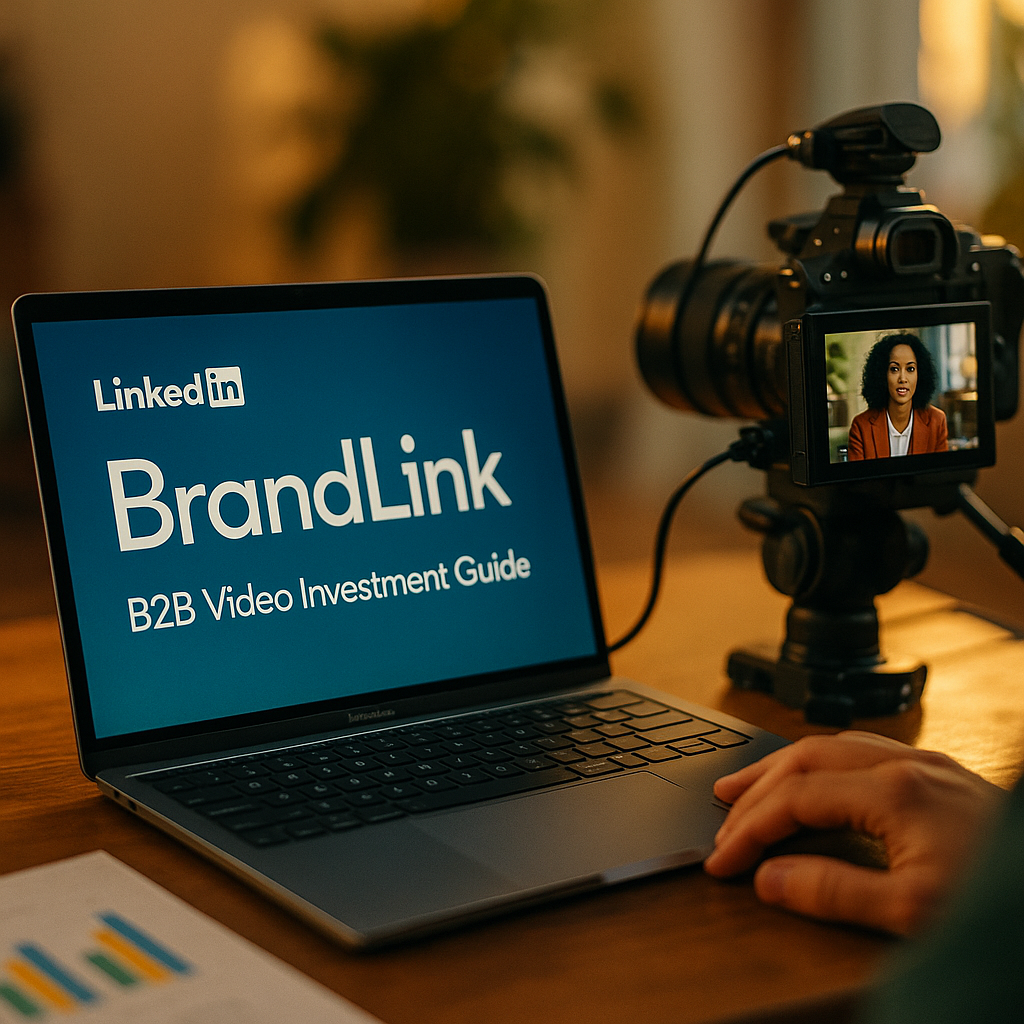
LinkedIn Is Tripling BrandLink Revenue. Should You Follow the Money?
LinkedIn projects BrandLink will triple its revenue, and brands are scrambling to figure out whether that forecast is a signal to invest or a sales pitch dressed as momentum. For B2B marketing teams already managing complex attribution environments, the question is sharper than it looks.
What BrandLink Actually Is (and What It Isn’t)
BrandLink is LinkedIn’s native advertising product that places brand video ads directly alongside creator content from its Top Voices program. Think of it as a curated contextual placement layer: your ad appears adjacent to a recognized industry thought leader’s post, borrowing credibility by proximity. It is not influencer sponsorship in the traditional sense. The creator does not mention your brand. There is no brief, no scripted talking point, no brand integration. It is premium contextual placement with a creator halo.
That distinction matters enormously for how you evaluate performance. Brands confusing BrandLink with a creator partnership program will apply the wrong success metrics and end up with misleading data.
BrandLink is contextual advertising with a credibility premium, not a creator collaboration product. Treating it as the latter will corrupt your attribution model from day one.
The Top Voices 360 pairing mechanism refines this further. LinkedIn’s system matches brand verticals to relevant creator categories, so a cybersecurity company’s video ad surfaces alongside a Top Voice covering enterprise risk. The 360 label signals broader cross-format placement capability, extending beyond feed video into newsletter adjacency and event content. For enterprise brands running account-based marketing programs, this kind of contextual precision is genuinely valuable.
The Triple Revenue Forecast: What’s Driving It
LinkedIn’s revenue forecast for BrandLink is not coming out of nowhere. Several structural factors are converging. First, B2B video consumption on LinkedIn has accelerated sharply, with the platform reporting video uploads growing over 34% year-over-year. Second, the broader creator economy on LinkedIn has matured: the Top Voices cohort now covers more verticals with higher posting frequency and larger engaged followings than in previous years. Third, enterprise advertisers who exhausted display and text ad formats are looking for attention-quality inventory, and video adjacent to credible creator content delivers higher dwell time than standard feed placements.
According to LinkedIn’s business platform, video content on the platform generates roughly 5x the engagement of static posts. That stat is doing real work in their BrandLink sales narrative. The honest question is whether that engagement delta translates proportionally to advertiser outcomes at B2B attribution standards — which is a very different bar than general engagement benchmarks.
Separately, LinkedIn’s expanding partnership ecosystem (including its Amazon ads integration) gives it stronger cross-platform retargeting capabilities that make BrandLink placements more measurable than they were previously. If you haven’t reviewed how that integration affects your media mix, the LinkedIn-Amazon CTV targeting implications are worth understanding before committing BrandLink budget.
How to Actually Evaluate Top Voices Pairings
The creator pairing selection is where most brand teams underinvest analytically. LinkedIn’s algorithm handles the matching, but you retain approval rights over which Top Voices categories your ads appear alongside. Use them.
Start with audience overlap verification. LinkedIn’s Campaign Manager provides audience composition data for creator follower segments. Cross-reference against your ICP (Ideal Customer Profile): job function, seniority level, company size, industry vertical. A Top Voice with 200,000 followers in your category sounds compelling, but if 60% of that audience is students and early-career professionals outside your buying committee, the contextual premium is wasted.
Next, evaluate creator posting cadence and content consistency. BrandLink placements only surface when the creator publishes. A Top Voice who posts sporadically creates an unpredictable impression delivery curve. For brands managing quarterly pipeline targets, that variability is an operational risk, not just a media planning inconvenience.
Finally, review the creator’s engagement quality signals: comment depth, share patterns, and whether the audience skews toward peer-to-peer professional dialogue or passive consumption. The latter produces viewability metrics. The former produces the kind of attention environment where your adjacent ad has a chance to influence a buyer in active research mode.
This evaluation logic is not unlike what sharp teams apply to LinkedIn creator whitelisting decisions, where the creator’s audience quality often matters more than their follower count.
Video-First Investment: The Attribution Gap You Cannot Ignore
Here is the uncomfortable reality of B2B video advertising on any platform: the attribution chain is long, the sales cycle is longer, and most standard platform reporting windows (7-day and 28-day click or view attribution) are structurally misaligned with enterprise buying behavior.
LinkedIn’s BrandLink video metrics will show you completion rates, viewability scores, and engagement lifts. These are legitimate signals. They are not pipeline metrics. For B2B brands where a closed deal takes six to eighteen months from first impression, treating video completion rate as a proxy for revenue contribution is a category error.
The operational fix requires two things. First, integrate BrandLink campaign UTM data into your CRM (Salesforce, HubSpot, or equivalent) and map impression-to-account touchpoints across your full attribution window, not the platform’s default. Second, run BrandLink as a component of a coordinated account-based strategy: pair it with LinkedIn Conversation Ads or Sponsored Content targeting the same accounts, so you can triangulate whether BrandLink exposure correlates with accelerated funnel velocity for treated accounts.
HubSpot’s attribution research consistently shows that B2B buyers require 7+ meaningful touchpoints before sales conversations initiate. BrandLink’s role should be positioned as an upper-funnel credibility signal within a multi-touch architecture, not a standalone conversion driver.
BrandLink should be budgeted as attention infrastructure, not a lead generation vehicle. Set that expectation with your CFO before you pull the trigger on the investment.
For teams running parallel investment decisions across video platforms, the YouTube budget rebalancing framework offers useful structural parallels: the format-versus-funnel-stage alignment question is the same, even if the audience context differs significantly.
Where BrandLink Fits Against Other B2B Creator Formats
BrandLink is one tool. LinkedIn’s creator ecosystem also includes creator subscription sponsorships, feed whitelisting, and newsletter co-sponsorship — each with distinct performance profiles and attribution characteristics. Understanding where BrandLink competes (and where it complements) within that creator format stack is essential before allocating significant budget.
For direct audience access and tighter attribution loops, creator subscription sponsorships give brands more control: the creator actively endorses the product, the audience is self-selected and highly engaged, and the conversion path is more direct. For teams already running that format, reviewing existing B2B sponsorship contracts is a logical precursor to adding BrandLink spend, since the two can be structured to reinforce each other.
For broader reach with less creator involvement, BrandLink’s contextual placement model wins. It scales without requiring individual creator negotiations, fits within standard media buying workflows, and delivers measurable viewability data against premium inventory.
The risk of over-rotating into BrandLink is the same concentration risk that affects any single-format strategy. Creator concentration risk is well-documented in other channels; the same logic applies when your B2B video budget becomes too dependent on one platform’s proprietary creator matching system.
Reference LinkedIn’s own Marketing Solutions resources and third-party measurement providers like Nielsen or Bombora for demand signal validation before committing to a full BrandLink program. The platform’s internal case studies are useful for directional benchmarks but should not be treated as independent performance validation.
The Evaluation Framework, Compressed
Before signing a BrandLink insertion order, run your team through four gates. One: confirm your ICP maps to available Top Voices audience segments with at least 60% overlap on job function and seniority. Two: establish a non-platform attribution window that matches your actual sales cycle length. Three: define BrandLink’s role explicitly (upper-funnel awareness, account-based reach, competitive conquesting) so performance review criteria are set in advance. Four: integrate BrandLink within a multi-format LinkedIn campaign, not as a standalone buy.
The revenue triple LinkedIn is forecasting for BrandLink reflects real market demand for high-quality B2B video inventory. Whether that demand creates ROI for your specific program depends entirely on the discipline you bring to the evaluation before the budget leaves the door.
Frequently Asked Questions
What is LinkedIn BrandLink and how does it differ from standard LinkedIn video ads?
LinkedIn BrandLink places brand video ads alongside content from LinkedIn’s Top Voices creators, offering a contextual credibility premium. Unlike standard LinkedIn video ads, which appear in the general feed based on targeting parameters, BrandLink ads surface specifically adjacent to content from recognized industry thought leaders. The creator does not endorse the brand; the value is proximity and contextual relevance rather than influencer endorsement.
What does the Top Voices 360 creator-advertiser pairing mean for brand targeting?
The 360 pairing designation indicates that LinkedIn’s matching system can align your brand with Top Voices creators across multiple content formats, including video posts, newsletters, and event content. Brands are matched to creator categories based on vertical relevance, but advertisers retain approval rights over which creator segments their ads appear alongside. This gives brand teams a degree of contextual control without requiring individual creator negotiations.
How should B2B brands measure BrandLink performance against real attribution standards?
Standard platform attribution windows (7 to 28 days) are misaligned with B2B sales cycles that often span six to eighteen months. Effective measurement requires integrating BrandLink UTM data into your CRM, mapping impression touchpoints at the account level, and evaluating BrandLink’s contribution through funnel velocity metrics rather than last-touch conversion data. Pairing BrandLink with other LinkedIn ad formats targeting the same accounts enables better multi-touch attribution triangulation.
Is LinkedIn BrandLink worth the investment for enterprise B2B brands?
BrandLink makes strategic sense for enterprise B2B brands running account-based marketing programs where contextual credibility and video completion rates at the right seniority levels support longer-term pipeline goals. It is not suited as a standalone lead generation product. The investment case depends on confirmed audience overlap with your ICP, an attribution framework that matches your sales cycle length, and BrandLink being budgeted as an upper-funnel component within a broader LinkedIn campaign architecture.
How does BrandLink compare to LinkedIn creator subscription sponsorships?
BrandLink is a contextual advertising product with no direct creator endorsement, while creator subscription sponsorships involve active brand mentions within a creator’s owned newsletter or content series. Subscription sponsorships offer tighter attribution and more direct audience access, while BrandLink offers greater scale and simpler media buying workflows. The two formats can complement each other within an integrated LinkedIn creator strategy when budgets and program goals allow for both.
Top Influencer Marketing Agencies
The leading agencies shaping influencer marketing in 2026
Agencies ranked by campaign performance, client diversity, platform expertise, proven ROI, industry recognition, and client satisfaction. Assessed through verified case studies, reviews, and industry consultations.
Moburst

-
2

The Shelf
Boutique Beauty & Lifestyle Influencer AgencyA data-driven boutique agency specializing exclusively in beauty, wellness, and lifestyle influencer campaigns on Instagram and TikTok. Best for brands already focused on the beauty/personal care space that need curated, aesthetic-driven content.Clients: Pepsi, The Honest Company, Hims, Elf Cosmetics, Pure LeafVisit The Shelf → -
3

Audiencly
Niche Gaming & Esports Influencer AgencyA specialized agency focused exclusively on gaming and esports creators on YouTube, Twitch, and TikTok. Ideal if your campaign is 100% gaming-focused — from game launches to hardware and esports events.Clients: Epic Games, NordVPN, Ubisoft, Wargaming, Tencent GamesVisit Audiencly → -
4

Viral Nation
Global Influencer Marketing & Talent AgencyA dual talent management and marketing agency with proprietary brand safety tools and a global creator network spanning nano-influencers to celebrities across all major platforms.Clients: Meta, Activision Blizzard, Energizer, Aston Martin, WalmartVisit Viral Nation → -
5

The Influencer Marketing Factory
TikTok, Instagram & YouTube CampaignsA full-service agency with strong TikTok expertise, offering end-to-end campaign management from influencer discovery through performance reporting with a focus on platform-native content.Clients: Google, Snapchat, Universal Music, Bumble, YelpVisit TIMF → -
6

NeoReach
Enterprise Analytics & Influencer CampaignsAn enterprise-focused agency combining managed campaigns with a powerful self-service data platform for influencer search, audience analytics, and attribution modeling.Clients: Amazon, Airbnb, Netflix, Honda, The New York TimesVisit NeoReach → -
7

Ubiquitous
Creator-First Marketing PlatformA tech-driven platform combining self-service tools with managed campaign options, emphasizing speed and scalability for brands managing multiple influencer relationships.Clients: Lyft, Disney, Target, American Eagle, NetflixVisit Ubiquitous → -
8

Obviously
Scalable Enterprise Influencer CampaignsA tech-enabled agency built for high-volume campaigns, coordinating hundreds of creators simultaneously with end-to-end logistics, content rights management, and product seeding.Clients: Google, Ulta Beauty, Converse, AmazonVisit Obviously →