


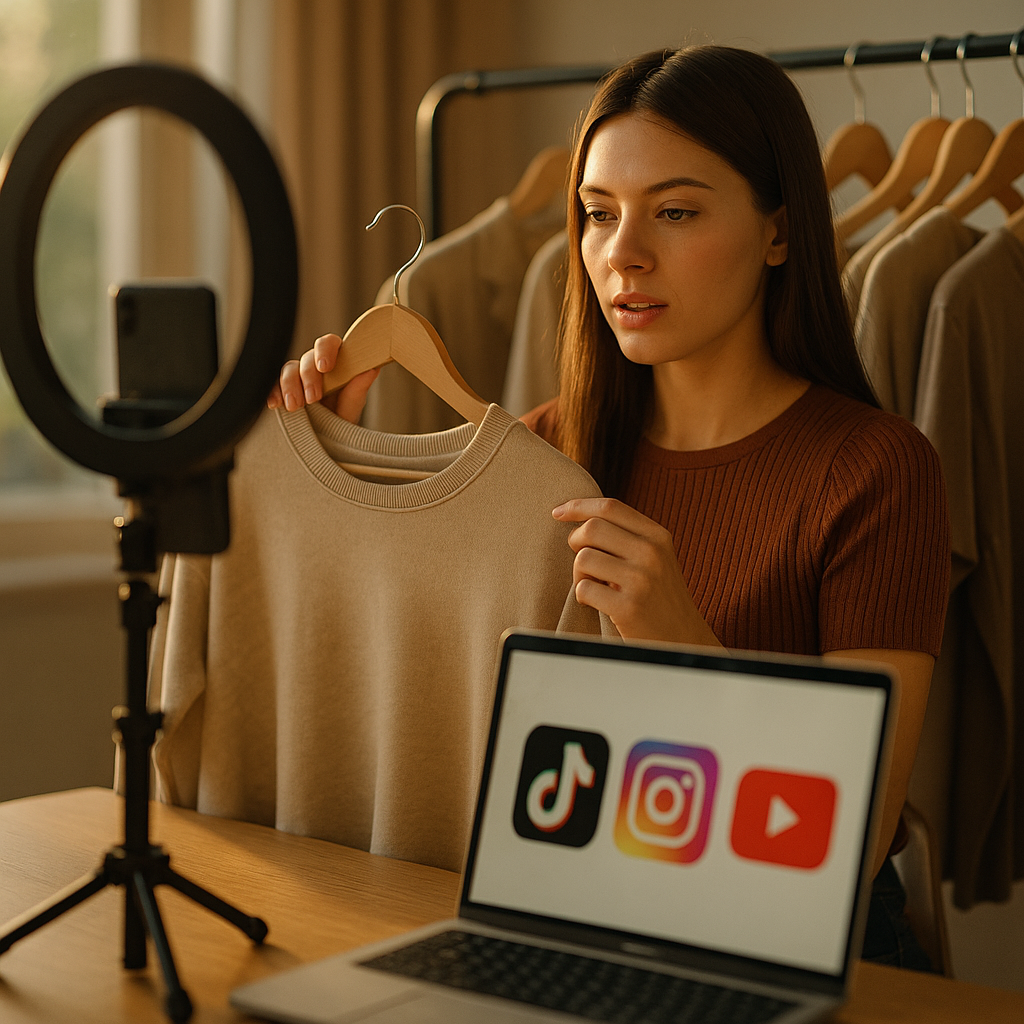
Livestream commerce is projected to top $1 trillion globally within the next few years, yet most brands still brief creators like it’s a single-platform, one-take exercise. That’s the gap costing you reach. The livestream commerce pipeline only works when the brief accounts for three different platforms, three different algorithms, and three very different viewer expectations from the first take.
Treat one live event as raw footage for a distribution system, not a single deliverable. Get that mental shift right, and everything downstream — clipping, captioning, compliance — gets easier.
Why One Livestream Can’t Serve Three Platforms Identically
TikTok Live viewers expect chaos: real-time comments, flash sales, impulsive banter. Instagram Live audiences skew toward existing fans who want intimacy and product detail. YouTube viewers, especially on longer livestream VODs, expect production value and searchability. Brief a creator to “go live and sell” without platform-specific direction, and you’ll get content optimized for none of them.
Here’s the uncomfortable truth: a livestream that crushes it on TikTok Shop can flop as a YouTube VOD because the pacing, hooks, and CTAs don’t translate. Cross-posting isn’t repurposing — it’s re-authoring for context.
The brands winning at livestream commerce aren’t the ones streaming the most often — they’re the ones who plan the edit before they plan the broadcast.
Brief the Broadcast, Then Brief the Breakdown
Most briefs stop at “go live at 7pm and demo the product.” That’s half a brief. The other half — how this gets cut into six pieces of content across three platforms — needs to be scoped before the stream starts, not scrambled together after.
Structure your creator brief in two layers:
- Layer one: the live broadcast. Platform, run time, product beats, promo codes, compliance disclosures, moderation plan for comments.
- Layer two: the clip strategy. Which segments get pulled for TikTok, which get reframed as Instagram Reels or Stories, which get uploaded as YouTube Shorts or folded into a long-form recap.
If you’ve briefed a livestream-to-week-of-content pipeline before, you already know the economics here: one properly planned stream can generate five to ten pieces of secondary content. Skip the planning and you’re stuck manually hunting for usable moments after the fact, usually under deadline pressure with a creator who’s already moved on to the next brand deal.
What Goes in the Brief Before the Camera Rolls
Specificity beats enthusiasm. A creator told to “have fun and show the product” will freelance in ways that make cross-posting a nightmare later. Instead, structure the ask:
- Timestamp the must-hit product beats (ingredient callout, price reveal, demo, offer code) so editors can find them fast.
- Specify vertical framing throughout, even on YouTube-first streams, so nothing needs reshooting for TikTok or Reels.
- Require a clean 3-5 second product-only shot every 10 minutes — B-roll gold for thumbnails and cutdowns.
- Ask for a spoken hook restated every 8-10 minutes, since viewers drop in mid-stream and cold-open clips need a self-contained pitch.
This mirrors the discipline used in TikTok Shop’s rapid-turnover demo format: brief for the smallest usable unit of content, and the larger asset takes care of itself.
Compliance Doesn’t Pause When You Cross-Post
Every clip pulled from a livestream is a new piece of sponsored content in the eyes of the FTC. That means the #ad or #sponsored disclosure needs to travel with the content, not just live in the original broadcast description. Brands routinely get this wrong: the live stream has a verbal disclosure and on-screen tag, but the 30-second TikTok cutdown loses both because the editor was focused on hook and pacing, not compliance.
Build disclosure requirements into the clip-cutting brief specifically, not just the live brief. Every platform-native repost needs its own visible disclosure, sized appropriately for that platform’s UI. Instagram Reels needs the paid partnership label active; TikTok needs the branded content toggle on, independent of whatever was disclosed live.
If your team handles a high volume of cross-posted commerce content, it’s worth reviewing how FTC-compliant briefing structures apply beyond scripted formats — livestream cutdowns carry the same legal exposure as any other sponsored post, just with less editorial control over what gets said in the moment.
Platform-Specific Editing Instructions Creators Actually Need
For TikTok: Cut for the first two seconds like your revenue depends on it, because it does. Pull the most chaotic, high-energy moment from the stream — a price drop reaction, a stock-sold-out alert, a genuine surprise — and lead with it. TikTok’s algorithm still rewards immediate pattern interrupts, and livestream footage is full of them if creators know what to flag during recording.
Reference the engaged-view mechanics from Meta’s 5-second engaged view threshold when briefing hooks — the same logic about front-loading value applies across TikTok even though the platform’s attribution model differs.
For Instagram: Livestream cutdowns perform best as Reels when they preserve context. A 45-90 second clip with a clear beginning (the question or problem), middle (the demo), and end (the CTA) outperforms a randomly trimmed highlight. Instagram audiences reward narrative completeness more than TikTok does. If the brand also runs try-on or shopping features, pair livestream clips with the same production standards outlined in the Instagram Shopping production playbook — consistent lighting and framing across live and pre-recorded content builds a more coherent shoppable feed.
For YouTube: This is where the full VOD matters, not just clips. Upload the entire stream (edited for dead air and technical hiccups) as a long-form asset, then pull 3-5 Shorts from the highlight reel. YouTube’s search indexing means the full VOD, properly titled and timestamped with chapters, can generate discovery traffic for months. Briefs should require creators to verbally state product names and key terms clearly during the stream, since YouTube’s search and auto-caption systems rely heavily on spoken audio for indexing.
Timing the Drop: Simultaneous vs. Staggered Release
Should cross-posted content go live everywhere at once, or staggered? There’s no universal answer, but here’s the operating logic most performance teams use:
Simultaneous posting maximizes urgency for time-sensitive offers — a flash sale or limited restock benefits from hitting all platforms within the same hour. Staggered posting works better for evergreen product education content, letting you test hooks on TikTok first (fast feedback loop) before committing to a YouTube Shorts or Instagram Reels version.
If your promo code expires in 24 hours, stagger nothing. If you’re building a content library for the quarter, staggering by 24-48 hours lets you A/B test which cut actually earns the caption and hook worth scaling.
This staggered-testing approach borrows heavily from content format diversification budgeting — treat each platform version as a testable variant, not a mandatory simultaneous release.
Don’t Skip the Post-Stream Debrief
A live event generates messy, valuable data: chat questions, drop-off points, which product got the most comments. Build a 15-minute debrief into the creator relationship immediately after the stream. Ask what questions came up repeatedly in chat — those become FAQ-style Shorts or Reels. Ask which product got silence versus which got flooded with comments — that tells you what to feature in the next cutdown cycle.
Brands running recurring livestream programs should treat this debrief like they would any chopped-content webinar strategy: the live event is a data-gathering exercise as much as a sales moment, and the second content wave should reflect what you learned, not just what looked good on camera.
Building This Into Your Creator Contracts
None of this works if the usage rights and deliverable counts aren’t specified upfront. Cross-posting a livestream into six pieces of derivative content is a different commercial arrangement than a single live appearance fee. Spell out:
- How many derivative clips the brand can create and post without additional payment
- Whether the creator or brand’s editing team handles the cutdowns
- Usage duration for each platform (organic vs. paid amplification rights often differ)
- Whitelisting or spark ads permissions if the brand wants to boost the best-performing clip
Vague contracts here lead to disputes months later when a clip is still running as a paid ad and the creator never agreed to extended usage. Build the math into the original fee, not as an afterthought.
According to Sprout Social’s ongoing research into social commerce behavior, viewers increasingly expect to discover products live and complete the purchase without leaving the platform — which means friction anywhere in your cross-posting workflow directly costs conversions, not just reach.
The Bottom Line
Start briefing the edit before you brief the broadcast. Build compliance and clip strategy into the same document as the live-show run sheet, contract for derivative usage upfront, and treat every platform version as its own creative decision rather than a copy-paste job.
FAQs
How long should a livestream be to generate enough cross-platform content?
Most brands find 45-90 minutes gives editors enough material for 5-8 derivative clips without diminishing returns on creator fatigue or viewer attention during the original broadcast.
Do FTC disclosure rules apply differently to livestream clips versus the original broadcast?
No — each cross-posted clip is treated as its own sponsored post and needs its own visible disclosure, regardless of what was disclosed during the live broadcast.
Should the same creator handle both the live broadcast and the clip editing?
Not necessarily. Many brands use the creator for the live performance and a separate editing team or agency for platform-specific cutdowns, provided usage rights and creative guardrails are contracted upfront.
Which platform should get the first cut of livestream content?
TikTok typically works best for testing hooks quickly due to faster algorithmic feedback, letting brands identify the strongest angle before committing resources to Instagram or YouTube versions.
How many derivative clips should be contracted per livestream?
There’s no universal number, but brands should specify an exact count or range in the contract rather than leaving it open-ended, since ambiguity here is the most common source of creator disputes.
FAQs
How long should a livestream be to generate enough cross-platform content?
Most brands find 45-90 minutes gives editors enough material for 5-8 derivative clips without diminishing returns on creator fatigue or viewer attention during the original broadcast.
Do FTC disclosure rules apply differently to livestream clips versus the original broadcast?
No — each cross-posted clip is treated as its own sponsored post and needs its own visible disclosure, regardless of what was disclosed during the live broadcast.
Should the same creator handle both the live broadcast and the clip editing?
Not necessarily. Many brands use the creator for the live performance and a separate editing team or agency for platform-specific cutdowns, provided usage rights and creative guardrails are contracted upfront.
Which platform should get the first cut of livestream content?
TikTok typically works best for testing hooks quickly due to faster algorithmic feedback, letting brands identify the strongest angle before committing resources to Instagram or YouTube versions.
How many derivative clips should be contracted per livestream?
There’s no universal number, but brands should specify an exact count or range in the contract rather than leaving it open-ended, since ambiguity here is the most common source of creator disputes.
Top Influencer Marketing Agencies
The leading agencies shaping influencer marketing in 2026
Agencies ranked by campaign performance, client diversity, platform expertise, proven ROI, industry recognition, and client satisfaction. Assessed through verified case studies, reviews, and industry consultations.
Moburst

-
2

The Shelf
Boutique Beauty & Lifestyle Influencer AgencyA data-driven boutique agency specializing exclusively in beauty, wellness, and lifestyle influencer campaigns on Instagram and TikTok. Best for brands already focused on the beauty/personal care space that need curated, aesthetic-driven content.Clients: Pepsi, The Honest Company, Hims, Elf Cosmetics, Pure LeafVisit The Shelf → -
3

Audiencly
Niche Gaming & Esports Influencer AgencyA specialized agency focused exclusively on gaming and esports creators on YouTube, Twitch, and TikTok. Ideal if your campaign is 100% gaming-focused — from game launches to hardware and esports events.Clients: Epic Games, NordVPN, Ubisoft, Wargaming, Tencent GamesVisit Audiencly → -
4

Viral Nation
Global Influencer Marketing & Talent AgencyA dual talent management and marketing agency with proprietary brand safety tools and a global creator network spanning nano-influencers to celebrities across all major platforms.Clients: Meta, Activision Blizzard, Energizer, Aston Martin, WalmartVisit Viral Nation → -
5

The Influencer Marketing Factory
TikTok, Instagram & YouTube CampaignsA full-service agency with strong TikTok expertise, offering end-to-end campaign management from influencer discovery through performance reporting with a focus on platform-native content.Clients: Google, Snapchat, Universal Music, Bumble, YelpVisit TIMF → -
6

NeoReach
Enterprise Analytics & Influencer CampaignsAn enterprise-focused agency combining managed campaigns with a powerful self-service data platform for influencer search, audience analytics, and attribution modeling.Clients: Amazon, Airbnb, Netflix, Honda, The New York TimesVisit NeoReach → -
7

Ubiquitous
Creator-First Marketing PlatformA tech-driven platform combining self-service tools with managed campaign options, emphasizing speed and scalability for brands managing multiple influencer relationships.Clients: Lyft, Disney, Target, American Eagle, NetflixVisit Ubiquitous → -
8

Obviously
Scalable Enterprise Influencer CampaignsA tech-enabled agency built for high-volume campaigns, coordinating hundreds of creators simultaneously with end-to-end logistics, content rights management, and product seeding.Clients: Google, Ulta Beauty, Converse, AmazonVisit Obviously →