


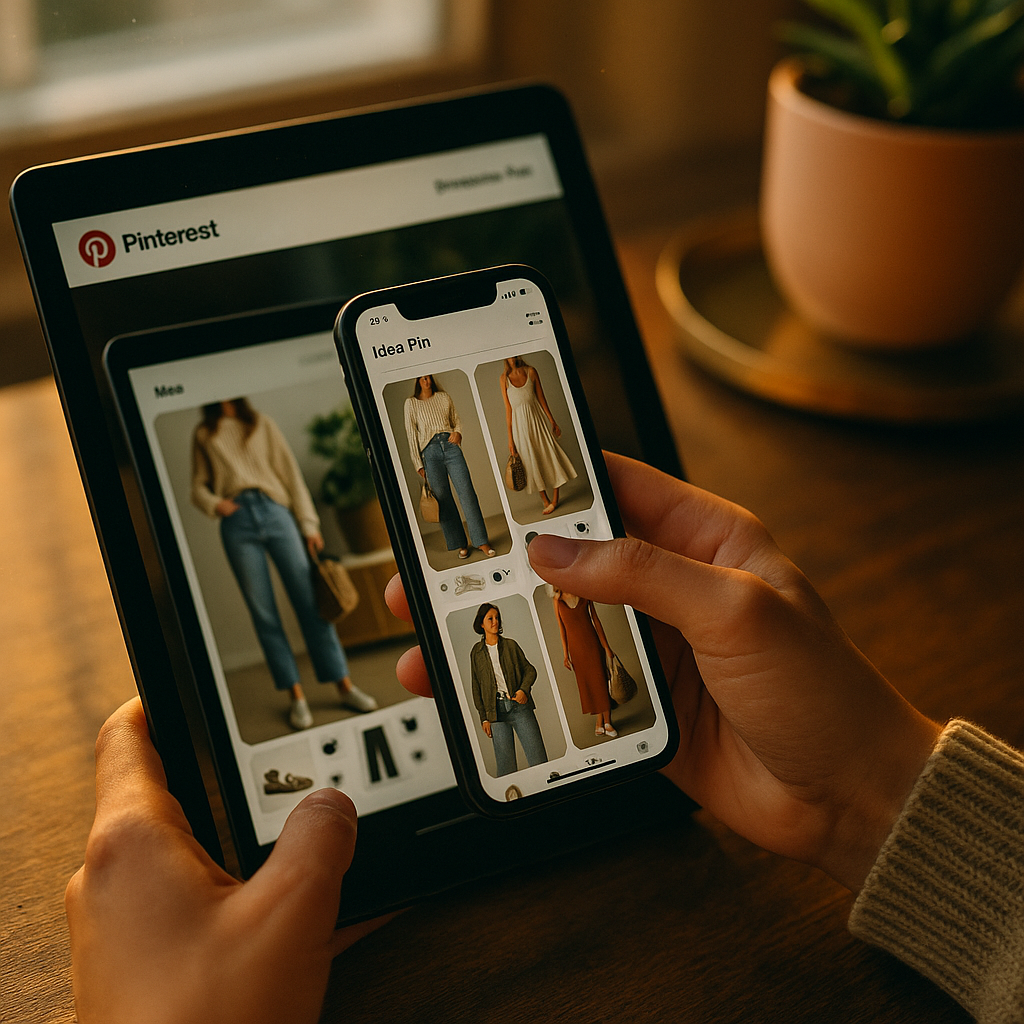
Pinterest’s AI now decides which slide of your Idea Pin gets seen first — and most brands are still building them like static slideshows. If your Pinterest Idea Pins aren’t structured for machine curation, you’re leaving discovery traffic (and conversions) on the table. Here’s the playbook.
Pinterest’s shift toward AI-curated, shoppable feeds has quietly rewritten the rules of multi-slide content. It’s no longer about pretty carousels. It’s about signal architecture: what each slide tells the algorithm, and how fast it tells it.
Why Idea Pins Became a Discovery Engine, Not Just a Format
Pinterest reported that users are increasingly starting their shopping journey with a search intent, not a browsing one — and the platform has responded by pushing more weight onto its visual search and recommendation systems. Idea Pins (Pinterest’s multi-slide, story-like format) sit at the center of that shift because they generate more engagement data per unit of content than a single static Pin. Each slide is a mini data point: dwell time, swipe-through, save rate, tap-to-shop.
Brands that treat Idea Pins as a creative afterthought — repurposed Reels, dumped-in TikTok exports — are feeding Pinterest’s AI weak signals. The platform’s recommendation model, much like the one covered in our Pinterest AI shopping assistant playbook, prioritizes content that demonstrates clear intent-to-outcome pathways. That means structure matters as much as aesthetics now.
Pinterest’s own merchant data suggests shoppers who engage with multi-slide product content are significantly more likely to complete a purchase within seven days than those who view a single static Pin — because the format mimics a decision journey, not just an image.
The Slide-by-Slide Architecture That AI Feeds Reward
Think of a five-to-eight slide Idea Pin as a funnel, not a gallery. Each slide has a job. Skip a job, and the algorithm has less to work with.
- Slide 1 — Hook + Category Signal: Lead with the product category in the first frame, visually and in on-screen text. Pinterest’s visual search leans heavily on object recognition; ambiguous opening frames confuse classification.
- Slide 2-3 — Problem/Use Case: Show the product solving a specific, searchable problem (“small apartment desk setup,” “overnight oats for meal prep”). This is where long-tail keyword alignment happens — match on-screen text to actual Pinterest search queries.
- Slide 4 — Product Detail: A clean, well-lit product shot with the shoppable tag active. This slide should be scroll-stoppable on its own, since Pinterest sometimes surfaces individual slides out of sequence in feeds.
- Slide 5-6 — Social Proof or Variation: Reviews, UGC snippets, or color/size variants. This extends dwell time, a key engagement signal.
- Final Slide — Clear CTA: Direct, unambiguous next step. “Shop the look,” “Save for later,” or a direct product link. Don’t bury it.
Notice what’s missing from that list? Filler. Every slide either builds intent or resolves it. Pinterest’s AI-curated feed logic — similar in spirit to Instagram’s engagement-weighted distribution discussed in our GEM algorithm breakdown — rewards content where every unit contributes to a measurable action.
Metadata Is Half the Battle
Here’s the part brands consistently underinvest in: the text layer. Pinterest’s AI reads on-screen text, alt text, titles, and descriptions as ranking signals for its visual and semantic search. A gorgeous Idea Pin with generic captions (“Loving this!”) is invisible to the systems that would otherwise surface it against high-intent searches.
Treat your Idea Pin metadata like you’d treat a product listing page. Title fields should include the primary keyword phrase naturally (not stuffed). Descriptions should mention use case, material, occasion — whatever a shopper would actually type into Pinterest search. This isn’t fundamentally different from optimizing an Amazon listing, a discipline we’ve broken down in the Amazon Posts and Storefronts playbook: the platform’s commerce AI needs explicit text signals to know what it’s looking at, even when the visual recognition is strong.
What “AI-Curated Feed” Actually Means for Your Content Calendar
Pinterest has moved away from strict reverse-chronological or purely follower-based distribution. Its home feed and search results increasingly blend generative recommendations — content the system predicts you’ll want, based on saved boards, search history, and even seasonal intent shifts. That has a direct operational implication: posting cadence matters less than signal density.
A single, well-structured Idea Pin with strong slide-level engagement can outperform five mediocre ones over a quarter. This flips the “post daily” instinct that dominates most brand social calendars. Instead of chasing frequency, prioritize testing structural variants of your best-performing product pins — swap slide order, test different hook frames, rotate CTA phrasing.
Run this like an A/B test program, not a content mill. Pull weekly reports on save rate, outbound click rate, and closeup rate (a Pinterest-specific metric measuring how often users tap to zoom or view detail). These three metrics tell you which slide structures the AI is rewarding, and which are getting buried.
Seasonal Intent Windows Are Non-Negotiable
Pinterest users plan early — often 30-90 days ahead of a purchase occasion. That means your Idea Pin structure needs to anticipate search intent before the demand curve peaks, not during it. Home decor content for autumn should be live by mid-summer. Holiday gift guides need to populate boards well before Black Friday chatter starts elsewhere.
This lead time also gives Pinterest’s AI more cycles to learn which slide sequences convert for a given product category, so early publishing compounds your algorithmic favor later in the season.
Multi-Slide Isn’t Just a Pinterest Problem — But Pinterest Solves It Differently
If you’re already running shoppable carousels on Instagram or TikTok Shop, you might assume the same creative can be repackaged for Pinterest. Resist that urge. Instagram’s carousel logic (detailed in our 5-slide story arc playbook) is built around narrative pacing and creator authenticity. Pinterest’s Idea Pin logic is built around searchable, evergreen product discovery. The intent is fundamentally different: Instagram users are often in a scroll-and-be-entertained mode; Pinterest users are frequently in a plan-and-decide mode.
That difference should shape your creative brief. Pinterest content ages well — a well-optimized Idea Pin can keep generating impressions and saves for months, sometimes over a year, because it’s indexed like search content rather than expiring like a feed post. This is closer in spirit to evergreen SEO content than to short-lived social video, and it should be budgeted and measured accordingly.
Treat Idea Pin production budget like content marketing spend, not paid social spend. The payoff curve is slower, but the half-life is dramatically longer than almost any other shoppable format.
Creator Partnerships Still Matter — Differently
Brands running creator programs on Pinterest often default to influencer-style content: a creator’s face, their voice, their aesthetic. That can work, but it’s not the only lever. Pinterest’s audience frequently favors faceless, product-forward, aspirational content over personality-led content — the opposite of what performs on TikTok or Instagram Reels.
If you’re allocating creator budget here, brief for utility over charisma. A creator who can produce clean, well-lit, keyword-rich product demonstrations will often outperform a bigger-name creator whose content leans heavily on personal brand. This is a meaningful budget efficiency point for teams used to negotiating creator deals the way they might for YouTube upfront bundles or TikTok Shop affiliates — the leverage points are different on Pinterest, and so should be the fee structures.
Compliance and Measurement: The Parts Brands Skip
Shoppable content on any platform invites FTC scrutiny around disclosure, especially when creators are compensated for product placement within Idea Pins. Make sure sponsored Idea Pins carry clear, platform-native disclosure tags, not just a buried hashtag in the description field. The FTC’s endorsement guidance applies here just as it does on any other shoppable format, and Pinterest’s own branded content tools support this natively — use them rather than relying on caption disclaimers alone.
On measurement, don’t rely solely on Pinterest’s native analytics dashboard for attribution. Cross-reference with your platform’s conversion API or your own UTM-tagged links to validate outbound click quality. Third-party tools like those tracked by eMarketer and Sprout Social can help benchmark your engagement rates against category norms, since Pinterest’s shoppable ecosystem is younger and less standardized than Meta’s or Google’s.
One operational note worth flagging for teams managing multiple shoppable formats simultaneously: don’t let Pinterest become the forgotten channel in your reporting stack. It’s easy to over-index reporting cadence on TikTok Shop livestreams (see our breakdown of the first five minutes that matter) simply because the content is more time-sensitive. Pinterest’s slower-burn performance curve requires monthly, not weekly, review cycles to see real signal.
Next Step
Audit your last five Idea Pins against the slide-by-slide framework above — category hook, use case, product detail, social proof, CTA — and flag which jobs are missing. Rebuild one underperformer with full metadata and a clear CTA slide, then compare closeup and save rates against your existing baseline over 30 days. That single test will tell you more about Pinterest’s AI-curated feed than any dashboard summary.
FAQs
How many slides should a shoppable Idea Pin have?
Five to eight slides tends to perform best. Fewer slides limit the engagement data Pinterest’s algorithm can collect; more than eight risks drop-off before reaching the CTA slide.
Do Idea Pins still exist, or has Pinterest renamed the format?
Pinterest has folded much of the Idea Pin functionality into its standard multi-slide Pin and video Pin tools, but the multi-slide, story-like structure and its curation logic remain central to how the platform surfaces shoppable content.
What metrics matter most for Pinterest shoppable content?
Save rate, outbound click rate, and closeup rate are the three to watch weekly. Together they indicate whether the AI-curated feed is treating your content as high-intent product discovery material.
Should every slide include shoppable tags?
No. Tag the product detail slide and, where relevant, a social proof or variation slide. Over-tagging every slide dilutes the CTA and can clutter the visual layout.
How far in advance should seasonal Idea Pins be published?
Thirty to ninety days ahead of the target purchase occasion, since Pinterest users typically research and plan well before buying, and early publishing gives the algorithm more learning cycles.
Is creator content necessary for Pinterest shoppable Pins to perform?
Not always. Product-forward, faceless content frequently outperforms creator-led content on Pinterest, unlike on TikTok or Instagram. Prioritize production quality and searchable framing over creator personality.
FAQs
How many slides should a shoppable Idea Pin have?
Five to eight slides tends to perform best. Fewer slides limit the engagement data Pinterest’s algorithm can collect; more than eight risks drop-off before reaching the CTA slide.
Do Idea Pins still exist, or has Pinterest renamed the format?
Pinterest has folded much of the Idea Pin functionality into its standard multi-slide Pin and video Pin tools, but the multi-slide, story-like structure and its curation logic remain central to how the platform surfaces shoppable content.
What metrics matter most for Pinterest shoppable content?
Save rate, outbound click rate, and closeup rate are the three to watch weekly. Together they indicate whether the AI-curated feed is treating your content as high-intent product discovery material.
Should every slide include shoppable tags?
No. Tag the product detail slide and, where relevant, a social proof or variation slide. Over-tagging every slide dilutes the CTA and can clutter the visual layout.
How far in advance should seasonal Idea Pins be published?
Thirty to ninety days ahead of the target purchase occasion, since Pinterest users typically research and plan well before buying, and early publishing gives the algorithm more learning cycles.
Is creator content necessary for Pinterest shoppable Pins to perform?
Not always. Product-forward, faceless content frequently outperforms creator-led content on Pinterest, unlike on TikTok or Instagram. Prioritize production quality and searchable framing over creator personality.
Top Influencer Marketing Agencies
The leading agencies shaping influencer marketing in 2026
Agencies ranked by campaign performance, client diversity, platform expertise, proven ROI, industry recognition, and client satisfaction. Assessed through verified case studies, reviews, and industry consultations.
Moburst

-
2

The Shelf
Boutique Beauty & Lifestyle Influencer AgencyA data-driven boutique agency specializing exclusively in beauty, wellness, and lifestyle influencer campaigns on Instagram and TikTok. Best for brands already focused on the beauty/personal care space that need curated, aesthetic-driven content.Clients: Pepsi, The Honest Company, Hims, Elf Cosmetics, Pure LeafVisit The Shelf → -
3

Audiencly
Niche Gaming & Esports Influencer AgencyA specialized agency focused exclusively on gaming and esports creators on YouTube, Twitch, and TikTok. Ideal if your campaign is 100% gaming-focused — from game launches to hardware and esports events.Clients: Epic Games, NordVPN, Ubisoft, Wargaming, Tencent GamesVisit Audiencly → -
4

Viral Nation
Global Influencer Marketing & Talent AgencyA dual talent management and marketing agency with proprietary brand safety tools and a global creator network spanning nano-influencers to celebrities across all major platforms.Clients: Meta, Activision Blizzard, Energizer, Aston Martin, WalmartVisit Viral Nation → -
5

The Influencer Marketing Factory
TikTok, Instagram & YouTube CampaignsA full-service agency with strong TikTok expertise, offering end-to-end campaign management from influencer discovery through performance reporting with a focus on platform-native content.Clients: Google, Snapchat, Universal Music, Bumble, YelpVisit TIMF → -
6

NeoReach
Enterprise Analytics & Influencer CampaignsAn enterprise-focused agency combining managed campaigns with a powerful self-service data platform for influencer search, audience analytics, and attribution modeling.Clients: Amazon, Airbnb, Netflix, Honda, The New York TimesVisit NeoReach → -
7

Ubiquitous
Creator-First Marketing PlatformA tech-driven platform combining self-service tools with managed campaign options, emphasizing speed and scalability for brands managing multiple influencer relationships.Clients: Lyft, Disney, Target, American Eagle, NetflixVisit Ubiquitous → -
8

Obviously
Scalable Enterprise Influencer CampaignsA tech-enabled agency built for high-volume campaigns, coordinating hundreds of creators simultaneously with end-to-end logistics, content rights management, and product seeding.Clients: Google, Ulta Beauty, Converse, AmazonVisit Obviously →