


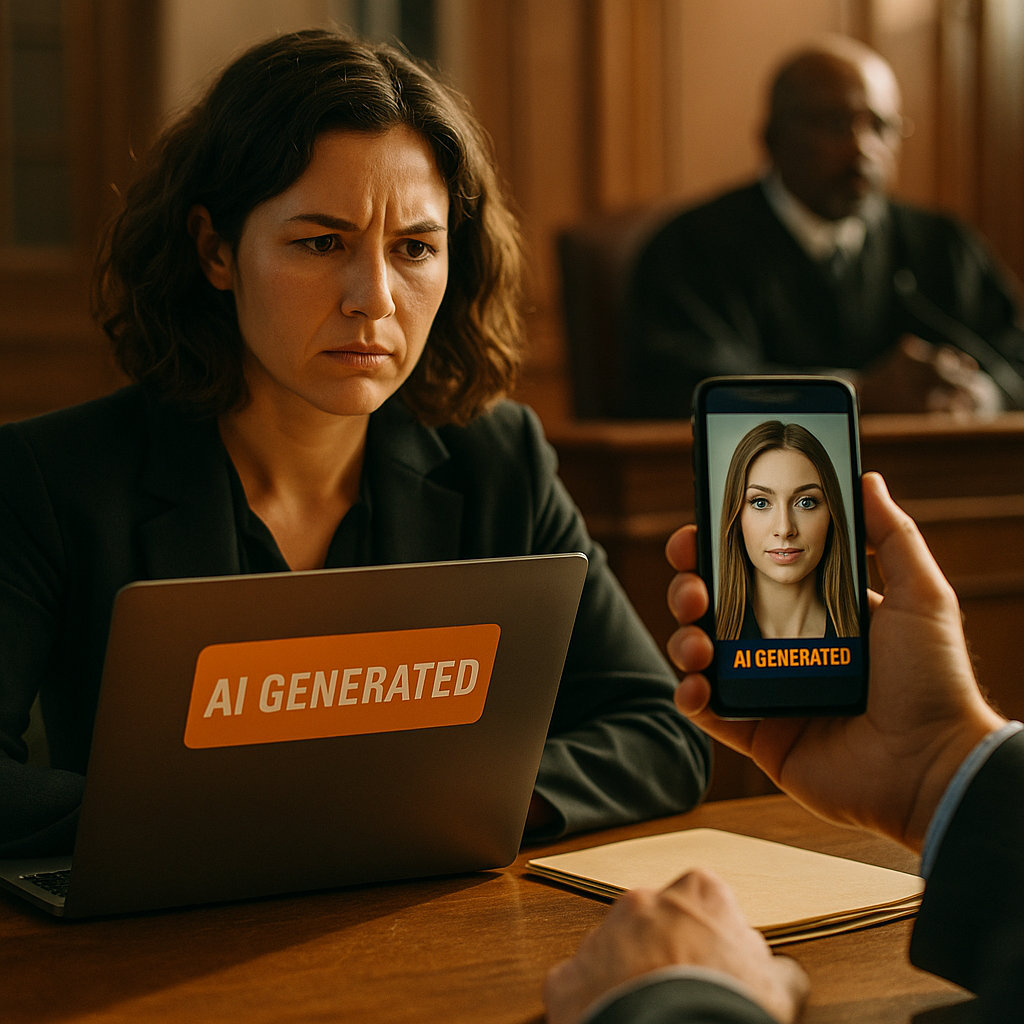
Three states now require distinct synthetic-performer disclosures. Every major platform runs its own AI content label. Stack them on a single sponsored post and you get overlapping, sometimes contradictory, disclosure obligations — and no regulator has offered a hierarchy for resolving the conflict. If your compliance framework treats these as one requirement, you’re already exposed.
This isn’t a hypothetical edge case anymore. It’s Tuesday for any brand running AI-generated or AI-augmented creator content at scale.
Why One Label Is No Longer Enough
For years, disclosure meant #ad and a paid partnership tag. Simple. Now add synthetic media into the mix, and the compliance surface multiplies. A brand running a virtual influencer campaign, an AI voice clone in a testimonial, or a digitally de-aged spokesperson faces at least two separate disclosure regimes on the same asset: state law governing synthetic performers, and the platform’s own AI-generated content label.
These regimes were not built to talk to each other. State legislatures wrote synthetic-performer laws to protect consumers and, in several cases, protect the labor rights of human performers whose likeness or voice might be replicated without consent. Platforms, meanwhile, built AI labels primarily to address misinformation and manipulated media at a content-moderation level — not for FTC-style commercial disclosure. The result is two labeling systems solving two different problems, slapped onto one piece of sponsored content.
A platform’s “AI-generated” tag confirms a technical fact. A state synthetic-performer disclosure confirms a legal one. Satisfying the first does not satisfy the second — and brands that assume otherwise are building compliance programs on a false equivalence.
The Regulatory Patchwork, Briefly
California’s synthetic performer statutes (building on years of digital replica and right-of-publicity litigation) require clear disclosure when a performer’s likeness is digitally created or altered in commercial content, with particular teeth around political and health-related messaging. Other states have followed with narrower rules focused on deepfake political ads, but the drafting language increasingly bleeds into commercial advertising too. Tennessee’s ELVIS Act protects voice likeness specifically. New York has proposed synthetic performer disclosure tied to SAG-AFTRA-style labor protections.
None of these statutes reference TikTok’s “AI-generated content” toggle, Meta’s “AI info” label, or YouTube’s altered-content disclosure requirement. They exist in parallel universes drafted by different legislatures with different constituencies in mind — consumer protection here, labor protection there, election integrity somewhere else.
That’s the operational headache. A brand running a single sponsored video with an AI-voiced narrator, distributed to audiences in California, Tennessee, and everywhere else, has to ask three questions simultaneously: What does state law require? What does the platform require? And do those two labels, placed together, actually communicate anything coherent to the consumer?
Where the Two Systems Actually Collide
Three friction points show up constantly when legal and marketing teams try to reconcile these obligations.
- Placement conflicts. State disclosure law often requires disclosure to be “clear and conspicuous” near the content itself — sometimes burned into the video. Platform AI labels are usually auto-applied metadata badges that sit in a fixed UI location the brand doesn’t control. If the platform’s label satisfies its own policy but doesn’t meet the state’s conspicuousness bar, you’re covered on one front and exposed on the other.
- Definitional mismatch. A platform might define “AI-generated” narrowly (fully synthetic video) while a state defines “synthetic performer” broadly enough to capture AI-assisted voice enhancement or de-aging filters. Content that dodges the platform’s toggle can still trigger the state law.
- Timing and jurisdiction. Platforms apply labels globally or by account region. State laws apply by audience location or where harm occurs. A single post can be simultaneously compliant in Texas and non-compliant in California, with the platform showing an identical label in both places.
Add sponsored content on top of that, and now the FTC’s Endorsement Guides enter the picture too — a third, federal layer with its own disclosure standard. This is why the frameworks that worked for standard influencer disclosure, like the ones covered in our paid partnership label guidance, don’t automatically extend to synthetic content. The FTC has already signaled, through cases involving AI-generated endorsements, that a platform badge alone won’t satisfy federal disclosure standards — a principle that echoes directly into how brands should treat TikTok’s AI avatar tools, as we broke down in our piece on AI avatar labels in regulated categories.
Build a Layered Disclosure Stack, Not a Single Label
The fix isn’t picking the “strictest” rule and hoping it covers everything. It’s building a layered disclosure architecture where each requirement gets satisfied independently, without contradicting the others. Here’s the operating model we recommend to brand compliance teams.
1. Map every asset against three disclosure regimes, not one
Before a synthetic or AI-augmented asset goes live, run it through a triage checklist: federal (FTC Endorsement Guides), state (synthetic performer or deepfake statute in every state where the audience will see it), and platform (native AI label policy). Treat these as three independent yes/no gates. An asset needs to clear all three, not just the loudest one.
2. Default to the strictest placement standard, but keep them visually distinct
Where state law demands an in-content, burned-in disclosure and the platform offers only a metadata badge, don’t rely on the badge to do double duty. Add your own on-screen text or verbal disclosure that satisfies the state’s conspicuousness threshold, separate from whatever the platform auto-generates. Yes, that can mean two labels on one post. That’s fine — redundancy beats ambiguity when regulators are involved.
3. Geo-fence sensitive synthetic content where feasible
If a state’s synthetic-performer law is unusually strict (California’s health and political carve-outs, for example), consider geo-targeting that content away from audiences in that state rather than trying to build one disclosure that satisfies every jurisdiction at once. It’s not always practical, but for high-risk categories like supplements, financial services, or political-adjacent messaging, geo-fencing is often cheaper than litigation.
4. Contractually assign disclosure responsibility
Ambiguity about who’s responsible for adding the disclosure — the brand, the agency, or the creator — is where most violations originate. Every contract involving synthetic media, voice cloning, or AI avatars needs explicit disclosure-ownership language, similar to how disclosure compliance clauses are now standard across platform-specific creator agreements. Specify which party adds which label, in which format, before publication — not after a platform flags it.
5. Keep a synthetic-content audit trail
Regulators and platforms increasingly want proof, not just compliance in theory. Maintain records showing what tool generated the content, what disclosure was applied, and when. This mirrors the audit logic already being used to catch undisclosed sponsorships, as detailed in our transcript audit system breakdown — the same instinct applies to synthetic media, just with an added layer documenting AI provenance.
What This Costs If You Get It Wrong
The FTC has already brought enforcement actions tied to AI-generated endorsement content, and state attorneys general have shown a willingness to move fast on deepfake-adjacent statutes, particularly where minors, health claims, or elections are involved. According to the Federal Trade Commission, the agency’s updated Endorsement Guides explicitly cover AI-generated reviews and testimonials, treating a missing or inadequate disclosure the same as any other deceptive endorsement violation — fines, injunctions, and reputational damage included.
Layer state penalties on top, some of which include private rights of action (meaning consumers, not just regulators, can sue), and the math on skipping a proper disclosure stack gets ugly fast.
There’s also a brand-trust dimension that doesn’t show up on a compliance checklist. Consumer research from firms like eMarketer continues to show declining trust in influencer content generally; adding undisclosed synthetic elements to that mix accelerates the erosion. A Sprout Social analysis of platform trust signals found audiences penalize brands more harshly for perceived deception than for the underlying use of AI itself — meaning transparent, well-labeled synthetic content often performs better than content trying to sneak past disclosure requirements entirely.
Operationalizing This Without Slowing Down Production
None of this needs to become a bottleneck if you build it into pre-production instead of legal review at the eleventh hour. A workable operating rhythm looks like this: creative and legal jointly maintain a living matrix of state synthetic-performer laws and platform AI policies, updated quarterly (these laws are moving fast — quarterly, not annually, is the right cadence right now). Every asset brief for AI-augmented or synthetic content includes a disclosure requirement field before a single frame gets produced. And platform publishing checklists get updated to include a manual disclosure-verification step, not just reliance on the platform’s automated label.
Brands already running structured disclosure audits for standard sponsored content, similar to the approach in our follower authenticity audit framework, are well positioned to extend that same operational muscle to synthetic media. The infrastructure for compliance discipline already exists in most mature marketing organizations. It just needs a synthetic-content module bolted on.
One more thing worth flagging: platform AI labeling policy is still evolving quickly, and today’s badge format may not exist in six months. Build your framework around principles (clear, conspicuous, independently verifiable disclosure) rather than around any single platform’s current UI, because chasing platform-specific label formats is a losing game long-term.
Next step: Audit your current AI-content pipeline this quarter. Pull every sponsored asset using synthetic voice, avatar, or likeness technology, check it against the state laws where your audience actually lives (not just where your brand is headquartered), and confirm your contracts explicitly assign disclosure ownership before the next campaign ships.
FAQs
Does a platform’s AI-generated content label satisfy state synthetic-performer disclosure laws?
No. Platform labels are typically metadata-based and address content moderation goals, not the “clear and conspicuous” legal disclosure standard many state statutes require. Brands should treat the two as separate obligations that both need independent verification.
Which states currently regulate synthetic performer disclosure in commercial content?
California has the most developed framework, particularly around health and political content, with Tennessee’s ELVIS Act covering voice likeness specifically. Other states have deepfake-focused laws that increasingly extend into commercial advertising contexts, and this list is expanding quickly, so a static compliance list will go stale within a year.
Who is legally responsible for adding synthetic-content disclosures — the brand, agency, or creator?
It depends on the contract, and that’s exactly the problem. Without explicit disclosure-ownership language, responsibility becomes ambiguous, which is where most violations originate. Every creator or production agreement involving synthetic media should specify who adds which disclosure and in what format before publication.
Can geo-fencing help manage conflicting synthetic-performer laws across states?
Yes, particularly for high-risk categories like health, finance, or political-adjacent content. Rather than building one disclosure that tries to satisfy every jurisdiction, some brands find it more efficient to geo-target sensitive synthetic content away from audiences in the strictest states.
What happens if a sponsored post satisfies FTC rules but not a state synthetic-performer law?
Both violations can be pursued independently. FTC enforcement operates at the federal level under the Endorsement Guides, while state statutes can carry their own penalties, and in some cases, private rights of action allowing consumers to sue directly. Compliance with one does not shield a brand from the other.
Top Influencer Marketing Agencies
The leading agencies shaping influencer marketing in 2026
Agencies ranked by campaign performance, client diversity, platform expertise, proven ROI, industry recognition, and client satisfaction. Assessed through verified case studies, reviews, and industry consultations.
Moburst

-
2

The Shelf
Boutique Beauty & Lifestyle Influencer AgencyA data-driven boutique agency specializing exclusively in beauty, wellness, and lifestyle influencer campaigns on Instagram and TikTok. Best for brands already focused on the beauty/personal care space that need curated, aesthetic-driven content.Clients: Pepsi, The Honest Company, Hims, Elf Cosmetics, Pure LeafVisit The Shelf → -
3

Audiencly
Niche Gaming & Esports Influencer AgencyA specialized agency focused exclusively on gaming and esports creators on YouTube, Twitch, and TikTok. Ideal if your campaign is 100% gaming-focused — from game launches to hardware and esports events.Clients: Epic Games, NordVPN, Ubisoft, Wargaming, Tencent GamesVisit Audiencly → -
4

Viral Nation
Global Influencer Marketing & Talent AgencyA dual talent management and marketing agency with proprietary brand safety tools and a global creator network spanning nano-influencers to celebrities across all major platforms.Clients: Meta, Activision Blizzard, Energizer, Aston Martin, WalmartVisit Viral Nation → -
5

The Influencer Marketing Factory
TikTok, Instagram & YouTube CampaignsA full-service agency with strong TikTok expertise, offering end-to-end campaign management from influencer discovery through performance reporting with a focus on platform-native content.Clients: Google, Snapchat, Universal Music, Bumble, YelpVisit TIMF → -
6

NeoReach
Enterprise Analytics & Influencer CampaignsAn enterprise-focused agency combining managed campaigns with a powerful self-service data platform for influencer search, audience analytics, and attribution modeling.Clients: Amazon, Airbnb, Netflix, Honda, The New York TimesVisit NeoReach → -
7

Ubiquitous
Creator-First Marketing PlatformA tech-driven platform combining self-service tools with managed campaign options, emphasizing speed and scalability for brands managing multiple influencer relationships.Clients: Lyft, Disney, Target, American Eagle, NetflixVisit Ubiquitous → -
8

Obviously
Scalable Enterprise Influencer CampaignsA tech-enabled agency built for high-volume campaigns, coordinating hundreds of creators simultaneously with end-to-end logistics, content rights management, and product seeding.Clients: Google, Ulta Beauty, Converse, AmazonVisit Obviously →