


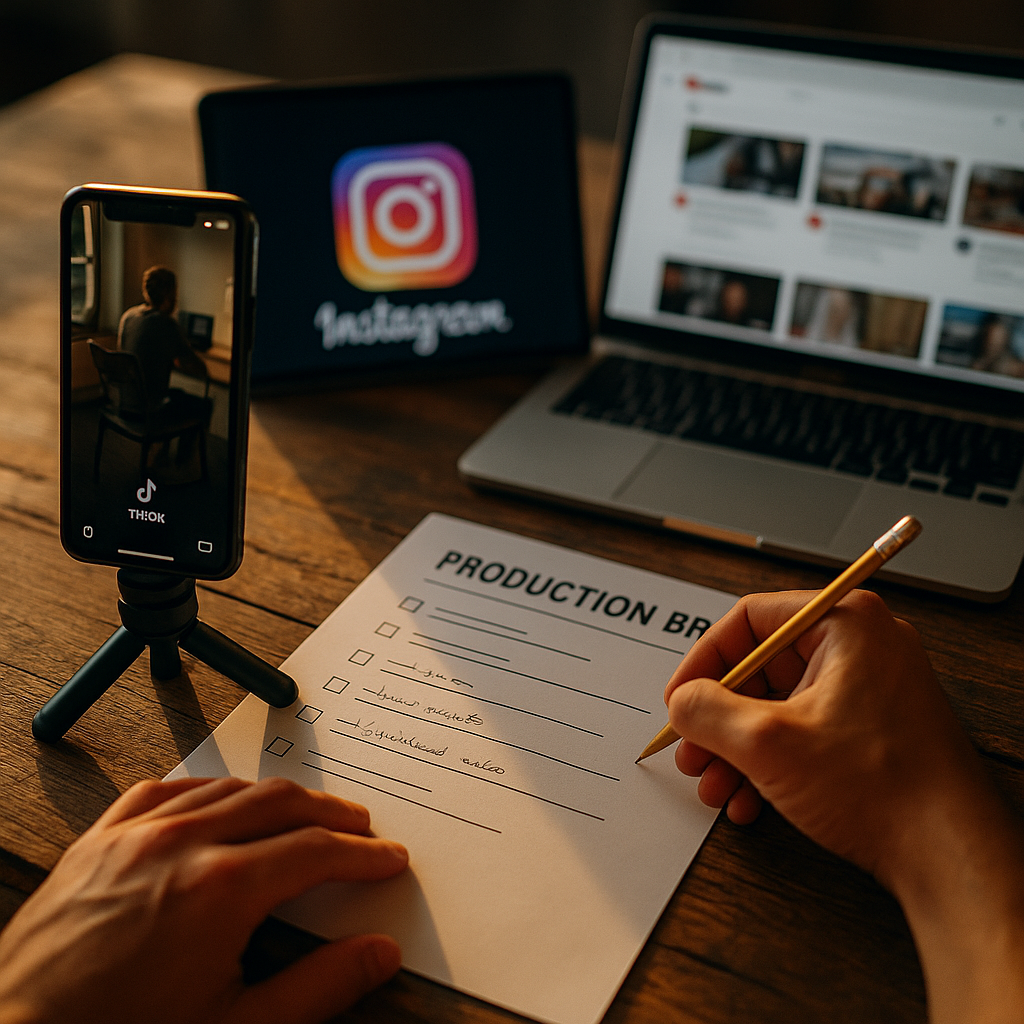
Your Creative Brief Is Outdated Before the Camera Rolls
Seventy-six percent of branded social content underperforms its category benchmark within the first 48 hours of posting, according to CreatorIQ’s latest data. The reason isn’t bad creative. It’s creative built for humans but not for the algorithms that decide whether humans ever see it. The social commerce feed has become a creative brief constraint — and if your production briefs don’t encode platform-specific format requirements before shoot day, you’re burning budget on content the machines will bury.
Three Algorithms, Three Sets of Rules
Let’s be blunt: TikTok’s recommendation engine, Instagram’s GEM (Graph-based Exploration Model) architecture, and YouTube’s suggested-video algorithm each evaluate content through radically different lenses. They share a family resemblance — all three reward retention and engagement — but the mechanical specifics diverge in ways that matter at the storyboard level.
TikTok’s AI recommendation logic is built around completion rate, replay rate, and early-signal velocity. The system decides a video’s fate in roughly the first 300-500 impressions. If your hook doesn’t land in under two seconds, the algorithm classifies the content as low-interest and caps its distribution ceiling. This is why TikTok hook architecture isn’t a nice-to-have — it’s a distribution prerequisite. The platform’s commerce layer (TikTok Shop) adds another dimension: shoppable content that drives add-to-cart events gets a measurable boost in For You feed placement.
Instagram’s GEM architecture replaced the older chronological-then-engagement model with a graph-based system that maps content to interest clusters. GEM weighs saves and shares more heavily than likes. It also evaluates format compliance: Reels that use native audio, on-screen text, and specific aspect ratios receive preferential routing through Explore and the Reels tab. Meta’s business documentation confirms that content originally watermarked from competitor platforms gets down-ranked — a detail that should be in every brief but rarely is.
YouTube’s suggested algorithm optimizes for session time. It doesn’t just care whether someone watches your video — it cares whether your video leads to more watching. Shorts have their own micro-algorithm that mirrors TikTok’s completion-rate logic, but long-form suggested placement rewards click-through rate on thumbnails, average view duration relative to video length, and the likelihood that the viewer continues consuming content on the platform. If you’re producing both Shorts and long-form from the same shoot, those are two entirely different optimization targets that need to be scripted separately.
The algorithm isn’t reviewing your creative after you post. It’s grading it. And the rubric is public if you know where to look. Build those grading criteria into your brief — or accept a failing score on distribution.
What This Means for Production Briefs — Practically
Most brand creative briefs still follow a template designed for campaign-era marketing: brand guidelines, key messages, target audience, tone of voice, deliverables list. That framework treats format as an afterthought — a line item that says “1x 30s Reel, 1x 60s TikTok, 1x YouTube Short.”
That’s not a brief. That’s a shopping list.
A brief that respects algorithm constraints as creative constraints needs to specify:
- Hook structure per platform — TikTok demands a pattern-interrupt in frames 1-15 (roughly 0.5-1 second). Instagram Reels reward curiosity gaps that drive saves. YouTube Shorts favor loops. These are different narrative techniques requiring different opening shots.
- Retention architecture — Where does the “commitment point” fall? On TikTok, you need a reason to stay at the 3-second mark. On YouTube long-form, the first 30 seconds must preview the payoff. Scripting these moments pre-shoot prevents costly re-edits.
- Audio strategy — TikTok’s algorithm indexes trending audio and original audio differently. Instagram GEM rewards native audio creation. YouTube cares less about trending sound and more about voice clarity for its speech-recognition-based content classification. Your audio plan can’t be one-size-fits-all.
- Text-on-screen requirements — All three platforms use OCR to classify content. Text placement, keyword density in captions, and text timing all feed the algorithm’s understanding of what your video is about — and therefore who sees it.
- Aspect ratio and safe zones — TikTok Shop overlays obscure the bottom 15-20% of the frame. Instagram’s interface clips differently. YouTube Shorts has its own UI chrome. If your product shot or CTA lands in a dead zone, it doesn’t matter how good the creative is.
For teams running multi-format production from a single shoot, this means storyboarding platform-specific variations before anyone picks up a camera — not in post.
Why “We’ll Fix It in Edit” Is the Most Expensive Sentence in Social Commerce
Here’s the math that should terrify every brand ops lead: re-editing a single piece of creator content for platform compliance costs between $200 and $800 depending on complexity. Multiply that across a 30-creator campaign producing four assets each, and you’re looking at $24,000-$96,000 in avoidable post-production costs. That’s not including the opportunity cost of delayed posting, which on TikTok can mean missing a trending sound window entirely.
The fix is upstream. It’s in the brief.
Progressive brands are now including what some agencies call an “algorithm spec sheet” as a brief appendix. This document, typically one page per platform, details the mechanical requirements the content must satisfy to be distribution-eligible. It sits alongside the brand guidelines deck and the shot list. Creators receive it before they plan their shoot.
Think of each platform’s algorithm as a gatekeeper with a published checklist. Your creative brief is the document that ensures every piece of content arrives at the gate with the right paperwork.
This approach also reduces friction with creators. Instead of vague mandates like “make it feel native,” the spec sheet gives concrete parameters — hook by frame 15, product in frame by second 4, CTA above the bottom-20% safe zone — that experienced creators can hit without sacrificing their style. It’s the difference between constraining creativity and channeling it. For deeper guidance on structuring these documents, explore how creator briefs can beat AI detection while maintaining organic reach.
The GEM Factor: Why Instagram Demands Different Creative DNA
Instagram’s GEM architecture deserves special attention because it’s the most misunderstood of the three systems. Brands that treat Reels as “repurposed TikToks” are leaving distribution on the table.
GEM maps content to interest clusters using a combination of visual recognition, caption semantics, engagement patterns, and user graph connections. The practical implication: Instagram’s algorithm cares about who engages as much as how many engage. A save from a user in a tightly defined interest cluster (say, “clean skincare for sensitive skin”) sends a stronger signal than a like from a general beauty follower.
This means your brief needs to specify the target interest cluster — not just the target demographic — and the content should include visual and textual signals that GEM can use to classify it correctly. Specific product ingredients mentioned in on-screen text. Niche hashtags that correspond to real interest graphs. A carousel save strategy that gives users a reason to bookmark.
None of this happens by accident. All of it can be specified in a brief.
Operationalizing Algorithm Constraints Across Teams
The organizational challenge is real. Creative teams think in stories. Media teams think in placements. Performance teams think in metrics. Algorithm format constraints live at the intersection of all three — and nobody owns that intersection by default.
The brands getting this right are assigning a “format strategist” role (sometimes called a platform creative lead) whose job is to translate algorithm updates into brief requirements. This person monitors changes to TikTok’s ads ecosystem, tracks Instagram’s feature rollouts, watches YouTube’s creator liaison updates, and distills those changes into actionable spec sheets that feed into every production brief.
Some teams embed this function within influencer marketing ops; others house it in creative strategy. The reporting line matters less than the mandate: ensure every brief reflects current algorithmic reality, not last quarter’s assumptions. For brands managing high-volume programs, this dovetails with broader efforts to scale creator programs without losing the authenticity that algorithms reward.
A few operational moves that pay dividends:
- Monthly algorithm audits — Review top-performing organic content on each platform and reverse-engineer the format patterns. Update spec sheets accordingly.
- Pre-shoot format checks — Before greenlighting any production, a format strategist reviews storyboards against the current spec sheet. This takes 30 minutes and saves thousands.
- Post-campaign format scoring — After launch, score each asset against the spec sheet and correlate compliance with performance. This builds institutional knowledge about which constraints matter most.
Your Next Move
Pull your last three production briefs. Audit them against TikTok’s hook and completion requirements, Instagram GEM’s interest-cluster signals, and YouTube’s retention and session-time logic. Every gap you find is a gap the algorithm already found — and penalized. Close those gaps before your next shoot day, not after.
Frequently Asked Questions
What is a social commerce feed creative brief constraint?
A social commerce feed creative brief constraint is a format requirement imposed by platform algorithms — such as TikTok’s recommendation logic, Instagram’s GEM architecture, or YouTube’s suggested algorithm — that brand creative teams must build into production briefs before filming to ensure content is eligible for maximum distribution and commerce conversion.
How does TikTok’s algorithm affect creative production briefs?
TikTok’s algorithm evaluates completion rate, replay rate, and early engagement velocity within the first 300-500 impressions. Production briefs must specify hook structures that land within the first two seconds, retention commitment points at the three-second mark, and safe zones that avoid TikTok Shop overlay areas in the bottom 15-20% of the frame.
Why shouldn’t brands repurpose TikTok content directly to Instagram Reels?
Instagram’s GEM architecture uses graph-based interest-cluster mapping that evaluates saves, shares, and the quality of engaged users differently than TikTok. Reposted content with competitor watermarks is down-ranked. Briefs need platform-specific audio strategies, interest-cluster targeting signals, and native formatting to perform on Instagram.
What is an algorithm spec sheet for creator briefs?
An algorithm spec sheet is a one-page-per-platform document appended to a creative brief that details mechanical requirements for distribution eligibility — including hook timing, audio strategy, text-on-screen keywords, aspect ratio safe zones, and retention architecture. Creators receive it before planning their shoot to reduce post-production rework.
How can brands reduce post-production costs caused by algorithm non-compliance?
Brands can reduce rework costs — which range from $200 to $800 per asset re-edit — by conducting pre-shoot format checks against current algorithm spec sheets, assigning a format strategist to translate platform updates into brief requirements, and storyboarding platform-specific variations before production begins rather than adapting content in post.
Top Influencer Marketing Agencies
The leading agencies shaping influencer marketing in 2026
Agencies ranked by campaign performance, client diversity, platform expertise, proven ROI, industry recognition, and client satisfaction. Assessed through verified case studies, reviews, and industry consultations.
Moburst

-
2

The Shelf
Boutique Beauty & Lifestyle Influencer AgencyA data-driven boutique agency specializing exclusively in beauty, wellness, and lifestyle influencer campaigns on Instagram and TikTok. Best for brands already focused on the beauty/personal care space that need curated, aesthetic-driven content.Clients: Pepsi, The Honest Company, Hims, Elf Cosmetics, Pure LeafVisit The Shelf → -
3

Audiencly
Niche Gaming & Esports Influencer AgencyA specialized agency focused exclusively on gaming and esports creators on YouTube, Twitch, and TikTok. Ideal if your campaign is 100% gaming-focused — from game launches to hardware and esports events.Clients: Epic Games, NordVPN, Ubisoft, Wargaming, Tencent GamesVisit Audiencly → -
4

Viral Nation
Global Influencer Marketing & Talent AgencyA dual talent management and marketing agency with proprietary brand safety tools and a global creator network spanning nano-influencers to celebrities across all major platforms.Clients: Meta, Activision Blizzard, Energizer, Aston Martin, WalmartVisit Viral Nation → -
5

The Influencer Marketing Factory
TikTok, Instagram & YouTube CampaignsA full-service agency with strong TikTok expertise, offering end-to-end campaign management from influencer discovery through performance reporting with a focus on platform-native content.Clients: Google, Snapchat, Universal Music, Bumble, YelpVisit TIMF → -
6

NeoReach
Enterprise Analytics & Influencer CampaignsAn enterprise-focused agency combining managed campaigns with a powerful self-service data platform for influencer search, audience analytics, and attribution modeling.Clients: Amazon, Airbnb, Netflix, Honda, The New York TimesVisit NeoReach → -
7

Ubiquitous
Creator-First Marketing PlatformA tech-driven platform combining self-service tools with managed campaign options, emphasizing speed and scalability for brands managing multiple influencer relationships.Clients: Lyft, Disney, Target, American Eagle, NetflixVisit Ubiquitous → -
8

Obviously
Scalable Enterprise Influencer CampaignsA tech-enabled agency built for high-volume campaigns, coordinating hundreds of creators simultaneously with end-to-end logistics, content rights management, and product seeding.Clients: Google, Ulta Beauty, Converse, AmazonVisit Obviously →