


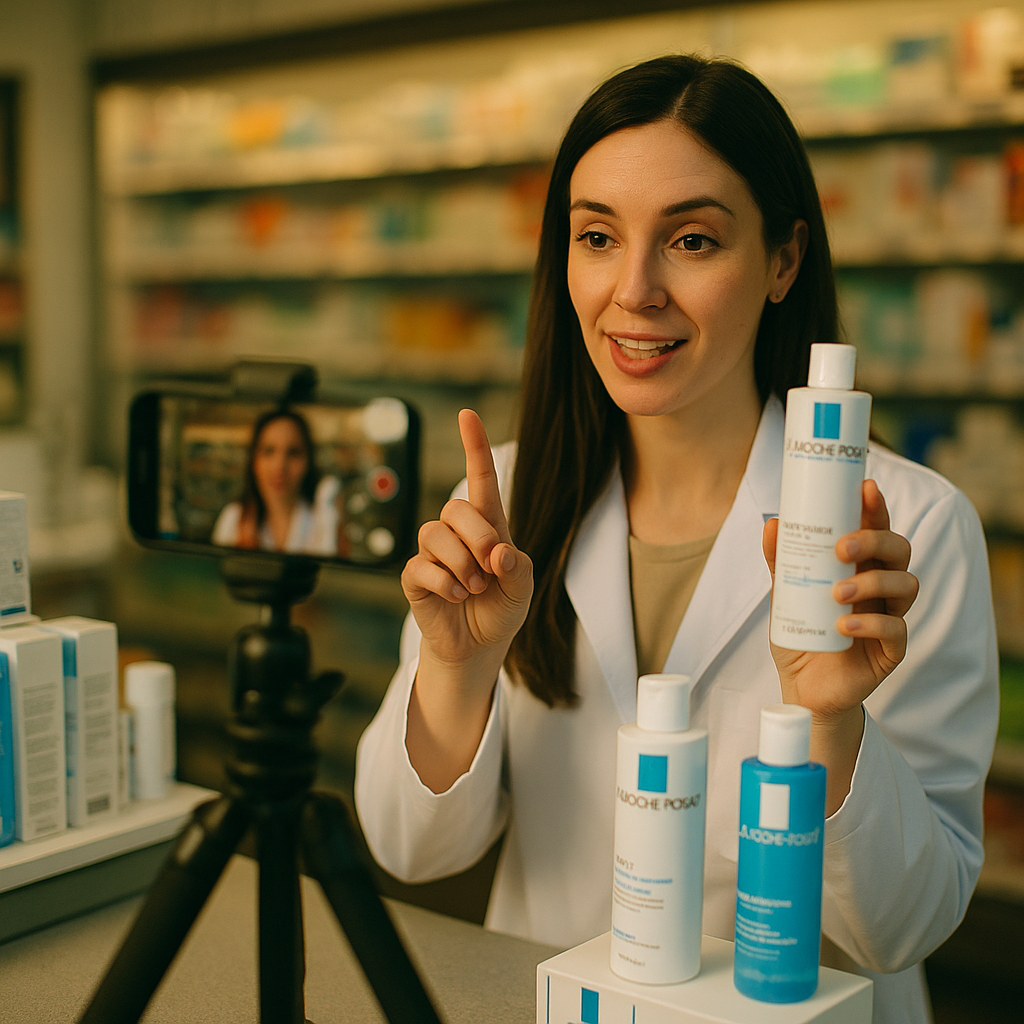
When a pharmacy skincare brand outranks prestige competitors in earned media, something unusual is happening. La Roche-Posay’s dermatologist creator strategy didn’t just win TikTok share of voice — it moved product off pharmacy shelves. Here’s what the data reveals.
Why Credential-Based Casting Changes Everything
Most skincare brands cast creators by follower count. La Roche-Posay cast by credential. The brand systematically partnered with board-certified dermatologists, dermatology residents, and licensed estheticians who happened to also be TikTok creators, prioritizing clinical authority over raw reach.
This distinction matters commercially. A 2024 Edelman Trust Barometer found that 68% of consumers trust “a person like me” or an expert more than brand advertising. In skincare specifically, that trust premium translates directly to purchase intent. When a dermatologist with 400K followers recommends Cicaplast Baume B5, the viewer’s cognitive frame is closer to a physician recommendation than a paid post — even when properly disclosed.
The selection filter La Roche-Posay applied wasn’t just “does this creator have a medical degree?” They cross-referenced clinical credibility with content quality metrics: average view duration, comment sentiment (specifically questions about efficacy rather than aesthetic appreciation), and save rates as a proxy for reference-intent. Saves signal that a viewer intends to return to the content for information, not just entertainment.
Credential-based casting elevates consumer trust beyond what follower count alone can deliver. In regulated categories like skincare, a mid-tier dermatologist creator can outperform a mega-influencer by 3-5x on purchase intent lift because the audience’s intent frame is fundamentally different.
Brief Architecture: How They Structured the Creative Mandate
The brief design is where most brands fail in expert-creator partnerships. They over-script. A dermatologist reading marketing copy doesn’t sound like a dermatologist; the audience detects it instantly.
La Roche-Posay’s brief architecture operated on three layers:
- Non-negotiables: Product mention, key claim (clinically tested, fragrance-free, etc.), disclosure language per FTC guidelines
- Guided territory: Suggested skin conditions to address, patient archetypes the creator could reference
- Creator-owned space: Format, tone, case framing, and any clinical context the dermatologist chose to add
That third layer is critical. It’s where authenticity lives. When a dermatologist creator adds an unrequested clinical aside (“I actually recommend this for my post-procedure patients”), that’s not a scripted claim — it’s earned validation. The brand brief had enough structure to ensure compliance but enough white space to allow genuine expert voice to emerge.
Compare this to the brief architecture approach PepsiCo used on TikTok, where the emphasis was on active attention mechanics rather than credential authority. Different category, different trust lever, same underlying principle: briefs should create conditions for authentic creator voice, not suppress it.
The brand also built in a pre-posting review workflow that kept dermatologist creators from making off-label claims while preserving their editorial voice. This is a genuinely hard operational problem in expert-creator programs — balancing regulatory compliance with creative authenticity. Their solution was a lightweight claim-flagging checklist (not a full legal review for every post) that the creator completed before submission, with a 48-hour brand response window. It’s worth replicating.
TikTok Commerce Integration: The Pharmacy Channel Connection
Here’s where the strategy gets structurally interesting. La Roche-Posay didn’t just chase TikTok views. They built a commerce architecture that connected TikTok content directly to pharmacy retail outcomes — a channel most beauty brands treat as entirely separate from social commerce.
TikTok Shop enabled in-app purchase, but La Roche-Posay’s pharmacy lift came from a more nuanced attribution play. Their creator content drove significant search volume increases for brand and product terms on Google and within pharmacy retail search (CVS.com, Walgreens.com). That search lift, combined with coordinated in-store placement and pharmacy staff education programs, created a demand funnel that TikTok initiated but physical retail captured.
This is the multi-touch model that most social-first brands underinvest in. Social content creates intent; search is where that intent crystallizes; physical retail is where it converts for this consumer cohort (pharmacy shoppers skew toward 35-55, a demographic that still prefers in-store skincare purchase for high-consideration SKUs).
The measurable outcome: independent retail data from IQVIA tracked pharmacy channel sell-through for La Roche-Posay’s Toleriane and Cicaplast lines during peak creator content periods, showing meaningful lift against category benchmarks. The brand attributed a portion of this directly to organic creator content amplified with paid spend, a hybrid model similar to what’s detailed in analysis of organic content plus paid amplification as a sales driver.
The Competitor Context: Share of Voice in a Crowded Category
La Roche-Posay competes against CeraVe, Neutrogena, Vanicream, and an increasingly aggressive direct-to-consumer tier of dermatologist-founded brands. CeraVe famously owns the dermatologist recommendation frame in mass market skincare — their brand positioning literally centers clinical endorsement. So how does La Roche-Posay differentiate on the same credential axis?
Two things. First, their creator program emphasized working dermatologists who could speak to specific clinical scenarios (rosacea flares, post-laser recovery, sensitive skin in pediatric patients) rather than generic “dermatologist-approved” language. The specificity of use-case is what drives trust in expert content. General endorsement has become table stakes. Specific clinical context is the differentiator.
Second, La Roche-Posay leaned into European clinical heritage as a trust signal in creator content — a frame CeraVe can’t authentically occupy. Creators were given background on the brand’s thermal spring water research and the La Roche-Posay spa’s 130-year dermatological history, context that surfaced organically in creator narratives and provided a category-level differentiator.
For context on how credential-adjacent brand association works at scale, the CeraVe x Michael Cera case is instructive — though it took the opposite approach, using humor and name-pun virality rather than clinical authority. Both worked. The lesson is that the mechanism of trust-building can vary; what matters is that the brand’s chosen trust frame is authentic and consistently executed across the creator roster.
In over-indexed categories where every competitor claims dermatologist credibility, the differentiator is specificity. Generic endorsement is noise. Clinical use-case content, condition-specific recommendations, and post-procedure applications are signals that drive both trust and purchase intent.
Roster Scale and Program Economics
La Roche-Posay’s dermatologist creator program didn’t operate at scale in the conventional influencer sense. Their active roster of credentialed creators in the U.S. market stayed in the 40-80 range, with a mix of contracted partners and gifted relationships with dermatologists who created content voluntarily after genuine product adoption.
That voluntary creator cohort is particularly valuable and hard to engineer. When a dermatologist with 80K followers posts an unprompted recommendation because they genuinely use the product on their own patients, that content carries authenticity signals that no brief architecture can replicate. The brand cultivated this through a medical sample program and dermatology conference presence, planting seeds that grew into organic creator relationships over 12-18 month horizons.
Program economics compared favorably to celebrity or mega-influencer spend. Mid-tier dermatologist creators (100K-500K followers) commanded $3,000-$8,000 per deliverable in contracted partnerships, competitive with e.l.f. Beauty’s mid-tier creator economics but with substantially higher content credibility and audience trust scores. The CPM on earned media from credentialed creator content was, according to industry estimates from eMarketer, significantly more efficient than paid display in the skincare category.
What Other Brands Can Replicate — and What They Can’t
The structural components here are transferable: credential-based casting filters, layered brief architecture, hybrid organic-plus-paid amplification, and cross-channel attribution design. Any brand in a regulated or high-trust category (pharma-adjacent OTC, supplements, medical devices, financial products) can adopt this framework.
What’s harder to replicate is the authentic clinical credibility that comes from a brand genuinely embedded in dermatology. La Roche-Posay sponsors the International League of Dermatological Societies and has clinical research relationships that most consumer brands don’t. According to Statista, dermatology and clinical skincare content generates some of the highest save rates and watch-through rates on TikTok among all beauty subcategories — which means the category tailwind is real, but only brands with authentic clinical positioning can fully capture it.
Brands attempting to manufacture expert creator credibility without genuine category roots will encounter audience skepticism. The comment section on dermatologist TikTok is ruthless. Followers of clinical creators are often themselves healthcare-adjacent and will call out brand talking points that don’t align with clinical reality. The brief architecture must leave room for the expert’s genuine voice precisely because that audience cannot be fooled.
For operational teams building similar programs, the deeper brand integration model for creator format partnerships offers a useful operational framework, particularly around deliverable structure and long-term roster management.
Also worth reviewing: FTC disclosure requirements for expert endorsements are more stringent than standard influencer guidelines. Material connections between brands and medical professionals require explicit disclosure, and the FTC’s endorsement guides specifically address paid testimonials from health professionals. This is not optional compliance — it’s program architecture.
The concrete next step: audit your current creator roster for credential signals your category’s audience trusts, then rebuild your brief template around the three-layer model above. Don’t start with the creator count. Start with what trust lever moves your category’s purchase intent.
Frequently Asked Questions
What is credential-based creator casting and why does it matter for skincare brands?
Credential-based creator casting prioritizes a creator’s professional qualifications — such as board certification in dermatology or esthetics licensing — over follower count when building an influencer roster. In skincare, this matters because consumer trust in expert endorsement consistently drives higher purchase intent than celebrity or lifestyle creator content. Audiences for credentialed creators engage differently, asking clinical questions and saving content for reference, behaviors that indicate stronger conversion likelihood.
How did La Roche-Posay connect TikTok creator content to pharmacy sales?
La Roche-Posay used creator content to drive branded and product-level search volume on Google and pharmacy retailer websites. This search lift, combined with coordinated in-store merchandising and pharmacy staff education, created a demand funnel that social content initiated and physical retail captured. Independent retail data from IQVIA tracked corresponding sell-through lifts in Toleriane and Cicaplast product lines during active creator content periods.
What FTC disclosure rules apply to dermatologist creator partnerships?
The FTC’s endorsement guides require that any material connection between a brand and a creator — including payment, free product, or other compensation — be clearly disclosed. For medical professionals specifically, there are additional requirements around paid testimonials. Brands must ensure their brief architecture includes mandatory disclosure language and that their review process catches any claims that could be considered misleading. Non-compliance carries regulatory and reputational risk that can undermine the trust the expert creator program is designed to build.
What is the typical cost for a dermatologist creator partnership?
Mid-tier dermatologist creators with 100K-500K followers typically command $3,000-$8,000 per contracted deliverable in the U.S. market. This is competitive with standard mid-tier influencer rates but delivers meaningfully higher audience trust scores and content credibility in regulated categories. Some brands supplement contracted relationships with medical sample programs that cultivate organic, unpaid creator content over longer time horizons, reducing overall program cost per credible impression.
How do you structure a creator brief for expert or medical creators?
Effective briefs for expert creators use a three-layer structure: a non-negotiables layer covering required product mentions, key claims, and FTC disclosure; a guided territory layer suggesting relevant conditions or patient archetypes to address; and a creator-owned space layer that gives the expert full control over tone, format, and any clinical context they choose to add. This structure ensures compliance and brand message consistency while preserving the authentic expert voice that makes credentialed creator content valuable in the first place.
Top Influencer Marketing Agencies
The leading agencies shaping influencer marketing in 2026
Agencies ranked by campaign performance, client diversity, platform expertise, proven ROI, industry recognition, and client satisfaction. Assessed through verified case studies, reviews, and industry consultations.
Moburst

-
2

The Shelf
Boutique Beauty & Lifestyle Influencer AgencyA data-driven boutique agency specializing exclusively in beauty, wellness, and lifestyle influencer campaigns on Instagram and TikTok. Best for brands already focused on the beauty/personal care space that need curated, aesthetic-driven content.Clients: Pepsi, The Honest Company, Hims, Elf Cosmetics, Pure LeafVisit The Shelf → -
3

Audiencly
Niche Gaming & Esports Influencer AgencyA specialized agency focused exclusively on gaming and esports creators on YouTube, Twitch, and TikTok. Ideal if your campaign is 100% gaming-focused — from game launches to hardware and esports events.Clients: Epic Games, NordVPN, Ubisoft, Wargaming, Tencent GamesVisit Audiencly → -
4

Viral Nation
Global Influencer Marketing & Talent AgencyA dual talent management and marketing agency with proprietary brand safety tools and a global creator network spanning nano-influencers to celebrities across all major platforms.Clients: Meta, Activision Blizzard, Energizer, Aston Martin, WalmartVisit Viral Nation → -
5

The Influencer Marketing Factory
TikTok, Instagram & YouTube CampaignsA full-service agency with strong TikTok expertise, offering end-to-end campaign management from influencer discovery through performance reporting with a focus on platform-native content.Clients: Google, Snapchat, Universal Music, Bumble, YelpVisit TIMF → -
6

NeoReach
Enterprise Analytics & Influencer CampaignsAn enterprise-focused agency combining managed campaigns with a powerful self-service data platform for influencer search, audience analytics, and attribution modeling.Clients: Amazon, Airbnb, Netflix, Honda, The New York TimesVisit NeoReach → -
7

Ubiquitous
Creator-First Marketing PlatformA tech-driven platform combining self-service tools with managed campaign options, emphasizing speed and scalability for brands managing multiple influencer relationships.Clients: Lyft, Disney, Target, American Eagle, NetflixVisit Ubiquitous → -
8

Obviously
Scalable Enterprise Influencer CampaignsA tech-enabled agency built for high-volume campaigns, coordinating hundreds of creators simultaneously with end-to-end logistics, content rights management, and product seeding.Clients: Google, Ulta Beauty, Converse, AmazonVisit Obviously →