


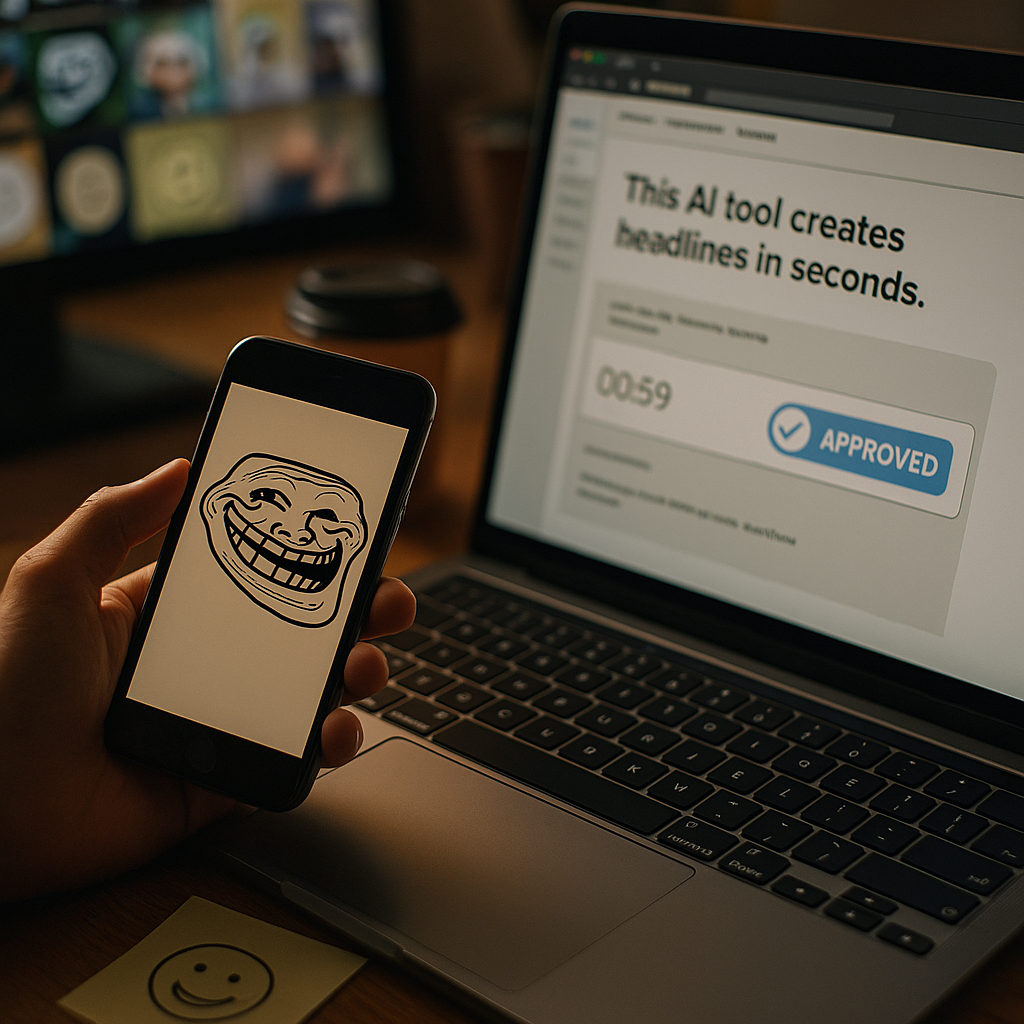
Most Brands Miss the Cultural Moment Entirely
Brands that win at real-time content aren’t faster at creating assets — they’re faster at approving them. The real-time meme asset generation problem isn’t creative. It’s operational. And fixing it requires building the infrastructure before the event, not scrambling during it.
Consider what happened during a major awards broadcast: a competing brand had a meme live within four minutes of a viral moment. Their secret wasn’t a genius social manager working miracles. It was a pre-approved visual library, a standing approval chain with one decision-maker on standby, and AI-generated headline variants that required only a final human sign-off. Four minutes. That’s the benchmark.
The Pre-Approved Creative Library: What It Actually Contains
Most brand teams conceptualize a “content library” as finished assets. Wrong framing. A real-time meme library is a system of modular components that can be assembled, personalized, and deployed in under a minute.
Here’s what the library needs to contain:
- Branded frame templates: Blank visual containers in every platform-native ratio (9:16, 1:1, 4:5) with logo placement, color fields, and typography locked at the brand level. The creative team pre-approves the shell. Nothing in that shell can violate brand guidelines by definition.
- Tone-coded copy blocks: Pre-written phrase structures sorted by emotional register — celebratory, empathetic, humorous, neutral. Each block has already passed legal review. Your social manager fills in the cultural variable, not the brand voice.
- Cleared imagery sets: Stock and original photography with rights explicitly confirmed for social use. No scrambling for licensing clearance mid-event.
- Reaction GIF sequences: Short-form branded animations (2-4 seconds) expressing common emotional states. Pre-cleared. Pre-sized. Pre-rendered.
- Hashtag and mention whitelists: Approved trending tags your brand can attach to without brand safety conflict. Updated quarterly at minimum.
The goal is to reduce every real-time decision to a fill-in-the-blank exercise. Creativity happens upstream. Execution happens at speed.
For teams already running structured creator programs, this approach mirrors the modular brief architecture that works well for multi-platform creator shoots — build the container once, fill it contextually.
AI Headline Generation: Templates That Actually Work
Generative AI is not your creative director. It is your first-draft machine. The distinction matters enormously for compliance and brand safety.
The most effective AI headline generation templates for live events use constrained prompting, not open-ended generation. Your prompt template should hardcode the brand voice parameters, prohibited language categories, and output format before any cultural context is inserted. Here’s a working structure:
“You are a social copywriter for [Brand]. Tone: [wit level 3/5, warmth level 4/5, formality 1/5]. Generate 5 headline variants for a meme reacting to [EVENT MOMENT]. Each variant must: be under 12 words, avoid political commentary, avoid competitor mentions, avoid health claims, end with a question or exclamation. Output numbered list only.”
That prompt structure does three things simultaneously: it constrains output to brand voice, it pre-filters legal risk categories, and it gives a human approver five options rather than a blank canvas. The approver’s job becomes selection, not creation.
The fastest approval chains don’t speed up human judgment — they reduce the number of judgment calls required. Pre-constrained AI output means your legal or brand lead is choosing between five compliant options, not evaluating one creative idea from scratch.
Tools like Jasper, Copy.ai, and Typeface all support saved prompt templates with brand guardrails baked in. If you’re running more sophisticated operations, platforms like Persado offer model-level brand voice enforcement. The tool matters less than the prompt architecture.
Building a 60-Second Approval Chain
This is where most enterprise brands fall down. Not because they lack talent, but because their approval infrastructure was designed for campaigns, not moments.
A functional 60-second approval chain requires three non-negotiable conditions:
- A single approver on standby. Not a committee. One designated decision-maker per event, reachable via a dedicated Slack channel or Signal thread, with explicit authority to approve and post without further escalation. Pre-brief this person on the event, the risk parameters, and the specific asset library in use.
- Pre-cleared risk categories. Before the event starts, legal and compliance sign off on a one-page memo that defines what’s in and out of bounds for that specific cultural moment. Award show? Avoid commentary on individual winners. Sports event? No injury-related humor. This memo replaces real-time legal consultation.
- Platform-specific posting permissions already active. Social managers should have live posting credentials authenticated before the event. Two-factor authentication prompts during a viral moment have killed more real-time campaigns than bad creative ever did.
For brands running creator-adjacent content alongside live events, the approval chain logic is nearly identical to what’s required for brand simulcast campaigns and reaction livestream activations. The infrastructure transfers.
FTC Compliance in Real-Time Contexts
The FTC’s endorsement guidelines don’t pause for a viral moment. And real-time content introduces specific compliance risks that slower campaign formats don’t.
The primary risk vector is ambiguity about paid versus organic content. When a brand deploys a meme reacting to a live event, the content can appear organic even if it’s strategically coordinated with creators or paid media. The fix is mechanical, not creative: ensure every piece of content deployed through creator channels carries the appropriate disclosure. “#ad” or “#sponsored” in the first line, not buried in a caption. This applies even to shares, reposts, and story stickers.
The secondary risk is context contamination. Meme formats frequently use imagery, audio clips, or phrases that originate from copyrighted sources. Your pre-approved library solves for this by including only cleared assets. The problem emerges when social managers deviate from the library mid-event and pull assets from the internet. The policy solution: zero-deviation rules for event content. If it’s not in the library, it doesn’t go out.
For teams managing FTC-compliant creative formats across other content types, the same disclosure discipline applies here — just compressed into a 60-second window.
Brand Safety: The Programmatic Parallel
Brand safety in real-time social contexts borrows logic from programmatic advertising. Just as you’d set keyword exclusion lists for display campaigns, your real-time content operation needs active exclusion monitoring.
Tools like Sprout Social, Brandwatch, and Talkwalker offer real-time social listening with sentiment and topic flags. Before any live event where you plan reactive content, configure keyword alerts for topics that would make brand participation inappropriate: breaking tragedy coverage, political controversy spikes, anything in the same hashtag ecosystem that could create association by proximity.
Sprout Social and HubSpot both offer monitoring setups that can surface brand safety flags in near-real-time. The goal isn’t to monitor everything — it’s to have a clear trigger that pauses deployment if the cultural context shifts.
One underused tactic: assign a dedicated “context monitor” role during live events, separate from the person creating content. Their sole job is watching the broader conversation for signals that would make brand participation tone-deaf or risky. Two roles, operating in parallel, with clear communication protocols between them.
The worst brand safety failures in real-time marketing don’t come from bad content — they come from good content deployed into a conversation that shifted five minutes before it went live. Context monitoring is non-negotiable.
Creator-Adjacent vs. Creator-Produced: Know the Difference
There’s a meaningful operational distinction between content that brands produce to feel creator-adjacent (informal, native, reactive) and content actually produced by creators under a brand brief. Both have a role in live event strategy, but they operate under different compliance and timing frameworks.
Brand-produced reactive content moves faster because it doesn’t require a creator briefing loop. Creator-produced content has higher authenticity signals but requires lead time, even for reactive formats. The reactive content brief model works well for planned events where you can pre-brief creators on scenarios, not specific moments. Think: “If the home team wins, deploy variant A. If there’s a major upset, deploy variant B.”
For participatory and fandom-driven activations, a participatory fandom brief structure gives creators enough context to self-activate during events without requiring brand approval on every individual piece of content, provided your brief includes clear guardrails on disclosure, brand mentions, and prohibited topics.
According to eMarketer, creator-driven content consistently outperforms brand-produced content on engagement rate benchmarks, but the gap narrows significantly when brand content is deployed in genuinely real-time contexts. Authenticity of timing can compensate for authenticity of voice. The two approaches aren’t in competition — they’re complementary layers of the same live event strategy.
One final operational note: document everything. For each real-time asset deployed, log the approver name, timestamp, asset version, and disclosure status. This isn’t bureaucracy. It’s your evidence file if an FTC inquiry or platform policy review ever surfaces. Platforms like Meta Business maintain their own content records, but your internal documentation needs to be independent of platform access.
Start with the approval chain, not the creative library. Most teams build assets before they secure the operational infrastructure to deploy them safely. Reverse the order: lock your single approver, your pre-cleared risk memo, and your posting permissions first. Then build the library around what that chain can realistically process in 60 seconds.
Frequently Asked Questions
What is a pre-approved creative library for real-time meme content?
A pre-approved creative library is a system of modular, legally cleared visual and copy components — branded templates, tone-coded copy blocks, cleared imagery, and reaction animations — that can be assembled and deployed in under a minute during live events. The library eliminates real-time creative decisions by moving brand safety and compliance review upstream, before any event begins.
How do you build a 60-second approval chain for live event content?
A 60-second approval chain requires three components: a single designated approver with explicit posting authority (not a committee), a pre-event legal memo that defines in-bounds and out-of-bounds content categories for that specific event, and pre-authenticated posting credentials so technical friction doesn’t delay deployment. The chain should be documented and tested before every major live event activation.
Does FTC disclosure apply to brand memes and reactive social content?
Yes. The FTC’s endorsement and disclosure guidelines apply to any content that involves a material connection between a brand and the content being published, including reactive memes distributed through creator channels or paid social. Disclosures like “#ad” or “#sponsored” must appear prominently — in the first line of the caption — not buried or omitted. Context does not create an exemption.
What tools support AI headline generation for real-time brand content?
Tools like Jasper, Copy.ai, Typeface, and Persado support saved prompt templates with brand voice and compliance guardrails. The key is using constrained prompt architecture — hardcoding brand tone parameters, prohibited language categories, and output format into the template — so AI output arrives pre-filtered for risk and requires only human selection, not human creation.
How do you prevent brand safety violations in real-time social content?
Configure real-time social listening tools (Sprout Social, Brandwatch, Talkwalker) with keyword flags for topics that would make brand participation inappropriate before any live event. Assign a dedicated context monitor role whose sole function during the event is watching for sentiment or topic shifts that would warrant pausing content deployment. Enforce a zero-deviation rule: if an asset isn’t in the pre-approved library, it doesn’t go out.
What’s the difference between creator-adjacent content and creator-produced content in live events?
Creator-adjacent content is brand-produced material designed to feel native and informal, like organic creator posts. Creator-produced content is actually made by creators under a brand brief. Creator-adjacent content deploys faster because it bypasses creator briefing loops, but creator-produced content typically delivers higher engagement. For planned live events, pre-briefing creators on scenario variants (win/loss, upset/expected outcome) allows both formats to operate simultaneously without requiring real-time creator coordination.
Top Influencer Marketing Agencies
The leading agencies shaping influencer marketing in 2026
Agencies ranked by campaign performance, client diversity, platform expertise, proven ROI, industry recognition, and client satisfaction. Assessed through verified case studies, reviews, and industry consultations.
Moburst

-
2

The Shelf
Boutique Beauty & Lifestyle Influencer AgencyA data-driven boutique agency specializing exclusively in beauty, wellness, and lifestyle influencer campaigns on Instagram and TikTok. Best for brands already focused on the beauty/personal care space that need curated, aesthetic-driven content.Clients: Pepsi, The Honest Company, Hims, Elf Cosmetics, Pure LeafVisit The Shelf → -
3

Audiencly
Niche Gaming & Esports Influencer AgencyA specialized agency focused exclusively on gaming and esports creators on YouTube, Twitch, and TikTok. Ideal if your campaign is 100% gaming-focused — from game launches to hardware and esports events.Clients: Epic Games, NordVPN, Ubisoft, Wargaming, Tencent GamesVisit Audiencly → -
4

Viral Nation
Global Influencer Marketing & Talent AgencyA dual talent management and marketing agency with proprietary brand safety tools and a global creator network spanning nano-influencers to celebrities across all major platforms.Clients: Meta, Activision Blizzard, Energizer, Aston Martin, WalmartVisit Viral Nation → -
5

The Influencer Marketing Factory
TikTok, Instagram & YouTube CampaignsA full-service agency with strong TikTok expertise, offering end-to-end campaign management from influencer discovery through performance reporting with a focus on platform-native content.Clients: Google, Snapchat, Universal Music, Bumble, YelpVisit TIMF → -
6

NeoReach
Enterprise Analytics & Influencer CampaignsAn enterprise-focused agency combining managed campaigns with a powerful self-service data platform for influencer search, audience analytics, and attribution modeling.Clients: Amazon, Airbnb, Netflix, Honda, The New York TimesVisit NeoReach → -
7

Ubiquitous
Creator-First Marketing PlatformA tech-driven platform combining self-service tools with managed campaign options, emphasizing speed and scalability for brands managing multiple influencer relationships.Clients: Lyft, Disney, Target, American Eagle, NetflixVisit Ubiquitous → -
8

Obviously
Scalable Enterprise Influencer CampaignsA tech-enabled agency built for high-volume campaigns, coordinating hundreds of creators simultaneously with end-to-end logistics, content rights management, and product seeding.Clients: Google, Ulta Beauty, Converse, AmazonVisit Obviously →