


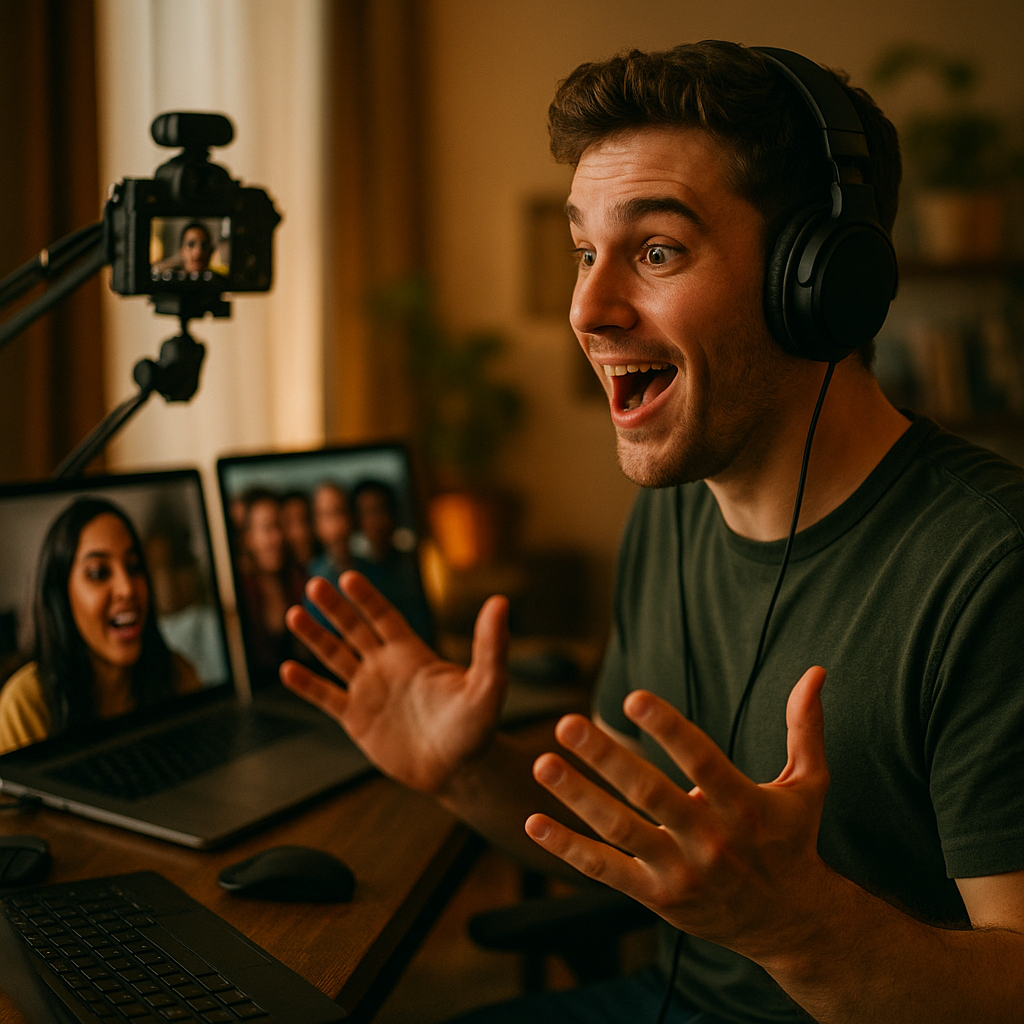
Live reaction content drives 6x higher engagement rates than pre-recorded brand integrations, yet most creator briefs written for simulcast campaigns are built for static shoots, not real-time chaos. If your brief can’t survive first contact with a live audience, your product integration won’t either.
Why Simulcast Campaigns Demand a Different Briefing Framework
A reaction livestream is not a sponsored YouTube video with a countdown timer. It’s a live broadcast event where the creator is simultaneously processing content, fielding audience commentary, managing chat moderation, and weaving your brand into unpredictable moments. Standard creator briefs assume a controllable production environment. Simulcast campaigns do not offer that.
The format has matured fast. Platforms like Twitch, YouTube Live, TikTok LIVE, and Kick now all support concurrent multi-stream distribution through tools like Restream and Mux. Brands running simulcast campaigns across these platforms face an immediate operational problem: creator behavior, community tone, and product integration timing vary dramatically by platform audience, even when the stream is identical.
A brief that works for Twitch subscribers will misfire on TikTok LIVE viewers. This is the foundational challenge your brief must solve before you write a single deliverable requirement.
The Anatomy of a Reaction Livestream Creator Brief
Structure matters more here than in almost any other format. Reaction livestream briefs need to account for four distinct operational layers, and most brand teams only address two of them.
Layer 1: Pre-Stream Setup Requirements. Before going live, the creator needs technical specifications (stream key distribution, overlay asset files, branded lower-thirds), product placement staging instructions, and a clear understanding of which platforms are included in the simulcast. Don’t leave this to a Slack message the night before. Specify resolution requirements, alert sound file permissions, and branded panel graphics if the creator uses Twitch panels or YouTube memberships tabs.
Layer 2: Event Scripting vs. Event Direction. This is where most brand teams make the critical error. Scripting a reaction livestream kills authenticity and community trust instantly. What you want is event direction: defined moments within the broadcast where product integration is natural, scripted talking points for legal compliance (particularly FTC disclosures), and a flexible content architecture that lets the creator improvise within guardrails.
For a detailed look at how this plays out in a real brief structure, the live reaction stream brief framework covers the timing mechanics specifically built for simulcast event formats.
Layer 3: Community Interaction Protocols. Specify how the creator should handle branded chat interactions. Should they read sponsor-triggered chat prompts? Use a channel point redemption tied to your product? Brief the moderator team as a separate entity with their own instruction set. A live audience is co-creating the content in real time, and your brief needs to treat moderators as production assets.
Layer 4: Multi-Platform Audience Acknowledgment. If the stream is live on four platforms simultaneously, the creator needs scripted platform callouts. “If you’re watching on TikTok, drop a rocket emoji. Twitch viewers, use the hype train.” Platform-specific shout-outs increase retention and signal to each audience that the content is live, not replayed. Brief this explicitly with suggested frequencies (every 15-20 minutes is a reasonable baseline).
Brands that brief multi-platform audience acknowledgment cadences see 22-35% longer average watch times compared to simulcasts that treat all viewers as a single audience. The platform-aware creator is not just a nice-to-have — it’s a retention mechanism.
Product Integration Without Breaking the Moment
Live reaction content succeeds because of authentic emotional response. The creator’s genuine shock, laughter, or commentary is the product. Your brand integration has to be designed to enhance that dynamic, not interrupt it.
Define three integration types in the brief and let the creator choose which one fits each organic moment:
- Hard integration: A dedicated 60-90 second segment, camera-facing, scripted FTC disclosure, explicit product demonstration. These should be capped at two per stream to avoid audience fatigue.
- Soft integration: Natural on-camera product use during the reaction (drinking from a branded beverage, wearing a brand item). No formal break from the content. These are powerful precisely because they feel incidental.
- Chat-triggered integration: The creator reads a viewer comment referencing the product and pivots to a 15-30 second response. This feels organic because it comes from community, not the creator.
For campaigns where commerce conversion is a primary KPI, the real-time commerce brief approach layers shoppable links and affiliate triggers into these same integration windows without disrupting narrative flow.
Your brief should also specify the verbal disclosure language. The FTC’s endorsement guidelines require clear and conspicuous disclosure in live content, meaning the creator can’t bury it in a stream description. The brief must state exactly when and how this disclosure is delivered on camera, ideally at the start of each hard integration segment.
Multi-Platform Distribution: What the Brief Must Specify
Distribution strategy is not the creator’s responsibility to figure out live. Your brief must answer these questions before the stream starts:
- Which platforms are included in the simulcast and does the creator need separate accounts or a shared tool like Restream?
- Are there platform-specific restrictions on branded content disclosure labeling? (TikTok’s branded content toggle and YouTube’s paid promotion checkbox are both mandatory and must be enabled before going live.)
- What happens to the VOD? Does the brand have rights to clip content for paid amplification? On which platforms?
- Are there any platform terms of service conflicts with the content being reacted to (music rights, third-party IP)?
This last point causes more post-campaign legal headaches than almost anything else. If your creator is reacting to a sports broadcast, a film trailer, or music content, the brief must flag which elements are legally cleared for simulcast distribution and which need to be muted or avoided to prevent DMCA strikes on platforms like YouTube and Twitch. Brief this clearly with legal input before the creator goes live.
Operational frameworks for managing real-time brand content across platforms can also be referenced in agile UGC operations stacks, which address the back-end workflow infrastructure most simulcast campaigns lack.
Approval Workflows Built for Real-Time Speed
Here’s the briefing problem no one wants to admit: your standard approval workflow will destroy a live campaign. A 48-hour legal review cycle is incompatible with a creator who needs to react to a live event happening in 4 hours.
Solve this in the brief design stage, not in the panic of the campaign itself. Pre-approve a menu of product talking points rather than a script. Pre-clear the visual assets. Define escalation contacts for live decisions. Specify what the creator is authorized to improvise versus what requires approval.
Tools like Superside for rapid asset iteration and Sprout Social for multi-platform monitoring can support real-time brand teams during a live event. Assign someone to watch all streams simultaneously during the broadcast, with direct contact to the creator’s producer or manager, not the creator themselves who is actively streaming.
The same speed-first principle applies to reactive asset creation. Guidance on 60-second approval frameworks for real-time content applies directly to simulcast campaign management.
The brief is not just a document you hand to a creator. For simulcast campaigns, it also functions as the operational playbook for your internal brand team during the live event. Write it for both audiences.
Metrics and Post-Stream Accountability
Define success before the stream, not after. Reaction livestreams are notoriously difficult to attribute cleanly because audiences span platforms, peak at different times, and convert through different mechanisms (affiliate links, chat codes, QR overlays on screen).
Your brief should specify which KPIs the creator is responsible for tracking and which your team owns. Creator-side metrics typically include: peak concurrent viewers by platform, chat engagement rate during integration windows, affiliate link clicks from stream description and chat pins. Brand-side metrics include: VOD view accumulation in the 72 hours post-stream, branded hashtag volume, and brand search lift (measurable through tools like Statista benchmarks or platform brand lift studies via Meta Business or TikTok Ads Manager).
Require a post-stream recap from the creator within 24 hours: a screenshot of peak viewer counts across platforms, affiliate link performance, and any notable community moments that could be repurposed as clips. This data is your evidence base for optimizing the next campaign.
For campaigns where community depth matters as much as reach, the brief architecture from Discord and Twitch community briefs provides a useful structural parallel, especially for brands investing in repeat simulcast programming rather than one-off events.
Brief Template: The Non-Negotiable Sections
If you’re building this from scratch, your brief must contain these sections in this order:
- Campaign overview and event context (what is being reacted to, why now, what the brand wants audiences to feel)
- Technical requirements (platforms, tools, asset files, stream settings)
- FTC and platform disclosure requirements (language, timing, toggles)
- Integration menu (hard, soft, chat-triggered, with approved talking points for each)
- Community interaction protocols (moderator instructions, chat prompts, platform callouts)
- VOD and clip rights (brand usage, creator usage, exclusivity windows)
- KPIs and reporting requirements (creator deliverables post-stream)
- Escalation contacts (who to call live if something goes wrong)
A well-built multi-format creator brief approach can serve as the master document from which the simulcast-specific brief is derived, particularly when the same campaign spans livestream, short-form clips, and platform-native posts.
Start with your escalation contacts section. If you can’t name the right people before you write the integration talking points, your brief isn’t ready to go live.
FAQs
What is a reaction livestream creator brief for a simulcast campaign?
It’s a structured campaign document that gives a creator event direction, integration requirements, FTC disclosure language, community interaction protocols, and multi-platform technical specifications for a live broadcast that streams simultaneously across two or more platforms. Unlike standard creator briefs, it prioritizes real-time decision-making flexibility over scripted deliverables.
How do you handle FTC disclosures in a live reaction stream?
FTC guidelines require clear and conspicuous disclosure during live content, not just in the stream description. The brief should specify exact verbal disclosure language (e.g., “This stream is sponsored by [Brand]”), require the creator to state it on camera at the start of every hard integration segment, and ensure the creator enables any platform-specific paid partnership labels before going live on each platform.
How many brand integrations should a reaction livestream contain?
For a two-to-three-hour reaction stream, two hard integrations (scripted, camera-facing segments) is typically the maximum before audience trust erodes. Soft integrations and chat-triggered mentions can be more frequent because they feel organic to the stream. The brief should define the maximum number of each type and leave timing judgment to the creator within those guardrails.
What tools support multi-platform simulcast for branded campaigns?
Restream and Mux are the most widely used tools for simultaneous multi-platform broadcasting. Restream allows a single stream key to distribute to YouTube Live, Twitch, TikTok LIVE, and others concurrently. The brand brief should specify which tool the creator is expected to use, who manages the account, and how platform-specific settings (like branded content labels) are enabled on each platform separately.
Who owns the VOD content after a sponsored reaction livestream?
VOD rights should be negotiated and documented in the creator contract, then summarized in the brief so the creator has immediate reference during post-stream decisions. Typically, brands request clip rights for paid amplification and the creator retains the full VOD on their channel. The brief should specify the exclusivity window (usually 48-72 hours post-stream) and any platforms where the brand is restricted from redistributing the content.
How do you measure ROI on a reaction livestream campaign?
Key metrics include peak concurrent viewers by platform, affiliate link click-through rates during integration windows, brand search lift, VOD view accumulation within 72 hours post-stream, and branded hashtag volume. The brief should split metric ownership clearly: creators report on their platform analytics within 24 hours post-stream, while the brand team tracks paid amplification performance, brand lift studies, and conversion attribution from tracked links or promo codes.
Top Influencer Marketing Agencies
The leading agencies shaping influencer marketing in 2026
Agencies ranked by campaign performance, client diversity, platform expertise, proven ROI, industry recognition, and client satisfaction. Assessed through verified case studies, reviews, and industry consultations.
Moburst

-
2

The Shelf
Boutique Beauty & Lifestyle Influencer AgencyA data-driven boutique agency specializing exclusively in beauty, wellness, and lifestyle influencer campaigns on Instagram and TikTok. Best for brands already focused on the beauty/personal care space that need curated, aesthetic-driven content.Clients: Pepsi, The Honest Company, Hims, Elf Cosmetics, Pure LeafVisit The Shelf → -
3

Audiencly
Niche Gaming & Esports Influencer AgencyA specialized agency focused exclusively on gaming and esports creators on YouTube, Twitch, and TikTok. Ideal if your campaign is 100% gaming-focused — from game launches to hardware and esports events.Clients: Epic Games, NordVPN, Ubisoft, Wargaming, Tencent GamesVisit Audiencly → -
4

Viral Nation
Global Influencer Marketing & Talent AgencyA dual talent management and marketing agency with proprietary brand safety tools and a global creator network spanning nano-influencers to celebrities across all major platforms.Clients: Meta, Activision Blizzard, Energizer, Aston Martin, WalmartVisit Viral Nation → -
5

The Influencer Marketing Factory
TikTok, Instagram & YouTube CampaignsA full-service agency with strong TikTok expertise, offering end-to-end campaign management from influencer discovery through performance reporting with a focus on platform-native content.Clients: Google, Snapchat, Universal Music, Bumble, YelpVisit TIMF → -
6

NeoReach
Enterprise Analytics & Influencer CampaignsAn enterprise-focused agency combining managed campaigns with a powerful self-service data platform for influencer search, audience analytics, and attribution modeling.Clients: Amazon, Airbnb, Netflix, Honda, The New York TimesVisit NeoReach → -
7

Ubiquitous
Creator-First Marketing PlatformA tech-driven platform combining self-service tools with managed campaign options, emphasizing speed and scalability for brands managing multiple influencer relationships.Clients: Lyft, Disney, Target, American Eagle, NetflixVisit Ubiquitous → -
8

Obviously
Scalable Enterprise Influencer CampaignsA tech-enabled agency built for high-volume campaigns, coordinating hundreds of creators simultaneously with end-to-end logistics, content rights management, and product seeding.Clients: Google, Ulta Beauty, Converse, AmazonVisit Obviously →