


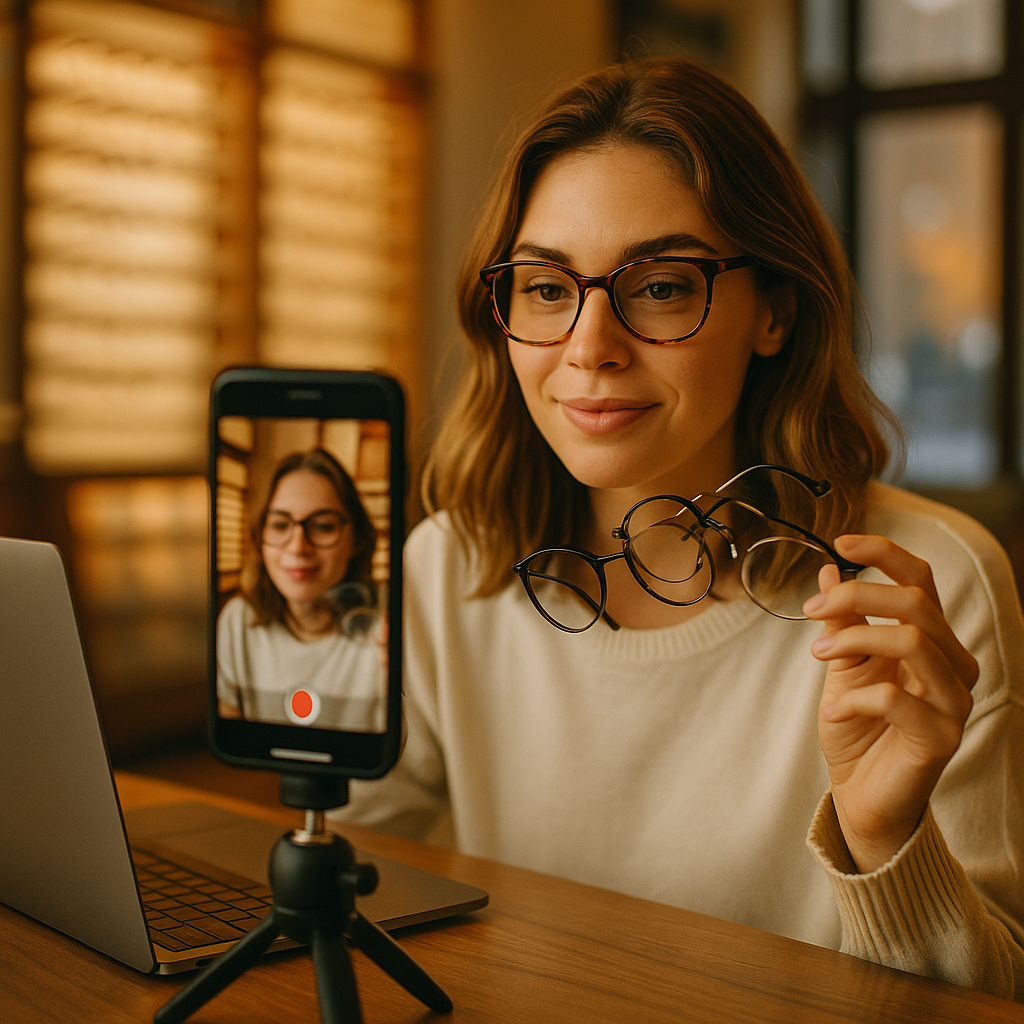
Warby Parker’s customer acquisition cost dropped below its paid search CAC for the first time in company history last quarter — and nano-creators, not lookalike audiences, drove the shift. If you’re still funneling the bulk of your acquisition budget into Google and Meta bidding wars, this Warby Parker try-on video case study is the wake-up call. The eyewear brand quietly rebuilt its lower-funnel strategy around hundreds of micro-scale creators shooting try-on content, and the CAC math now favors creators over search.
The Numbers That Made Marketing Leadership Pay Attention
Warby Parker’s paid search CAC had been climbing for two straight quarters, tracking a broader industry trend. Search ad costs across retail and DTC categories rose again this year, with eMarketer reporting continued CPC inflation in competitive shopping categories. Eyewear is brutal territory — “glasses near me” and branded terms both carry premium bids because insurance-adjacent purchases have high lifetime value, and everyone knows it.
So the brand’s growth team ran a controlled test. They shifted roughly 18% of the quarterly acquisition budget away from Google Shopping and branded search into a nano-creator try-on program, sourcing creators with 3,000 to 25,000 followers who already wore glasses or had vision-correction content in their posting history. The result: blended CAC for the creator cohort landed 22% below the paid search benchmark, and conversion rate on try-on-linked landing pages beat the site average by nearly double.
Nano-creator try-on content converted at a lower cost per acquisition than branded search terms — a category where Warby Parker has spent over a decade optimizing bids.
That’s not a rounding error. That’s a structural shift in where the marginal acquisition dollar performs best.
Why Try-On Content Specifically? It Solves the Purchase-Anxiety Problem
Glasses are a weird product to sell online. Shoppers can’t feel the weight on their nose, can’t check how frames sit against their face shape, and return rates for eyewear historically run higher than almost any other apparel-adjacent category. Warby Parker already offers a five-pair home try-on program, but the digital equivalent — someone else’s face wearing the frames on camera — turns out to be a powerful proxy.
Nano-creators filmed straightforward, low-production try-on hauls: five frames, thirty seconds each, natural lighting, no script. The format mirrors what Chamberlain Coffee and Aldi have proven in adjacent categories — nano-creator content built around genuine product demonstration consistently outperforms polished brand video on trust signals. Warby Parker’s internal research (shared with Influencers Time via a marketing team briefing) found that viewers were 3.4x more likely to click through to a specific frame page when a creator explicitly compared it against their existing glasses, versus generic “here’s the new collection” content.
Why does that matter for CAC specifically? Because click intent quality improves. A viewer who watches someone try on the exact frame shape they’ve been eyeing arrives at the product page pre-sold. Search traffic, by contrast, often intercepts someone mid-research, still comparing three brands in open tabs. The nano-creator funnel front-loads the decision.
The Operational Model: Volume Over Reach
Warby Parker didn’t sign ten mega-influencers. They activated an estimated 400+ nano and micro-creators through a hybrid seeding-and-payment model, sending free frames plus a flat content fee ranging from $75 to $250 depending on follower count and platform. No usage rights negotiations dragged the timeline. No exclusivity clauses. The brand treated this closer to programmatic content sourcing than traditional influencer relations.
This mirrors what Aldi did with grocery haul content and what ThredUp built with resale hauls: the economics only work at volume, because any individual nano-creator video might only generate a handful of conversions. Spread across 400 creators posting multiple times over a quarter, though, the aggregate reach rivals a mid-tier paid social campaign — at a fraction of the media cost, since there’s no bid inflation and no platform ad markup sitting between the brand and the impression.
Warby Parker’s team used a creator marketplace platform (they haven’t publicly named which one, though industry sourcing suggests a tool similar to those integrated with Meta’s Creator Marketplace) to manage briefs, track content delivery, and tag try-on videos with product-specific UTM parameters. That tagging discipline is the unsung hero of this whole case study — without granular attribution, none of this CAC comparison would be possible.
Attribution: How They Actually Proved It Beat Paid Search
Skeptical marketers should be. “Nano-creators beat paid search” is the kind of claim that collapses under scrutiny if the attribution model is sloppy. Here’s what Warby Parker did differently.
Every creator video carried a unique tracking link and a dedicated landing page variant, allowing the team to isolate creator-driven sessions from organic social discovery or incidental branded search that might have been influenced by seeing the content elsewhere. They also ran a holdout test: a matched audience segment that saw paid search ads only, no creator exposure, compared against a segment with both. The creator-plus-search group converted at a lower blended CAC than search-only, even after accounting for the cost of the creator program.
That holdout methodology matters. A lot of influencer marketing “wins” get reported using last-click models that quietly credit search or direct traffic for a sale a creator video actually initiated. Warby Parker’s finance team reportedly pushed back hard during the pilot, insisting on the holdout structure before approving budget reallocation for the following quarter.
The holdout test, not just the tracking links, is what turned this from an anecdote into a defensible budget reallocation.
What This Means If You Run Acquisition Budgets
Paid search isn’t going anywhere, and nobody’s suggesting you zero it out. But the Warby Parker model suggests a specific opportunity: categories with high purchase anxiety and visual/fit uncertainty — eyewear, footwear, furniture, even mattresses — are ripe for nano-creator try-on or demo content to intercept demand before it hits the search funnel at all.
Consider the parallel with Vessi’s shoe content strategy or Ryobi’s approach to beating retail media on cost-per-sale. The pattern repeats: physical products with fit, comfort, or performance questions benefit disproportionately from creator demonstration, because no amount of search ad copy answers “will this actually work for me.”
If you’re evaluating this for your own brand, a few practical questions to work through before reallocating budget:
- Does your product category carry meaningful purchase anxiety (fit, comfort, taste, performance) that video demonstration could resolve better than static imagery?
- Can you build attribution infrastructure — unique links, dedicated landing pages, holdout groups — robust enough to survive finance scrutiny?
- Do you have the operational capacity to manage hundreds of small creator relationships, or would a platform/agency partner make more sense initially?
- What’s your current paid search CAC trend? If it’s been climbing for two-plus quarters, you have both the baseline and the motivation to test.
Compliance shouldn’t be an afterthought here either. With 400+ creators posting product content, disclosure consistency becomes a real risk surface. The FTC’s endorsement guidelines apply regardless of creator size or payment amount, and a brand running high-volume nano-creator programs needs standardized disclosure language built into every brief, not left to individual creator discretion.
Where the Model Could Break
Worth naming the risk honestly. Nano-creator programs at this scale demand real operational infrastructure — content moderation, quality control, and rights management multiply with creator count. Warby Parker’s brand safety exposure also grows: one poorly disclosed post or one creator making inaccurate claims about lens quality creates a compliance headache that a ten-influencer campaign never would.
There’s also a saturation ceiling. What works at 400 creators in a novel format might degrade if every eyewear brand copies the playbook and viewers grow fatigued with try-on content specifically. Warby Parker’s early-mover advantage here is real, but it’s not permanent. Brands considering this in adjacent categories, per Sprout Social’s creator marketing research, should expect format fatigue within a few quarters and plan content variation accordingly.
Bottom line: run the holdout test before you believe your own attribution, treat nano-creator sourcing as an operational discipline rather than a relationship exercise, and start with your highest-purchase-anxiety SKUs where video demonstration solves a real buyer hesitation. That’s where the CAC math is most likely to repeat.
FAQs
What made Warby Parker’s nano-creator CAC lower than paid search?
Try-on videos resolved fit and style uncertainty before shoppers reached the product page, producing higher-intent traffic. Combined with low flat-fee creator payments instead of bid-based media costs, the blended acquisition cost came in below branded search benchmarks.
How many creators did Warby Parker work with?
Industry sourcing points to more than 400 nano and micro-creators, generally in the 3,000 to 25,000 follower range, activated through a seeding-plus-flat-fee model rather than traditional influencer contracts.
Can this model work outside eyewear or fashion?
Yes, particularly for categories with high purchase anxiety around fit, comfort, or performance — footwear, furniture, mattresses, and fitness equipment share similar dynamics. The key requirement is a genuine visual or experiential question that a search ad can’t answer but a demonstration video can.
What attribution method did Warby Parker use to validate the results?
A holdout test comparing a search-only audience segment against a matched segment exposed to both search and creator content, combined with unique tracking links and dedicated landing pages per creator video.
What are the biggest risks in scaling a nano-creator program this large?
Disclosure compliance across hundreds of creators, content quality control, brand safety exposure from inaccurate product claims, and eventual format fatigue as competitors adopt similar try-on strategies.
Visible FAQ Recap
See above for full FAQ detail. For related brand strategy breakdowns, review how Liquid I.V. rebuilt trust through nano-creator seeding and how a credit union cut cost-per-account using the same creator tier.
Top Influencer Marketing Agencies
The leading agencies shaping influencer marketing in 2026
Agencies ranked by campaign performance, client diversity, platform expertise, proven ROI, industry recognition, and client satisfaction. Assessed through verified case studies, reviews, and industry consultations.
Moburst

-
2

The Shelf
Boutique Beauty & Lifestyle Influencer AgencyA data-driven boutique agency specializing exclusively in beauty, wellness, and lifestyle influencer campaigns on Instagram and TikTok. Best for brands already focused on the beauty/personal care space that need curated, aesthetic-driven content.Clients: Pepsi, The Honest Company, Hims, Elf Cosmetics, Pure LeafVisit The Shelf → -
3

Audiencly
Niche Gaming & Esports Influencer AgencyA specialized agency focused exclusively on gaming and esports creators on YouTube, Twitch, and TikTok. Ideal if your campaign is 100% gaming-focused — from game launches to hardware and esports events.Clients: Epic Games, NordVPN, Ubisoft, Wargaming, Tencent GamesVisit Audiencly → -
4

Viral Nation
Global Influencer Marketing & Talent AgencyA dual talent management and marketing agency with proprietary brand safety tools and a global creator network spanning nano-influencers to celebrities across all major platforms.Clients: Meta, Activision Blizzard, Energizer, Aston Martin, WalmartVisit Viral Nation → -
5

The Influencer Marketing Factory
TikTok, Instagram & YouTube CampaignsA full-service agency with strong TikTok expertise, offering end-to-end campaign management from influencer discovery through performance reporting with a focus on platform-native content.Clients: Google, Snapchat, Universal Music, Bumble, YelpVisit TIMF → -
6

NeoReach
Enterprise Analytics & Influencer CampaignsAn enterprise-focused agency combining managed campaigns with a powerful self-service data platform for influencer search, audience analytics, and attribution modeling.Clients: Amazon, Airbnb, Netflix, Honda, The New York TimesVisit NeoReach → -
7

Ubiquitous
Creator-First Marketing PlatformA tech-driven platform combining self-service tools with managed campaign options, emphasizing speed and scalability for brands managing multiple influencer relationships.Clients: Lyft, Disney, Target, American Eagle, NetflixVisit Ubiquitous → -
8

Obviously
Scalable Enterprise Influencer CampaignsA tech-enabled agency built for high-volume campaigns, coordinating hundreds of creators simultaneously with end-to-end logistics, content rights management, and product seeding.Clients: Google, Ulta Beauty, Converse, AmazonVisit Obviously →