


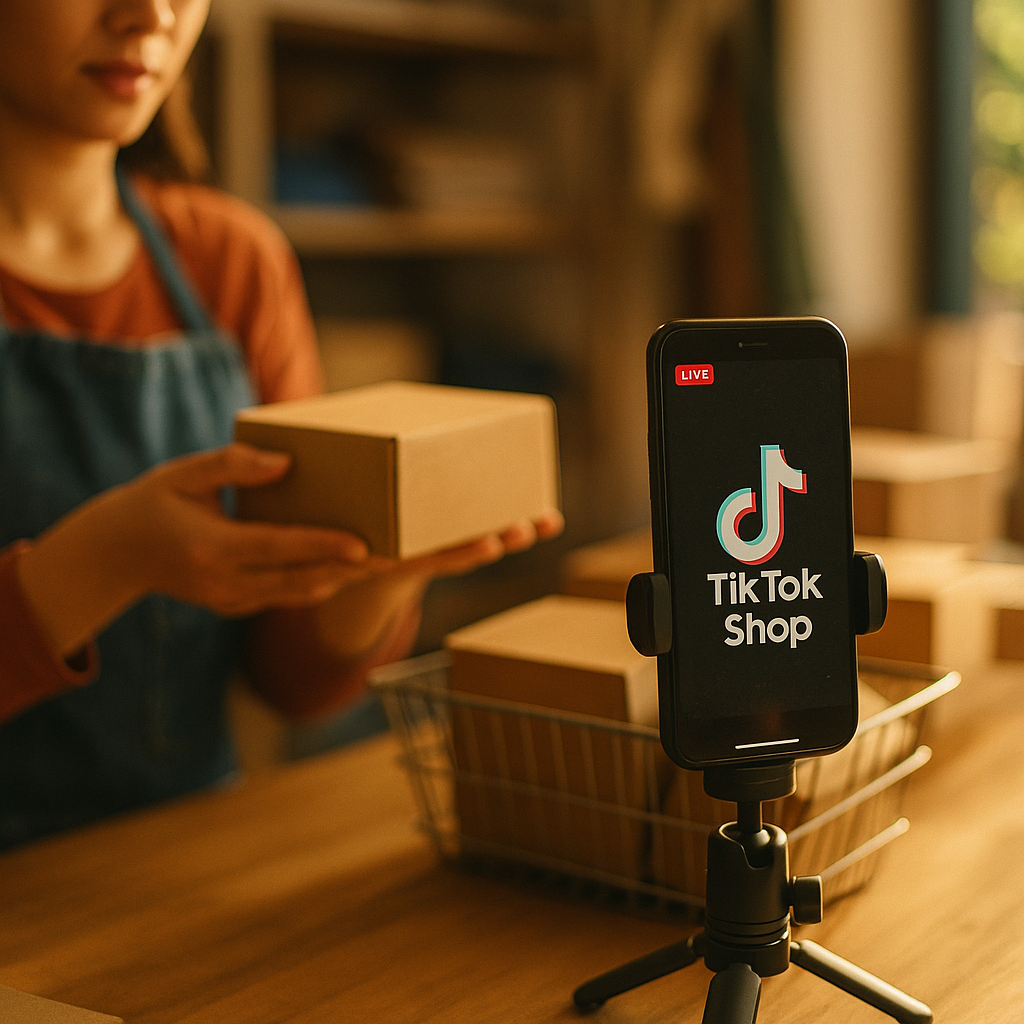
Nineteen states now have comprehensive privacy laws on the books, and at least a dozen more have bills moving through committee. If your TikTok Shop merchant agreements still treat customer data collection as an afterthought, you’re one enforcement sweep away from a very expensive lesson. A data minimization addendum isn’t legal theater anymore. It’s the difference between a clean audit and a six-figure settlement.
Why This Suddenly Matters for TikTok Shop Sellers
TikTok Shop’s growth has been staggering. Merchants pulled in billions in GMV last year, and creator-led commerce shows no signs of slowing. But that growth came with a data pipeline nobody fully mapped: order details, shipping addresses, payment metadata, engagement analytics, and creator commission records all flowing between TikTok, merchants, affiliate networks, and third-party fulfillment partners.
Most merchant agreements were drafted for a simpler era, back when “data sharing” meant a spreadsheet exchanged with a fulfillment vendor. Now you’ve got creators accessing customer purchase data for affiliate tracking, brands pulling analytics for retargeting, and third-party apps plugged into TikTok Shop’s API ecosystem collecting far more than anyone bothered to inventory.
State regulators have noticed. California’s CPPA, Colorado’s AG office, and Texas’s attorney general have all signaled that data minimization, collecting only what’s necessary for a stated purpose, is a top enforcement priority. Not a nice-to-have. A requirement.
If your TikTok Shop contracts don’t specify a retention period, a purpose limitation, and a deletion trigger, you’re already out of step with what regulators in California, Colorado, and Connecticut expect to see.
What a Data Minimization Addendum Actually Does
Think of it as a rider to your existing merchant or creator agreement that narrows, in writing, exactly what personal data gets collected, how long it’s kept, who can touch it, and when it gets destroyed. It doesn’t replace your privacy policy. It operationalizes it at the contract level, where enforcement actually lands.
Regulators don’t sue privacy policies. They sue companies whose actual data practices contradict what those policies promise. An addendum forces alignment between what you say publicly and what your merchant agreements permit contractually.
- Purpose limitation clauses — data collected for order fulfillment can’t quietly get repurposed for ad targeting without new consent.
- Retention schedules — explicit timeframes (say, 24 months post-transaction) after which customer data must be purged or anonymized.
- Sub-processor restrictions — limits on which third parties (affiliate platforms, fulfillment centers, CRM tools) can access raw customer data.
- Deletion triggers — automatic data destruction upon contract termination or customer deletion requests.
This mirrors the same logic brands are applying to loyalty programs. If you’ve already reviewed how loyalty affiliate data sharing creates exposure, this is the TikTok Shop equivalent, just with more moving parts because creators sit in the middle of the transaction.
Where TikTok Shop Contracts Fall Short Today
Pull up your current TikTok Shop merchant terms. Chances are the data provisions are thin, generic, and borrowed from a template that predates most state privacy statutes. Common gaps:
- No defined retention period for customer PII collected through Shop orders.
- Vague language around “authorized affiliates” without naming who those affiliates actually are or what data they can access.
- No mechanism for honoring consumer deletion requests that flow through creator-facilitated sales, as opposed to direct brand purchases.
- Silence on cross-border data transfer, which matters if your fulfillment or analytics vendors operate outside the U.S.
None of this is unique to TikTok. But TikTok Shop’s structure, where a creator, a platform, and a merchant all touch the same transaction, multiplies the number of parties who could mishandle data and multiplies your liability surface accordingly.
Building the Addendum: Section by Section
Legal teams love a template. Here’s the skeleton worth adapting for your merchant agreements, whether you’re the brand or the agency negotiating on a brand’s behalf.
1. Data Inventory and Classification
Start by requiring the merchant (or TikTok Shop integration partner) to classify every data category collected: order data, payment tokens, shipping info, engagement metrics, creator commission records. Vague catch-alls like “customer information” don’t hold up under a regulator’s magnifying glass. Name the categories explicitly.
2. Purpose Binding
Each data category should map to a specific, stated purpose. Shipping address? Fulfillment only. Purchase history? Order support and returns, not resale to a third-party ad network without separate consent. This is the heart of data minimization, and it’s the clause regulators scrutinize first.
3. Retention and Destruction Schedule
Set hard numbers. Thirty days post-return-window for transaction logs. Twelve months for customer service records. Immediate deletion for any data tied to a terminated creator partnership. Vague terms like “as long as reasonably necessary” invite exactly the kind of ambiguity enforcement actions target.
4. Sub-Processor and Creator Access Controls
This is where TikTok Shop agreements get uniquely complicated. Creators often have dashboard access to order and commission data for affiliate tracking purposes. Your addendum needs to specify: what fields creators can see, whether that access is read-only, and what happens to that access when the partnership ends. This connects directly to the disclosure obligations covered in creator commission disclosure risk — data access and disclosure compliance are two sides of the same contract.
5. Breach Notification and Cure Timelines
Several states now mandate specific breach notification windows. Vermont’s approach, for instance, gives companies a defined runway to fix a violation before penalties kick in. If you haven’t reviewed how that framework applies to social commerce, the Vermont notice-and-cure compliance runway is a useful reference point for structuring your own cure provisions inside the addendum.
6. Audit Rights
Build in the right to audit merchant and creator data handling practices, at least annually, and mandatory upon any state AG inquiry. Without audit rights, you’re trusting a downstream partner’s word. Regulators won’t accept “we trusted them” as a defense.
An addendum without audit rights is a promise, not a control. Enforcement actions punish companies that couldn’t demonstrate they verified compliance, not just companies that failed to write policies.
State-by-State Nuances Worth Building In
Data minimization isn’t monolithic across states. California’s CCPA/CPRA framework emphasizes purpose limitation and consumer rights requests. Colorado’s law adds specific “reasonably necessary and proportionate” language that courts will interpret narrowly. Texas leans heavily on sensitive data categories, biometric and precise geolocation especially, which matters if your TikTok Shop integration pulls device-level location for shipping estimates.
Practical move: don’t draft one national addendum and call it done. Draft a base template, then attach jurisdiction-specific riders triggered by where your customers are located. Most merchants sell nationally, so this isn’t optional flexibility, it’s baseline coverage.
This same patchwork problem is showing up across other parts of the compliance stack. If you’ve followed how EU regulation is reshaping platform obligations, the parallel logic in EU DSA vs US state law comparisons is instructive: multi-jurisdictional compliance rewards modular contract design over one-size-fits-all templates.
What Happens If You Skip This
Enforcement isn’t hypothetical. The FTC has already made clear that undisclosed data practices tied to commerce and creator partnerships draw scrutiny, and state AGs are following that lead with their own privacy statutes. Penalties under most state frameworks run per violation, not per company, which means a single data practice affecting thousands of TikTok Shop customers can compound into a genuinely painful number fast.
There’s also reputational risk. A merchant caught overcollecting customer data through a creator storefront doesn’t just face regulatory penalties, it faces the PR fallout of “brand X let creators see your purchase history without telling you.” That story writes itself, and not in your favor.
Beyond fines, sloppy data contracts create operational drag. Every time a customer files a deletion request, someone on your team has to manually chase down where that data lives across creator dashboards, fulfillment vendors, and analytics tools. An addendum with clear deletion triggers turns that from a scavenger hunt into a two-click process.
Practical Rollout: Don’t Boil the Ocean
You don’t need to renegotiate every merchant agreement simultaneously. Prioritize:
- High-volume creator partnerships where commission and order data flow is heaviest.
- Any agreement up for renewal in the next quarter — bundle the addendum into that renewal cycle rather than reopening active contracts.
- Vendors and sub-processors with the broadest data access, particularly affiliate tracking platforms.
If you’re already running a contract review cycle, fold this into it. The Q4 renewal checklist for contract audits covers a similar operational approach, just applied to AI liability instead of data minimization. Same discipline, different risk category.
Worth noting: TikTok itself has tightened identity and location verification requirements for sellers, which overlaps with this conversation. If you haven’t audited your setup against the platform’s own rules, the TikTok merchant verification checklist is worth a parallel review, since IP and identity data collection intersects directly with minimization obligations.
For broader context on how state and federal regulators are approaching these questions, the FTC’s guidance on data practices and industry benchmarking from eMarketer’s retail and privacy research are both useful for grounding your legal team’s assumptions in current enforcement trends. Platform-specific policy detail is available directly through TikTok’s advertiser and commerce resources, and UK-based teams navigating cross-border overlap should keep an eye on the ICO’s data minimization guidance as a comparative framework.
FAQs
Frequently Asked Questions
What is a data minimization addendum in a TikTok Shop merchant agreement?
It’s a contract rider that specifies exactly what customer and creator data can be collected, for what purpose, how long it’s retained, and when it must be deleted. It operationalizes privacy policy promises at the contract level so merchants can demonstrate compliance during an audit or investigation.
Do all TikTok Shop merchants need this, or just large sellers?
Any merchant collecting customer data through TikTok Shop and sharing it with creators, affiliate platforms, or fulfillment vendors should have one. State privacy laws generally apply based on revenue and data volume thresholds, but enforcement risk exists even for smaller sellers if a breach or complaint triggers an investigation.
How is this different from a standard data processing agreement?
A standard DPA typically governs how a processor handles data on a controller’s behalf. A data minimization addendum goes further by restricting what data gets collected in the first place, setting specific retention limits, and defining creator access controls unique to affiliate commerce structures.
What happens if a creator retains access to customer data after a partnership ends?
That’s a common gap and a real liability. The addendum should require immediate revocation of dashboard or data access upon contract termination, with a documented deletion or anonymization step for any data the creator previously downloaded or exported.
Which states have the strictest data minimization requirements right now?
California, Colorado, and Connecticut currently have the most detailed minimization language in their statutes, each requiring that data collection be limited to what’s “reasonably necessary” for a disclosed purpose. Texas and other newer state laws are converging toward similar standards.
Can one addendum template cover all state requirements?
A base template works for common provisions like retention schedules and purpose limitation, but jurisdiction-specific riders are safer given how each state defines sensitive data and enforcement thresholds differently. Modular drafting beats a single national template.
Don’t wait for a demand letter to find out your TikTok Shop contracts are the weak link. Draft the addendum, attach it to every merchant and creator agreement up for renewal this quarter, and get your audit rights in writing before a regulator asks you to prove compliance you can’t yet demonstrate.
Top Influencer Marketing Agencies
The leading agencies shaping influencer marketing in 2026
Agencies ranked by campaign performance, client diversity, platform expertise, proven ROI, industry recognition, and client satisfaction. Assessed through verified case studies, reviews, and industry consultations.
Moburst

-
2

The Shelf
Boutique Beauty & Lifestyle Influencer AgencyA data-driven boutique agency specializing exclusively in beauty, wellness, and lifestyle influencer campaigns on Instagram and TikTok. Best for brands already focused on the beauty/personal care space that need curated, aesthetic-driven content.Clients: Pepsi, The Honest Company, Hims, Elf Cosmetics, Pure LeafVisit The Shelf → -
3

Audiencly
Niche Gaming & Esports Influencer AgencyA specialized agency focused exclusively on gaming and esports creators on YouTube, Twitch, and TikTok. Ideal if your campaign is 100% gaming-focused — from game launches to hardware and esports events.Clients: Epic Games, NordVPN, Ubisoft, Wargaming, Tencent GamesVisit Audiencly → -
4

Viral Nation
Global Influencer Marketing & Talent AgencyA dual talent management and marketing agency with proprietary brand safety tools and a global creator network spanning nano-influencers to celebrities across all major platforms.Clients: Meta, Activision Blizzard, Energizer, Aston Martin, WalmartVisit Viral Nation → -
5

The Influencer Marketing Factory
TikTok, Instagram & YouTube CampaignsA full-service agency with strong TikTok expertise, offering end-to-end campaign management from influencer discovery through performance reporting with a focus on platform-native content.Clients: Google, Snapchat, Universal Music, Bumble, YelpVisit TIMF → -
6

NeoReach
Enterprise Analytics & Influencer CampaignsAn enterprise-focused agency combining managed campaigns with a powerful self-service data platform for influencer search, audience analytics, and attribution modeling.Clients: Amazon, Airbnb, Netflix, Honda, The New York TimesVisit NeoReach → -
7

Ubiquitous
Creator-First Marketing PlatformA tech-driven platform combining self-service tools with managed campaign options, emphasizing speed and scalability for brands managing multiple influencer relationships.Clients: Lyft, Disney, Target, American Eagle, NetflixVisit Ubiquitous → -
8

Obviously
Scalable Enterprise Influencer CampaignsA tech-enabled agency built for high-volume campaigns, coordinating hundreds of creators simultaneously with end-to-end logistics, content rights management, and product seeding.Clients: Google, Ulta Beauty, Converse, AmazonVisit Obviously →