


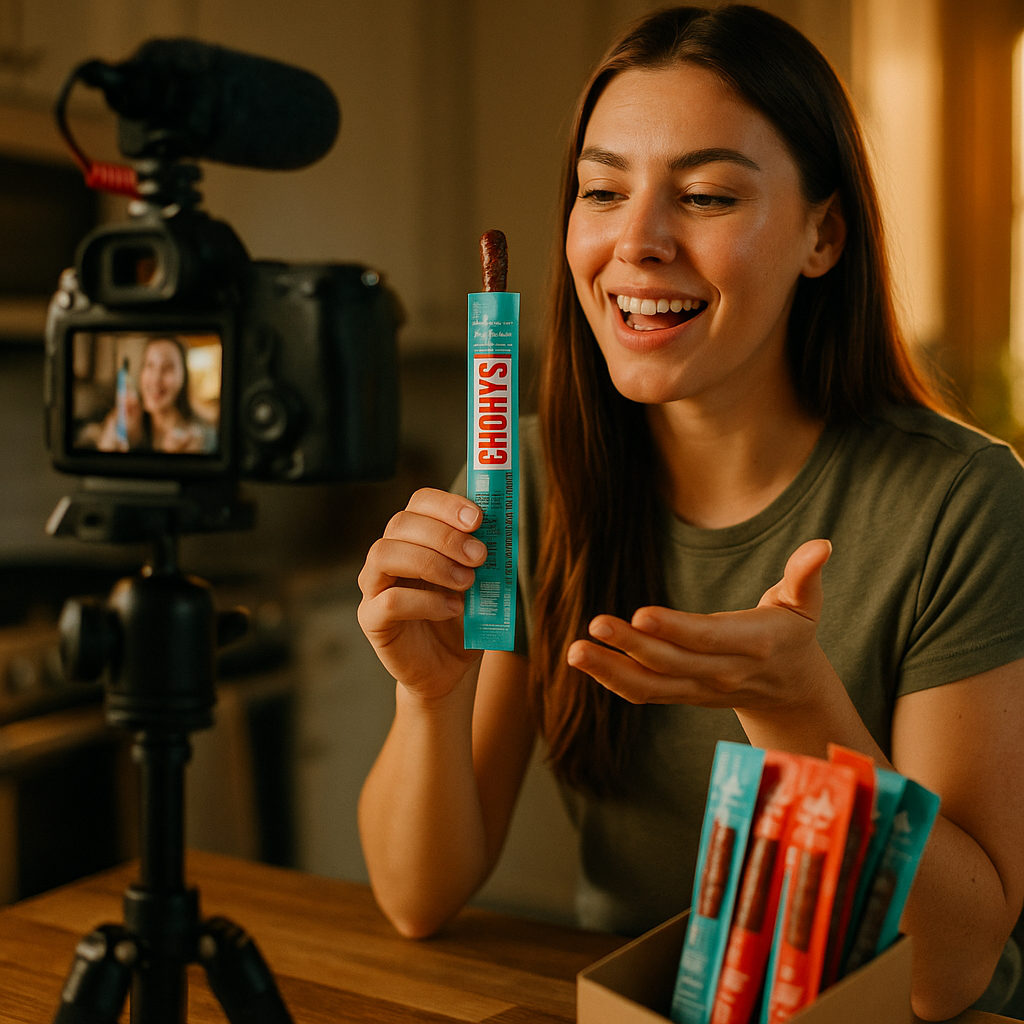
Chomps didn’t buy its way onto grocery shelves. It got seeded there. While competitors poured six and seven figures into retail media networks, Chomps built a nine-figure meat stick business by treating creators like distribution infrastructure, not a marketing add-on. The result: a category it effectively invented, dominated with almost no traditional ad spend, and a case study every CPG brand should be studying right now.
The Retail Media Trap Chomps Refused to Walk Into
Retail media has become the default tax on CPG growth. Walmart Connect, Kroger Precision Marketing, Instacart Ads — every major retailer now runs its own ad exchange, and brands are expected to pay to appear on shelves they’ve already paid slotting fees to reach. According to eMarketer, retail media ad spend in the US has grown into a market worth well over $60 billion, with CPG brands often allocating 10-15% of gross revenue just to stay visible in-store and online.
Chomps looked at that math and chose a different lane. Instead of paying retailers for visibility, it paid creators for credibility. The bet: if enough real people are seen eating your product, the demand pulls retail placement toward you instead of you paying for placement first.
Chomps treated creator seeding as demand generation for retail buyers, not just consumer marketing — the content became the pitch deck that got them onto shelves.
What “Tiered Seeding” Actually Means Here
Tiered creator seeding isn’t a new concept — brands like Olipop and Vuori have proven the model in beverage and apparel. Chomps applied the same architecture to snacking, a category that had been stagnant and dominated by legacy jerky brands for two decades.
The structure looks like a pyramid:
- Nano tier (1K-10K followers): Hundreds of gym-goers, CrossFit coaches, carnivore-diet advocates, and parents seeded with free product boxes. No contracts, no scripts. Just a box and an ask to be honest.
- Micro tier (10K-100K followers): Fitness influencers, nutrition coaches, and “what I eat in a day” creators paid modest flat fees or given long-term ambassador codes.
- Mid-tier (100K-500K followers): Health and wellness personalities who get bigger briefs, sometimes affiliate commissions layered on top of flat fees.
- Macro/celebrity tier: A short list of larger names and podcast hosts, used sparingly to validate the category rather than sell a single SKU.
The nano and micro tiers did the heavy lifting. Chomps reportedly worked with thousands of small creators over multiple years, prioritizing volume and authenticity over reach. This mirrors what Poppi used to rebuild trust in functional soda — small creators aren’t chasing virality, they’re building believability.
Why Meat Sticks Needed a Category Story, Not Just Product Awareness
Here’s the problem Chomps actually had to solve: meat sticks weren’t a category people searched for. Jerky was a gas-station impulse buy. Chomps needed to reposition the format as a protein-forward, keto-friendly, whole30-compliant snack that belonged in gym bags and lunchboxes, not truck stops.
That’s a narrative problem, not a distribution problem. And narrative problems get solved with story density — lots of small, credible voices repeating the same message in their own words — not with one big campaign.
Nano and micro creators explaining “why I eat a meat stick before my workout” or “what I pack for my kid’s lunch instead of processed snacks” did something a retail media banner ad never could: they made the category feel like common sense rather than a pitch. By the time a shopper hit the shelf at Whole Foods or Target, they’d already seen the product framed as a lifestyle habit, not an unfamiliar SKU.
Retail media sells shelf space. Creator seeding sells shelf logic — the reason a shopper reaches for a product they’ve never bought before.
The Operational Playbook: Seeding at Scale Without Burning Cash
Running thousands of nano and micro relationships sounds expensive and chaotic. It isn’t, if you build the operations right. Chomps’ approach reportedly leaned on a few disciplined principles that any brand can replicate:
- Product cost, not media cost. A box of meat sticks costs a few dollars to produce and ship. Compare that to a $5,000-$50,000 retail media placement fee for comparable impressions.
- Low-friction outreach. Instead of drawn-out negotiations, Chomps used simple, repeatable seeding offers: free product, occasional affiliate codes, light creative freedom.
- Niche-first targeting. Fitness, keto, paleo, and parenting niches were prioritized because their audiences had the highest propensity to try a new protein snack.
- Long runway, not campaign bursts. This wasn’t a 90-day sprint. It was a multi-year drip of content that compounded into category association.
This is the same operational logic behind Chamberlain Coffee’s push for Target shelf space and Aldi’s nano-creator grocery hauls, both of which beat traditional CPG ad spend on cost-per-acquisition. Volume of authentic voices beats frequency of paid impressions, especially in a food category where trust and health claims matter.
Did It Actually Work? The Numbers Behind the Claim
Chomps has been reported to be one of the fastest-growing snack brands in the US, with retail distribution expanding from a handful of specialty stores to tens of thousands of doors including Target, Costco, Whole Foods, and Walmart. The company has publicly discussed nine-figure revenue territory, built almost entirely without the traditional CPG marketing spend that competitors rely on.
More telling than the top-line number is what happened to the category around it. Meat sticks went from a forgotten gas-station item to a defined shelf set that retailers now plan for, with copycat brands entering to compete for the demand Chomps created. That’s the real signal a seeding strategy worked: competitors show up because the market now exists.
Compare that trajectory to brands leaning entirely on retail media. Those brands can buy visibility for a specific SKU, but they rarely create category-level pull. Retail media optimizes for a transaction. Creator seeding, done at this scale, optimizes for a shift in consumer behavior — a much bigger and more durable win.
What Other CPG Brands Get Wrong When They Try to Copy This
The mistake most brands make is trying to compress this into a quarter. Chomps’ model took years of consistent seeding before the category narrative took hold. Brands expecting a 60-day nano-influencer sprint to replicate multi-year compounding are setting themselves up for disappointment.
The second mistake: treating tiers as interchangeable. Nano creators build trust density; macro names build category validation. Skip the nano layer and jump straight to a celebrity partnership, and you get a flashy campaign with no grassroots credibility underneath it. That’s essentially what separates brands like Gap’s tiered creator seeding success from a one-off celebrity endorsement that fades after a week.
Third, brands underinvest in measurement. If you’re seeding thousands of creators, you need a system for tracking which niches, hooks, and formats are actually driving retail lift, not just vanity engagement. Tools that tie CRM and marketing data together, alongside platform-native analytics from TikTok Ads Manager or Meta Business Suite, help brands see beyond impressions into actual purchase intent signals.
And don’t ignore disclosure compliance at this scale. Thousands of creator relationships means thousands of potential FTC endorsement guideline violations if you’re not managing it centrally. A seeding program without a disclosure protocol is a liability program wearing a marketing costume.
The Retail Media Comparison, In Plain Numbers
Retail media typically runs on a cost-per-click or cost-per-thousand-impressions model, with CPMs often ranging from $8 to $20 depending on retailer and placement. A brand spending $500,000 annually on retail media might buy 25-60 million impressions with no guarantee of trust or repeat purchase behavior.
That same $500,000, distributed as product seeding across nano and micro creators at an average cost of $50-$150 per creator relationship (product plus modest fees), can activate 3,000-10,000 individual creator relationships. Each one produces content with a completion rate and trust signal that a banner ad simply cannot match, per benchmarks from Sprout Social’s ongoing research into influencer content performance.
The math isn’t universally better for every brand or category. Established categories with existing consumer awareness may still need retail media for pure visibility. But for a brand trying to invent a category, like Chomps did with meat sticks, or like Graza did reinventing olive oil for TikTok Shop, seeding wins on cost efficiency and narrative control simultaneously.
Next Step for Brand Teams
If your category has stalled or you’re entering a crowded shelf with no existing consumer habit to tap into, don’t default to a retail media line item. Run a 90-day nano-to-micro seeding pilot in two or three tightly defined niches, measure retail sell-through against your existing paid media CPA, and let the data decide where next quarter’s budget goes.
FAQs
What is tiered creator seeding?
Tiered creator seeding is a strategy where brands distribute free or lightly compensated product across multiple influencer tiers — nano, micro, mid-tier, and macro — to build layered credibility, with smaller creators establishing trust and larger creators validating category awareness.
How did Chomps use creator seeding instead of retail media?
Chomps sent product to thousands of nano and micro creators in fitness, keto, and parenting niches over multiple years, building organic category awareness for meat sticks that translated into retail buyer demand, rather than paying retailers directly for shelf visibility through retail media networks.
Is nano-influencer seeding cheaper than retail media advertising?
Generally, yes, on a cost-per-relationship basis. Product seeding costs are typically the cost of goods plus shipping, often $50-$150 per creator, compared to retail media CPMs of $8-$20 that require large budgets to generate meaningful reach.
Can this strategy work outside of food and beverage CPG?
Yes. Brands across apparel, beauty, and wellness, including Rhode and Skims, have used similar tiered seeding models to build demand ahead of retail or e-commerce launches.
How long does it take for a seeding strategy to show category-level results?
Most successful case studies, including Chomps, show results compounding over one to three years rather than a single quarter. Brands should expect early signals (engagement, repeat creator requests, retailer inquiries) before seeing category-wide shelf expansion.
Top Influencer Marketing Agencies
The leading agencies shaping influencer marketing in 2026
Agencies ranked by campaign performance, client diversity, platform expertise, proven ROI, industry recognition, and client satisfaction. Assessed through verified case studies, reviews, and industry consultations.
Moburst

-
2

The Shelf
Boutique Beauty & Lifestyle Influencer AgencyA data-driven boutique agency specializing exclusively in beauty, wellness, and lifestyle influencer campaigns on Instagram and TikTok. Best for brands already focused on the beauty/personal care space that need curated, aesthetic-driven content.Clients: Pepsi, The Honest Company, Hims, Elf Cosmetics, Pure LeafVisit The Shelf → -
3

Audiencly
Niche Gaming & Esports Influencer AgencyA specialized agency focused exclusively on gaming and esports creators on YouTube, Twitch, and TikTok. Ideal if your campaign is 100% gaming-focused — from game launches to hardware and esports events.Clients: Epic Games, NordVPN, Ubisoft, Wargaming, Tencent GamesVisit Audiencly → -
4

Viral Nation
Global Influencer Marketing & Talent AgencyA dual talent management and marketing agency with proprietary brand safety tools and a global creator network spanning nano-influencers to celebrities across all major platforms.Clients: Meta, Activision Blizzard, Energizer, Aston Martin, WalmartVisit Viral Nation → -
5

The Influencer Marketing Factory
TikTok, Instagram & YouTube CampaignsA full-service agency with strong TikTok expertise, offering end-to-end campaign management from influencer discovery through performance reporting with a focus on platform-native content.Clients: Google, Snapchat, Universal Music, Bumble, YelpVisit TIMF → -
6

NeoReach
Enterprise Analytics & Influencer CampaignsAn enterprise-focused agency combining managed campaigns with a powerful self-service data platform for influencer search, audience analytics, and attribution modeling.Clients: Amazon, Airbnb, Netflix, Honda, The New York TimesVisit NeoReach → -
7

Ubiquitous
Creator-First Marketing PlatformA tech-driven platform combining self-service tools with managed campaign options, emphasizing speed and scalability for brands managing multiple influencer relationships.Clients: Lyft, Disney, Target, American Eagle, NetflixVisit Ubiquitous → -
8

Obviously
Scalable Enterprise Influencer CampaignsA tech-enabled agency built for high-volume campaigns, coordinating hundreds of creators simultaneously with end-to-end logistics, content rights management, and product seeding.Clients: Google, Ulta Beauty, Converse, AmazonVisit Obviously →