


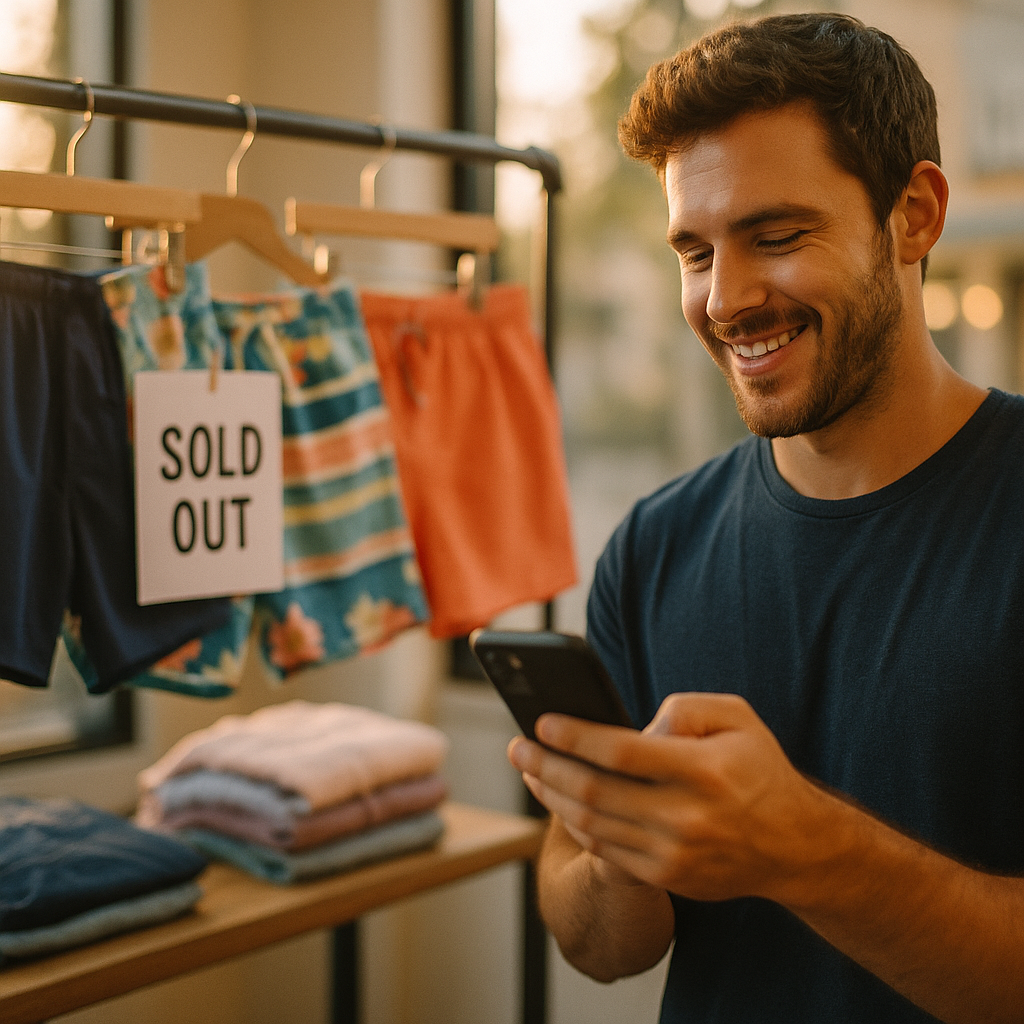
One brand sold out an entire novelty product drop in under 48 hours, and it wasn’t because a celebrity wore it. Chubbies did it with a roster of nano-creators, absurdist skits, and zero traditional media spend. If you’re still funneling budget toward one polished hero video, this case study is your wake-up call.
The Drop That Broke the Model
Chubbies has built a fifteen-year identity on being the anti-athleisure brand: loud prints, self-deprecating copy, and shorts that look like they were designed during a fraternity brainstorm. Their latest novelty release, a limited run of exaggerated “cargo-meets-swim” shorts with an absurd number of pockets, wasn’t positioned as premium apparel. It was positioned as a joke that happened to be purchasable.
That distinction matters. Most DTC brands try to make novelty items feel aspirational. Chubbies leaned the opposite direction. They made the product the punchline, then let dozens of small creators tell that joke in their own voice.
The result: the drop sold out in under 48 hours, with the brand reporting the majority of sell-through happening in the first 18 hours after seeding hit creator feeds. No paid amplification. No influencer with a blue check and a rate card in the five figures. Just nano-creators, absurdist framing, and a product genuinely built for chaos.
Why Nano-Creators, Not Macro Names?
Ask most CMOs why they haven’t tried a nano-first strategy, and you’ll hear some version of “the reach isn’t there.” Fair point on paper. A creator with 8,000 followers can’t touch the impressions of a 2-million-follower macro influencer.
But reach was never the goal here. Trust was.
Nano-creators convert on relatability, not aspiration. A joke lands harder from someone who looks like your neighbor than from someone who looks like a billboard.
Chubbies seeded the shorts to roughly 60 creators, each with follower counts between 3,000 and 25,000. These weren’t fashion influencers. Many were comedy accounts, beer-league softball players, dads with grill content, and college intramural teams. The brief was loose: wear the shorts, make it absurd, don’t oversell it.
That last instruction is the whole strategy. The moment a nano-creator starts sounding like an ad, the format collapses. Sprout Social’s research on creator marketing consistently shows that authenticity signals outperform production value when it comes to purchase intent, particularly among Gen Z and younger millennial shoppers who’ve grown numb to polished brand content.
The Content Formula: Absurdist, Not Aspirational
Here’s where most brands get novelty products wrong. They try to justify the product’s existence with logic. Chubbies did the opposite: they doubled down on the absurdity.
Creator content followed a loose but consistent pattern:
- Cold open with a mundane scenario — grocery runs, backyard barbecues, mowing the lawn — completely undercut by the shorts’ ridiculous pocket count or pattern.
- Deadpan delivery. No overselling, no “you NEED these.” Just matter-of-fact absurdity, like the shorts were an obvious life upgrade nobody questioned.
- A single product callout, usually text overlay, never a scripted pitch.
- Native platform humor — trending sounds, formats already circulating on TikTok, repurposed rather than reinvented.
This isn’t new territory for Chubbies. The brand has leaned into comedic self-awareness since its early “America, we’re gonna need you to look away for a sec” ad campaigns. What’s changed is the distribution mechanism. Instead of one big-budget commercial, the joke now gets told sixty different ways by sixty different creators, each adding their own comedic timing and audience context.
That variation is a feature, not a bug. A single hero ad has one shot to land. Sixty nano-creator takes have sixty shots, across sixty different audience psychographics.
The Compressed Timeline: Why 48 Hours Matters
Speed wasn’t incidental. It was engineered.
Chubbies seeded product to creators roughly five days before the drop, giving them just enough lead time to film and post organically without content going stale. Posts were staggered across a 24-hour window right as the product went live, creating a wave effect rather than a single spike.
This mirrors a pattern we’ve seen work across other scarcity-driven launches. Gap’s tiered creator seeding used a similar staggered cadence to sell out a denim style in days rather than weeks. Aritzia’s pant sellout followed the same logic: compress the content wave, let scarcity do the psychological heavy lifting, skip paid media entirely.
The tight window also does something subtler: it prevents content fatigue. When forty pieces of similar content post over three weeks, audiences tune it out by week two. When forty pieces post over 36 hours, it reads as a moment, not a marketing push.
What Did This Actually Cost?
This is the question every CFO asks, and rightly so. Nano-creator campaigns are cheap relative to macro deals, but “cheap” isn’t the same as “free,” and brands that treat it that way get burned on logistics.
Chubbies’ cost structure, based on comparable nano-seeding campaigns in the apparel space, likely broke down into three buckets:
- Product cost. Sixty units of the shorts, seeded at retail or near-retail value. For a novelty item with modest per-unit cost, this is a rounding error compared to a single macro-influencer fee.
- Shipping and fulfillment logistics. Getting product to sixty creators on a tight five-day runway requires operational precision most brands underestimate. This is the hidden cost center in nano-seeding: not the product, but the coordination.
- Light usage rights or small flat fees. Some creators may have received a modest fee for guaranteed posting windows, though much of nano-creator activation still runs on product-for-post arrangements.
Compare that to a single macro influencer post, which can run anywhere from $10,000 to well over $100,000 depending on follower count and platform, per benchmarks from eMarketer’s influencer spend data. Sixty nano-creators seeded with product likely cost Chubbies a fraction of one macro placement, with far more content volume and a much lower single-point-of-failure risk.
That risk mitigation angle deserves more attention from brand strategists. One macro creator having an off day, posting late, or generating a lukewarm response is a campaign-level failure. One nano-creator underperforming is a rounding error in a portfolio of sixty.
The Compliance Angle Nobody Talks About
Scaling to sixty creators means scaling disclosure risk too. The FTC’s endorsement guidelines apply regardless of follower count, and nano-creators are statistically more likely to forget a #ad tag than seasoned macro talent who have agencies managing compliance for them.
Brands running seeding programs at this scale need a lightweight but enforceable disclosure process baked into the brief itself, not left to creator discretion. That means clear, simple language in outreach messaging, not buried legal jargon, and spot-checking posts within the first few hours of the campaign window rather than auditing after the fact.
This is the unglamorous part of nano-creator strategy that rarely makes it into case study writeups, but it’s exactly the kind of operational detail that separates a repeatable program from a one-off viral moment.
What This Means for Your Next Drop
Chubbies’ formula isn’t really about shorts. It’s about matching content tone to product tone, and matching distribution scale to trust requirements rather than reach requirements.
Brands sitting on a genuinely fun, slightly absurd, or novelty-adjacent product have more room to run this playbook than they think. The category doesn’t have to be apparel. Food, beverage, and even hardware brands have run comparable nano-first launches. Olipop’s creator whitelisting approach and Graza’s TikTok Shop strategy both prove the model extends well beyond fashion, as long as the brand voice can carry humor without undercutting product credibility.
The throughline across all of these: smaller creators, tighter timelines, tone-matched content, and a willingness to let go of message control in exchange for authenticity. That trade-off scares a lot of brand teams. It shouldn’t. It’s exactly what’s converting right now.
Frequently Asked Questions
What made the Chubbies nano-creator strategy different from a typical influencer campaign?
Instead of one or two macro-influencer partnerships, Chubbies seeded product to roughly sixty nano-creators with follower counts under 25,000, prioritizing tone match and authenticity over raw reach. The staggered posting created a concentrated wave effect rather than a single spike.
Why do nano-creators work well for novelty or humor-driven products?
Nano-creators read as relatable rather than aspirational, which suits absurdist or comedic product positioning. Audiences are more likely to trust a joke or product recommendation from someone who resembles their own social circle than from a polished celebrity endorsement.
How much does a nano-creator seeding campaign typically cost compared to a macro influencer deal?
Costs vary, but seeding product to dozens of nano-creators generally costs a fraction of a single macro-influencer post, which can range from $10,000 to over $100,000 depending on platform and following. The primary hidden cost in nano campaigns is logistics and fulfillment coordination, not creator fees.
What compliance risks come with scaling to dozens of nano-creators?
Disclosure compliance becomes harder to monitor at scale, since nano-creators are less likely to have agency support managing FTC endorsement requirements. Brands need clear disclosure language built into briefs and early spot-checking of posts to reduce risk.
Can this strategy work outside of apparel?
Yes. Brands in food, beverage, and consumer hardware have run comparable nano-first launches successfully, provided the brand voice can sustain humor or authenticity without undermining product credibility.
If you’re planning a novelty or limited drop next quarter, skip the single hero influencer and build a nano-creator wave instead: tighter timeline, tone-matched briefs, and a disclosure checklist ready before seeding goes out.
Top Influencer Marketing Agencies
The leading agencies shaping influencer marketing in 2026
Agencies ranked by campaign performance, client diversity, platform expertise, proven ROI, industry recognition, and client satisfaction. Assessed through verified case studies, reviews, and industry consultations.
Moburst

-
2

The Shelf
Boutique Beauty & Lifestyle Influencer AgencyA data-driven boutique agency specializing exclusively in beauty, wellness, and lifestyle influencer campaigns on Instagram and TikTok. Best for brands already focused on the beauty/personal care space that need curated, aesthetic-driven content.Clients: Pepsi, The Honest Company, Hims, Elf Cosmetics, Pure LeafVisit The Shelf → -
3

Audiencly
Niche Gaming & Esports Influencer AgencyA specialized agency focused exclusively on gaming and esports creators on YouTube, Twitch, and TikTok. Ideal if your campaign is 100% gaming-focused — from game launches to hardware and esports events.Clients: Epic Games, NordVPN, Ubisoft, Wargaming, Tencent GamesVisit Audiencly → -
4

Viral Nation
Global Influencer Marketing & Talent AgencyA dual talent management and marketing agency with proprietary brand safety tools and a global creator network spanning nano-influencers to celebrities across all major platforms.Clients: Meta, Activision Blizzard, Energizer, Aston Martin, WalmartVisit Viral Nation → -
5

The Influencer Marketing Factory
TikTok, Instagram & YouTube CampaignsA full-service agency with strong TikTok expertise, offering end-to-end campaign management from influencer discovery through performance reporting with a focus on platform-native content.Clients: Google, Snapchat, Universal Music, Bumble, YelpVisit TIMF → -
6

NeoReach
Enterprise Analytics & Influencer CampaignsAn enterprise-focused agency combining managed campaigns with a powerful self-service data platform for influencer search, audience analytics, and attribution modeling.Clients: Amazon, Airbnb, Netflix, Honda, The New York TimesVisit NeoReach → -
7

Ubiquitous
Creator-First Marketing PlatformA tech-driven platform combining self-service tools with managed campaign options, emphasizing speed and scalability for brands managing multiple influencer relationships.Clients: Lyft, Disney, Target, American Eagle, NetflixVisit Ubiquitous → -
8

Obviously
Scalable Enterprise Influencer CampaignsA tech-enabled agency built for high-volume campaigns, coordinating hundreds of creators simultaneously with end-to-end logistics, content rights management, and product seeding.Clients: Google, Ulta Beauty, Converse, AmazonVisit Obviously →