


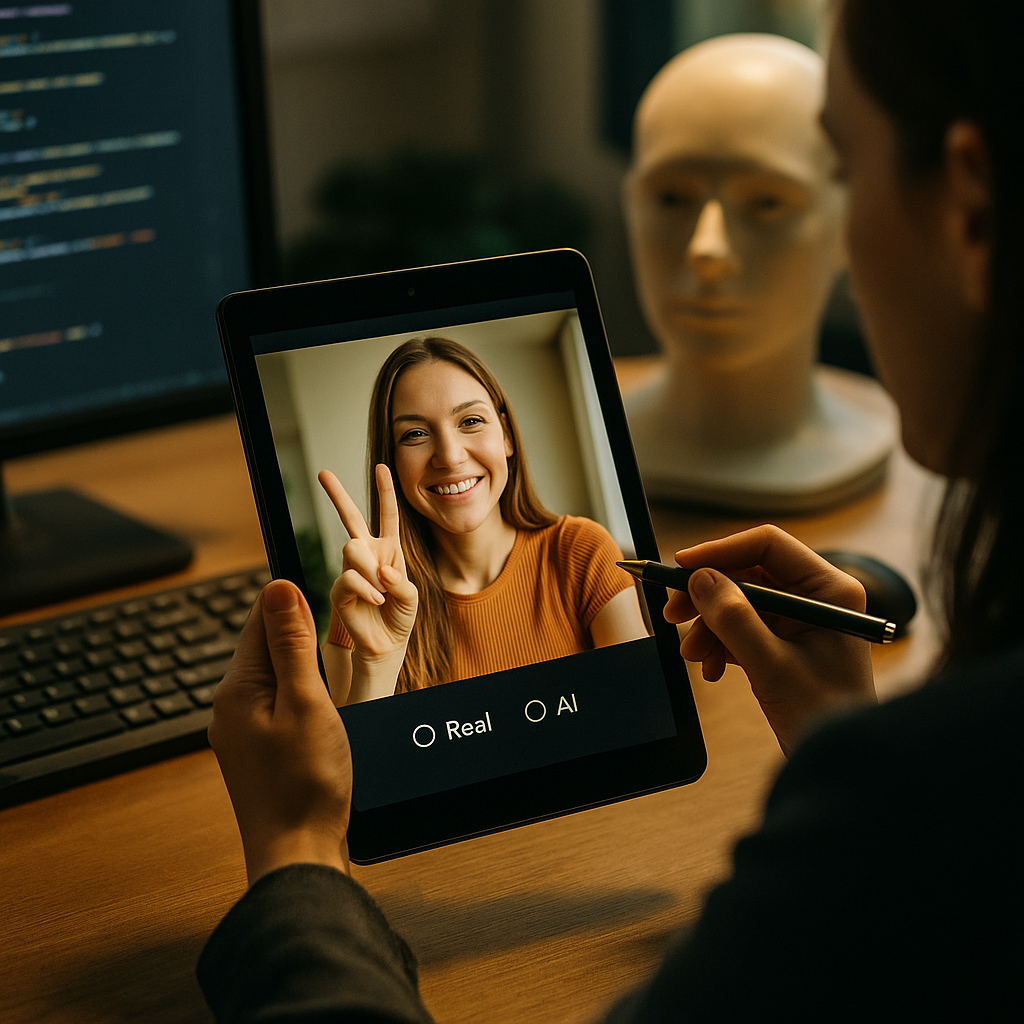
Seventy percent of consumers say they can’t reliably tell AI-generated content from human-made content, according to recent consumer trust surveys. That gap is exactly where the FTC now hunts. If your brand is scraping, remixing, or lightly editing community content with AI tools before it hits paid or organic feeds, the FTC audience-perception standard isn’t a legal footnote. It’s the test that decides whether your next campaign draws a complaint.
What the Audience-Perception Standard Actually Means
The FTC has never cared much about your internal production workflow. It cares about one thing: what a reasonable consumer believes when they see the content. That’s the crux of the audience-perception standard, and it’s why brands keep getting tripped up. You can have a fully documented AI pipeline, clean licensing, and a compliant contract with the original creator — and still violate the FTC Act if the final post misleads viewers about who made it, who’s endorsing it, or whether it’s genuine user experience at all.
This matters more now because AI-assisted UGC has become a default sourcing strategy, not an edge case. Brands pull real customer clips, run them through AI upscalers, voice enhancers, or generative b-roll tools, then repurpose them as ads. Somewhere in that pipeline, the content stops being “user-generated” in any meaningful sense and starts becoming brand-produced media wearing a UGC costume. The FTC doesn’t ask how it was made. It asks how it looks.
The FTC’s test isn’t “did you use AI?” It’s “would a reasonable person watching this believe it’s an authentic, unpaid, unaltered customer experience?” That single question should govern every AI-assisted UGC decision your team makes.
Why Brands Sourcing at Scale Are Most Exposed
Small campaigns get scrutiny sometimes. Scaled UGC programs get scrutiny constantly, because volume creates inconsistency. When you’re running community content through automated pipelines — AI editing suites, auto-captioning, voice cloning for dubbing, synthetic b-roll insertion — you lose the ability to manually audit every piece before it publishes. That’s the whole point of scale. But it’s also where the FTC’s audience-perception standard becomes a genuine operational risk rather than a theoretical one.
Consider the typical modern UGC pipeline: a brand collects hundreds of creator submissions through a platform, runs them through an AI tool that trims dead air, enhances audio, maybe generates a synthetic voiceover to standardize tone across markets, then pushes the polished output to paid social. Nobody on the team intended to deceive anyone. But if the final video looks like an unedited, spontaneous customer testimonial when it’s actually been algorithmically reconstructed, you’ve created exactly the perception gap the FTC targets.
This isn’t hypothetical anxiety. The FTC has been explicit for years that endorsements must reflect the “honest opinions, findings, beliefs, or experience” of the endorser, and that altering content in ways that misrepresent that experience is a violation regardless of intent. Our earlier coverage of AI-remixed creator content and fresh disclosure requirements laid out how even minor AI touches change the legal analysis. The audience-perception standard is the throughline connecting all of it.
The Three Failure Modes
Most compliance failures in this space fall into one of three buckets:
- Synthetic realism failures. AI-generated voiceovers, faces, or full performers presented as real customers. This is the most severe category and the one regulators discuss most explicitly.
- Enhancement-as-fabrication failures. Real content edited so heavily — new claims added via script control, altered outcomes, exaggerated results through AI upscaling or color grading — that it no longer reflects genuine experience.
- Context-stripping failures. Real, unaltered content presented without disclosure that it was solicited, paid, or incentivized, even though the AI involvement was minimal. This overlaps heavily with older influencer disclosure law but gets murkier when AI tools handle the sourcing and curation.
Each failure mode requires a different fix. Lumping them together under one “AI compliance” policy is how legal teams miss things.
Building a Practical Test Before Content Ships
Here’s where most brand compliance frameworks fall short: they focus on documentation instead of perception. A signed release form and a disclosure tag don’t matter if the finished asset still deceives viewers about its nature. You need an actual pre-publish test, not a paperwork checklist.
A workable version looks like this. Before any AI-assisted UGC goes live, run it through four questions:
- Would a first-time viewer assume this is unedited? If AI has changed pacing, voice, visuals, or claims in ways that aren’t obvious, the answer is probably yes, and that’s a problem.
- Does the disclosure match the actual level of alteration? A generic “#ad” tag doesn’t cover AI voice cloning or synthetic performer insertion. Disclosure specificity should scale with alteration severity, a concept we detailed in synthetic performer disclosure frameworks built for multi-jurisdiction compliance.
- Could the AI-assisted version support a claim the original couldn’t? This is the substantiation trap. If enhancement makes a product look more effective than the raw footage showed, you’ve created an unsupported claim, not just a perception issue.
- Who signed off on the script or edit, and at what depth? Script and edit approval depth is now its own liability category. Brands that heavily direct AI-assisted edits inherit more responsibility, a line we mapped out in script approval depth and FTC liability.
If any answer raises a flag, the content needs either heavier disclosure, a re-edit, or a kill decision. That triage should happen before legal review, not instead of it — legal review catches contract exposure, this test catches perception exposure. They’re not the same gate.
Scale Doesn’t Excuse Sloppy Sourcing
Brands running high-volume creator programs often argue that manual review at scale is impossible. Fair point, but it’s not actually the standard being asked of you. Nobody expects a human to watch every one of ten thousand UGC clips. What’s expected is a system: clear criteria, automated flagging where possible, and spot-audits that catch systemic drift.
Some brands are building this into their creator contracts directly, requiring disclosure of any AI tools used in submission or post-production before content enters the pipeline. That single contractual step, covered in depth in our piece on the AI liability clause for creator contracts, shifts a meaningful amount of risk upstream and gives compliance teams a data field to filter on rather than guessing after the fact.
Platform-level tools matter here too. Meta and TikTok have both introduced AI-content labeling requirements, but their disclosure standards don’t automatically satisfy FTC requirements; they’re separate obligations that sometimes conflict. We covered this collision directly in when AI labels clash with FTC disclosure. Relying on a platform’s “AI-generated” tag as your sole compliance mechanism is a mistake many brands are still making.
Platform AI labels and FTC disclosure requirements are not interchangeable. A TikTok “AI-generated” tag satisfies TikTok’s policy. It does not, by itself, satisfy the FTC’s audience-perception standard.
What This Costs If You Get It Wrong
Enforcement risk is only part of the exposure. Reputational damage compounds faster in creator marketing than in traditional advertising, because the audience relationship is built on the premise of authenticity. When a brand gets caught passing off AI-reconstructed testimonials as organic customer voice, the backlash tends to hit harder than a standard ad complaint, precisely because it violates the implicit contract UGC marketing depends on. Research from eMarketer has repeatedly shown that perceived authenticity is the single biggest driver of UGC’s outperformance over branded content. Undermine that perception and you don’t just risk a fine, you erode the mechanism that made the format work in the first place.
There’s also a quieter cost: creator trust. Communities that feel their content was manipulated without meaningful consent stop submitting. Scaled UGC programs depend on a healthy contributor pipeline. Compliance failures here aren’t just a legal line item, they’re a supply problem.
Operationalizing the Standard Across Teams
The audience-perception test only works if it’s embedded somewhere people actually check it: brief templates, vendor onboarding, and platform-specific launch checklists. A few practical moves:
- Add an “AI alteration level” field to your UGC intake form, tiered from none to heavy synthetic content.
- Require vendors and AI editing tools to log what was changed, not just that AI was used. Level of change drives disclosure requirements.
- Route anything above “light enhancement” through a compliance reviewer before scheduling, regardless of campaign timeline pressure.
- Cross-check state-specific rules. Some states are moving faster than federal guidance, similar to the dynamic we saw in state-level parental consent laws forcing creator ad segmentation.
- Document your review process itself. If the FTC ever asks, “how did you assess audience perception,” a documented methodology is your best defense, per FTC guidance on endorsement compliance programs.
None of this requires slowing production to a crawl. It requires deciding, in advance, where the line sits between “AI helped us produce good content” and “AI helped us produce content that lies about what it is.” Brands that draw that line clearly move faster in the long run, because they’re not relitigating the same judgment call on every single asset.
For teams managing this across markets, tools like Sprout Social and enterprise UGC platforms are starting to build AI-disclosure tracking directly into content workflows, which helps, but software won’t make the judgment call for you. That’s still a compliance and marketing leadership decision.
Frequently Asked Questions
What is the FTC’s audience-perception standard for AI-assisted UGC?
It’s the principle that FTC compliance depends on how a reasonable consumer perceives content, not on the production method behind it. If AI-assisted editing or generation makes content look like authentic, unaltered customer experience when it isn’t, that mismatch is the violation, regardless of intent.
Does using AI tools on UGC automatically require disclosure?
Not automatically, but frequently. Minor edits like trimming or color correction typically don’t require special disclosure. Substantial alterations, synthetic voice or performer insertion, or changes that affect claims made in the content generally do.
How is this different from standard influencer disclosure rules?
Standard disclosure rules address whether a relationship (paid, gifted, affiliate) is disclosed. The audience-perception standard adds a second layer: even with proper relationship disclosure, if AI alteration misrepresents the nature or authenticity of the content itself, that’s a separate compliance failure.
Can platform AI labels satisfy FTC requirements?
No. Platform labeling systems like TikTok’s or Meta’s AI-content tags are separate policy requirements. They don’t automatically satisfy FTC disclosure obligations, which are governed by federal law and assessed independently of platform rules.
Who is liable when a scaled UGC pipeline produces a non-compliant asset?
Typically the brand, since it directs the sourcing, editing, and publishing decisions, even when a vendor or AI tool performed the actual alteration. Contractual liability clauses can shift some risk to vendors or creators, but the FTC generally holds brands primarily accountable for deceptive advertising.
Start by auditing your current UGC pipeline against the four-question test above, and don’t wait for a complaint to find the gaps first. Every campaign that clears that test before publish is one less compliance conversation you’ll have with legal after the fact.
Frequently Asked Questions
What is the FTC’s audience-perception standard for AI-assisted UGC?
It’s the principle that FTC compliance depends on how a reasonable consumer perceives content, not on the production method behind it. If AI-assisted editing or generation makes content look like authentic, unaltered customer experience when it isn’t, that mismatch is the violation, regardless of intent.
Does using AI tools on UGC automatically require disclosure?
Not automatically, but frequently. Minor edits like trimming or color correction typically don’t require special disclosure. Substantial alterations, synthetic voice or performer insertion, or changes that affect claims made in the content generally do.
How is this different from standard influencer disclosure rules?
Standard disclosure rules address whether a relationship (paid, gifted, affiliate) is disclosed. The audience-perception standard adds a second layer: even with proper relationship disclosure, if AI alteration misrepresents the nature or authenticity of the content itself, that’s a separate compliance failure.
Can platform AI labels satisfy FTC requirements?
No. Platform labeling systems like TikTok’s or Meta’s AI-content tags are separate policy requirements. They don’t automatically satisfy FTC disclosure obligations, which are governed by federal law and assessed independently of platform rules.
Who is liable when a scaled UGC pipeline produces a non-compliant asset?
Typically the brand, since it directs the sourcing, editing, and publishing decisions, even when a vendor or AI tool performed the actual alteration. Contractual liability clauses can shift some risk to vendors or creators, but the FTC generally holds brands primarily accountable for deceptive advertising.
Top Influencer Marketing Agencies
The leading agencies shaping influencer marketing in 2026
Agencies ranked by campaign performance, client diversity, platform expertise, proven ROI, industry recognition, and client satisfaction. Assessed through verified case studies, reviews, and industry consultations.
Moburst

-
2

The Shelf
Boutique Beauty & Lifestyle Influencer AgencyA data-driven boutique agency specializing exclusively in beauty, wellness, and lifestyle influencer campaigns on Instagram and TikTok. Best for brands already focused on the beauty/personal care space that need curated, aesthetic-driven content.Clients: Pepsi, The Honest Company, Hims, Elf Cosmetics, Pure LeafVisit The Shelf → -
3

Audiencly
Niche Gaming & Esports Influencer AgencyA specialized agency focused exclusively on gaming and esports creators on YouTube, Twitch, and TikTok. Ideal if your campaign is 100% gaming-focused — from game launches to hardware and esports events.Clients: Epic Games, NordVPN, Ubisoft, Wargaming, Tencent GamesVisit Audiencly → -
4

Viral Nation
Global Influencer Marketing & Talent AgencyA dual talent management and marketing agency with proprietary brand safety tools and a global creator network spanning nano-influencers to celebrities across all major platforms.Clients: Meta, Activision Blizzard, Energizer, Aston Martin, WalmartVisit Viral Nation → -
5

The Influencer Marketing Factory
TikTok, Instagram & YouTube CampaignsA full-service agency with strong TikTok expertise, offering end-to-end campaign management from influencer discovery through performance reporting with a focus on platform-native content.Clients: Google, Snapchat, Universal Music, Bumble, YelpVisit TIMF → -
6

NeoReach
Enterprise Analytics & Influencer CampaignsAn enterprise-focused agency combining managed campaigns with a powerful self-service data platform for influencer search, audience analytics, and attribution modeling.Clients: Amazon, Airbnb, Netflix, Honda, The New York TimesVisit NeoReach → -
7

Ubiquitous
Creator-First Marketing PlatformA tech-driven platform combining self-service tools with managed campaign options, emphasizing speed and scalability for brands managing multiple influencer relationships.Clients: Lyft, Disney, Target, American Eagle, NetflixVisit Ubiquitous → -
8

Obviously
Scalable Enterprise Influencer CampaignsA tech-enabled agency built for high-volume campaigns, coordinating hundreds of creators simultaneously with end-to-end logistics, content rights management, and product seeding.Clients: Google, Ulta Beauty, Converse, AmazonVisit Obviously →