


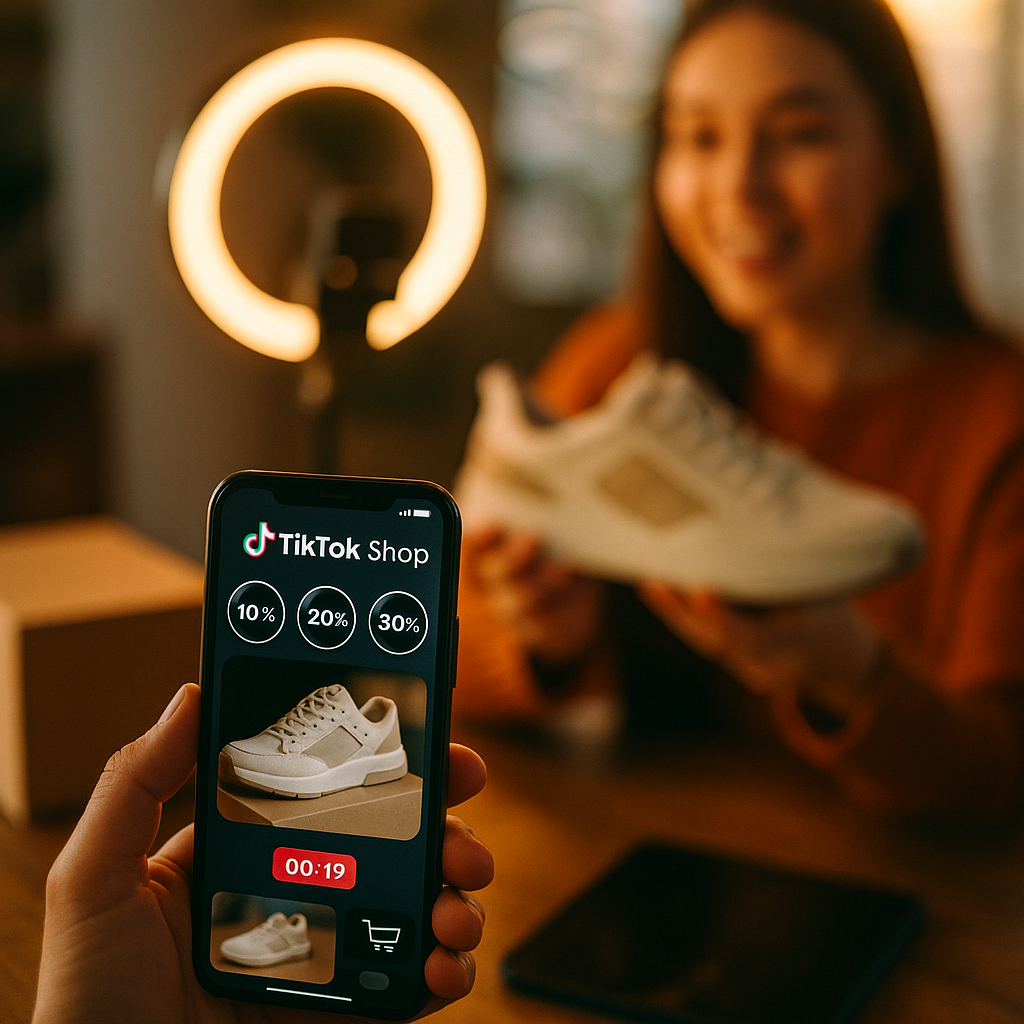
Most first-time CPG sellers on TikTok Shop torch their margin in week one. They copy a commission rate from a Discord thread, slap a countdown sticker on a livestream, and wonder why creators ghost them by week three. A well-structured TikTok Shop merchant playbook for commission tiers and countdown livestreams isn’t optional anymore — it’s the difference between a launch that scales and one that burns cash chasing GMV.
Why Most CPG Launches Get the Math Wrong Before They Start
Consumer packaged goods brands love flat commission rates. Pick 15%, apply it everywhere, done. It feels fair. It’s also lazy, and TikTok Shop’s affiliate marketplace punishes lazy pricing almost immediately.
Here’s the problem: a flat rate treats a nano-creator with 4,000 followers the same as a mid-tier creator doing six figures in monthly GMV. The nano-creator has no leverage and will take whatever you offer. The mid-tier creator is comparing your commission against three other CPG brands pitching them this week. If your rate doesn’t flex, you either overpay the long tail or underpay the creators actually moving product.
TikTok Shop’s own seller data consistently shows that top-performing affiliate campaigns use variable commission structures tied to performance tiers, not blanket rates. That’s not a suggestion. It’s how the platform’s affiliate leaderboard dynamics actually work — creators self-sort by what they can earn, and the algorithm rewards listings with active, escalating affiliate participation.
A flat commission rate is a signal to your best creators that you haven’t done the math on what their audience is actually worth to you.
Building the Three-Tier Commission Structure
Skip the spreadsheet paralysis. For a first launch, three tiers is enough. More than that and you’re managing a pricing model instead of a product launch.
- Tier 1 — Seeding rate (18-25%): This is your baseline for new and unproven affiliates. Keep it generous because you need volume of content early, not volume of sales. A new CPG SKU has zero social proof on day one. You’re paying for the first wave of authentic unboxings and reviews, not conversions.
- Tier 2 — Performance rate (12-18%): Once a creator crosses a sales threshold — say, 15 units sold or $500 in GMV — move them here. This is your sustainable, ongoing rate. It should still beat category averages (TikTok Shop’s beauty and personal care categories often see averages between 10-20%, per public seller benchmarks) but doesn’t bleed margin on your bestsellers.
- Tier 3 — VIP/negotiated rate (custom, often 8-15% plus flat fees or bonuses): Reserved for creators doing serious volume, or ones you want locked into livestream slots. At this tier you’re not just paying commission, you’re often layering in a flat appearance fee for countdown livestreams, which we’ll get to.
The mechanics matter here. TikTok Shop lets sellers set both standard commission plans and open collaboration plans with different rates. Use the standard plan for your Tier 1 seeding rate to control who gets in easily. Reserve target/negotiated plans for Tier 2 and 3, where you’re inviting specific creators based on past performance data pulled from the Seller Center dashboard.
One CPG snack brand we’ve tracked through public case commentary ran a 22% seeding tier for the first 30 days, then dropped new signups to 14% once they had 200+ pieces of organic affiliate content live. GMV didn’t dip. It actually accelerated, because the content library itself became the conversion engine, not the commission rate.
Don’t Forget the Margin Ceiling
Before setting any tier, calculate your true landed cost per unit — manufacturing, TikTok Shop’s platform fee (typically around 6-8% depending on category), shipping, and returns buffer. CPG margins are already thin compared to beauty or apparel. A commission structure that looks generous on paper can push you into negative unit economics the moment you add a livestream bonus on top. Model this in a spreadsheet before you publish a single commission plan, not after creators start asking why payouts feel inconsistent.
Countdown Livestreams: The Underused Launch Lever
Countdown livestreams are TikTok’s built-in urgency mechanic — a visible timer on a live shopping event, usually paired with limited-inventory or price-drop moments. For a first-time CPG launch, they solve a specific problem: getting a cold audience to convert on a product with zero purchase history.
The format works because it compresses decision time. Someone scrolling into a livestream with a visible countdown and a flash price is nudged toward impulse action, which matters enormously for CPG categories like snacks, beverages, or supplements where the purchase decision is naturally low-friction anyway.
But countdown livestreams fail for a predictable reason: brands treat them like a single event instead of a structured funnel. Here’s the sequence that actually works for a launch:
- Pre-launch teaser stream (48-72 hours out): No selling, just countdown visibility. Build the notification list.
- Launch countdown stream: The main event. Tiered price drops every 10-15 minutes tied to the countdown clock, stacked with limited-quantity flash bundles.
- Restock/urgency follow-up stream (24-48 hours later): For the inevitable sell-outs. This is where FOMO converts the fence-sitters who watched but didn’t buy.
This mirrors what’s already working in TikTok’s broader live commerce infrastructure. The platform’s push toward always-on livestream formats shows that consistency beats one-off spectacle — but for a first launch specifically, a tight three-stream countdown sequence gives you urgency without requiring the staffing infrastructure of a 24/7 operation.
Who Should Host — Founder, Creator, or Both?
First-time CPG brands overestimate how much audiences trust founder-led streams and underestimate how much production quality matters on TikTok Shop specifically. The safest structure for a launch: co-host with a mid-tier affiliate creator who already has commerce credibility, and let the founder appear for a segment to tell the origin story. Pure founder streams tend to underperform on conversion unless the founder already has an audience; pure creator streams sometimes lack the authenticity CPG buyers want when trying a new food or wellness brand for the first time.
Staffing and Inventory: The Part Nobody Budgets For
A countdown livestream that goes viral and sells out in nine minutes is a nightmare if your fulfillment team wasn’t warned. This happens more than brands admit. Set a hard inventory allocation for each stream — never list your full stock — and have a real-time stock alert system connected to your Seller Center account so hosts can adjust price-drop pacing if sell-through is faster than projected.
Compliance matters here too. FTC disclosure rules apply to livestream commerce exactly as they do to static posts — hosts and affiliate creators need to verbally and visually disclose paid partnerships during the stream, not just in a caption nobody reads live. Build this into your host briefing document, not as an afterthought. The FTC’s endorsement guidelines don’t carve out exceptions for livestream urgency formats, and enforcement attention on live commerce has only increased as the format has scaled.
The brands winning at TikTok Shop launches aren’t the ones with the biggest budgets — they’re the ones who treat commission structure and livestream cadence as a single integrated system, not two separate line items.
How This Compares to Other Shopping Platforms
If you’re weighing TikTok Shop against Instagram Shopping or YouTube Shopping for a CPG launch, the tiered commission model matters less on those platforms because their affiliate marketplaces are less mature and creators are harder to activate at scale through a single dashboard. TikTok Shop’s advantage is the density of ready-to-go affiliates browsing the marketplace daily looking for new commission opportunities — a dynamic explored in more depth in this platform comparison. Checkout speed is another factor worth understanding before you commit livestream budget to one platform over another, covered in this checkout speed analysis.
Worth noting: TikTok Shop’s in-app checkout means countdown urgency actually converts, because there’s no redirect friction. On platforms where shoppers get bounced to an external site, urgency mechanics lose most of their power — the countdown clock creates emotional urgency that dies the moment someone has to load a new page and re-enter payment details.
What to Track After Launch Week
Don’t just watch GMV. Track commission-cost-per-acquisition by tier, livestream watch-time retention against your countdown checkpoints, and affiliate churn — how many Tier 1 creators actually convert to Tier 2 within 30 days. If your Tier 1-to-Tier 2 conversion rate is under 10%, your seeding rate probably isn’t generous enough to produce content that performs, or your product-market fit signal is weaker than you think. According to eMarketer, live shopping continues to grow as a share of U.S. social commerce spend, which means the cost of getting this wrong compounds every quarter you delay optimizing it.
FAQs
Frequently Asked Questions
What’s a reasonable starting commission rate for a first-time CPG launch on TikTok Shop?
Most successful launches start with an 18-25% seeding tier for new affiliates in the first 30-60 days, then step down to a 12-18% performance tier once creators prove they can sell. This range accounts for typical CPG margins while still being competitive enough to attract creator attention in a crowded marketplace.
How many commission tiers should a first-time seller use?
Three tiers is the sweet spot: a seeding rate for unproven affiliates, a performance rate for creators who’ve hit a sales threshold, and a negotiated VIP rate for top performers or livestream hosts. More tiers add administrative complexity without meaningfully improving results for a first launch.
How long should a countdown livestream sequence run for a product launch?
A three-stream sequence over roughly five days works well: a teaser stream 48-72 hours before launch, the main countdown event on launch day, and a restock or urgency follow-up stream 24-48 hours later to capture shoppers who hesitated the first time.
Do countdown livestream hosts need to disclose paid partnerships?
Yes. FTC disclosure requirements apply to live commerce the same way they apply to static posts and videos. Hosts and affiliate creators need clear, real-time verbal or visual disclosure during the stream itself, not just in written captions or descriptions.
How much inventory should I allocate to a single countdown livestream?
Never list full available stock. Allocate a fixed portion — many sellers use 20-40% of on-hand inventory per stream — and monitor sell-through in real time so hosts can adjust pacing or price drops if demand outpaces projections.
What’s the biggest mistake first-time CPG sellers make with commission structuring?
Using a single flat commission rate across all creators. This either overpays low-performing affiliates or underpays the mid-tier and top creators actually driving sales, causing your best partners to deprioritize your listing in favor of brands offering tiered, performance-based payouts.
Next step: Before your launch date, build a one-page commission and livestream calendar that maps each tier threshold to a specific stream in your countdown sequence — then review it weekly against actual GMV and affiliate churn data, not gut feel.
Top Influencer Marketing Agencies
The leading agencies shaping influencer marketing in 2026
Agencies ranked by campaign performance, client diversity, platform expertise, proven ROI, industry recognition, and client satisfaction. Assessed through verified case studies, reviews, and industry consultations.
Moburst

-
2

The Shelf
Boutique Beauty & Lifestyle Influencer AgencyA data-driven boutique agency specializing exclusively in beauty, wellness, and lifestyle influencer campaigns on Instagram and TikTok. Best for brands already focused on the beauty/personal care space that need curated, aesthetic-driven content.Clients: Pepsi, The Honest Company, Hims, Elf Cosmetics, Pure LeafVisit The Shelf → -
3

Audiencly
Niche Gaming & Esports Influencer AgencyA specialized agency focused exclusively on gaming and esports creators on YouTube, Twitch, and TikTok. Ideal if your campaign is 100% gaming-focused — from game launches to hardware and esports events.Clients: Epic Games, NordVPN, Ubisoft, Wargaming, Tencent GamesVisit Audiencly → -
4

Viral Nation
Global Influencer Marketing & Talent AgencyA dual talent management and marketing agency with proprietary brand safety tools and a global creator network spanning nano-influencers to celebrities across all major platforms.Clients: Meta, Activision Blizzard, Energizer, Aston Martin, WalmartVisit Viral Nation → -
5

The Influencer Marketing Factory
TikTok, Instagram & YouTube CampaignsA full-service agency with strong TikTok expertise, offering end-to-end campaign management from influencer discovery through performance reporting with a focus on platform-native content.Clients: Google, Snapchat, Universal Music, Bumble, YelpVisit TIMF → -
6

NeoReach
Enterprise Analytics & Influencer CampaignsAn enterprise-focused agency combining managed campaigns with a powerful self-service data platform for influencer search, audience analytics, and attribution modeling.Clients: Amazon, Airbnb, Netflix, Honda, The New York TimesVisit NeoReach → -
7

Ubiquitous
Creator-First Marketing PlatformA tech-driven platform combining self-service tools with managed campaign options, emphasizing speed and scalability for brands managing multiple influencer relationships.Clients: Lyft, Disney, Target, American Eagle, NetflixVisit Ubiquitous → -
8

Obviously
Scalable Enterprise Influencer CampaignsA tech-enabled agency built for high-volume campaigns, coordinating hundreds of creators simultaneously with end-to-end logistics, content rights management, and product seeding.Clients: Google, Ulta Beauty, Converse, AmazonVisit Obviously →