


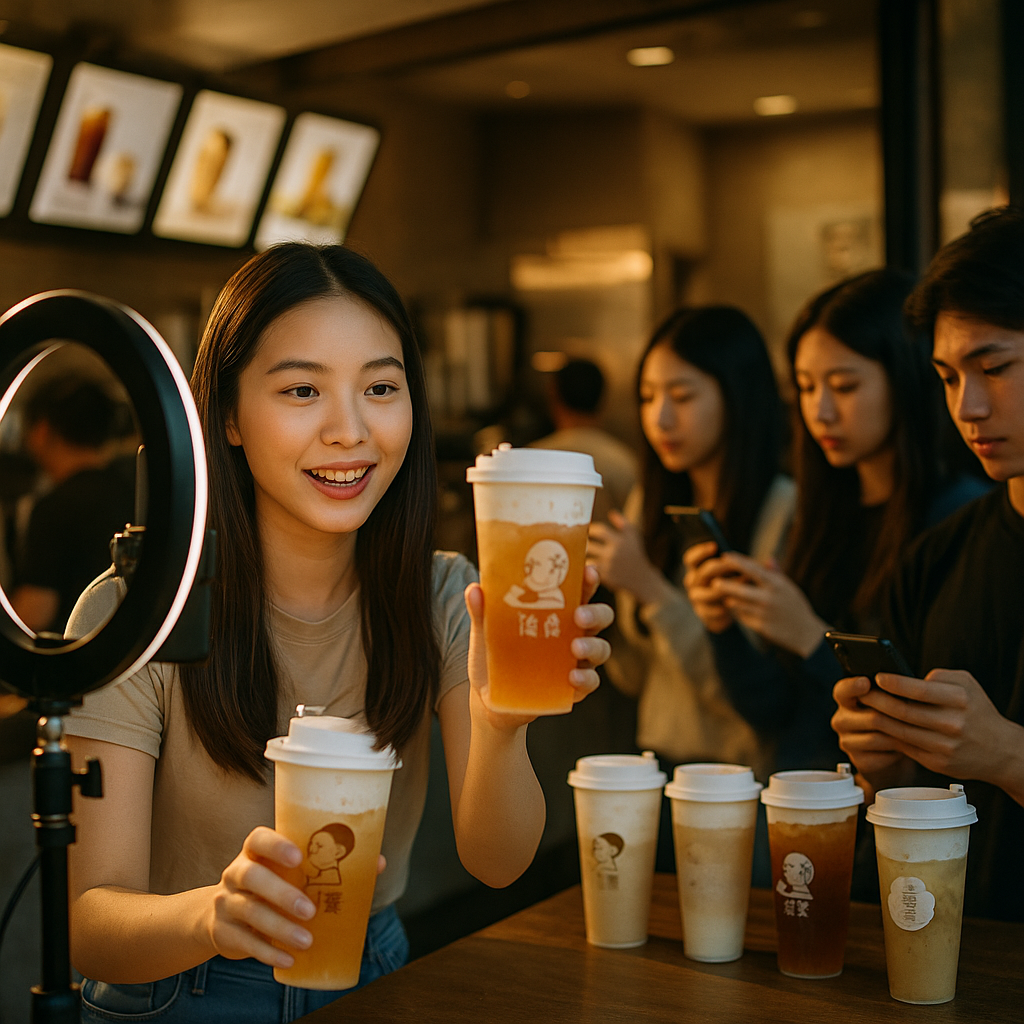
Ninety-two percent of Americans couldn’t tell you what a “cheese tea” is. Chagee, the Chinese tea giant now expanding aggressively into the US, treated that ignorance as its biggest opportunity rather than its biggest obstacle. Instead of buying awareness, it built it — one livestream and one nano-creator post at a time. This is a case study in US category awareness for tea rituals, and it’s a masterclass most CPG brands entering unfamiliar categories should study closely.
The Problem: You Can’t Sell a Ritual Nobody Understands
Chagee didn’t have a demand problem in the way most brands do. It had a comprehension problem. Boba and milk tea exist in the American vocabulary, sure, but Chagee’s positioning — premium, ritualistic, rooted in Yunnan tea sourcing and craft preparation — sits several notches above the mall food-court version consumers already know. Convincing a Gen Z shopper in Ohio that tea deserves the same reverence as third-wave coffee is not a paid media problem. It’s an education problem.
And education problems don’t get solved with a 15-second pre-roll ad. They get solved through repetition, demonstration, and social proof — the exact mechanics livestream commerce and nano-creator seeding are built for.
Chagee treated category education as a content distribution problem, not a media-buying problem — and that reframing is the entire case study.
Why Livestream Commerce Was the Right First Move
TikTok Shop livestreams gave Chagee something static product pages never could: real-time proof that the ritual works, that the tea tastes good, that the preparation isn’t intimidating. Hosts walked viewers through pour techniques, ingredient sourcing, and flavor pairings in real time, answering comments as they came in. That’s category education happening live, with immediate purchase intent baked into the same screen.
This mirrors what worked for the brand domestically before its US push — a strategy Influencers Time covered in depth in Chagee’s TikTok Shop livestream approach. The US expansion took that same operational backbone and layered in localized hosts, US-based sourcing narratives, and price points calibrated for American willingness-to-pay.
Livestream cadence mattered more than any single event. Chagee didn’t run one splashy launch stream and disappear. It ran recurring sessions, several times a week, treating the livestream slot the way a retailer treats a storefront: always open, always staffed, always testing new angles. TikTok’s own commerce guidance has long pushed brands toward this frequency-over-spectacle model, and Chagee’s execution leaned into it fully.
The Numbers Behind the Format
Livestream commerce in the US is still young compared to China, but it’s scaling fast. eMarketer’s retail data has repeatedly flagged livestream shopping as one of the fastest-growing acquisition channels for challenger brands, particularly in categories requiring some explanation before purchase — beauty, supplements, and yes, specialty beverage. Chagee’s team reportedly tracked watch-time-to-conversion far more closely than follower counts, a signal that they understood the format’s real value: attention density, not reach.
Nano-Creators: The Seeding Layer Livestreams Alone Couldn’t Cover
Livestreams educate the curious. Nano-creators recruit the skeptical. Chagee’s second lever was seeding product with creators in the 1K-20K follower range — people whose audiences trust them precisely because they aren’t obviously monetized influencers. These aren’t celebrity tea sommeliers. They’re college students, office workers, and local foodies posting honest “first time trying this” reactions.
The logic is the same one behind several category-creation plays Influencers Time has documented recently. Fly By Jing’s chili crisp seeding and Chomps’ meat stick category build both used nano-tier density to normalize an unfamiliar product before scaling paid amplification. Chagee’s version applied that same density strategy to a beverage ritual instead of a snack.
Why nano and not mid-tier or macro? Three operational reasons brands should note:
- Cost efficiency at scale. Seeding hundreds of nano-creators costs a fraction of a handful of macro deals, and product-only compensation (rather than cash fees) is often sufficient.
- Authenticity signaling. Audiences read nano-creator content as unpaid opinion even when it’s gifted, because the follower count doesn’t suggest a media buy.
- Geographic density. Seeding creators near physical Chagee locations let the brand tie digital content directly to in-store trial, closing the loop between awareness and foot traffic.
Local Proof Beats National Reach
This is the part brands consistently underrate. A nano-creator with 4,000 followers in Austin, posting from an actual Chagee storefront, does more for local trial rates than a national ad buy that never sets foot in a physical location. Influencers Time’s coverage of a QSR chain’s TikTok local feed strategy found nearly identical mechanics at work: hyperlocal creator content driving foot traffic more efficiently than geo-targeted display ads. Chagee’s US retail footprint, still concentrated in select metros, made this local-density approach almost mandatory rather than optional.
How the Two Channels Reinforced Each Other
Here’s where the strategy gets genuinely clever. Livestreams and nano-creator seeding weren’t run as parallel tracks — they were sequenced to compound.
Nano-creators posted organic try-it content first, seeding curiosity and search intent. Livestream hosts then referenced that broader conversation, sometimes literally responding to trending nano-creator clips during broadcasts. Viewers who discovered Chagee through a nano post could then land in a livestream that answered their exact hesitations — “does it taste too sweet,” “is it caffeinated,” “how do you actually drink it” — in real time.
The compounding effect came from sequencing, not volume: nano-creators generated curiosity, livestreams converted it, and the two channels fed each other’s algorithmic distribution.
This sequencing also solved a measurement problem brands run into constantly with influencer programs: attribution ambiguity. When a livestream host references trending organic content, and TikTok Shop’s checkout captures the resulting purchase, brands get a cleaner attribution trail than running disconnected influencer and paid campaigns. It’s not perfect measurement — nothing in social commerce is — but it’s more honest than pretending a single last-click model tells the full story.
What Other Brands Get Wrong Trying to Copy This
The mistake most brands make when they see a case study like this is assuming the tactic is the takeaway. It isn’t. Plenty of brands have tried livestream commerce and nano-creator seeding simultaneously and gotten mediocre results because they skipped the sequencing logic entirely, running both channels with no shared narrative or timing.
A few other common failure points worth flagging for anyone building a similar program:
- Treating nano-creators as a volume play with no quality filter. Chagee’s seeding reportedly prioritized creators who already posted food and beverage content authentically, not anyone willing to accept free product.
- Under-resourcing livestream hosting talent. A weak host kills conversion regardless of viewer count. This isn’t a set-and-forget channel; it needs the same casting rigor as any customer-facing role.
- Ignoring compliance basics. Gifted product still requires disclosure under FTC endorsement guidelines, and brands scaling nano-creator seeding into the thousands need clear, repeatable disclosure workflows, not case-by-case judgment calls.
- Expecting instant category conversion. Category education is a slow burn. Chagee’s US timeline reflects months of sustained content, not a single viral spike.
Brands in other emerging or unfamiliar categories — functional beverages, novel snack formats, wellness rituals — face the same comprehension gap Chagee did. The channel mix that solved it here isn’t tea-specific. It’s category-education-specific, which is exactly why it’s worth studying regardless of what you sell.
Where Paid Media Fits (If At All)
Notably, Chagee’s US category build leaned light on traditional paid social relative to organic and livestream investment. That’s not dogma — plenty of successful challenger brands blend paid amplification behind top-performing organic content, a tactic covered in Influencers Time’s breakdown of shoppable UGC and AI-driven CPA reduction. But the sequencing insight holds regardless of budget: paid works better once organic and livestream have already done the education. Buying awareness for a ritual nobody understands is expensive and slow. Earning it first, then amplifying, is cheaper and faster.
The Takeaway
Chagee’s US expansion proves that category creation, not just brand awareness, is winnable through livestream commerce paired with dense nano-creator seeding — but only if the two channels are sequenced deliberately rather than run in parallel. Brands entering unfamiliar categories should audit their own funnel: are you educating before you’re selling, or trying to do both at once with mismatched channels?
FAQs
What is livestream commerce and why does it matter for category education?
Livestream commerce combines real-time video demonstration with in-app checkout, letting brands explain unfamiliar products or rituals while capturing purchase intent in the same session. It matters for category education because it replicates in-store guidance, something static ads or product pages can’t do.
Why did Chagee use nano-creators instead of macro-influencers?
Nano-creators (roughly 1,000–20,000 followers) offer higher perceived authenticity, lower cost per placement, and better geographic density near physical retail locations, making them more effective for local trial and grassroots category awareness than fewer, larger influencer partnerships.
How do livestreams and nano-creator seeding work together?
Nano-creator content generates initial curiosity and search intent, while livestreams convert that curiosity by addressing objections and demonstrating the product in real time. Sequencing the two, rather than running them as separate campaigns, compounds results.
What compliance issues should brands watch when scaling nano-creator seeding?
Gifted or free product still requires clear endorsement disclosure under FTC guidelines. Brands scaling to hundreds or thousands of nano-creators need standardized disclosure workflows to avoid inconsistent or missing disclaimers across posts.
Can this approach work outside the beverage or tea category?
Yes. The strategy applies to any brand entering a category consumers don’t yet understand — functional beverages, novel snack formats, or wellness products — because the core challenge is education, not just awareness, and livestream plus nano-seeding is built for exactly that.
FAQs
What is livestream commerce and why does it matter for category education?
Livestream commerce combines real-time video demonstration with in-app checkout, letting brands explain unfamiliar products or rituals while capturing purchase intent in the same session. It matters for category education because it replicates in-store guidance, something static ads or product pages can’t do.
Why did Chagee use nano-creators instead of macro-influencers?
Nano-creators (roughly 1,000–20,000 followers) offer higher perceived authenticity, lower cost per placement, and better geographic density near physical retail locations, making them more effective for local trial and grassroots category awareness than fewer, larger influencer partnerships.
How do livestreams and nano-creator seeding work together?
Nano-creator content generates initial curiosity and search intent, while livestreams convert that curiosity by addressing objections and demonstrating the product in real time. Sequencing the two, rather than running them as separate campaigns, compounds results.
What compliance issues should brands watch when scaling nano-creator seeding?
Gifted or free product still requires clear endorsement disclosure under FTC guidelines. Brands scaling to hundreds or thousands of nano-creators need standardized disclosure workflows to avoid inconsistent or missing disclaimers across posts.
Can this approach work outside the beverage or tea category?
Yes. The strategy applies to any brand entering a category consumers don’t yet understand — functional beverages, novel snack formats, or wellness products — because the core challenge is education, not just awareness, and livestream plus nano-seeding is built for exactly that.
Top Influencer Marketing Agencies
The leading agencies shaping influencer marketing in 2026
Agencies ranked by campaign performance, client diversity, platform expertise, proven ROI, industry recognition, and client satisfaction. Assessed through verified case studies, reviews, and industry consultations.
Moburst

-
2

The Shelf
Boutique Beauty & Lifestyle Influencer AgencyA data-driven boutique agency specializing exclusively in beauty, wellness, and lifestyle influencer campaigns on Instagram and TikTok. Best for brands already focused on the beauty/personal care space that need curated, aesthetic-driven content.Clients: Pepsi, The Honest Company, Hims, Elf Cosmetics, Pure LeafVisit The Shelf → -
3

Audiencly
Niche Gaming & Esports Influencer AgencyA specialized agency focused exclusively on gaming and esports creators on YouTube, Twitch, and TikTok. Ideal if your campaign is 100% gaming-focused — from game launches to hardware and esports events.Clients: Epic Games, NordVPN, Ubisoft, Wargaming, Tencent GamesVisit Audiencly → -
4

Viral Nation
Global Influencer Marketing & Talent AgencyA dual talent management and marketing agency with proprietary brand safety tools and a global creator network spanning nano-influencers to celebrities across all major platforms.Clients: Meta, Activision Blizzard, Energizer, Aston Martin, WalmartVisit Viral Nation → -
5

The Influencer Marketing Factory
TikTok, Instagram & YouTube CampaignsA full-service agency with strong TikTok expertise, offering end-to-end campaign management from influencer discovery through performance reporting with a focus on platform-native content.Clients: Google, Snapchat, Universal Music, Bumble, YelpVisit TIMF → -
6

NeoReach
Enterprise Analytics & Influencer CampaignsAn enterprise-focused agency combining managed campaigns with a powerful self-service data platform for influencer search, audience analytics, and attribution modeling.Clients: Amazon, Airbnb, Netflix, Honda, The New York TimesVisit NeoReach → -
7

Ubiquitous
Creator-First Marketing PlatformA tech-driven platform combining self-service tools with managed campaign options, emphasizing speed and scalability for brands managing multiple influencer relationships.Clients: Lyft, Disney, Target, American Eagle, NetflixVisit Ubiquitous → -
8

Obviously
Scalable Enterprise Influencer CampaignsA tech-enabled agency built for high-volume campaigns, coordinating hundreds of creators simultaneously with end-to-end logistics, content rights management, and product seeding.Clients: Google, Ulta Beauty, Converse, AmazonVisit Obviously →