


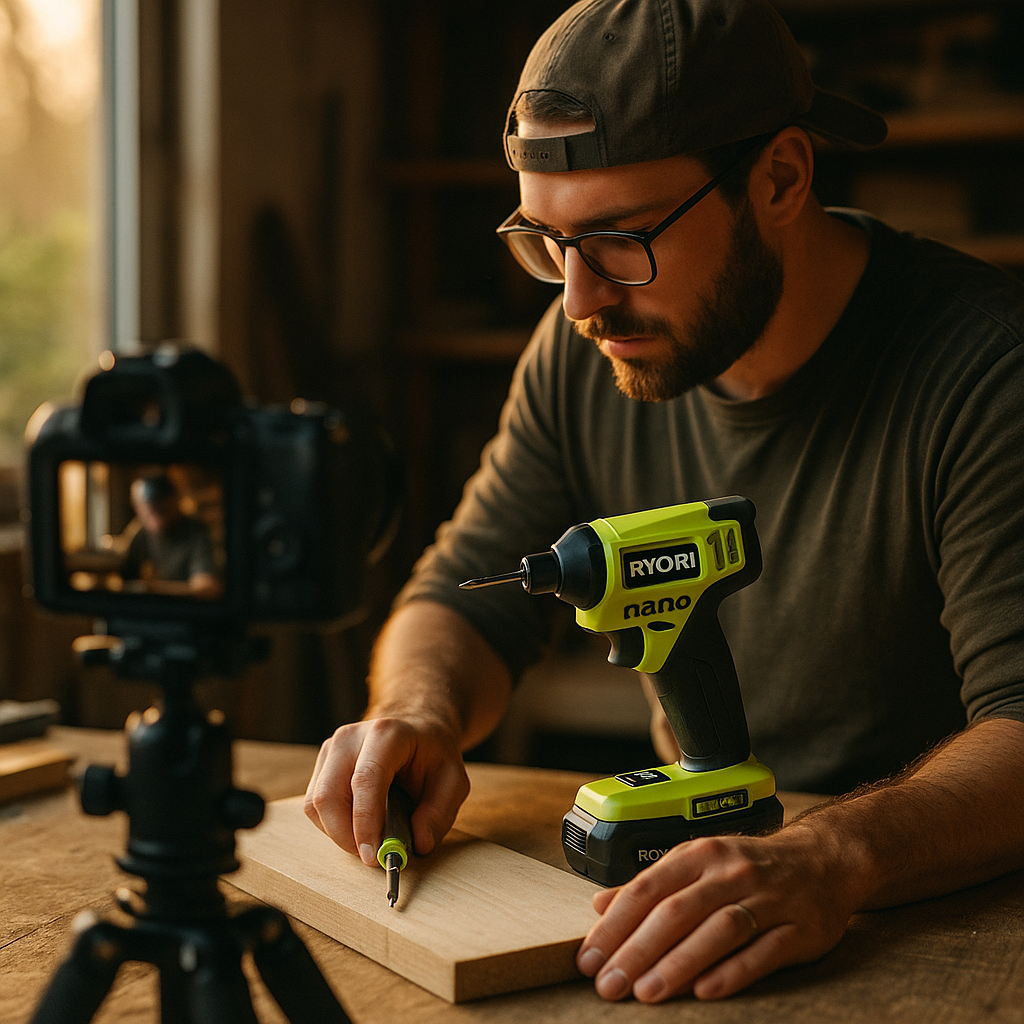
A power tool brand outspending competitors on paid search still loses to a guy in a garage filming a drill review on his phone. Sounds implausible? Ryobi’s nano-creator DIY tool review program now delivers the brand’s highest return on ad spend of any acquisition channel, beating out paid social and search by a wide margin. Here’s how a 40-year-old orange power tool brand quietly rebuilt its growth engine around people with 3,000 followers and a workbench.
Why Ryobi Bet on Nano-Creators Over Pro Reviewers
Ryobi’s marketing team faced a familiar problem: their target buyer doesn’t trust brand-produced content, and increasingly doesn’t trust big-name tool reviewers either. YouTube’s largest tool channels get sponsorship checks from every major manufacturer, and audiences know it. Skepticism runs high. Meanwhile, a weekend woodworker with 4,000 TikTok followers posting an unscripted “is this drill actually worth $99” video reads as credible precisely because it looks unpolished.
Ryobi leaned into that dynamic deliberately. Instead of chasing reach through mid-tier influencers with agents and rate cards, the brand built a pipeline that seeds tools directly to nano-creators — typically defined as accounts with 1,000 to 10,000 followers — who already talk about DIY, home renovation, or garage projects. No scripts. No mandatory talking points. Just product in hand, camera rolling.
This mirrors a pattern showing up across categories. Solo Stove’s nano-creator seeding engine and Stanley’s tumbler-driven seeding playbook both proved that smaller creators, at scale, can outperform top-tier partnerships on cost-per-acquisition. Ryobi took that logic into a much more considered purchase category, and it worked even better than expected.
Ryobi’s internal data shows nano-creator DIY reviews converting at a rate roughly 3x higher than the brand’s paid social benchmarks, at a fraction of the cost per acquisition.
The Mechanics: How the Program Actually Runs
This isn’t a one-off gifting stunt. Ryobi built operational infrastructure around it, and that’s the part most brands skip.
- Always-on seeding, not campaign bursts. Tools ship out continuously rather than in quarterly waves, so there’s a constant drip of fresh review content rather than a spike-and-drought pattern.
- Category-specific creator sourcing. The team identifies creators by project type — deck building, garage organization, first-time homeowners — rather than by follower count alone. Relevance matters more than reach.
- Product-market fit tools first. New releases get seeded before they hit retail shelves, giving creators genuine “first look” status, which drives higher engagement than post-launch content.
- Light-touch briefs. Creators get the product, a suggested use case, and freedom. No mandatory hashtags beyond disclosure requirements, no forced brand messaging.
- UGC rights baked into the agreement. Every nano-creator partnership includes usage rights, letting Ryobi repurpose top-performing reviews into paid social and retail media without renegotiating.
That last point is where the ROAS math really shifts. A single $150 tool seed can generate organic content plus a paid asset that Ryobi runs across Meta and YouTube for months. Compare that to a $15,000 mid-tier influencer package that yields one branded video and no repurposing rights. The unit economics aren’t close.
What Made the Content Convert
DIY tools are a considered purchase. Buyers research specs, compare torque ratings, read Reddit threads, and watch multiple reviews before adding to cart. That research-heavy journey is exactly why nano-creator content outperforms polished brand video — it answers the specific, skeptical questions a buyer already has.
Ryobi’s most-converting content wasn’t cinematic. It was a guy comparing battery runtime on a stopwatch, or a homeowner showing what the drill did to drywall after twenty holes. Rough footage. Real use cases. Comment sections full of “does this work on X” questions that creators actually answered.
The brand’s growth team noticed something else too: viewers didn’t just watch, they cross-referenced. A single strong review would get linked in Reddit’s r/tools threads and Facebook DIY groups, extending its shelf life for months after posting. That secondary distribution is nearly impossible to buy and almost never happens with over-produced influencer content.
This tracks with broader platform data. eMarketer research has repeatedly shown that audiences rank peer and creator recommendations above branded advertising for trust, especially in categories with high perceived risk like home improvement, where a bad tool purchase means wasted money and a ruined project.
ROAS by the Numbers — Directionally
Ryobi hasn’t published exact figures publicly, but industry benchmarks help frame why the model works. Nano-creator campaigns typically cost 60-80% less per piece of content than mid-tier influencer deals, according to data cited by Sprout Social, while engagement rates on nano accounts routinely outperform macro accounts on a per-follower basis.
Layer that onto Ryobi’s existing retail media and affiliate infrastructure, and the math compounds. A tool review with genuine engagement drives:
- Direct click-throughs via affiliate links or shoppable tags
- Organic search visibility, since long-tail tool comparison content ranks well and gets referenced repeatedly
- Paid social assets Ryobi can run at a fraction of production cost
- Retail media creative for Home Depot’s on-site and app placements, where Ryobi is a flagship brand
That fourth point is underrated. Home Depot’s retail media network rewards authentic product demonstration content, and Ryobi’s nano-creator library gives them a constant supply of it without hiring a production house.
Where Other Brands Get This Wrong
Plenty of brands have tried “nano-creator programs” and gotten mediocre results. The difference usually comes down to three operational failures Ryobi avoided.
First, treating it like a campaign instead of infrastructure. A three-week nano-creator push generates a content spike, then silence. Ryobi runs seeding as a permanent function, similar to how Liquid Death built nano-creator relationships into an ongoing brand engine rather than a campaign line item.
Second, over-scripting creators. The moment a nano-creator sounds like they’re reading brand copy, the trust that made them valuable disappears. Ryobi’s briefs are closer to “here’s the product, here’s who might care” than a content calendar.
Third, ignoring vetting and compliance. Product seeding at scale means dozens or hundreds of creators posting per month. Without a system for tracking FTC disclosure compliance, usage rights, and basic quality control, the program becomes a liability rather than an asset. Brands scaling seeding programs increasingly lean on AI-assisted vetting tools to manage this volume — a shift covered in how one supplement brand cut discovery costs with AI vetting. Ryobi’s legal and marketing teams built disclosure checklists directly into the creator onboarding flow, referencing FTC endorsement guidelines to keep every partnership compliant regardless of creator size.
Scaling nano-creator seeding without a compliance layer isn’t a growth program — it’s a lawsuit waiting for an FTC audit.
This is the risk-mitigation angle brand teams can’t skip. Nano-creators are less likely to have professional representation or legal awareness, which means the brand carries more responsibility for ensuring disclosures happen correctly. Ryobi’s program includes automated reminders and disclosure templates sent alongside every product shipment, reducing the manual burden on both sides.
The Broader Shift This Reflects
Ryobi isn’t an outlier so much as an early mover in a pattern reshaping acquisition strategy across considered-purchase categories. Brands selling anything that requires research — appliances, outdoor gear, software, financial products — are discovering that trust-driven micro-content beats reach-driven macro content on efficiency metrics that actually matter to CFOs.
The category precedent is everywhere once you look. YETI built a premium category largely without traditional ads, relying instead on authentic use-case content. Vessi turned product demos into a referral engine using similar seeding logic. The common thread: brands that let smaller creators be unpolished and honest consistently out-convert brands chasing follower count.
Ryobi’s own earlier work on this front — detailed in how Ryobi turned nano-creator seeding into its top channel — laid the groundwork for this more refined, DIY-review-specific iteration. The evolution matters: what started as general product seeding became a purpose-built review engine tied directly to purchase-stage content.
For marketing leaders evaluating budget allocation for the year ahead, the Ryobi case offers a specific, testable hypothesis: in categories where buyers research heavily before purchase, a well-run nano-creator review program will likely outperform mid-tier influencer spend on cost-per-acquisition, and may outperform paid search on trust-adjusted conversion. It’s worth a pilot budget before it’s worth a full reallocation.
Next Steps for Brands Considering This Model
Start small: seed 20-30 nano-creators in a single product category, track content performance against your existing paid benchmarks for 90 days, and build the disclosure and usage-rights infrastructure before scaling volume. The brands winning with this model treated it as a system to build, not a campaign to run.
FAQs
What counts as a nano-creator in a program like Ryobi’s?
Nano-creators typically have between 1,000 and 10,000 followers. Ryobi prioritizes relevance to DIY and home improvement niches over raw follower count when selecting partners.
How does Ryobi measure ROAS on nano-creator content?
Ryobi tracks direct affiliate link conversions, repurposed paid social performance, and retail media contribution from seeded content, comparing blended cost-per-acquisition against paid search and traditional influencer benchmarks.
Why do nano-creators outperform larger influencers on conversion?
Smaller creators generally have higher engagement rates and are perceived as more trustworthy since audiences see them as peers rather than paid spokespeople, which matters heavily in considered-purchase categories like power tools.
What compliance risks come with scaling a nano-creator program?
The main risk is inconsistent FTC disclosure compliance across a large number of smaller creators who may lack professional management. Brands need built-in disclosure templates and monitoring systems to manage this at scale.
Can smaller brands replicate this without Ryobi’s budget?
Yes. The core cost is product seeding, not media spend, making this model accessible to smaller brands. The bigger investment is operational: creator sourcing, vetting, and content rights management.
Top Influencer Marketing Agencies
The leading agencies shaping influencer marketing in 2026
Agencies ranked by campaign performance, client diversity, platform expertise, proven ROI, industry recognition, and client satisfaction. Assessed through verified case studies, reviews, and industry consultations.
Moburst

-
2

The Shelf
Boutique Beauty & Lifestyle Influencer AgencyA data-driven boutique agency specializing exclusively in beauty, wellness, and lifestyle influencer campaigns on Instagram and TikTok. Best for brands already focused on the beauty/personal care space that need curated, aesthetic-driven content.Clients: Pepsi, The Honest Company, Hims, Elf Cosmetics, Pure LeafVisit The Shelf → -
3

Audiencly
Niche Gaming & Esports Influencer AgencyA specialized agency focused exclusively on gaming and esports creators on YouTube, Twitch, and TikTok. Ideal if your campaign is 100% gaming-focused — from game launches to hardware and esports events.Clients: Epic Games, NordVPN, Ubisoft, Wargaming, Tencent GamesVisit Audiencly → -
4

Viral Nation
Global Influencer Marketing & Talent AgencyA dual talent management and marketing agency with proprietary brand safety tools and a global creator network spanning nano-influencers to celebrities across all major platforms.Clients: Meta, Activision Blizzard, Energizer, Aston Martin, WalmartVisit Viral Nation → -
5

The Influencer Marketing Factory
TikTok, Instagram & YouTube CampaignsA full-service agency with strong TikTok expertise, offering end-to-end campaign management from influencer discovery through performance reporting with a focus on platform-native content.Clients: Google, Snapchat, Universal Music, Bumble, YelpVisit TIMF → -
6

NeoReach
Enterprise Analytics & Influencer CampaignsAn enterprise-focused agency combining managed campaigns with a powerful self-service data platform for influencer search, audience analytics, and attribution modeling.Clients: Amazon, Airbnb, Netflix, Honda, The New York TimesVisit NeoReach → -
7

Ubiquitous
Creator-First Marketing PlatformA tech-driven platform combining self-service tools with managed campaign options, emphasizing speed and scalability for brands managing multiple influencer relationships.Clients: Lyft, Disney, Target, American Eagle, NetflixVisit Ubiquitous → -
8

Obviously
Scalable Enterprise Influencer CampaignsA tech-enabled agency built for high-volume campaigns, coordinating hundreds of creators simultaneously with end-to-end logistics, content rights management, and product seeding.Clients: Google, Ulta Beauty, Converse, AmazonVisit Obviously →