


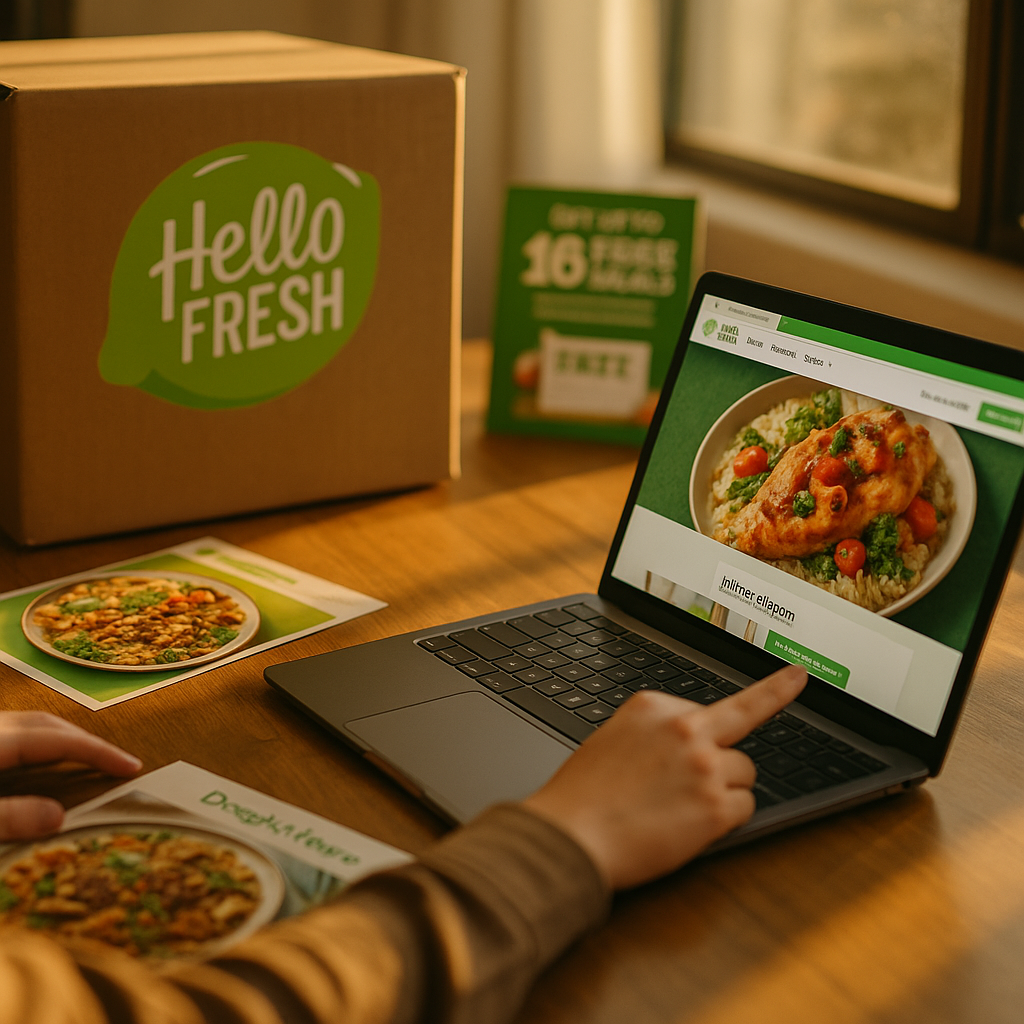
Meal-kit churn rates hover around 70-80% annually, yet HelloFresh has stayed the category leader for over a decade. The secret isn’t one big campaign or one clever hack. The HelloFresh dual-strategy model runs two influencer programs simultaneously, one built for reach and brand equity, the other engineered for measurable, always-on conversion. Most brands pick a lane. HelloFresh built both.
Why One Influencer Strategy Was Never Going to Be Enough
Meal kits are a strange product to market. They need constant top-of-funnel awareness because most people forget meal kits exist until a nagging voice in their head says “I should cook more.” But they also need aggressive bottom-funnel conversion, because free-trial economics only work if new subscribers convert to paying customers before churning out in month one.
Trying to solve both problems with a single influencer tactic is a bit like using one knife to both chop garlic and carve a turkey. Technically possible. Not ideal. HelloFresh’s marketing team appears to have recognized this early, splitting spend and strategy into two distinct tracks that rarely get discussed in the same case study.
Track One: Big-Budget Brand Campaigns for Reach and Trust
The first track looks like traditional celebrity and macro-influencer marketing, just with a subscription-commerce twist. HelloFresh has run campaigns featuring high-profile talent and lifestyle creators across YouTube, Instagram, and connected TV, focused on unboxing moments, family dinner routines, and the “I actually cook now” narrative arc that resonates with skeptical non-cookers.
These campaigns aren’t optimized for immediate click-through. They’re optimized for something harder to measure but just as important: category association. When someone thinks “meal kit,” HelloFresh wants to be the default answer, the way Kleenex became tissues. That requires reach at scale, and reach at scale requires budget that smaller competitors like Home Chef or EveryPlate simply can’t match.
Brand campaigns build the mental shortcut. Affiliate programs harvest the demand that shortcut creates. Skip either half and you’re leaving money on the table.
This is also where HelloFresh leans on seasonal and cultural moments: New Year’s resolutions, back-to-school scrambles, and holiday-adjacent “give yourself a break” messaging. Big-budget campaigns get timed to when consumer intent naturally spikes, not scattered evenly across the calendar. That timing discipline matters more than most marketers admit.
Track Two: The Always-On Affiliate Engine
Here’s where things get genuinely interesting for performance marketers. Running parallel to the glossy campaigns is a sprawling affiliate and nano-creator program that never really turns off. Thousands of smaller creators, food bloggers, budget-conscious moms, fitness influencers, and college-age side hustlers post HelloFresh discount codes and links continuously, earning commission per conversion.
This isn’t a seasonal push. It’s infrastructure. The always-on nature means HelloFresh has a constant, predictable stream of new-customer acquisition that doesn’t depend on a single campaign hitting. If one creator’s content underperforms, ten others are still driving trials. That redundancy is the whole point.
The affiliate side also solves a trust problem the big campaigns can’t. A celebrity endorsement feels like an ad. A nano-creator saying “here’s the code I actually use every week” feels like a recommendation. Research from HubSpot consistently shows consumers trust peer-level recommendations over polished celebrity endorsements, especially for recurring purchase decisions like grocery and meal subscriptions.
Where AI Actually Fits Into the Model
The “AI-optimized” part of this strategy isn’t marketing fluff. It shows up in three concrete places:
- Creator matching and vetting. With thousands of affiliates in rotation, manually reviewing each creator’s audience quality, engagement authenticity, and content fit isn’t feasible. AI-driven vetting tools flag fraud risk and audience mismatch before a single dollar of commission gets paid out.
- Dynamic commission and code optimization. Rather than a flat commission rate across the board, algorithms adjust payouts based on which creators, codes, and content formats are driving actual paid conversions, not just clicks.
- Content and creative testing at scale. AI tools analyze which hooks, thumbnails, and messaging angles perform best across hundreds of simultaneous affiliate posts, then feed those insights back to creators and internal teams.
This mirrors a broader shift across the industry. Brands like the ones covered in our AI vetting case study are discovering that manual creator discovery simply doesn’t scale past a certain program size. HelloFresh’s affiliate operation, reportedly involving thousands of active partners, would be operationally impossible to run without automation layered on top.
The ROI Math Brands Actually Care About
Skeptical CMOs will rightly ask: does running two programs cost twice as much for marginal extra return? The data suggests otherwise, largely because the two tracks serve different parts of the funnel and get measured against different KPIs.
Big-budget campaigns get evaluated on brand lift, share of voice, and CAC trends over quarters, not days. Affiliate performance gets evaluated on cost-per-acquisition and lifetime value ratios, often within days of a code going live. Because attribution is cleaner on the affiliate side (unique codes, trackable links, direct commission structures), that program essentially self-funds through performance data. It rarely needs a leap of faith from finance.
Meanwhile, eMarketer data on subscription commerce shows customer acquisition costs in the meal-kit category have risen steadily as ad platforms get more expensive and privacy changes limit targeting precision. Diversifying acquisition across both paid brand campaigns and organic-feeling affiliate content hedges against that inflation. If Meta ad costs spike, the affiliate engine keeps producing trials at a relatively stable cost.
When one acquisition channel gets more expensive, brands with a diversified creator strategy don’t panic. They shift weight, not strategy.
What Other Brands Get Wrong When They Try to Copy This
Plenty of brands have tried to run a “big campaign plus affiliate program” model and failed to get HelloFresh’s results. Usually it’s one of three mistakes.
First, treating affiliate as an afterthought rather than a fully resourced channel with its own strategy, budget, and optimization cadence. Second, failing to build the vetting infrastructure needed to manage volume, which leads to fraud, low-quality codes, and wasted commission spend. Third, letting the two programs operate in silos with zero shared learnings, when in reality the creative insights from affiliate testing should inform the big campaigns, and vice versa.
Brands like Solo Stove’s nano-creator engine and Liquid Death’s creator-driven growth show that always-on programs work best when they’re treated as a genuine media channel, not a coupon-code side hustle. HelloFresh appears to have internalized that lesson early, which is part of why its affiliate program has scaled without becoming a compliance nightmare.
Speaking of compliance: running thousands of affiliate relationships means disclosure risk multiplies fast. Every code-sharing creator needs to follow FTC disclosure guidelines, and at HelloFresh’s scale, that’s not a one-time training, it’s an ongoing monitoring function. Brands considering a similar dual-strategy approach should budget for compliance tooling alongside creative and media spend, not as an afterthought once regulators come knocking.
Building the Vetting Layer Most Brands Skip
It’s worth dwelling on this because it’s where most affiliate programs quietly fall apart. Fraudulent codes, bot-driven engagement, and low-quality creators drain commission budgets fast if there’s no filtering mechanism upstream. The brands getting this right, as seen in cases like Sephora’s creator vetting gaps, learn this the hard way if they don’t invest early.
HelloFresh’s affiliate infrastructure reportedly leans on tiered vetting: automated screening for obvious red flags, followed by human review for higher-tier or higher-spend creator relationships. That hybrid model, AI for volume, humans for judgment calls, is becoming the standard playbook across performance-driven creator programs, not just meal-kit brands.
The Bigger Lesson for Brand Strategists
The real takeaway from the HelloFresh dual-strategy approach isn’t “run two programs.” It’s that brand-building and performance marketing don’t have to compete for the same budget line. They can be structured as complementary systems, each with its own success metrics, timeline expectations, and optimization tools, while still feeding insights back into a shared strategy.
For brands stuck debating whether to invest in flashy campaigns or scrappy affiliate content, the honest answer is probably both, sequenced and resourced properly. Platforms like TikTok Shop’s affiliate tools and Meta’s creator marketplace have made the operational side of running always-on programs far more accessible than it was even a couple of years ago, which lowers the barrier for mid-sized brands to attempt a similar split.
Next step: Before scaling either side of a dual-strategy program, audit your current attribution setup. If you can’t cleanly separate brand-campaign lift from affiliate-driven conversions, fix that measurement gap first, because neither track can be optimized on data you don’t trust.
Frequently Asked Questions
What is the HelloFresh dual-strategy model?
It’s an influencer marketing approach that combines big-budget, high-reach brand campaigns with celebrities and macro-influencers alongside an always-on affiliate program powered by thousands of nano and micro-creators using trackable discount codes.
Why do brands need both a brand campaign and an affiliate program?
Brand campaigns build awareness and category association over time, while affiliate programs drive measurable, near-immediate conversions. Relying on only one leaves either the top or bottom of the funnel underdeveloped.
How does AI improve affiliate program performance?
AI tools handle creator vetting and fraud detection at scale, optimize commission payouts based on real conversion data, and analyze which creative formats and hooks are driving results across large numbers of simultaneous campaigns.
Is an always-on affiliate program more cost-effective than paid ads?
It can be, especially as ad platform costs rise. Because affiliate payouts are typically performance-based, brands only pay for actual conversions, which offers more predictable unit economics than fluctuating CPMs.
What’s the biggest risk in scaling an affiliate program quickly?
Compliance and fraud. Without proper vetting and FTC-compliant disclosure monitoring, brands risk wasted commission spend, low-quality traffic, and regulatory exposure as the number of active creators grows.
Top Influencer Marketing Agencies
The leading agencies shaping influencer marketing in 2026
Agencies ranked by campaign performance, client diversity, platform expertise, proven ROI, industry recognition, and client satisfaction. Assessed through verified case studies, reviews, and industry consultations.
Moburst

-
2

The Shelf
Boutique Beauty & Lifestyle Influencer AgencyA data-driven boutique agency specializing exclusively in beauty, wellness, and lifestyle influencer campaigns on Instagram and TikTok. Best for brands already focused on the beauty/personal care space that need curated, aesthetic-driven content.Clients: Pepsi, The Honest Company, Hims, Elf Cosmetics, Pure LeafVisit The Shelf → -
3

Audiencly
Niche Gaming & Esports Influencer AgencyA specialized agency focused exclusively on gaming and esports creators on YouTube, Twitch, and TikTok. Ideal if your campaign is 100% gaming-focused — from game launches to hardware and esports events.Clients: Epic Games, NordVPN, Ubisoft, Wargaming, Tencent GamesVisit Audiencly → -
4

Viral Nation
Global Influencer Marketing & Talent AgencyA dual talent management and marketing agency with proprietary brand safety tools and a global creator network spanning nano-influencers to celebrities across all major platforms.Clients: Meta, Activision Blizzard, Energizer, Aston Martin, WalmartVisit Viral Nation → -
5

The Influencer Marketing Factory
TikTok, Instagram & YouTube CampaignsA full-service agency with strong TikTok expertise, offering end-to-end campaign management from influencer discovery through performance reporting with a focus on platform-native content.Clients: Google, Snapchat, Universal Music, Bumble, YelpVisit TIMF → -
6

NeoReach
Enterprise Analytics & Influencer CampaignsAn enterprise-focused agency combining managed campaigns with a powerful self-service data platform for influencer search, audience analytics, and attribution modeling.Clients: Amazon, Airbnb, Netflix, Honda, The New York TimesVisit NeoReach → -
7

Ubiquitous
Creator-First Marketing PlatformA tech-driven platform combining self-service tools with managed campaign options, emphasizing speed and scalability for brands managing multiple influencer relationships.Clients: Lyft, Disney, Target, American Eagle, NetflixVisit Ubiquitous → -
8

Obviously
Scalable Enterprise Influencer CampaignsA tech-enabled agency built for high-volume campaigns, coordinating hundreds of creators simultaneously with end-to-end logistics, content rights management, and product seeding.Clients: Google, Ulta Beauty, Converse, AmazonVisit Obviously →