


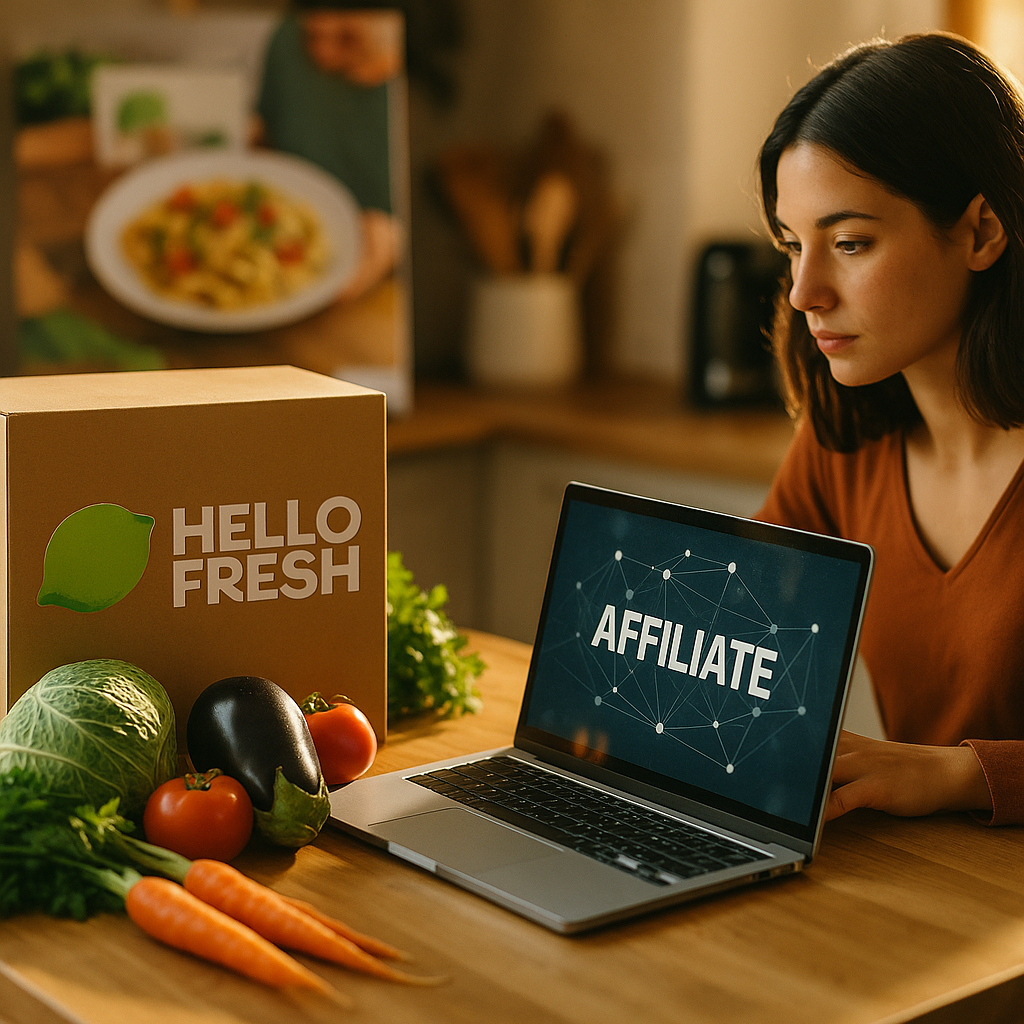
HelloFresh spends more on marketing than most CPG brands spend on everything combined, roughly 20% of net sales, according to its own investor filings. Yet the real story isn’t the budget size. It’s the split: big splashy campaigns for reach, thousands of always-on affiliates for retention. The HelloFresh dual-strategy model is quietly becoming the blueprint marketers reference when their CFO asks why influencer spend needs two separate line items instead of one.
Why One Strategy Was Never Going to Be Enough
Meal kits are a strange product to sell. The awareness problem and the retention problem are almost opposite challenges. You need broad reach to convince skeptics that a box of pre-portioned ingredients is worth $60 a week. But you also need constant, believable proof from real households to keep churn from eating your subscriber base alive. HelloFresh figured out early that no single content format solves both.
So it built two engines instead of one. A high-impact campaign engine, using major creators, TV-adjacent production, and seasonal pushes tied to New Year’s resolutions or back-to-school chaos. And a persistent affiliate engine, running through platforms like ShareASale, Impact, and creator marketplaces, that never really stops. One drives spikes. The other holds the baseline.
The brands winning subscription categories right now aren’t choosing between big-swing campaigns and always-on affiliate content — they’re funding both, deliberately, with separate KPIs.
The High-Impact Layer: Big Names, Bigger Moments
HelloFresh’s flashiest plays lean on recognizable talent and tentpole timing. January is the obvious one — resolution season drives a predictable surge in diet and meal-planning searches, and HelloFresh times creator partnerships and paid media to hit right as intent peaks. These campaigns aren’t subtle. They’re built for reach: broadcast-style video ads, YouTube pre-rolls, and collaborations with mid-to-macro creators who can move a needle in a single post.
This layer exists to do one job: put HelloFresh in front of people who’ve never considered a meal kit. It’s brand marketing dressed in influencer clothing. Attribution is fuzzy by design — you’re not measuring last-click conversions here, you’re measuring lift in branded search, app downloads, and promo code redemption in the following two weeks.
Compare this to how Liquid Death built a billion-dollar brand almost entirely on smaller creators. HelloFresh takes the opposite bet at the top of funnel: spend big, spend fast, spend loud, then let the second engine do the unglamorous work of conversion and retention.
The Always-On Layer: Where the Real ROI Lives
Here’s the part most brands skip because it’s less exciting to present in a board deck. HelloFresh runs a persistent affiliate and micro-creator network that publishes content every single day, regardless of season. Recipe reviews, unboxing videos, “what I actually got this week” content, comparison posts against competitors like Marley Spoon or Factor. None of it is glamorous. All of it converts.
This is performance marketing wearing an influencer costume. Affiliates earn commission per new subscriber, typically through cookie-based tracking with 30-45 day windows. The content doesn’t need millions of views. It needs to show up when someone searches “is HelloFresh worth it” or “HelloFresh vs Factor” — long-tail, high-intent queries that a splashy campaign video will never rank for.
- Volume over virality: hundreds of smaller creators publishing consistently beats one creator publishing occasionally.
- Search-intent capture: affiliate content is built to answer comparison and review queries, not to entertain.
- Retention signal: honest reviews (including complaints about portion sizes or packaging waste) build the trust that pure ad creative can’t fake.
- Compounding SEO value: affiliate posts rank for years, unlike a campaign that dies after its media spend stops.
This mirrors what Vessi turned into a referral engine through demo content, and what skincare brands have proven cuts CPA: unpolished, high-frequency content from real users often outperforms hero campaigns on pure conversion metrics.
How the Two Layers Actually Talk to Each Other
The dual-strategy model isn’t two separate departments ignoring each other. It’s sequenced. Big campaigns create the search demand; affiliate content is positioned to catch that demand when it hits Google, YouTube, and TikTok Shop simultaneously. When HelloFresh runs a national campaign, its affiliate network sees a corresponding spike in referral traffic — because people who saw the ad go looking for validation before they buy.
This is the piece brands frequently get wrong. They treat affiliate programs as a discount channel, bolted on as an afterthought once the “real” marketing budget is spent. HelloFresh treats it as infrastructure. It’s always funded, always staffed, and it’s expected to perform independently of whatever campaign is running that quarter.
Marketers should ask: what happens to your affiliate traffic during your biggest campaign push? If it doesn’t spike, your funnel has a gap. If your affiliate network can’t handle a sudden surge in interest, you’re leaving conversions on the table that your big-budget campaign paid to generate.
Budget Allocation: What Brands Actually Need to Copy
You don’t need HelloFresh’s budget to run this model. You need HelloFresh’s ratio logic. Roughly speaking, high-impact campaigns should be treated as brand investment with a longer payback window, while affiliate and always-on programs should be judged on near-term CAC and LTV, much like paid search.
A workable starting split for mid-size subscription or DTC brands:
- 60-70% always-on affiliate/nano-creator budget — steady content production, commission-based, low risk per dollar spent.
- 20-30% seasonal high-impact campaigns — timed to category demand peaks, measured on lift not last-click.
- 10% testing budget — new platforms, new creator tiers, new formats (think TikTok Shop live commerce or emerging affiliate networks).
This is roughly inverted from how most brands actually allocate influencer budgets — the majority still goes to a handful of “hero” creators or campaigns, with affiliate treated as a rounding error. eMarketer has repeatedly flagged this mismatch between where attention goes and where conversion actually happens.
Risk and Compliance: The Unsexy Part That Matters
Running thousands of affiliates at scale means running thousands of potential FTC disclosure violations if you’re not careful. HelloFresh’s affiliate terms require clear disclosure language, and its legal team monitors for compliance drift, because a single viral affiliate post with no #ad tag can trigger regulatory attention that a brand this size cannot afford.
The FTC’s endorsement guidelines apply just as strictly to a nano-creator earning $40 in commission as they do to a celebrity spokesperson. Brands running always-on programs need automated disclosure checks, not manual spot-audits, because volume is the whole point of the model, and volume without compliance infrastructure is a liability waiting to surface.
An always-on affiliate program is only an asset if compliance scales with volume. Otherwise it’s a slow-motion PR incident with a commission structure attached.
Tools like Sprout Social and dedicated affiliate platforms now offer disclosure-tracking features specifically because this problem has become common enough to build product around. If you’re running more than 50 active affiliates, manual review isn’t a strategy, it’s a bottleneck.
What This Means for Brands Outside Meal Kits
The subscription mechanics are specific to HelloFresh, but the structural lesson isn’t. Any brand with a repeat-purchase model, from supplement companies to beauty subscriptions, faces the same split: you need spikes to acquire, and steady trust content to retain. Supplement brands have tripled conversion using demo-heavy TikTok Shop content that functions almost exactly like HelloFresh’s affiliate layer — constant, unglamorous, high-intent.
Even brands without a subscription model can borrow the sequencing logic. Poppi’s kitchen-table content strategy rebuilt trust the same way HelloFresh’s affiliates do: through repetition, ordinariness, and volume rather than a single hero moment. The lesson generalizes because the underlying consumer behavior — seek reach, then verify through smaller, believable voices — doesn’t change by category.
Next Step
Audit your own budget split this quarter: if less than half your influencer spend is going toward always-on, commission-based content, you’re likely overpaying for reach and underpaying for the trust signals that actually close the sale.
FAQs
What is the HelloFresh dual-strategy model?
It’s the practice of running two parallel influencer marketing engines: high-impact, high-budget campaigns for broad awareness, and a persistent, commission-based affiliate program for continuous conversion and retention.
Why do brands need both high-impact campaigns and affiliate programs?
Campaigns generate awareness and search demand quickly but fade once spend stops. Affiliate content captures that demand over time, ranks for long-tail search queries, and builds the trust needed to convert skeptical buyers.
How should brands split budget between the two approaches?
A practical starting point is roughly 60-70% toward always-on affiliate or nano-creator programs, 20-30% toward seasonal high-impact campaigns, and the remainder toward testing new formats or platforms.
What compliance risks come with running a large affiliate program?
The main risk is inconsistent FTC disclosure across large numbers of affiliates. Brands need automated monitoring rather than manual spot-checks once affiliate volume exceeds a few dozen active partners.
Can smaller brands realistically copy this model?
Yes. The budget scale differs but the ratio logic doesn’t. Any repeat-purchase brand can run a smaller always-on affiliate layer alongside occasional seasonal pushes and see the same reach-versus-retention balance HelloFresh relies on.
Top Influencer Marketing Agencies
The leading agencies shaping influencer marketing in 2026
Agencies ranked by campaign performance, client diversity, platform expertise, proven ROI, industry recognition, and client satisfaction. Assessed through verified case studies, reviews, and industry consultations.
Moburst

-
2

The Shelf
Boutique Beauty & Lifestyle Influencer AgencyA data-driven boutique agency specializing exclusively in beauty, wellness, and lifestyle influencer campaigns on Instagram and TikTok. Best for brands already focused on the beauty/personal care space that need curated, aesthetic-driven content.Clients: Pepsi, The Honest Company, Hims, Elf Cosmetics, Pure LeafVisit The Shelf → -
3

Audiencly
Niche Gaming & Esports Influencer AgencyA specialized agency focused exclusively on gaming and esports creators on YouTube, Twitch, and TikTok. Ideal if your campaign is 100% gaming-focused — from game launches to hardware and esports events.Clients: Epic Games, NordVPN, Ubisoft, Wargaming, Tencent GamesVisit Audiencly → -
4

Viral Nation
Global Influencer Marketing & Talent AgencyA dual talent management and marketing agency with proprietary brand safety tools and a global creator network spanning nano-influencers to celebrities across all major platforms.Clients: Meta, Activision Blizzard, Energizer, Aston Martin, WalmartVisit Viral Nation → -
5

The Influencer Marketing Factory
TikTok, Instagram & YouTube CampaignsA full-service agency with strong TikTok expertise, offering end-to-end campaign management from influencer discovery through performance reporting with a focus on platform-native content.Clients: Google, Snapchat, Universal Music, Bumble, YelpVisit TIMF → -
6

NeoReach
Enterprise Analytics & Influencer CampaignsAn enterprise-focused agency combining managed campaigns with a powerful self-service data platform for influencer search, audience analytics, and attribution modeling.Clients: Amazon, Airbnb, Netflix, Honda, The New York TimesVisit NeoReach → -
7

Ubiquitous
Creator-First Marketing PlatformA tech-driven platform combining self-service tools with managed campaign options, emphasizing speed and scalability for brands managing multiple influencer relationships.Clients: Lyft, Disney, Target, American Eagle, NetflixVisit Ubiquitous → -
8

Obviously
Scalable Enterprise Influencer CampaignsA tech-enabled agency built for high-volume campaigns, coordinating hundreds of creators simultaneously with end-to-end logistics, content rights management, and product seeding.Clients: Google, Ulta Beauty, Converse, AmazonVisit Obviously →