


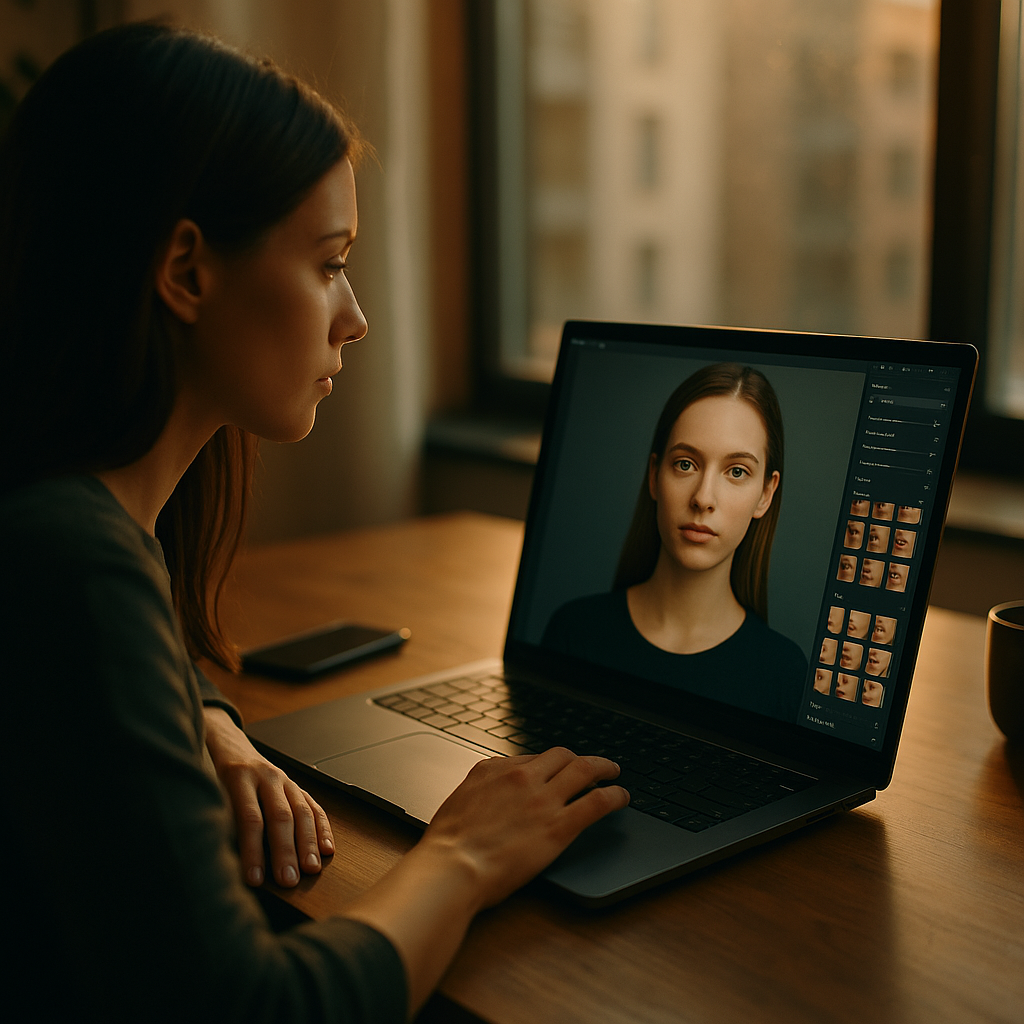
Sixty-one percent of marketers say they’ve deployed or tested AI-generated influencers, yet nearly half of consumers report they’d trust a brand less for using one without disclosure. That gap is the whole story. The trust-versus-efficiency tradeoff isn’t a hypothetical debate for an ethics panel — it’s a budget line item, a legal exposure, and increasingly, a boardroom question about where synthetic creators actually belong in the media mix.
Why Synthetic Creators Got So Tempting So Fast
Let’s be honest about the appeal. A virtual influencer never ghosts a shoot, never negotiates usage rights past the contract term, never posts something off-brand at 2 a.m. You can spin up a synthetic spokesperson, localize her voice for six markets, and run 40 creative variants against a testing matrix in the time it takes a human creator to schedule a single UGC deliverable. For teams already leaning into testing frequency as a core KPI, that speed is intoxicating.
Cost matters too. Production budgets that once funded a single celebrity campaign can now fund a synthetic creator asset library that scales indefinitely. No usage renewals. No image rights renegotiation. No talent agency in the loop. From a pure efficiency lens, it’s hard to argue against the math.
The Trust Side of the Ledger
But efficiency isn’t the only currency that matters, and consumers are telling us that plainly. Research from firms like eMarketer has repeatedly shown that perceived authenticity drives purchase intent more than production polish. Synthetic creators, by definition, remove the one variable audiences say they value most: a real human vouching for something they actually used.
The efficiency gains from synthetic creators are real and measurable. The trust erosion is real too — it’s just harder to see on a dashboard until it shows up in churn, sentiment scores, or a regulatory inquiry.
Here’s the uncomfortable part: trust erosion doesn’t announce itself immediately. A synthetic campaign can post strong engagement numbers for months before a Reddit thread or a TikTok “gotcha” video exposes the AI origin, and then the backlash compounds fast because it reads as deception rather than innovation. That’s a materially different risk profile than a human creator having an off week.
What the Data Actually Shows
Sentiment research on AI-generated marketing content tends to split cleanly along one axis: disclosure. Consumers who are told upfront that a creator is synthetic report far less negative sentiment than those who discover it after the fact. Sprout Social’s ongoing social trust research points to the same pattern across categories — transparency doesn’t eliminate skepticism, but it neutralizes the sense of betrayal that drives real reputational damage.
That’s a solvable problem operationally. It’s a much harder problem culturally, because most brand teams still treat disclosure as a legal checkbox rather than a trust-building asset.
Where the Tradeoff Actually Plays Out in Budget Decisions
Marketing leaders aren’t choosing between “all synthetic” or “all human” anymore — that framing is already outdated. The real decision tree looks more like this:
- Top-of-funnel awareness and A/B creative testing: synthetic creators often win on cost and speed, especially for interactive video formats where you need dozens of variants fast.
- Mid-funnel consideration content: a blended approach, human hosts with AI-assisted production, tends to preserve trust while still compressing timelines.
- Bottom-funnel conversion and community-building: human creators still dominate here, particularly in markets where micro-community engagement outperforms broad reach plays.
The tradeoff isn’t binary. It’s situational, and brands that treat it as an either/or decision are leaving performance on the table in one direction or the other.
Regulatory Reality Is Catching Up Faster Than Brands Expect
The FTC has been explicit that endorsement guidelines apply regardless of whether the endorser is human, and the UK’s ICO has flagged synthetic media disclosure as an active enforcement interest tied to broader data and consumer protection frameworks. Platform-level governance is tightening in parallel. TikTok’s recent moves around creator ID verification and posting caps signal that platforms themselves are nervous about unlabeled synthetic content polluting commerce feeds, and that nervousness will keep translating into stricter labeling requirements.
Brands that get ahead of disclosure requirements now, rather than reacting to a platform policy change or an FTC consent order later, are the ones protecting both budget and brand equity simultaneously. This is the same operational logic driving financial services’ cautious approach to AI compliance — regulated or reputation-sensitive categories move first, but the standard eventually becomes universal.
The Agency Skill Gap Nobody’s Talking About
Most influencer agencies were built to vet human creators: audience authenticity, engagement quality, brand safety history. Very few have a rigorous framework for vetting a synthetic creator’s disclosure practices, training data provenance, or platform compliance status. That gap is why agencies are rapidly hiring data analysts — not just to optimize media spend, but to build the measurement infrastructure needed to track sentiment shifts before they become PR problems.
If your agency partner can’t answer a direct question about how they’d handle synthetic creator disclosure across markets with different regulatory postures, that’s a red flag worth pressing on before the next contract renewal.
Building an Actual Decision Framework
Rather than treating synthetic creator adoption as a philosophical debate, run it through the same operational lens you’d apply to any vendor decision. A few questions worth forcing into every campaign brief:
- Does this use case require perceived human authenticity to convert, or is it primarily a reach/awareness play?
- What’s our disclosure protocol, and is it consistent across every platform we’re running on?
- Have we modeled the reputational downside if the synthetic origin is discovered rather than disclosed?
- Does our measurement stack actually track sentiment, not just engagement and conversion?
That last point matters more than most teams admit. Plenty of dashboards still measure synthetic creator campaigns purely on CTR and CPA, missing the slower-burn sentiment damage entirely. Pair performance metrics with regular social listening, and treat sentiment dips as an early warning system, not a lagging indicator you notice during the quarterly review.
Trust and efficiency aren’t opposites to be balanced once. They’re variables that shift by funnel stage, market, and platform — which means the decision framework has to be revisited campaign by campaign, not set once and forgotten.
There’s also a martech dimension here worth flagging. As AI-martech spend climbs past $74 billion, vendors are bundling synthetic creator tools into broader platform suites, often without clear guidance on disclosure best practices baked into the product. Don’t assume compliance is handled just because a vendor sells the capability. Ask directly, get it in the contract, and revisit it as platform rules evolve.
Key Takeaway
Treat synthetic creators as a tool for specific funnel stages, not a wholesale replacement strategy, and build disclosure into the brief from day one rather than bolting it on after legal review. The brands winning this tradeoff aren’t the ones moving fastest — they’re the ones measuring trust as rigorously as they measure efficiency.
Frequently Asked Questions
What is the trust-versus-efficiency tradeoff in AI marketing?
It refers to the tension between the speed and cost savings synthetic creators offer and the erosion of consumer trust that can occur when AI-generated endorsers aren’t clearly disclosed. Brands gain operational efficiency but risk reputational damage if audiences feel misled.
Do consumers actually trust synthetic or AI-generated influencers?
Trust levels vary significantly based on disclosure. Consumers who are told upfront that content is AI-generated report far less negative sentiment than those who discover it after the fact, suggesting the issue is less about the technology itself and more about transparency.
Are synthetic influencers legally required to disclose AI involvement?
Regulatory guidance, including from the FTC, generally applies existing endorsement disclosure rules regardless of whether the endorser is human or synthetic. Platforms are also introducing their own labeling and verification requirements, making disclosure both a legal and platform-compliance issue.
Where do synthetic creators perform best in a marketing funnel?
They tend to perform well in top-of-funnel awareness and rapid creative testing scenarios, where scale and speed matter more than perceived personal authenticity. Human creators generally still outperform in mid- and bottom-funnel content where trust and community connection drive conversion.
How should brands measure the risk of using synthetic creators?
Beyond standard engagement and conversion metrics, brands should track sentiment through social listening tools to catch early signs of backlash. Building disclosure protocols and reputational risk modeling into the campaign brief, rather than treating them as afterthoughts, is critical for managing downside risk.
Top Influencer Marketing Agencies
The leading agencies shaping influencer marketing in 2026
Agencies ranked by campaign performance, client diversity, platform expertise, proven ROI, industry recognition, and client satisfaction. Assessed through verified case studies, reviews, and industry consultations.
Moburst

-
2

The Shelf
Boutique Beauty & Lifestyle Influencer AgencyA data-driven boutique agency specializing exclusively in beauty, wellness, and lifestyle influencer campaigns on Instagram and TikTok. Best for brands already focused on the beauty/personal care space that need curated, aesthetic-driven content.Clients: Pepsi, The Honest Company, Hims, Elf Cosmetics, Pure LeafVisit The Shelf → -
3

Audiencly
Niche Gaming & Esports Influencer AgencyA specialized agency focused exclusively on gaming and esports creators on YouTube, Twitch, and TikTok. Ideal if your campaign is 100% gaming-focused — from game launches to hardware and esports events.Clients: Epic Games, NordVPN, Ubisoft, Wargaming, Tencent GamesVisit Audiencly → -
4

Viral Nation
Global Influencer Marketing & Talent AgencyA dual talent management and marketing agency with proprietary brand safety tools and a global creator network spanning nano-influencers to celebrities across all major platforms.Clients: Meta, Activision Blizzard, Energizer, Aston Martin, WalmartVisit Viral Nation → -
5

The Influencer Marketing Factory
TikTok, Instagram & YouTube CampaignsA full-service agency with strong TikTok expertise, offering end-to-end campaign management from influencer discovery through performance reporting with a focus on platform-native content.Clients: Google, Snapchat, Universal Music, Bumble, YelpVisit TIMF → -
6

NeoReach
Enterprise Analytics & Influencer CampaignsAn enterprise-focused agency combining managed campaigns with a powerful self-service data platform for influencer search, audience analytics, and attribution modeling.Clients: Amazon, Airbnb, Netflix, Honda, The New York TimesVisit NeoReach → -
7

Ubiquitous
Creator-First Marketing PlatformA tech-driven platform combining self-service tools with managed campaign options, emphasizing speed and scalability for brands managing multiple influencer relationships.Clients: Lyft, Disney, Target, American Eagle, NetflixVisit Ubiquitous → -
8

Obviously
Scalable Enterprise Influencer CampaignsA tech-enabled agency built for high-volume campaigns, coordinating hundreds of creators simultaneously with end-to-end logistics, content rights management, and product seeding.Clients: Google, Ulta Beauty, Converse, AmazonVisit Obviously →