


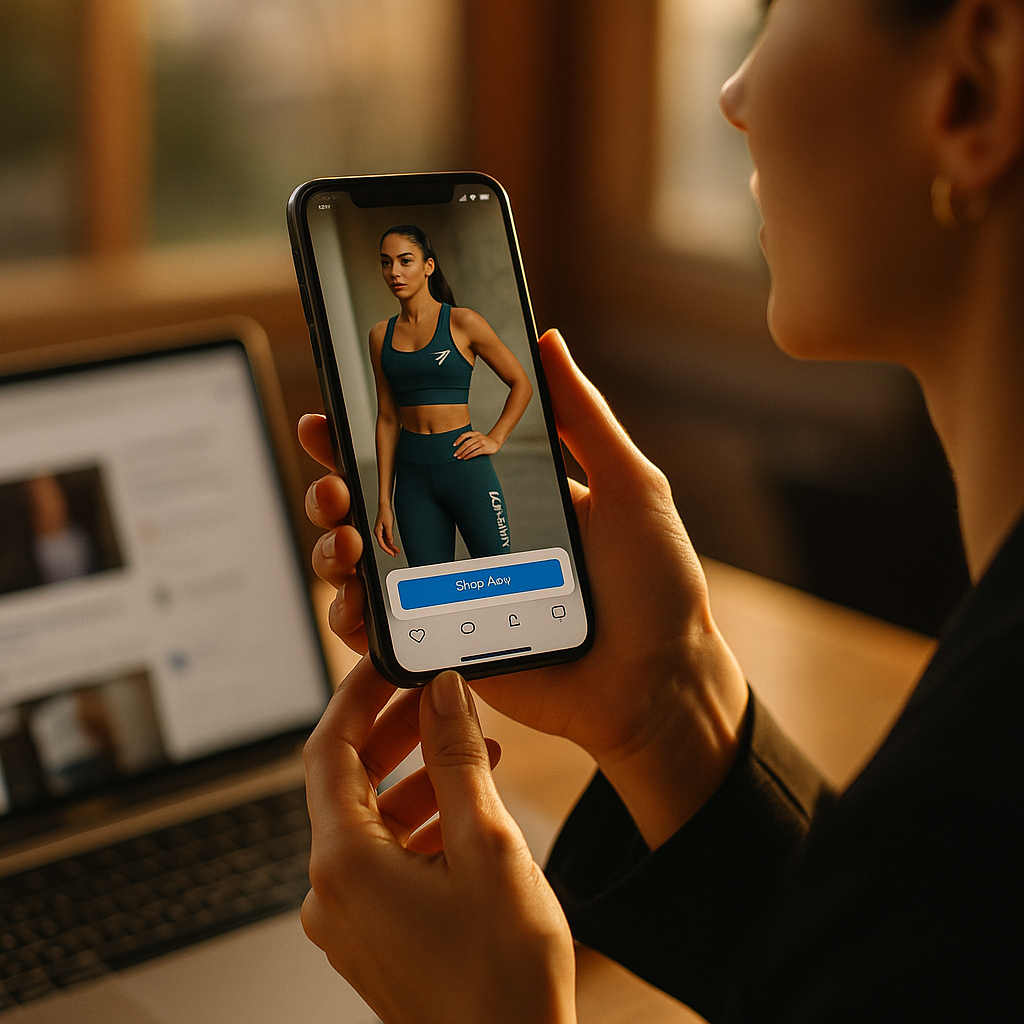
One UK fitness brand quietly runs some of the most efficient paid social in retail — by paying to boost content it didn’t even make. Gymshark’s creator whitelisting program takes ordinary customer and creator posts and turns them into targeted ad units, and the CPAs reportedly beat the brand’s own studio-produced creative. That’s not a fluke. It’s a system.
The Problem Every Brand Recognizes
Every brand marketer knows the feeling: your organic UGC performs beautifully in the comments section, gets reshared, generates genuine engagement — then dies the moment you try to scale it. You either reshoot it as branded content (losing the authenticity that made it work) or you leave it on the table entirely. Gymshark refused both options.
Instead, the brand built a repeatable operational pipeline for identifying high-performing organic content from creators and gym-goers, then running it as paid media directly from the creator’s handle. This is whitelisting — sometimes called creator-run ads or partnership ads, depending on the platform vocabulary. Meta calls it Partnership Ads. TikTok calls it Spark Ads. The mechanics differ slightly, but the strategic logic is identical: borrow the creator’s face, voice, and social proof, but control the media spend and targeting like a performance marketer.
Whitelisting isn’t a content tactic. It’s a distribution tactic that happens to use content someone else made.
How Gymshark’s Pipeline Actually Works
Gymshark runs one of the largest ambassador networks in fitness apparel, with thousands of athletes and creators across weightlifting, running, and general fitness content. Most of these partnerships start small: product seeding, a discount code, maybe a flat fee for a few organic posts. The brand isn’t paying six figures upfront for unproven creators. It’s paying for options.
Here’s the sequence, reconstructed from how the brand’s social and performance teams have described their process in industry talks and case studies:
- Seed broadly, track everything. Product goes out to a wide bench of creators with minimal creative direction. The brand wants authentic training content, not scripted ads.
- Let organic performance pick winners. Content that earns above-benchmark engagement, saves, or shares organically becomes a shortlist for paid amplification.
- Secure whitelisting rights up front. Contracts include usage and ad-account access clauses from day one, so there’s no renegotiation scramble when a post takes off.
- Push spend behind the winners. The performance team takes the top-performing organic assets and runs them as Partnership Ads or Spark Ads, targeting cold audiences that never saw the organic post.
- Iterate on hooks, not full remakes. Instead of producing new videos, the team tests new captions, thumbnails, and CTAs against the same base footage.
The result is a content funnel that looks less like a campaign calendar and more like a testing lab. Organic acts as the qualifying round. Paid is the final.
Why This Beats Traditional Influencer Campaigns on Cost
Traditional influencer campaigns front-load risk. You pay a flat fee, hope the content performs, and often run it once on the creator’s own page where reach is capped by their follower count and the platform’s organic algorithm. Whitelisting flips that risk profile entirely.
Because Gymshark only pushes paid spend behind content that has already proven itself organically, the brand is effectively using real audience behavior as a pre-flight test for ad creative. That’s a meaningfully different model than the standard “brief, shoot, hope” cycle most performance teams still run.
When you pay to amplify a winner instead of gambling on an untested brief, your blended CPA drops because you’ve removed the guesswork from creative selection.
Industry benchmarks back this up directionally. eMarketer research has repeatedly shown that creator-sourced ad creative tends to outperform brand-produced creative on click-through and cost efficiency across social platforms, largely because it doesn’t read as an ad in the feed. Gymshark’s whitelisting model is essentially an operationalized version of that finding — it doesn’t rely on hoping UGC-style content performs, it waits for proof, then buys distribution on proven winners.
It’s also worth noting what this does to production budgets. When a brand can run a $0 creative-production cost against a six-figure media budget, the entire unit economics of a campaign shift. Compare that to brands still commissioning glossy studio ads that need reshoots every quarter — the operational drag is enormous, and the creative fatigues faster because it looks like an ad from frame one.
The Compliance Layer Nobody Talks About Enough
Whitelisting only works if the legal groundwork is airtight. Running a creator’s content as a paid ad, from their handle or via a branded content tool, means the brand is now the advertiser of record on someone else’s identity. That triggers disclosure obligations under FTC endorsement guidance, and in the UK, similar expectations from the ICO around data use in targeted advertising.
Gymshark’s contracts reportedly bake in whitelisting rights, usage duration, and platform scope from the start of the relationship — not as an afterthought once a post goes viral. That’s the operational lesson other brands miss: you can’t whitelist content retroactively without going back to the creator, renegotiating terms, and losing your window while the post’s organic momentum cools.
Brands that skip this step expose themselves to real risk. Running paid spend behind a creator’s likeness without a documented agreement isn’t just an ethical gray area, it’s a contract dispute waiting to happen. Other case studies in this space show what happens when creator vetting and compliance aren’t built in early — see how creator vetting gaps can turn into brand-level reputational damage fast, or how credentialed nano-creator programs can reduce FTC exposure by design rather than by luck.
What This Means for Platform Selection
Not every platform’s whitelisting tool works the same way, and this matters for budget allocation. Meta’s Partnership Ads let brands run content from a creator’s Instagram or Facebook handle directly through Ads Manager, with full targeting and optimization controls, once the creator grants access via Meta Business Suite. TikTok’s Spark Ads work similarly, pulling organic posts into the ad auction via TikTok Ads Manager, and tend to retain the organic engagement (likes, comments, shares) on the original post even while running as a paid unit — a detail that matters for social proof.
Gymshark runs both, but allocates differently depending on funnel stage: TikTok Spark Ads skew toward top-of-funnel reach and community building, while Meta Partnership Ads get more weight in retargeting and conversion-focused pushes where Meta’s targeting stack has historically had an edge.
This is where a lot of mid-market brands get the sequencing wrong. They pick a platform first, then look for whitelisting-eligible content to fit it. Gymshark does the reverse: let the content and audience signal tell you which platform deserves the spend.
Where Other Brands Get This Wrong
A few recurring mistakes show up when brands try to copy this model without the underlying discipline:
- Treating whitelisting as a one-off tactic. It only compounds when it’s a standing operational process, not a campaign-specific ask.
- Skipping the organic testing phase. Some brands jump straight to paid with unproven creator content, which defeats the entire cost-efficiency logic.
- Underinvesting in the seeding bench. You need volume at the top of the funnel — dozens or hundreds of creators — to generate enough organic winners to whitelist. A bench of five ambassadors won’t produce enough signal.
- Forgetting attribution hygiene. If you can’t tie whitelisted ad spend back to specific creators and content IDs, you can’t tell which creators are actually worth re-signing.
This last point deserves its own emphasis. Brands running whitelisting at scale need clean creator-level reporting, not just campaign-level dashboards. Tools like Sprout Social and native platform analytics can help close that loop, but only if someone owns the process of matching organic performance data to paid results on a rolling basis.
Other brands building similar always-on creator engines offer useful parallels: Whoop’s ambassador program shows how a membership base can double as a creator bench, while Vessi’s referral-driven model shows the same organic-to-paid handoff logic applied to a single breakout post rather than a full roster.
Is This Model Right for Your Brand?
Whitelisting rewards brands with two things: a large enough creator bench to generate statistically meaningful organic signal, and a performance team fluent enough in paid social to act fast once winners emerge. If you’re running five ambassador relationships a year, this model won’t have enough raw material to work. If you’re running fifty or more seeded partnerships, you likely already have unrealized paid media sitting in your organic feed right now.
The operational cost isn’t creative production, it’s contract infrastructure and cross-functional coordination between influencer marketing and paid social teams that, in most orgs, still don’t talk to each other enough.
FAQs
Frequently Asked Questions
What is creator whitelisting in influencer marketing?
Creator whitelisting is when a brand gets permission to run paid ads directly from a creator’s social media account, using tools like Meta Partnership Ads or TikTok Spark Ads. The ad appears to come from the creator’s handle, but the brand controls targeting, budget, and optimization.
How is whitelisting different from standard influencer sponsorships?
Standard sponsorships pay for content and organic reach capped at the creator’s follower base. Whitelisting adds a paid media layer on top, letting brands target cold audiences with proven organic content, often at a lower cost per acquisition than brand-produced ads.
Do brands need special legal agreements for whitelisting?
Yes. Whitelisting requires explicit usage rights, ad account access permissions, and disclosure terms built into the creator contract. Retroactively negotiating these rights after a post goes viral is slower and riskier than securing them upfront.
Which platforms support creator whitelisting?
Meta supports it through Partnership Ads in Meta Business Suite, and TikTok supports it through Spark Ads in TikTok Ads Manager. Both let brands boost organic creator content while preserving existing likes, comments, and shares on the original post.
How many creators does a brand need to make whitelisting work?
There’s no fixed number, but brands typically need a broad seeding bench, often dozens to hundreds of creators, to generate enough organic content variation for paid teams to identify genuine winners worth scaling.
Does whitelisted content still count as an ad under FTC rules?
Yes. Running creator content as paid media doesn’t remove disclosure obligations. Brands and creators still need to follow FTC endorsement guidance on clear and conspicuous disclosure, regardless of whether the ad runs from the creator’s handle or the brand’s.
Next step: Audit your last quarter of organic creator content for engagement outliers, then check your existing contracts for whitelisting rights before you try to scale a single post. If those rights aren’t already in place, fix that clause before your next seeding round, not after your next viral moment.
Top Influencer Marketing Agencies
The leading agencies shaping influencer marketing in 2026
Agencies ranked by campaign performance, client diversity, platform expertise, proven ROI, industry recognition, and client satisfaction. Assessed through verified case studies, reviews, and industry consultations.
Moburst

-
2

The Shelf
Boutique Beauty & Lifestyle Influencer AgencyA data-driven boutique agency specializing exclusively in beauty, wellness, and lifestyle influencer campaigns on Instagram and TikTok. Best for brands already focused on the beauty/personal care space that need curated, aesthetic-driven content.Clients: Pepsi, The Honest Company, Hims, Elf Cosmetics, Pure LeafVisit The Shelf → -
3

Audiencly
Niche Gaming & Esports Influencer AgencyA specialized agency focused exclusively on gaming and esports creators on YouTube, Twitch, and TikTok. Ideal if your campaign is 100% gaming-focused — from game launches to hardware and esports events.Clients: Epic Games, NordVPN, Ubisoft, Wargaming, Tencent GamesVisit Audiencly → -
4

Viral Nation
Global Influencer Marketing & Talent AgencyA dual talent management and marketing agency with proprietary brand safety tools and a global creator network spanning nano-influencers to celebrities across all major platforms.Clients: Meta, Activision Blizzard, Energizer, Aston Martin, WalmartVisit Viral Nation → -
5

The Influencer Marketing Factory
TikTok, Instagram & YouTube CampaignsA full-service agency with strong TikTok expertise, offering end-to-end campaign management from influencer discovery through performance reporting with a focus on platform-native content.Clients: Google, Snapchat, Universal Music, Bumble, YelpVisit TIMF → -
6

NeoReach
Enterprise Analytics & Influencer CampaignsAn enterprise-focused agency combining managed campaigns with a powerful self-service data platform for influencer search, audience analytics, and attribution modeling.Clients: Amazon, Airbnb, Netflix, Honda, The New York TimesVisit NeoReach → -
7

Ubiquitous
Creator-First Marketing PlatformA tech-driven platform combining self-service tools with managed campaign options, emphasizing speed and scalability for brands managing multiple influencer relationships.Clients: Lyft, Disney, Target, American Eagle, NetflixVisit Ubiquitous → -
8

Obviously
Scalable Enterprise Influencer CampaignsA tech-enabled agency built for high-volume campaigns, coordinating hundreds of creators simultaneously with end-to-end logistics, content rights management, and product seeding.Clients: Google, Ulta Beauty, Converse, AmazonVisit Obviously →