


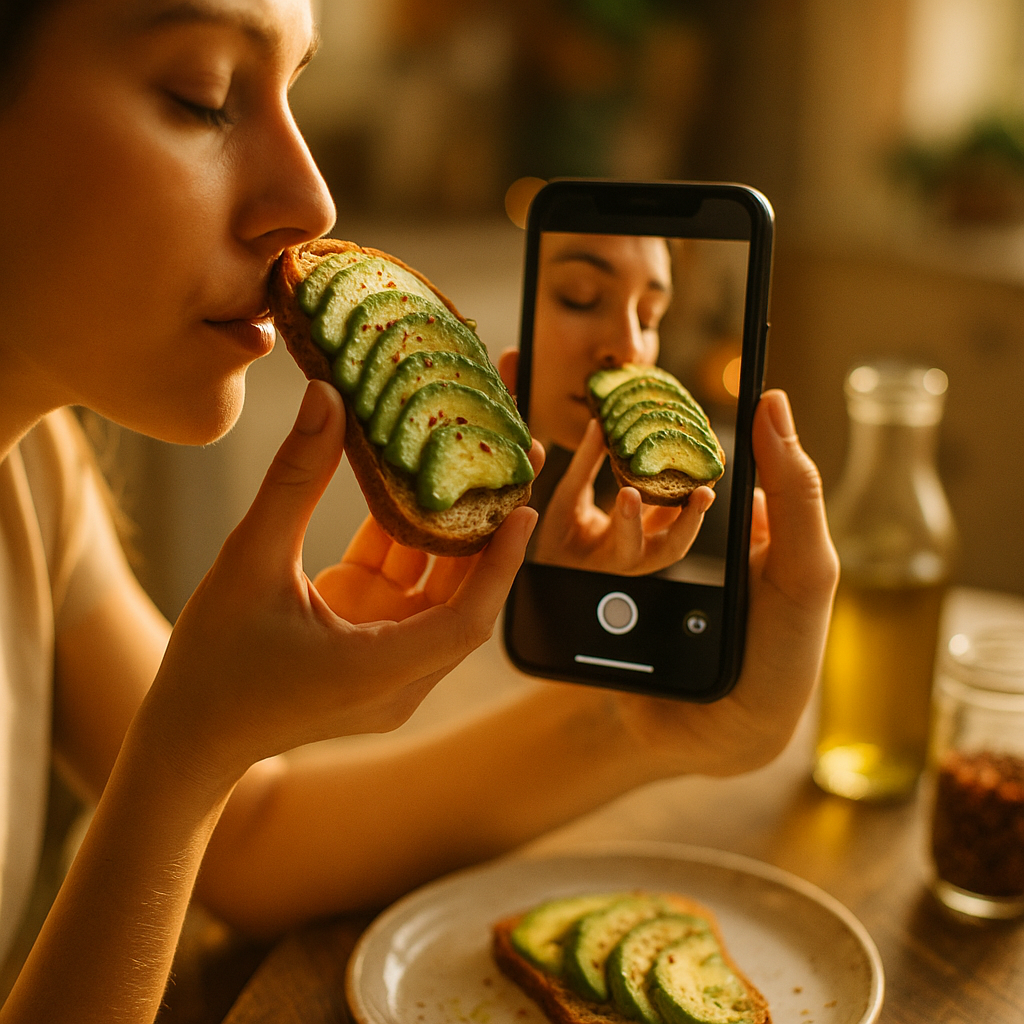
Scroll-stopping isn’t the same as sale-closing. A jar of moisturizer swatched on a real hand, a knife cutting through a ripe tomato, a vacuum sucking up visible crumbs — these clips convert at rates polished studio spots simply can’t touch. UGC works best when the product has a sensory payoff, and brands selling beauty, food, or home goods are sitting on an advantage most haven’t fully priced in.
The Sense-First Purchase Problem
Some products sell on logic. Software, insurance, B2B services — buyers want specs, comparisons, proof points delivered cleanly. But beauty, food, and home goods sell on sensation. Will this serum actually absorb, or sit greasy on skin? Does this sauce have real texture, or is it thin and watery? Does that cordless vacuum genuinely have suction, or is it all packaging promise?
Studio content struggles to answer these questions because it’s optimized for aesthetics, not evidence. Lighting is perfect. Backgrounds are clean. And that’s exactly the problem — audiences have learned to discount polish as performance. A Sprout Social analysis of consumer trust in branded content consistently finds that audiences rate creator-style demos as more credible than brand-produced ads, specifically because the imperfection reads as proof.
When the product’s value proposition is sensory, the demonstration itself becomes the evidence. No amount of studio lighting can substitute for watching texture, sound, or reaction happen in real time.
Why Demonstrations Outperform Polish
Think about what a creator video actually delivers that a studio ad can’t: unscripted reaction, ambient audio, real skin tone, real kitchen counter, real dog hair on the carpet before the vacuum runs. These details aren’t flaws. They’re the entire mechanism of trust.
TikTok Shop data has repeatedly shown this play out in beauty categories, where discovery-driven beauty sales spike around creators showing texture swatches and before/after application, not around brand-produced campaign assets. The same pattern shows up in the platform’s broader momentum — TikTok Shop’s forecasted growth trajectory is being driven disproportionately by CPG and beauty categories where sensory proof matters most.
Food brands see the same effect. A recipe video shot in a home kitchen, slightly shaky camera work included, consistently pulls stronger completion rates and saves than a studio-shot commercial. Why? Because viewers are mentally simulating cooking it themselves. Authenticity isn’t a nice-to-have here. It’s the mechanism that makes the mental simulation feel achievable.
What the Data Actually Shows
This isn’t just a vibe-based claim. Several data points converge on the same conclusion:
- Creator-shot product demos in beauty and personal care categories consistently show higher click-through and add-to-cart rates than brand-produced video, per multiple eMarketer creator commerce reports.
- Food and beverage UGC featuring real preparation and tasting reactions drives materially higher watch-through rates than recipe content shot with professional food styling.
- Home goods demonstrations — cleaning, organizing, unboxing — rank among the highest-performing UGC formats by completion rate across short-form platforms, largely because the “problem-solution” arc plays out visually in real time.
The pattern holds because sensory categories have a unique verification problem. You can’t taste, smell, or touch through a screen, so viewers substitute visual and auditory cues for direct sensory experience. A crisp bite sound. A visible lather. A satisfying click when a container seals shut. These micro-signals do the persuading that spec sheets and studio lighting can’t.
The Studio Content Trap
Here’s where a lot of brand teams get stuck. Studio content is easier to control, easier to get legal sign-off on, and easier to brief against a creative deck. It feels safer. But safety and performance aren’t the same thing, and for sensory categories, that gap is widening.
Comfrts, the sleepwear brand, made this bet explicit — building a 500-creator content engine to replace agency production almost entirely. The logic wasn’t cost-cutting alone. It was recognizing that fabric feel, fit, and comfort are inherently sensory claims that no studio shoot communicates as convincingly as hundreds of real bodies showing real reactions.
Go Zero took an even more aggressive stance, cutting its influencer budget to zero not because creators failed, but because the brand restructured how it sourced and paid for demonstration content entirely — a signal that the old paid-partnership model is being renegotiated across sensory categories, not abandoned.
Beauty: The Proof-of-Texture Category
Beauty is arguably the clearest case study. Swatch videos, wear-tests, and “get ready with me” formats dominate because they answer the one question studio ads can’t: how does this actually perform on skin that isn’t a professional model’s under studio lighting?
TikTok’s beauty algorithm rewards engagement over follower count, which means a mid-tier creator with a genuinely compelling demo can outperform a celebrity endorsement shot in a studio. That’s a structural shift in leverage. Brands no longer need to chase reach; they need to chase demonstrable proof, delivered by someone whose skin, tone, or texture concern actually resembles the target buyer’s.
This has downstream implications for how brands structure creator programs. If the format is what matters, then short-form UGC pricing premiums aren’t arbitrary. Brands are effectively paying for verified, replicable proof-of-performance content, not just reach.
Food and Beverage: Sound Sells
Food content lives and dies on ASMR-adjacent cues: sizzle, crunch, pour, steam. These are impossible to fake convincingly and audiences have gotten very good at spotting overproduced “food porn” that reads as staged rather than appetizing.
The best-performing food UGC right now leans into imperfection: uneven plating, real kitchen sounds, a creator commenting mid-bite instead of scripted narration. This is a category where studio polish actively works against conversion, because it signals distance from the real eating experience rather than closeness to it.
Home Goods: The Before/After Advantage
Home and cleaning products get a unique benefit: visible transformation. A grimy stovetop becomes spotless. A cluttered drawer becomes organized. This before/after arc is inherently more compelling in an unscripted, real-home setting than in a staged studio set, because viewers immediately recognize their own mess in the “before” shot.
Brands in this category should be thinking about demonstration cadence, not just one-off hero videos. Testing frequency has become a KPI in its own right, because sensory categories reward volume: the more real demonstrations in market, the more data brands get on which specific sensory cues (sound, texture, visible result) actually move purchase intent.
Operationalizing the Shift
None of this means studio content is dead. Brand campaigns, top-of-funnel awareness, and retail packaging still benefit from controlled, polished assets. But for mid- and lower-funnel conversion in sensory categories, the operational shift should be:
- Reallocate budget toward creator demo volume rather than fewer, more expensive studio productions.
- Standardize briefs around sensory proof points — texture, sound, visible result — rather than generic messaging pillars. This is where UGC standardization frameworks help keep creative consistent without killing authenticity.
- Pay for performance, not just production. Contract structures shifting toward performance pay align naturally with sensory-category UGC, since conversion lift is measurable per asset.
- Treat creators as a supply chain input, not a one-off campaign line item. The creator supply chain model treats demonstration content as ongoing media inventory rather than episodic production.
Brands should also resist the urge to over-script demo content. The FTC’s endorsement guidelines already require clear disclosure, but over-scripting introduces a second risk: it strips out the very authenticity signals that make sensory UGC convert in the first place. Disclosure and authenticity aren’t in tension; over-production and authenticity are.
What This Means for Measurement
If demonstrations are outperforming studio content, measurement frameworks need to catch up. Vanity metrics like views tell you reach, not sensory proof effectiveness. Brands should be tracking save rate, rewatch rate, and comment sentiment specifically referencing texture, sound, or result, since these are the leading indicators that a demonstration is doing its persuasive job. Platforms and tools still lag here; the gaps in influencer measurement tooling are a real constraint on scaling this insight cleanly across large creator rosters.
Next Step
If your brand sells something people touch, taste, smell, or hear, audit your current content mix this quarter: what percentage is studio-produced versus creator-demonstrated? If studio still dominates spend in a sensory category, that’s the first line item to rebalance.
FAQs
Why does UGC outperform studio content specifically in beauty, food, and home goods?
These categories depend on sensory proof — texture, sound, smell, visible results — that audiences can’t verify through polished studio footage alone. Creator demonstrations provide the real-world evidence viewers need before purchasing.
Does this mean brands should stop producing studio content entirely?
No. Studio content still serves brand awareness, retail packaging, and top-of-funnel campaigns well. The shift applies mainly to mid- and lower-funnel conversion content, where sensory proof drives the purchase decision.
How should brands measure the performance of sensory-category UGC?
Track save rate, rewatch rate, and comment sentiment referencing texture, sound, or visible outcomes, in addition to standard click-through and conversion metrics. Views alone don’t capture whether the demonstration built sensory trust.
What’s the biggest risk in scaling creator demonstration content?
Over-scripting. Brands that over-produce or over-direct creator demos strip out the authenticity cues that make the format work, while still needing to meet FTC disclosure requirements for sponsored content.
Should compensation models change for demonstration-heavy UGC?
Many brands are shifting toward performance-based pay structures tied to conversion or engagement lift, rather than flat fees for production, since sensory-category demos have measurable downstream impact on sales.
Top Influencer Marketing Agencies
The leading agencies shaping influencer marketing in 2026
Agencies ranked by campaign performance, client diversity, platform expertise, proven ROI, industry recognition, and client satisfaction. Assessed through verified case studies, reviews, and industry consultations.
Moburst

-
2

The Shelf
Boutique Beauty & Lifestyle Influencer AgencyA data-driven boutique agency specializing exclusively in beauty, wellness, and lifestyle influencer campaigns on Instagram and TikTok. Best for brands already focused on the beauty/personal care space that need curated, aesthetic-driven content.Clients: Pepsi, The Honest Company, Hims, Elf Cosmetics, Pure LeafVisit The Shelf → -
3

Audiencly
Niche Gaming & Esports Influencer AgencyA specialized agency focused exclusively on gaming and esports creators on YouTube, Twitch, and TikTok. Ideal if your campaign is 100% gaming-focused — from game launches to hardware and esports events.Clients: Epic Games, NordVPN, Ubisoft, Wargaming, Tencent GamesVisit Audiencly → -
4

Viral Nation
Global Influencer Marketing & Talent AgencyA dual talent management and marketing agency with proprietary brand safety tools and a global creator network spanning nano-influencers to celebrities across all major platforms.Clients: Meta, Activision Blizzard, Energizer, Aston Martin, WalmartVisit Viral Nation → -
5

The Influencer Marketing Factory
TikTok, Instagram & YouTube CampaignsA full-service agency with strong TikTok expertise, offering end-to-end campaign management from influencer discovery through performance reporting with a focus on platform-native content.Clients: Google, Snapchat, Universal Music, Bumble, YelpVisit TIMF → -
6

NeoReach
Enterprise Analytics & Influencer CampaignsAn enterprise-focused agency combining managed campaigns with a powerful self-service data platform for influencer search, audience analytics, and attribution modeling.Clients: Amazon, Airbnb, Netflix, Honda, The New York TimesVisit NeoReach → -
7

Ubiquitous
Creator-First Marketing PlatformA tech-driven platform combining self-service tools with managed campaign options, emphasizing speed and scalability for brands managing multiple influencer relationships.Clients: Lyft, Disney, Target, American Eagle, NetflixVisit Ubiquitous → -
8

Obviously
Scalable Enterprise Influencer CampaignsA tech-enabled agency built for high-volume campaigns, coordinating hundreds of creators simultaneously with end-to-end logistics, content rights management, and product seeding.Clients: Google, Ulta Beauty, Converse, AmazonVisit Obviously →