


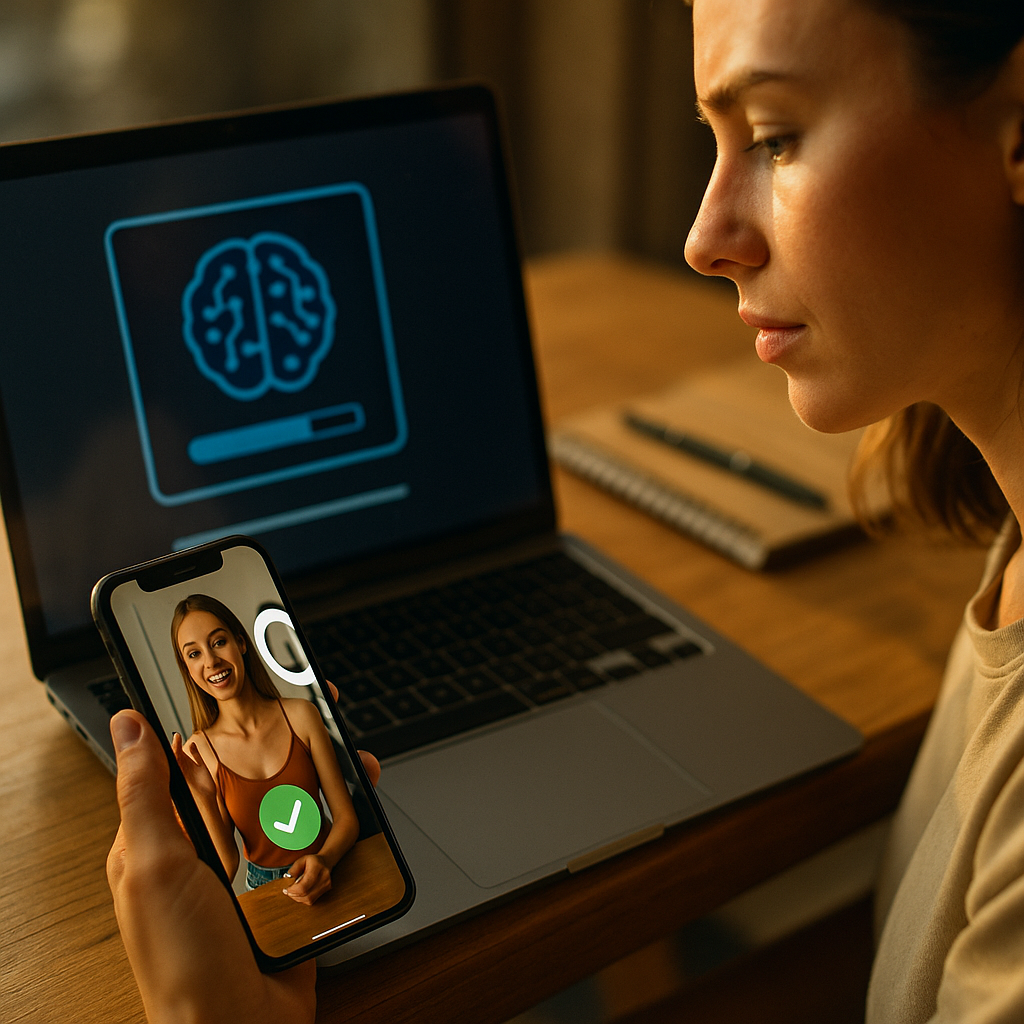
Fourteen days. That’s the average time a mid-size brand spends bouncing a single piece of creator content between legal, brand, and compliance before it ever posts. Now some teams do it in under 48 hours. The difference isn’t headcount — it’s AI content checks replacing sequential human review with parallel, automated screening. Campaign approval timelines are shrinking, and the brands that figure this out first are winning the calendar.
The Bottleneck Nobody Budgets For
Ask any brand marketer where their influencer campaigns actually stall, and it’s rarely sourcing or negotiation. It’s the review chain. Draft goes to legal. Legal flags a claim. Back to the creator. Creator revises. Brand safety re-checks. Someone in compliance realizes the disclosure language doesn’t match FTC guidance. Round two.
Each handoff adds days, not hours, because humans work in queues and time zones and Slack backlogs. A single ambiguous product claim can add a full week if legal only reviews content on Tuesdays and Thursdays. Multiply that across fifty creators in a single campaign, and you understand why so many influencer programs miss their launch windows entirely.
This is the quiet cost center most media plans ignore. Creator spend has become core media budget, yet the operational infrastructure supporting it still runs on email chains and manual redlines built for a handful of annual campaigns, not hundreds of always-on creator posts.
What AI Content Checks Actually Do
Strip away the marketing language, and AI content checks are pattern-matching engines trained on your brand guidelines, regulatory requirements, and historical approval decisions. They scan draft captions, video transcripts, and visuals against a rules library, then flag issues before a human ever opens the file.
Practically, that means:
- Automated detection of unsubstantiated or risky product claims (“clinically proven,” “guaranteed results”) before legal sees them.
- Real-time disclosure checks against FTC endorsement guidance, catching missing #ad tags or buried disclosures.
- Brand voice and tone scoring, comparing draft copy against approved messaging pillars.
- Visual screening for logo misuse, competitor products in frame, or off-brand settings.
- Sentiment and context analysis to catch tonal mismatches, like a somber audio track paired with a celebratory campaign.
None of this replaces legal judgment. It replaces the first pass — the 80% of review that’s mechanical, repetitive, and honestly beneath a senior compliance officer’s time. Humans still make the final call on the 20% that’s genuinely ambiguous.
Brands running AI-assisted pre-screening report cutting first-round rejection rates by more than half, because creators receive structured feedback before content ever reaches a human reviewer.
The Math Behind “Weeks,” Not Days
Why weeks, specifically, and not just “faster”? Because compression compounds across a campaign lifecycle, not a single asset.
Consider a 30-creator campaign with a traditional three-stage review (brand, legal, compliance). If each stage takes two business days on average, and 40% of content requires at least one revision cycle, you’re looking at roughly 10-12 business days of pure review time before accounting for creator turnaround and rescheduling. Stack a few holidays or a legal team backlog, and three weeks disappears fast.
Now run that same campaign with AI checks handling first-pass screening. Content that passes automated review (typically 60-75% of submissions, depending on category) routes straight to a lighter human sign-off — often same-day. Only flagged content enters the traditional queue. The net effect: total review time drops to 3-5 business days for most of the batch, with legal attention concentrated where it actually matters.
That’s not a marginal efficiency gain. That’s the difference between hitting a product launch date and missing it.
Where the Time Savings Actually Show Up
It’s not just speed to publish. Faster approval cycles change how brands plan entire quarters:
- Reactive campaigns become viable. Trend-based content has a shelf life measured in days. If your approval process takes longer than the trend, you’ve already lost. Compressed cycles let brands participate in real-time culture instead of always trailing it.
- Creator relationships improve. Nothing frustrates a creator more than radio silence followed by a vague rejection. Structured, immediate AI feedback (“disclosure missing,” “claim unsubstantiated”) lets creators self-correct without a three-day round trip.
- Budget utilization tightens. Campaigns that used to slip past the fiscal quarter now close inside it, which matters enormously for teams under pressure to prove ROI on a growing share of the media mix.
This Isn’t Just Speed — It’s Risk Reduction Too
Here’s the part that gets underplayed in vendor pitches: faster isn’t the main benefit. Consistency is.
Human reviewers are inconsistent by nature. A compliance officer reviewing content at 4pm on a Friday, three weeks into a heavy campaign cycle, is not applying the same scrutiny as they did Monday morning. AI checks don’t get tired. They apply the same rule set to submission one and submission one thousand, which matters enormously when regulators are paying closer attention to influencer disclosure practices. The FTC has made clear that inconsistent enforcement of disclosure rules is a brand liability, not just a creator one.
This connects directly to a broader trend: AI governance skills now command a real salary premium in marketing organizations, precisely because someone needs to own the rule sets these systems run on. An AI content check is only as good as the guidelines fed into it. Garbage rules, garbage flags.
Speed without governance just means you make bad decisions faster. The brands seeing real ROI pair AI screening with a documented, auditable rules library — not a black box.
Where Teams Get This Wrong
A few recurring mistakes show up across brands adopting AI-assisted approval workflows:
Treating AI checks as full automation. The teams that see the worst outcomes are the ones that let AI auto-approve content with zero human spot-checking. Automated systems miss context — sarcasm, cultural nuance, a claim that’s technically compliant but reputationally risky. Keep a human in the loop, especially for regulated categories like health, finance, and alcohol.
Under-investing in the rules library. If your brand guidelines live in a stale PDF from three years ago, your AI check is screening against outdated standards. This needs to be a living document, updated as regulations shift and campaigns evolve.
Ignoring the trust gap. Marketers themselves are skeptical. Recent data shows 61% of marketers distrust AI-powered labels in adjacent contexts, and that skepticism carries over to approval automation. Transparency about how the system flags content, and giving reviewers visibility into the “why” behind a flag, builds internal buy-in faster than any efficiency stat.
Failing to disclose AI’s role to creators or, in some cases, consumers. Brands that are upfront about using AI in their review process tend to build more trust, not less. It signals rigor rather than shortcut-taking. This mirrors a pattern seen elsewhere: brands that disclose AI limitations tend to win more consumer trust than those that stay quiet about it.
What This Means for Platform and Vendor Selection
If you’re evaluating tools, the AI content check shouldn’t be a bolt-on feature buried in a broader influencer platform. Ask vendors directly:
- Can the rules engine be customized per brand, per region, per regulatory environment?
- Does it integrate with existing legal/compliance workflows, or does it require a parallel process?
- What’s the false-positive rate, and how is it measured over time?
- Is there an audit trail for every flag and override, in case a regulator or platform (see Meta Business or TikTok Ads Manager policy reviews) comes asking?
This is increasingly relevant given how much marketing infrastructure spend is shifting toward AI tooling broadly. The AI-MarTech market has already crossed $74 billion, and content approval automation is one of the faster-growing line items inside that number, according to trend tracking from eMarketer.
The Competitive Edge Is Temporary — Act Accordingly
Every efficiency gain in marketing eventually becomes table stakes. Right now, AI-accelerated approval cycles are still a differentiator — brands using them are outpacing competitors stuck in manual review purgatory. That window won’t stay open forever. As adoption spreads, the advantage shifts from “who has AI content checks” to “who has the best-governed, most accurate rules library behind them.”
Brands serious about this should start now: audit your current approval bottleneck, quantify the actual days lost per campaign, and pilot AI-assisted screening on a single, lower-risk campaign category before scaling brand-wide.
Frequently Asked Questions
What exactly are AI content checks in influencer marketing?
AI content checks are automated screening tools that review creator content — captions, video transcripts, visuals — against brand guidelines, regulatory requirements, and historical approval patterns before a human reviewer sees it. They flag issues like missing disclosures, unsubstantiated claims, or off-brand messaging.
Do AI content checks replace legal and compliance teams?
No. They handle first-pass screening on mechanical, repetitive review tasks, freeing legal and compliance staff to focus on genuinely ambiguous or high-risk content. Final sign-off on regulated categories should still involve human judgment.
How much time can AI content checks actually save on a campaign?
Depending on campaign size and category, brands report cutting total review time from 10-12 business days to 3-5 business days by routing only flagged content through traditional multi-stage review.
Are AI content checks reliable for FTC disclosure compliance?
They’re effective at catching missing or improperly placed disclosures based on defined rules, but brands remain responsible for ensuring those rules reflect current FTC endorsement guidance. Human oversight is still recommended for final compliance sign-off.
What’s the biggest risk in adopting AI content checks?
Over-relying on full automation without human spot-checking, and running the system against outdated brand guidelines. Both lead to false confidence in content that’s actually non-compliant or off-brand.
Top Influencer Marketing Agencies
The leading agencies shaping influencer marketing in 2026
Agencies ranked by campaign performance, client diversity, platform expertise, proven ROI, industry recognition, and client satisfaction. Assessed through verified case studies, reviews, and industry consultations.
Moburst

-
2

The Shelf
Boutique Beauty & Lifestyle Influencer AgencyA data-driven boutique agency specializing exclusively in beauty, wellness, and lifestyle influencer campaigns on Instagram and TikTok. Best for brands already focused on the beauty/personal care space that need curated, aesthetic-driven content.Clients: Pepsi, The Honest Company, Hims, Elf Cosmetics, Pure LeafVisit The Shelf → -
3

Audiencly
Niche Gaming & Esports Influencer AgencyA specialized agency focused exclusively on gaming and esports creators on YouTube, Twitch, and TikTok. Ideal if your campaign is 100% gaming-focused — from game launches to hardware and esports events.Clients: Epic Games, NordVPN, Ubisoft, Wargaming, Tencent GamesVisit Audiencly → -
4

Viral Nation
Global Influencer Marketing & Talent AgencyA dual talent management and marketing agency with proprietary brand safety tools and a global creator network spanning nano-influencers to celebrities across all major platforms.Clients: Meta, Activision Blizzard, Energizer, Aston Martin, WalmartVisit Viral Nation → -
5

The Influencer Marketing Factory
TikTok, Instagram & YouTube CampaignsA full-service agency with strong TikTok expertise, offering end-to-end campaign management from influencer discovery through performance reporting with a focus on platform-native content.Clients: Google, Snapchat, Universal Music, Bumble, YelpVisit TIMF → -
6

NeoReach
Enterprise Analytics & Influencer CampaignsAn enterprise-focused agency combining managed campaigns with a powerful self-service data platform for influencer search, audience analytics, and attribution modeling.Clients: Amazon, Airbnb, Netflix, Honda, The New York TimesVisit NeoReach → -
7

Ubiquitous
Creator-First Marketing PlatformA tech-driven platform combining self-service tools with managed campaign options, emphasizing speed and scalability for brands managing multiple influencer relationships.Clients: Lyft, Disney, Target, American Eagle, NetflixVisit Ubiquitous → -
8

Obviously
Scalable Enterprise Influencer CampaignsA tech-enabled agency built for high-volume campaigns, coordinating hundreds of creators simultaneously with end-to-end logistics, content rights management, and product seeding.Clients: Google, Ulta Beauty, Converse, AmazonVisit Obviously →