


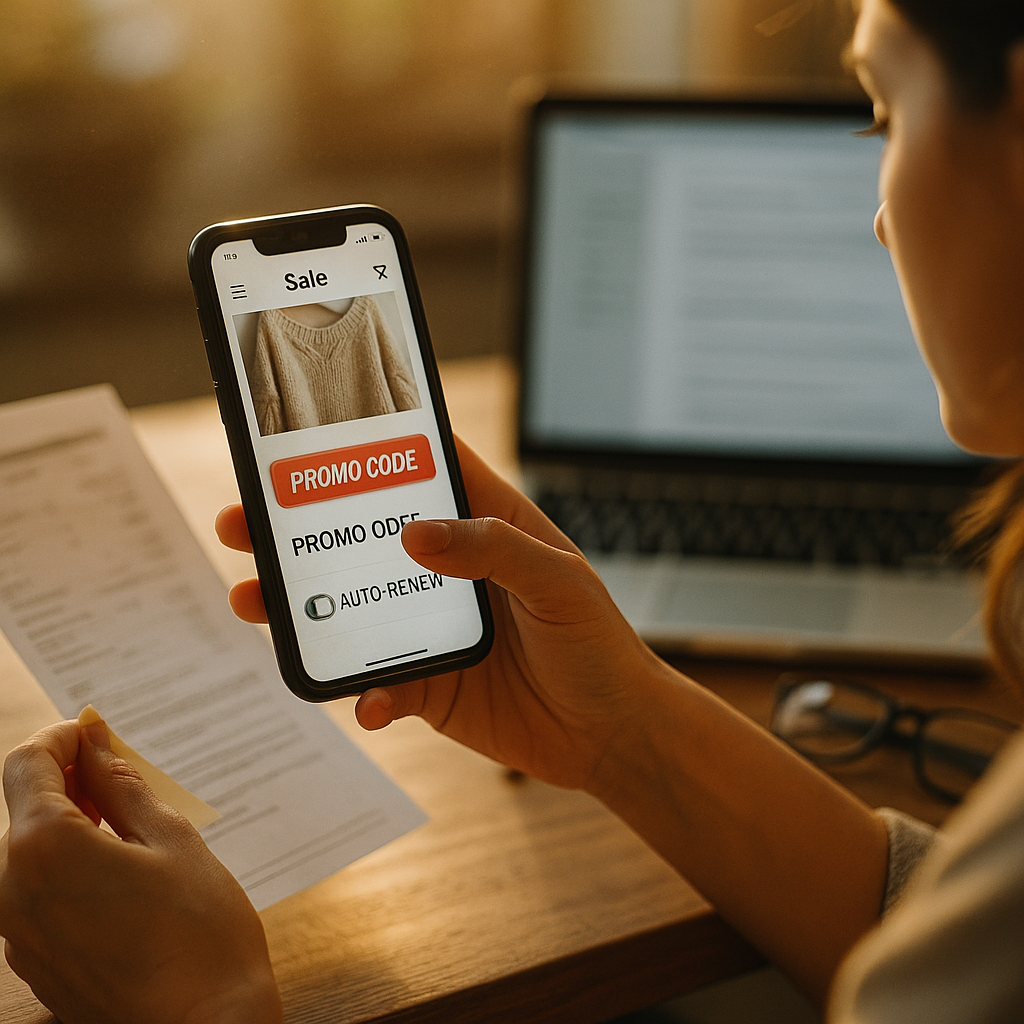
Discount codes power roughly a third of creator-driven conversions, according to industry affiliate tracking data. But if that code triggers an auto-renewing subscription and your creator never says so clearly, you’re not running a promotion. You’re running an FTC rules violation waiting to happen. The agency’s 2024 “click-to-cancel” rule and its ongoing negative-option enforcement sweep have turned a routine influencer tactic into one of the riskiest corners of creator marketing.
This isn’t theoretical. The FTC has already fined subscription-box brands, skincare companies, and supplement marketers for exactly this pattern: a flashy discount code, a vague “terms apply,” and a recurring charge nobody warned the customer about. If your influencer program touches subscriptions, this guide is your operational checklist.
Why Auto-Renewal Codes Are a Regulatory Minefield
Here’s the mechanic that gets brands in trouble. A creator posts “Use code SARAH20 for 20% off your first box.” Sounds harmless. But if that first box automatically converts into a recurring monthly charge, and the disclosure lives in tiny print on a landing page three clicks away, the FTC considers that a deceptive pricing practice under Section 5 of the FTC Act. The discount isn’t the problem. The silence around what happens next is.
The FTC’s Negative Option Rule, finalized in 2024, requires “clear and conspicuous” disclosure of subscription terms before you take payment information, plus a simple cancellation mechanism. Courts have pushed back on parts of the rule’s implementation timeline, but the enforcement appetite hasn’t cooled. The FTC has continued bringing cases under existing Section 5 authority even as the broader rule works through litigation.
A discount code that hides an auto-renewal isn’t a growth hack. It’s a liability that scales with every creator who repeats your script.
What “Clear and Conspicuous” Actually Means for Creator Content
Brand legal teams love this phrase and hate defining it. The FTC has offered guidance, though, and it’s more specific than most marketers assume.
- Proximity: The auto-renewal disclosure must sit near the discount claim itself, not buried in a bio link or a pinned comment nobody reads.
- Unavoidability: If a viewer can complete the purchase path without encountering the term, it fails. A caption disclosure doesn’t count if the checkout flow never repeats it.
- Plain language: “Recurring billing” beats legalese. “Auto-renews at $49.99/month unless canceled” beats “subscription terms available at checkout.”
- Audio-visual parity: On video content, on-screen text disclosures need to match what’s said verbally. A muted disclaimer flashing for half a second won’t survive review.
Short-form video makes this genuinely hard. Fifteen-second TikToks don’t leave much room for legal disclaimers, and creators know that friction kills conversion. But that’s exactly why brands need to build the disclosure into the script, not treat it as an optional add-on the creator can skip if it “ruins the vibe.”
The Drip Pricing Problem Nobody’s Talking About
Auto-renewal isn’t the only landmine. The FTC has separately targeted “drip pricing,” where the advertised price excludes mandatory fees revealed only at checkout. Picture a creator promoting “$15 skincare bundle,” and by checkout it’s $22 after a “processing fee” and shipping surcharge that were never optional. That’s deceptive pricing regardless of subscription status.
Combine drip pricing with auto-renewal and you’ve got a compounding disclosure failure: the initial price is wrong, and the ongoing price is hidden. Regulators treat these as related but distinct violations, meaning a single campaign misstep can trigger two separate enforcement theories.
Building a Compliance Workflow, Not Just a Warning Label
Most brands react to this risk with a single line added to creator contracts: “Creator must disclose auto-renewal terms.” That’s not a workflow. That’s a hope.
A real compliance process looks like this:
- Pre-approve the script language. Don’t leave disclosure wording to creator discretion. Provide exact phrasing for the auto-renewal term and require it verbatim, similar to how brands now pre-approve health claim disclaimers for supplement campaigns.
- Audit the landing page, not just the post. The FTC evaluates the full purchase journey. If your checkout page doesn’t reinforce the renewal terms, the creator’s disclosure alone won’t save you.
- Require a visible cancellation path. Click-to-cancel obligations mean if a customer can sign up in two clicks, they need to cancel in roughly the same number.
- Run a transcript check post-publish. Verbal disclosures get dropped in editing more often than brands realize. A systematic transcript audit process catches omissions before regulators do.
- Track code-level performance against complaint data. If a specific creator’s discount code correlates with a spike in chargebacks or subscription cancellation complaints, that’s an early signal your disclosure isn’t landing.
None of this is glamorous. But it’s cheaper than a consent decree, and far cheaper than the reputational hit of a viral “this influencer scammed me” thread.
Contract Language That Actually Protects You
Generic disclosure clauses don’t hold up well in FTC investigations because they shift responsibility without creating accountability. Contracts need specificity: exact disclosure text, required placement (spoken and on-screen), a mandate that the creator cannot edit compliance language without approval, and an indemnification clause tied to disclosure failures.
This mirrors the broader shift happening across creator contracts generally. Brands are already tightening language around usage rights, data handling, and platform-specific disclosure rules, as covered in our creator contract disclosure guide. Auto-renewal terms deserve the same rigor, arguably more, given the FTC’s active enforcement posture on negative-option billing.
Indemnification matters especially when creators use their own affiliate platforms or link-in-bio tools that generate the actual checkout flow. If a third-party tool obscures pricing terms, brands can still be on the hook. That’s the same liability logic playing out in AI shopping agent liability discussions, where the technology layer between creator and consumer creates fresh disclosure gaps nobody fully owns yet.
Platform Differences Complicate Enforcement
Instagram Reels, TikTok, and YouTube Shorts each handle on-screen text and link placement differently, which means a single disclosure template rarely works across platforms. TikTok’s algorithm and interface changes have already forced brands to rethink affiliate vetting standards, as seen in the platform’s ongoing affiliate crackdown. Similar scrutiny is likely heading toward subscription and auto-renewal promotions specifically, given how many DTC brands rely on TikTok Shop for recurring-revenue products.
YouTube’s shift toward Shorts and shorter watch times adds another wrinkle: less time on screen means less room for disclosure, which is exactly the tension explored in our piece on the dual disclosure checklist for shortened video formats.
What Happens When Brands Get This Wrong
The FTC doesn’t need a viral scandal to open an inquiry. Complaint volume through the FTC’s consumer complaint database often triggers investigations quietly, months before any public action. By the time a brand sees a press release, the agency has usually already gathered contracts, creator briefs, and landing page snapshots via subpoena.
Penalties under the FTC Act can reach into six or seven figures per violation, and each individual ad instance can be treated as a separate violation when multiplied across creators running the same script. That math gets ugly fast for brands running large-scale seeding or affiliate programs, the kind covered in our nano-creator seeding compliance guide.
One non-compliant script, multiplied across fifty creators, isn’t fifty small risks. It’s fifty identical violations, each one admissible as evidence of a pattern.
Brands should also watch for state-level consumer protection laws, which sometimes impose stricter auto-renewal disclosure standards than federal rules. California’s Automatic Renewal Law, for example, predates and in some ways exceeds the FTC’s negative-option requirements. A campaign compliant at the federal level can still expose a brand in specific states.
A Quick Self-Audit Before Your Next Campaign Brief
Run through this before signing off on any creator campaign involving discount codes tied to subscriptions:
- Does the creator script include the exact renewal price and frequency, spoken aloud?
- Is the disclosure visible on-screen for long enough to read comfortably, not just flashed?
- Does the landing page repeat the auto-renewal terms before payment info is collected?
- Is there a one-step or near-one-step cancellation path?
- Have you documented creator approval of the exact compliance language, in writing?
- Does your contract include indemnification specific to pricing and renewal disclosure failures?
If you can’t check every box, don’t launch. Marketing teams under revenue pressure tend to treat compliance reviews as a bottleneck. Regulators treat missing compliance reviews as intent.
Industry benchmarking data from sources like eMarketer and Sprout Social consistently shows subscription and DTC brands among the heaviest users of creator discount codes. That popularity is precisely why this category draws outsized regulatory attention. High-volume tactics attract high-volume scrutiny.
The Takeaway
Treat every auto-renewal discount code the way you’d treat a health claim or a financial promotion: assume regulators will read the script before your customers do. Build disclosure into the creative brief, not the legal appendix, and audit the full purchase path, not just the caption.
Frequently Asked Questions
Does the FTC’s Negative Option Rule apply to influencer-promoted discount codes specifically?
Yes. The rule applies to the underlying subscription transaction regardless of how the customer arrived there. If a creator’s code drives a signup into an auto-renewing plan, the brand must ensure clear disclosure and an easy cancellation path, even though the creator’s post is only the entry point.
Who is liable if a creator fails to disclose auto-renewal terms, the brand or the creator?
Typically both, though the FTC has historically pursued brands more aggressively since they control the product, pricing, and checkout experience. Contracts should include indemnification language, but that doesn’t eliminate brand exposure to regulatory action.
Is a link-in-bio disclosure enough to satisfy “clear and conspicuous” requirements?
Generally no. The FTC expects disclosures to appear at the point of the claim itself, meaning in the video or post where the discount is promoted, not several clicks removed. A landing page disclosure can supplement but not replace an in-content disclosure.
What counts as drip pricing in a creator campaign?
Drip pricing occurs when the advertised price excludes mandatory fees, such as processing charges or shipping, that are only revealed at checkout. If a creator promotes a specific dollar amount that isn’t the true final price, that’s a deceptive pricing risk separate from any auto-renewal issue.
How often should brands audit creator content for pricing disclosure compliance?
Best practice is a pre-publish script and landing page review, followed by a post-publish transcript audit to confirm the creator delivered the approved disclosure verbatim. High-volume affiliate or seeding programs should run this check on a rolling basis, not just at campaign launch.
FAQs
Does the FTC’s Negative Option Rule apply to influencer-promoted discount codes specifically?
Yes. The rule applies to the underlying subscription transaction regardless of how the customer arrived there. If a creator’s code drives a signup into an auto-renewing plan, the brand must ensure clear disclosure and an easy cancellation path, even though the creator’s post is only the entry point.
Who is liable if a creator fails to disclose auto-renewal terms, the brand or the creator?
Typically both, though the FTC has historically pursued brands more aggressively since they control the product, pricing, and checkout experience. Contracts should include indemnification language, but that doesn’t eliminate brand exposure to regulatory action.
Is a link-in-bio disclosure enough to satisfy “clear and conspicuous” requirements?
Generally no. The FTC expects disclosures to appear at the point of the claim itself, meaning in the video or post where the discount is promoted, not several clicks removed. A landing page disclosure can supplement but not replace an in-content disclosure.
What counts as drip pricing in a creator campaign?
Drip pricing occurs when the advertised price excludes mandatory fees, such as processing charges or shipping, that are only revealed at checkout. If a creator promotes a specific dollar amount that isn’t the true final price, that’s a deceptive pricing risk separate from any auto-renewal issue.
How often should brands audit creator content for pricing disclosure compliance?
Best practice is a pre-publish script and landing page review, followed by a post-publish transcript audit to confirm the creator delivered the approved disclosure verbatim. High-volume affiliate or seeding programs should run this check on a rolling basis, not just at campaign launch.
Top Influencer Marketing Agencies
The leading agencies shaping influencer marketing in 2026
Agencies ranked by campaign performance, client diversity, platform expertise, proven ROI, industry recognition, and client satisfaction. Assessed through verified case studies, reviews, and industry consultations.
Moburst

-
2

The Shelf
Boutique Beauty & Lifestyle Influencer AgencyA data-driven boutique agency specializing exclusively in beauty, wellness, and lifestyle influencer campaigns on Instagram and TikTok. Best for brands already focused on the beauty/personal care space that need curated, aesthetic-driven content.Clients: Pepsi, The Honest Company, Hims, Elf Cosmetics, Pure LeafVisit The Shelf → -
3

Audiencly
Niche Gaming & Esports Influencer AgencyA specialized agency focused exclusively on gaming and esports creators on YouTube, Twitch, and TikTok. Ideal if your campaign is 100% gaming-focused — from game launches to hardware and esports events.Clients: Epic Games, NordVPN, Ubisoft, Wargaming, Tencent GamesVisit Audiencly → -
4

Viral Nation
Global Influencer Marketing & Talent AgencyA dual talent management and marketing agency with proprietary brand safety tools and a global creator network spanning nano-influencers to celebrities across all major platforms.Clients: Meta, Activision Blizzard, Energizer, Aston Martin, WalmartVisit Viral Nation → -
5

The Influencer Marketing Factory
TikTok, Instagram & YouTube CampaignsA full-service agency with strong TikTok expertise, offering end-to-end campaign management from influencer discovery through performance reporting with a focus on platform-native content.Clients: Google, Snapchat, Universal Music, Bumble, YelpVisit TIMF → -
6

NeoReach
Enterprise Analytics & Influencer CampaignsAn enterprise-focused agency combining managed campaigns with a powerful self-service data platform for influencer search, audience analytics, and attribution modeling.Clients: Amazon, Airbnb, Netflix, Honda, The New York TimesVisit NeoReach → -
7

Ubiquitous
Creator-First Marketing PlatformA tech-driven platform combining self-service tools with managed campaign options, emphasizing speed and scalability for brands managing multiple influencer relationships.Clients: Lyft, Disney, Target, American Eagle, NetflixVisit Ubiquitous → -
8

Obviously
Scalable Enterprise Influencer CampaignsA tech-enabled agency built for high-volume campaigns, coordinating hundreds of creators simultaneously with end-to-end logistics, content rights management, and product seeding.Clients: Google, Ulta Beauty, Converse, AmazonVisit Obviously →