


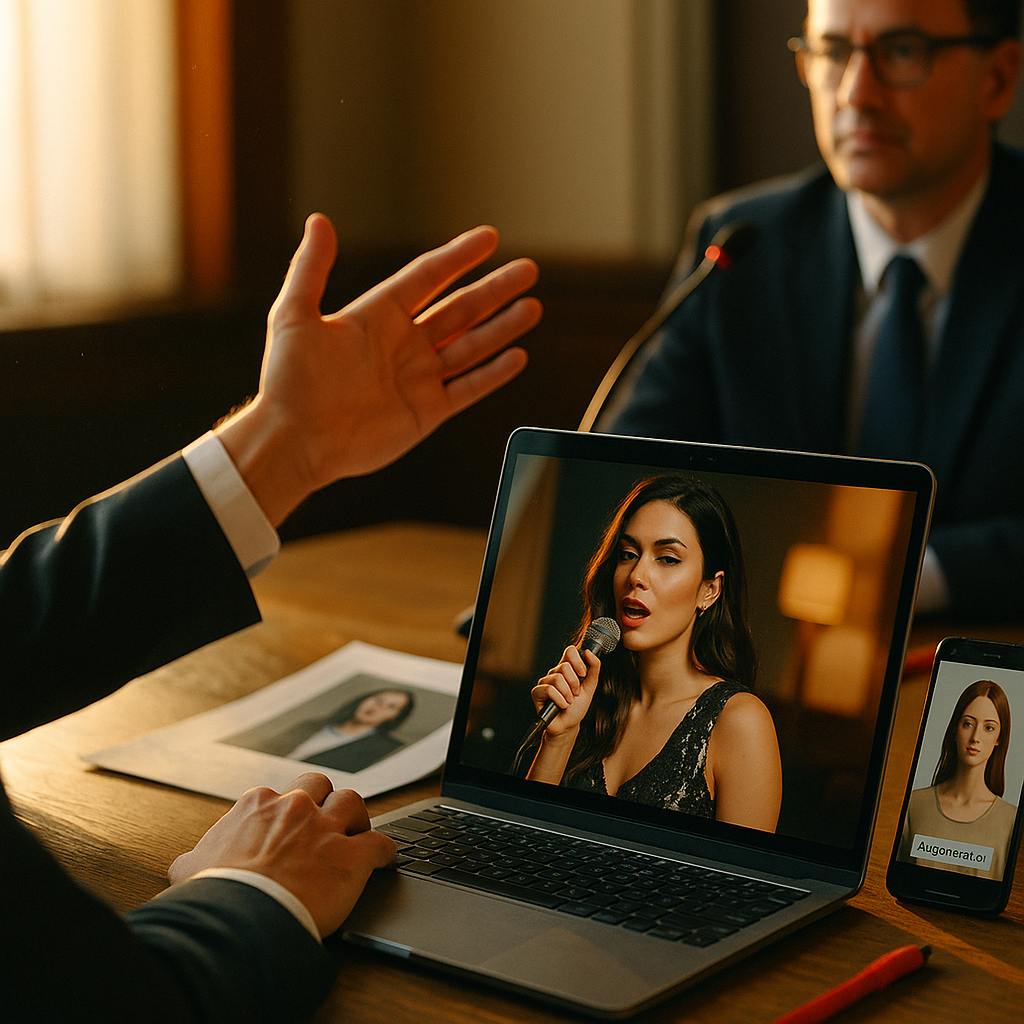
Nineteen states now have laws touching synthetic or AI-generated performers. Zero of them use the same definition. If your national campaign features a digitally altered spokesperson, or any AI-assisted “performer,” you’re not looking at one compliance question — you’re looking at nineteen, plus whatever synthetic performer disclosure laws the platform itself layers on top with its own native AI label. One ad, one upload button, and a legal patchwork that doesn’t care that you only wanted to run it once.
This isn’t a hypothetical for the legal team to worry about someday. It’s a live operational problem for anyone shipping AI-generated or AI-modified talent into paid social this year.
Why One Ad Now Triggers Multiple Legal Regimes
A single national ad buy used to mean one FTC framework and one platform policy. Simple. Now it means reconciling three separate — and frequently contradictory — layers: state disclosure statutes, platform-native AI labeling systems, and federal deceptive-advertising standards that predate generative video entirely.
States like California, Tennessee, and New York have each passed some version of a synthetic-performer or digital-replica disclosure law, but the triggers differ wildly. California’s statute (built partly on publicity-rights precedent) cares about consent and likeness use. Tennessee’s ELVIS Act focuses on voice replication. New York’s approach leans on labor and union-adjacent protections for performers whose likeness gets digitally extended. None of them agree on what percentage of AI alteration triggers a disclosure requirement, or where on the creative that disclosure must live.
Meanwhile, TikTok, Meta, and YouTube each run their own “AI-generated content” labeling systems, applied automatically or through creator self-disclosure, with different thresholds for what counts as synthetic media at all.
Run the same ad in Ohio, Texas, and California simultaneously, and you may need three different disclosure treatments to satisfy state law, layered under one platform label that doesn’t map to any of them.
A brand can be simultaneously overcompliant on a platform label and underdisclosed under state law, in the same ad, at the same time.
The Matrix Problem, Explained Simply
Think of it as two axes. One axis is jurisdiction: where the ad runs, where the audience is located, sometimes where the performer resides. The other axis is platform: where the label lives, how it’s triggered, and whether it satisfies any legal disclosure requirement at all (usually it doesn’t).
Most brand and agency compliance teams have been treating these as one problem. They’re not. A platform’s “AI info” tag is a content-moderation feature, not a legal disclosure. Relying on it as your synthetic-performer disclosure is like relying on a nutrition label to satisfy a drug warning requirement. Related, adjacent, legally insufficient.
Here’s a simplified version of the matrix logic, without pretending it substitutes for actual counsel review in each state:
- Likeness-based states (California-style): trigger centers on whether a real person’s face, voice, or identifiable characteristics were digitally replicated without consent, regardless of platform labeling.
- Voice-specific states (Tennessee-style): trigger centers narrowly on vocal likeness, meaning a fully synthetic on-screen performer with a licensed voice actor may not even trigger the statute.
- Consumer-protection states: trigger centers on deceptive impression, meaning the question is whether a reasonable viewer would believe the performer is human and unaltered.
- Platform-native labels: trigger centers on detection thresholds and creator self-reporting, applied uniformly regardless of state law, and often missing entirely on paid dark posts that bypass organic upload flows.
That last point matters more than most teams realize. Native AI labels frequently apply to organic posts but get stripped or bypassed when content is repurposed into a dark ad unit through Ads Manager or a whitelisting arrangement. If your synthetic-performer disclosure strategy leans on the platform label showing up automatically, check that assumption before your next media buy, not after a regulator does it for you.
Building the Actual Reconciliation Matrix
Legal and marketing ops teams that have gotten ahead of this treat it as a spreadsheet problem before it’s a creative problem. The matrix needs, at minimum, these columns: state of ad delivery, applicable statute (if any), disclosure trigger type, required disclosure placement (on-screen text, verbal, metadata), platform running the buy, native label behavior on that platform, and whether the native label satisfies, partially satisfies, or has no bearing on the state requirement.
Populate that matrix once, per campaign, before creative goes into production. Not after.
The practical fix most compliance-forward teams land on: build the disclosure into the creative itself, on-screen, in a way that meets the strictest applicable state standard, and layer the platform’s native label on top as a redundant signal, not a substitute. If California requires a clear and conspicuous on-screen disclosure and Ohio requires nothing, run the California-grade disclosure everywhere. It’s rarely worth the operational cost of producing state-specific creative cuts for a nuance this granular, unless the media spend justifies it.
Design to the strictest state standard once, rather than reconciling fifty different thresholds ad-by-ad. It’s slower upfront and dramatically cheaper downstream.
This mirrors the logic brands have already had to apply to TikTok Shop disclosure timing versus FTC rules — when regimes conflict, build to the stricter standard and treat the looser one as automatically satisfied. It’s a familiar compliance pattern, just applied to a newer content category.
For a deeper technical breakdown of how the state statutes themselves diverge, our earlier piece on state synthetic-performer laws versus platform AI labels is worth keeping open in a second tab while you build your matrix.
Where Platform Labels Actually Fall Short
Platform AI labels were built to protect the platform, not the advertiser. TikTok’s disclosure tools and Meta’s AI content policies exist primarily to manage misinformation risk and user trust at scale. They weren’t designed with state tort law or publicity-rights statutes in mind, and it shows.
Three specific gaps come up constantly in brand legal reviews:
First, labels often apply at the platform-account level or the individual-post level, not the campaign level, so a whitelisted or dark ad running through a different distribution path may never pick up the label at all. Second, the label language itself (“AI info,” “Made with AI”) rarely meets the “clear and conspicuous” bar that most state statutes actually require, since it’s often a small icon rather than legible on-screen text. Third, none of the major platforms currently distinguish between “fully synthetic performer” and “real performer, AI-enhanced,” even though several state laws treat those as legally distinct scenarios.
That third gap is the one catching agencies off guard most often in review calls. A real actor whose voice was cleaned up or de-aged with AI tools sits in a completely different legal category than a fully synthetic avatar, but the platform label treats them identically, or doesn’t flag either one consistently. This is the same category of gap explored in coverage of AI remix consent clauses, where platform tools move faster than the contract language backing them.
Contracting Around the Gap
The matrix only works if performer contracts and vendor agreements are written to support it. That means specifying, at the contract stage, whether a performer’s likeness, voice, or performance may be AI-modified, to what degree, and who bears liability if a state disclosure requirement is triggered downstream. Waiting until post-production to figure out whether your ad needs a Tennessee-compliant voice disclosure is how brands end up pulling creative mid-flight.
This connects directly to indemnification language brands should already be negotiating. If a vendor supplies AI-generated or AI-enhanced performer content and doesn’t flag which state triggers apply, that risk needs to sit contractually with the vendor, not get discovered by the brand’s legal team after a regulator complaint. The indemnification logic here runs parallel to what’s already standard practice around AI shopping agent liability — allocate the risk before the tool ships, not after.
Usage rights matter here too. If a synthetic performer’s likeness gets reused, extended, or remixed for a follow-up campaign, that’s a fresh disclosure analysis, not a continuation of the old one. Brands already managing this for breakout creator content via usage-rights escalation clauses should extend the same discipline to synthetic-performer assets specifically.
What Enforcement Actually Looks Like Right Now
Nobody’s been hit with a nine-figure judgment over a mislabeled AI ad yet. But state attorneys general have shown, repeatedly, that they’ll use consumer-protection statutes creatively when a new ad format outpaces specific legislation. The FTC has also signaled, through public statements and its ongoing enforcement priorities around AI-generated endorsements, that “the platform labeled it” is not a defense it takes seriously. Deceptive impression on the consumer is still the test, regardless of what icon sat in the corner of the frame.
Given that eMarketer and other industry trackers have flagged AI-generated ad creative as one of the fastest-growing categories in paid social this year, the enforcement gap won’t stay a gap for long. Brands running national synthetic-performer campaigns right now are, functionally, the test cases.
Building the Habit, Not Just the Spreadsheet
A matrix is only useful if someone owns updating it. State legislatures are still actively drafting synthetic-performer bills; platforms are still revising label thresholds. Treat this like a living compliance document, reviewed quarterly, tied to whoever owns paid social legal review internally, whether that’s brand counsel, a retained agency compliance lead, or a dedicated trust and safety function.
Teams that already run structured audits for things like creator disclosure risk or discount-code compliance have the operational muscle for this already. Synthetic-performer disclosure just needs to get added to that same recurring review cycle, not spun up as a separate, one-off legal project.
Next step: before your next national creative featuring any AI-modified or synthetic performer goes into production, build the state-by-platform matrix first, design the on-screen disclosure to the strictest applicable state, and get vendor indemnification language locked before a single frame is shot.
FAQs
What counts as a “synthetic performer” under most state laws?
Definitions vary, but most statutes cover digitally created or substantially AI-altered likenesses, voices, or performances that a reasonable viewer could mistake for an unaltered human performer. Some states, like Tennessee, narrow this specifically to voice replication, while others take a broader likeness-based approach.
Does a platform’s “Made with AI” label satisfy state disclosure law?
Generally, no. Platform labels are content-moderation tools, not legal disclosures, and they rarely meet the “clear and conspicuous” standard required by most state statutes. Treat them as a supplementary signal, not a substitute for compliant on-screen disclosure.
Can I run one disclosure treatment nationally instead of customizing by state?
Yes, and it’s usually the more efficient approach. Build your disclosure to meet the strictest state standard in your distribution footprint, then apply it universally rather than producing separate creative cuts for each jurisdiction.
Who’s liable if a vendor’s AI tool triggers an undisclosed state requirement?
That depends entirely on your contract language. Brands should negotiate indemnification clauses that place this risk on vendors supplying AI-generated or AI-enhanced performer content, specified before production begins.
Are dark ads and whitelisted posts covered by platform AI labels?
Not reliably. Native AI labels often apply at the organic post level and can be stripped or bypassed when content moves into a dark ad unit through Ads Manager or a whitelisting arrangement. Verify label persistence on your specific distribution path before assuming coverage.
FAQs
Top Influencer Marketing Agencies
The leading agencies shaping influencer marketing in 2026
Agencies ranked by campaign performance, client diversity, platform expertise, proven ROI, industry recognition, and client satisfaction. Assessed through verified case studies, reviews, and industry consultations.
Moburst

-
2

The Shelf
Boutique Beauty & Lifestyle Influencer AgencyA data-driven boutique agency specializing exclusively in beauty, wellness, and lifestyle influencer campaigns on Instagram and TikTok. Best for brands already focused on the beauty/personal care space that need curated, aesthetic-driven content.Clients: Pepsi, The Honest Company, Hims, Elf Cosmetics, Pure LeafVisit The Shelf → -
3

Audiencly
Niche Gaming & Esports Influencer AgencyA specialized agency focused exclusively on gaming and esports creators on YouTube, Twitch, and TikTok. Ideal if your campaign is 100% gaming-focused — from game launches to hardware and esports events.Clients: Epic Games, NordVPN, Ubisoft, Wargaming, Tencent GamesVisit Audiencly → -
4

Viral Nation
Global Influencer Marketing & Talent AgencyA dual talent management and marketing agency with proprietary brand safety tools and a global creator network spanning nano-influencers to celebrities across all major platforms.Clients: Meta, Activision Blizzard, Energizer, Aston Martin, WalmartVisit Viral Nation → -
5

The Influencer Marketing Factory
TikTok, Instagram & YouTube CampaignsA full-service agency with strong TikTok expertise, offering end-to-end campaign management from influencer discovery through performance reporting with a focus on platform-native content.Clients: Google, Snapchat, Universal Music, Bumble, YelpVisit TIMF → -
6

NeoReach
Enterprise Analytics & Influencer CampaignsAn enterprise-focused agency combining managed campaigns with a powerful self-service data platform for influencer search, audience analytics, and attribution modeling.Clients: Amazon, Airbnb, Netflix, Honda, The New York TimesVisit NeoReach → -
7

Ubiquitous
Creator-First Marketing PlatformA tech-driven platform combining self-service tools with managed campaign options, emphasizing speed and scalability for brands managing multiple influencer relationships.Clients: Lyft, Disney, Target, American Eagle, NetflixVisit Ubiquitous → -
8

Obviously
Scalable Enterprise Influencer CampaignsA tech-enabled agency built for high-volume campaigns, coordinating hundreds of creators simultaneously with end-to-end logistics, content rights management, and product seeding.Clients: Google, Ulta Beauty, Converse, AmazonVisit Obviously →