


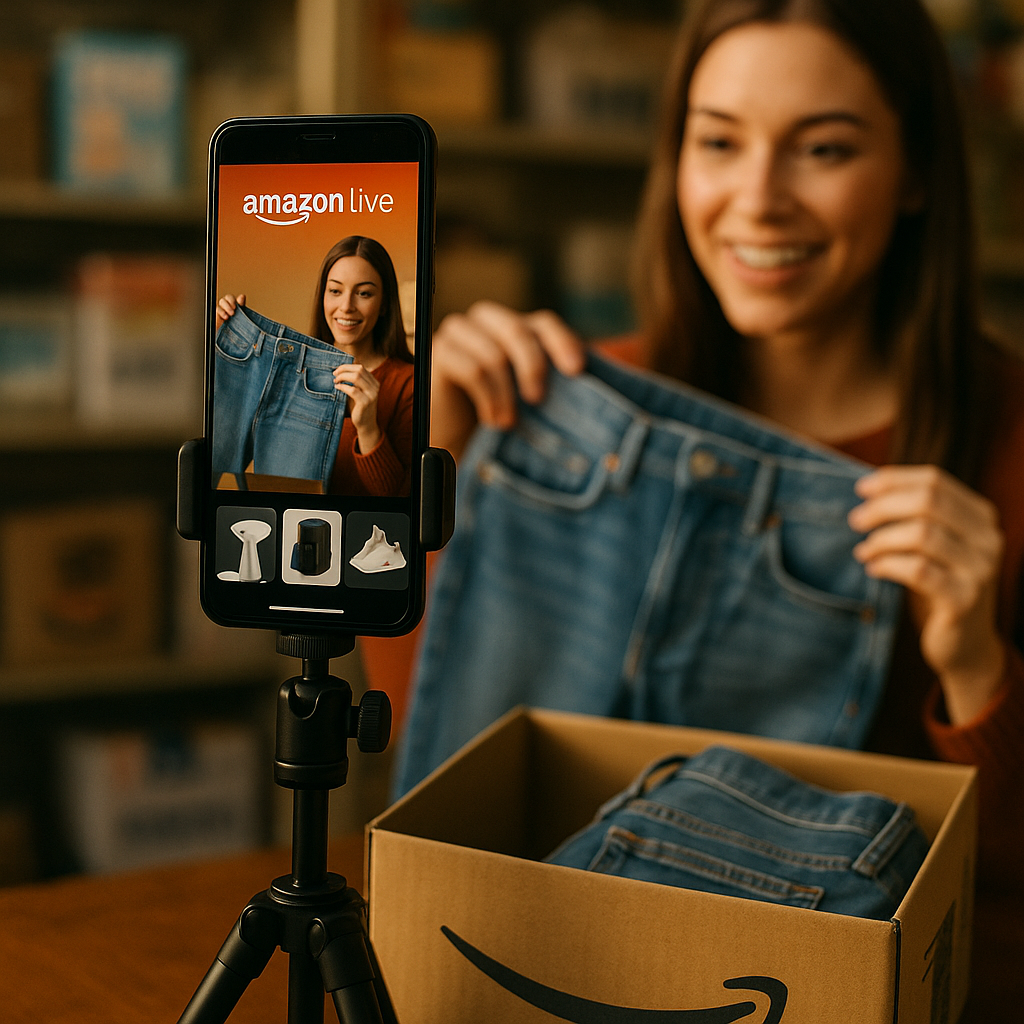
Amazon reportedly drives over $1 billion in annualized sales through Amazon Live, yet most brands still treat livestream shopping like a single-tier casting call: book a big name, hope for conversions, repeat. Amazon Live’s tiered creator roster model breaks that habit, and it’s quietly becoming one of the smartest CAC-reduction plays in retail media. Here’s how the structure actually works, and why it matters for anyone managing a creator budget.
The Problem With Flat Creator Rosters
Most brands build influencer programs the way they build media plans: top-down, reach-first, budget-heavy. You sign a handful of macro creators, run a campaign, measure the spike, and move on. It works, until it doesn’t. Macro talent commands premium rates, audiences skew toward brand awareness rather than purchase intent, and customer acquisition cost creeps up with every renewal negotiation.
Amazon Live took a different bet. Instead of a flat roster, it built a tiered system that treats creator investment like a portfolio, not a single line item. Macro creators anchor reach and credibility. Mid-tier creators drive category-specific conversion. Emerging and nano creators feed a discovery pipeline that constantly refreshes the roster with lower-cost, higher-trust talent.
The tiered model isn’t about picking one type of creator. It’s about running reach and discovery as two separate, simultaneous functions that feed the same CAC target.
How the Tiered Structure Actually Breaks Down
Amazon Live’s creator ecosystem generally sorts into three functional bands, even though Amazon doesn’t publish an official rate card:
- Macro/celebrity tier: Established creators and personalities with large followings, used for launch moments, seasonal pushes, and brand credibility halo effects.
- Mid-tier category specialists: Creators with engaged, niche audiences in beauty, home, tech, or fitness — the people whose livestreams convert because their audience already trusts their product opinions.
- Emerging/nano tier: Smaller creators, often just starting on Amazon Live, given low-barrier entry through Amazon’s affiliate and storefront tools, then promoted up the ladder based on performance data.
What makes this interesting from a brand strategist’s chair isn’t the tiers themselves — plenty of platforms segment creators by follower count. It’s that Amazon ties tier movement to actual commerce data: click-through, add-to-cart, and completed purchase, not vanity engagement. A nano creator who converts at 8% moves up faster than a macro creator coasting on reach alone.
Why This Matters for CAC
Customer acquisition cost math changes dramatically when you stop paying macro rates for every touchpoint. If a $15,000 macro livestream and a $400 nano creator segment both drive comparable purchase volume in a given category, the blended CAC across your program drops fast. Brands running on Amazon Live have quietly used this exact logic: keep one or two macro anchors for reach and brand lift, then flood the middle and bottom of the funnel with cheaper, higher-converting emerging talent.
This mirrors what we’ve seen in other nano-creator plays. Poppi’s TikTok Shop rebuild leaned on nano creators specifically because trust and conversion mattered more than reach. Amazon Live applies the same principle inside a livestream commerce environment, where purchase intent is already higher than standard social feeds.
Discovery as a Built-In Feature, Not an Afterthought
Here’s the part most competitor platforms miss: discovery isn’t a separate initiative bolted onto the creator program. It’s structurally built into how Amazon Live scores and promotes talent. New creators get access to the same storefront and commission tools as established ones. Performance data — not follower count, not agency relationships — determines who gets surfaced in Amazon’s creator recommendations to brands.
That’s a meaningful departure from how Instagram or TikTok discovery typically works, where algorithmic reach and existing audience size still heavily influence who gets found. Amazon’s retail context gives it an advantage: it already knows who’s buying, what converts, and which creators are influencing actual transactions rather than just impressions.
For brands, this means the emerging-talent pipeline isn’t a manual sourcing exercise. You’re not scrolling TikTok hoping to find the next Chamberlain Coffee-style nano partner before a competitor does — Amazon’s own commerce data does a chunk of that scouting for you. Compare that to the manual discovery work brands did to build Chamberlain Coffee’s nano-creator shelf strategy, and the efficiency gain is obvious.
What the Data Suggests About Tiered ROI
Livestream shopping in the U.S. remains smaller than in China, but it’s growing fast — eMarketer has tracked steady increases in U.S. livestream commerce spend, and platforms like Amazon Live, TikTok Shop, and Whatnot are the primary beneficiaries. What’s notable in Amazon’s case is conversion quality. Livestream viewers arriving through Amazon Live are already inside the Amazon purchase environment — one click from checkout, already carrying stored payment info and Prime shipping expectations. That changes the CAC equation entirely compared to platforms where you’re driving traffic off-site.
Brands running tiered rosters report a few consistent patterns:
- Blended CAC drops as nano/emerging creator volume increases, provided conversion rates hold above a minimum threshold (typically 2-4% for consideration categories, higher for impulse/CPG).
- Macro creators still outperform on new-to-brand customer acquisition and search lift, even when their direct-conversion CAC is higher.
- Mid-tier creators offer the best cost-per-acquisition-to-reach ratio, making them the workhorse tier most brands under-invest in.
This lines up with what other retail and DTC brands have learned the hard way. Prime Hydration’s convenience store velocity strategy succeeded partly because it didn’t over-rely on a single creator tier — it stacked visibility across multiple trust levels simultaneously.
Where Brands Get the Tiered Model Wrong
Not every brand executing a “tiered” creator strategy actually gets the CAC benefit. The common failure mode: treating tiers as a budget allocation exercise instead of a performance-routing system. If you assign creators to tiers based on rate card and never revisit placement based on conversion data, you’re just running three separate flat programs badly.
The other mistake is under-resourcing the emerging tier operationally. Nano and micro creators need faster content turnaround support, clearer product briefs, and simpler commission structures than agencies typically build for macro talent. Skip that infrastructure and your “discovery pipeline” becomes a graveyard of one-off collaborations that never scale.
A tiered roster only reduces CAC if creator movement between tiers is driven by conversion data, not renewal dates or agency convenience.
There’s also a compliance layer brands underestimate. Livestream commerce sits at the intersection of affiliate marketing, influencer disclosure, and real-time claims — all areas the FTC has scrutinized more aggressively as livestream shopping scales. Emerging creators, in particular, often lack the training that macro talent and their agencies already have around proper disclosure language during live, unscripted selling. That’s a real risk exposure brands need to build into onboarding, not treat as a nice-to-have.
Operationalizing a Tiered Roster Without Amazon’s Native Tools
Most brands don’t have Amazon’s internal purchase data to power tier movement automatically. If you’re building something similar for TikTok Shop, YouTube Shopping, or your own DTC site, you need a proxy scoring system: conversion rate, average order value, repeat purchase attribution, and content-to-cart click-through. Track these per creator, review monthly, and move people up or down the roster based on trailing performance, not gut feel or follower growth.
Tools already used for TikTok Shop attribution and rapid creative testing translate well here. The same disciplined, data-driven rotation logic that powered a 41% CPI reduction through rapid ad testing applies to creator tier management: test fast, kill what underperforms, double down on what converts. Livestream commerce just adds a real-time layer to that same feedback loop.
Platforms like Sprout Social and HubSpot offer attribution frameworks that can be adapted for creator-tier tracking outside Amazon’s ecosystem, though nothing fully replicates the closed-loop purchase data Amazon has natively.
The Emerging-Talent Payoff Compounds
The real long-term advantage isn’t this quarter’s CAC number. It’s the compounding effect of having a self-refreshing bench of proven, lower-cost creators who already understand your product and convert reliably. Macro talent gets more expensive every renewal cycle. A well-managed emerging tier gets cheaper and more effective the longer you run it, because you’re constantly filtering for what already works.
That’s the same dynamic behind nano-creator collectives scaling brand deals through AI-assisted matching — volume plus data plus fast iteration beats a handful of expensive, static partnerships every time.
Next step: Audit your current creator roster by conversion tier, not follower count, and set a quarterly rule for promoting or cutting talent based on CAC contribution — not renewal convenience. That single change is what separates a real tiered strategy from an expensive flat one wearing a new label.
FAQs
What is Amazon Live’s tiered creator roster model?
It’s a structure that segments Amazon Live creators into macro, mid-tier, and emerging/nano bands, with movement between tiers driven by actual purchase conversion data rather than follower count or rate card alone.
How does a tiered creator model reduce customer acquisition cost?
By blending expensive macro creators (used for reach and brand credibility) with lower-cost mid-tier and nano creators who often convert at higher rates, brands lower their blended CAC across the full program instead of paying premium rates for every touchpoint.
Can brands replicate this model outside Amazon Live?
Yes, though it requires building a proxy scoring system using conversion rate, average order value, and click-to-cart data since most platforms don’t offer Amazon’s closed-loop purchase visibility natively.
What’s the biggest risk in running a tiered creator program?
Under-resourcing the emerging-talent tier operationally and failing to enforce FTC-compliant disclosure practices during live, unscripted selling, which creates outsized compliance exposure as programs scale.
Which creator tier delivers the best ROI?
Mid-tier category specialists typically offer the strongest cost-per-acquisition-to-reach ratio, though macro creators still lead in new-to-brand acquisition and search lift despite higher direct costs.
FAQs
What is Amazon Live’s tiered creator roster model?
It’s a structure that segments Amazon Live creators into macro, mid-tier, and emerging/nano bands, with movement between tiers driven by actual purchase conversion data rather than follower count or rate card alone.
How does a tiered creator model reduce customer acquisition cost?
By blending expensive macro creators (used for reach and brand credibility) with lower-cost mid-tier and nano creators who often convert at higher rates, brands lower their blended CAC across the full program instead of paying premium rates for every touchpoint.
Can brands replicate this model outside Amazon Live?
Yes, though it requires building a proxy scoring system using conversion rate, average order value, and click-to-cart data since most platforms don’t offer Amazon’s closed-loop purchase visibility natively.
What’s the biggest risk in running a tiered creator program?
Under-resourcing the emerging-talent tier operationally and failing to enforce FTC-compliant disclosure practices during live, unscripted selling, which creates outsized compliance exposure as programs scale.
Which creator tier delivers the best ROI?
Mid-tier category specialists typically offer the strongest cost-per-acquisition-to-reach ratio, though macro creators still lead in new-to-brand acquisition and search lift despite higher direct costs.
Top Influencer Marketing Agencies
The leading agencies shaping influencer marketing in 2026
Agencies ranked by campaign performance, client diversity, platform expertise, proven ROI, industry recognition, and client satisfaction. Assessed through verified case studies, reviews, and industry consultations.
Moburst

-
2

The Shelf
Boutique Beauty & Lifestyle Influencer AgencyA data-driven boutique agency specializing exclusively in beauty, wellness, and lifestyle influencer campaigns on Instagram and TikTok. Best for brands already focused on the beauty/personal care space that need curated, aesthetic-driven content.Clients: Pepsi, The Honest Company, Hims, Elf Cosmetics, Pure LeafVisit The Shelf → -
3

Audiencly
Niche Gaming & Esports Influencer AgencyA specialized agency focused exclusively on gaming and esports creators on YouTube, Twitch, and TikTok. Ideal if your campaign is 100% gaming-focused — from game launches to hardware and esports events.Clients: Epic Games, NordVPN, Ubisoft, Wargaming, Tencent GamesVisit Audiencly → -
4

Viral Nation
Global Influencer Marketing & Talent AgencyA dual talent management and marketing agency with proprietary brand safety tools and a global creator network spanning nano-influencers to celebrities across all major platforms.Clients: Meta, Activision Blizzard, Energizer, Aston Martin, WalmartVisit Viral Nation → -
5

The Influencer Marketing Factory
TikTok, Instagram & YouTube CampaignsA full-service agency with strong TikTok expertise, offering end-to-end campaign management from influencer discovery through performance reporting with a focus on platform-native content.Clients: Google, Snapchat, Universal Music, Bumble, YelpVisit TIMF → -
6

NeoReach
Enterprise Analytics & Influencer CampaignsAn enterprise-focused agency combining managed campaigns with a powerful self-service data platform for influencer search, audience analytics, and attribution modeling.Clients: Amazon, Airbnb, Netflix, Honda, The New York TimesVisit NeoReach → -
7

Ubiquitous
Creator-First Marketing PlatformA tech-driven platform combining self-service tools with managed campaign options, emphasizing speed and scalability for brands managing multiple influencer relationships.Clients: Lyft, Disney, Target, American Eagle, NetflixVisit Ubiquitous → -
8

Obviously
Scalable Enterprise Influencer CampaignsA tech-enabled agency built for high-volume campaigns, coordinating hundreds of creators simultaneously with end-to-end logistics, content rights management, and product seeding.Clients: Google, Ulta Beauty, Converse, AmazonVisit Obviously →