


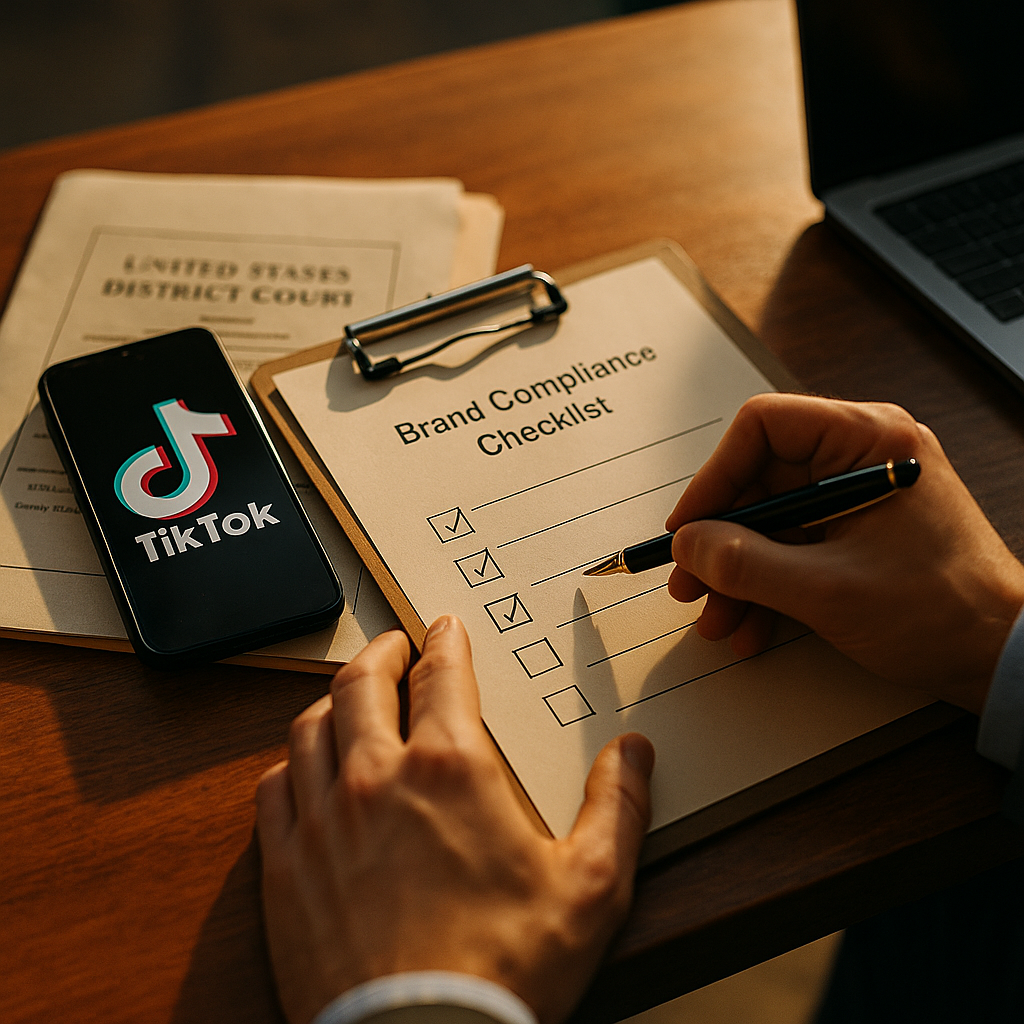
$400 million. That’s what TikTok agreed to pay over allegations it let millions of children under 13 create accounts without verifiable parental consent. If your brand runs influencer campaigns targeting teens, the TikTok COPPA settlement just became your problem too — not just TikTok’s.
The FTC and Department of Justice made the case public with a clear message: platforms aren’t the only ones on the hook. Advertisers who knowingly target underage audiences, or who fail to verify who they’re actually reaching, share the exposure. If your media buys, creator briefs, or shoppable content touch anyone under 18, this settlement changes your risk calculus immediately.
Why This Settlement Isn’t Just TikTok’s Problem
COPPA (the Children’s Online Privacy Protection Act) has been around since 1998, but enforcement against platforms rarely trickled down to advertisers. That’s shifting. Regulators are increasingly treating brands as co-controllers of data when they run targeted campaigns on platforms with known age-verification failures — especially when internal targeting data shows a meaningful share of the audience skews under 13.
The DOJ complaint alleged TikTok knew accounts belonged to children and continued collecting persistent identifiers, location data, and device information without consent. Brands running influencer or paid campaigns aimed at “teens” often can’t cleanly separate 13-to-17-year-olds from a large under-13 bleed. That’s the exposure. Age-gating on the platform side has historically been self-reported and weak, which means your targeting parameters may be doing far less filtering than your media plan assumes.
If your teen-targeted campaign relies solely on platform-reported age data, you’re inheriting the platform’s compliance gaps as your own.
What the $400M Number Actually Signals
Settlements this size don’t happen for isolated violations. They happen when regulators find systemic failure — and systemic failures invite systemic remedies, including audit requirements, third-party monitoring, and mandatory reporting that ripple outward to business partners. Expect increased scrutiny of ad platforms’ age-assurance mechanisms, and expect brands to be asked to demonstrate their own due diligence if regulators come knocking.
For context, this follows a pattern. Meta’s teen safety settlement pushed platforms toward stricter default privacy settings for minors, and our breakdown of Meta’s teen safety settlement covers the documentation brands were forced to adopt. TikTok’s case is bigger in dollar terms and broader in scope, covering both COPPA violations and allegations tied to a 2019 consent decree the company allegedly ignored.
eMarketer and Statista data consistently show teens spend more daily time on TikTok than any other platform, which is exactly why brands keep targeting the demographic. But that same concentration of underage users is what regulators are now treating as a red flag rather than a targeting opportunity.
The Compliance Checklist: What Brands Need to Fix Now
This isn’t about pulling out of teen marketing entirely. It’s about building a defensible compliance posture. Here’s what that actually looks like operationally.
- Audit your age-targeting parameters against platform-verified data, not self-reported birthdates. Self-reported age gates are notoriously unreliable. If your media buying team is targeting “13-17” as an audience segment, ask your platform rep for documentation on how that age is verified, not just collected.
- Separate influencer briefs by age tier. A creator whose audience skews 11-14 needs a fundamentally different content and data-handling approach than one whose audience is genuinely 16-18. Bake this into your creator vetting process, not as an afterthought.
- Review your data processing agreements. If you’re running TikTok Shop or shoppable content, check who’s actually processing the data behind the scenes. Our guide on the TikTok Shop DPA naming Oracle as sub-processor is required reading if you haven’t updated your vendor paperwork recently.
- Apply data minimization by default for any campaign touching minors. Don’t collect what you don’t need. Our framework on data minimization for TikTok Shop and Instagram checkout walks through practical field-level cuts that reduce exposure without killing campaign performance.
- Document parental consent flows for any interactive or data-collecting teen campaign. Quizzes, giveaways, sign-up forms — anything that captures PII from a user who might be under 13 needs a verifiable consent mechanism, not a checkbox.
- Build an escalation path for age-verification failures. When a creator’s content clearly reaches an underage audience despite targeting settings, who reviews it? Who pulls it? Define this before a regulator asks you to.
Notice what’s missing from that list: legal boilerplate. Regulators want operational evidence — logs, audit trails, documented decisions — not a privacy policy nobody reads.
Age Verification Is Now a Brand-Side Responsibility
Here’s the uncomfortable part. Platforms have historically treated age verification as their problem to solve, and brands treated it as someone else’s compliance layer. That division of labor is collapsing. Our recent coverage of how TikTok’s settlement exposes brand age-verification gaps lays out exactly why advertisers can no longer outsource this responsibility entirely to the platform’s terms of service.
Real identity verification — the kind tied to actual account authentication rather than self-reported birthdates — is becoming a bigger part of the conversation. If you’re running influencer campaigns through TikTok’s merchant or creator programs, it’s worth understanding how identity checks work on the seller side too. Our piece on TikTok’s real identity verification requirements is a useful companion resource, since the same infrastructure shift touches both creator onboarding and audience targeting.
For a deeper look specifically at what this settlement requires brands to change in their targeting practices, read our companion piece on what brands must fix in targeting now. It goes further into the targeting-parameter side of this checklist.
What Happens If You Don’t Update Your Practices?
Skip the audit and you’re betting on regulators not looking your direction. That’s a worse bet than it used to be. The FTC has signaled, through both this case and its broader enforcement priorities, that it’s willing to pursue advertisers directly, not just platforms. The agency’s own guidance on children’s privacy enforcement makes clear that “knew or should have known” standards apply broadly across the ad ecosystem, not just to the platform hosting the content.
There’s also reputational risk that outlasts any fine. Parents talk. Journalists cover this beat closely. A brand caught running underage-targeted campaigns without safeguards faces a PR problem that a settlement check doesn’t fully resolve.
Regulators are no longer treating “the platform’s terms of service allowed it” as a valid defense for advertisers.
Building This Into Your Existing Compliance Stack
If your team already runs influencer compliance audits, this isn’t a brand-new workstream — it’s an extension. Fold age-verification checks into the same process you use to catch undisclosed gifting or verify disclosure language. Most mid-size marketing teams already have a quarterly or campaign-level audit cadence; add a specific checklist item for audience age composition and consent documentation.
Platforms like Sprout Social and other social management tools increasingly offer audience demographic breakdowns that can help flag when a campaign’s actual reach skews younger than intended. Use them. Cross-reference platform-reported demographics against your own first-party data wherever possible, and flag discrepancies before launch, not after a complaint.
It’s also worth building contract language with creators that addresses this directly — spelling out expectations around audience composition and consent for any data capture. Similar to how brands have started adding contract clauses for platform de-monetization risk, a teen-audience clause protects both parties if a campaign draws regulatory attention later.
None of this eliminates risk entirely. COPPA enforcement is only getting more aggressive, and platforms will keep making changes that ripple down to advertisers with little warning. But a documented, repeatable compliance process is exactly what regulators look for when deciding whether a violation was negligent or willful. That distinction matters enormously when penalties get calculated.
The Bottom Line
Run an immediate audit of every active campaign touching teen audiences: verify age-targeting accuracy, document consent flows, and update your creator briefs this quarter — not after the next settlement makes headlines.
FAQs
Does the TikTok COPPA settlement apply to brands, or just to TikTok itself?
The settlement itself was against TikTok, but it signals that regulators are increasingly willing to scrutinize advertisers who target underage audiences on platforms with known age-verification failures. Brands aren’t automatically liable, but they carry more due-diligence responsibility than before.
What is COPPA and who does it protect?
COPPA, the Children’s Online Privacy Protection Act, restricts how companies can collect personal data from children under 13 without verifiable parental consent. It’s enforced by the FTC and applies to any online service, including ad-supported content, that’s directed at or knowingly used by children.
How can brands verify audience age more reliably than platform self-reporting?
Cross-reference platform demographic data against first-party data where available, review creator audience insights closely rather than trusting broad targeting categories, and build consent verification into any interactive campaign element that collects personal information.
What documentation should brands keep to demonstrate compliance?
Audit trails showing age-targeting decisions, consent records for any data collection touching minors, creator vetting notes on audience composition, and a documented escalation process for when underage reach is discovered post-launch.
Are influencer campaigns held to the same standard as traditional paid ads under COPPA?
Yes. If a campaign, whether paid media or organic creator content, knowingly collects data from or targets an audience skewing under 13, COPPA obligations apply regardless of format.
Top Influencer Marketing Agencies
The leading agencies shaping influencer marketing in 2026
Agencies ranked by campaign performance, client diversity, platform expertise, proven ROI, industry recognition, and client satisfaction. Assessed through verified case studies, reviews, and industry consultations.
Moburst

-
2

The Shelf
Boutique Beauty & Lifestyle Influencer AgencyA data-driven boutique agency specializing exclusively in beauty, wellness, and lifestyle influencer campaigns on Instagram and TikTok. Best for brands already focused on the beauty/personal care space that need curated, aesthetic-driven content.Clients: Pepsi, The Honest Company, Hims, Elf Cosmetics, Pure LeafVisit The Shelf → -
3

Audiencly
Niche Gaming & Esports Influencer AgencyA specialized agency focused exclusively on gaming and esports creators on YouTube, Twitch, and TikTok. Ideal if your campaign is 100% gaming-focused — from game launches to hardware and esports events.Clients: Epic Games, NordVPN, Ubisoft, Wargaming, Tencent GamesVisit Audiencly → -
4

Viral Nation
Global Influencer Marketing & Talent AgencyA dual talent management and marketing agency with proprietary brand safety tools and a global creator network spanning nano-influencers to celebrities across all major platforms.Clients: Meta, Activision Blizzard, Energizer, Aston Martin, WalmartVisit Viral Nation → -
5

The Influencer Marketing Factory
TikTok, Instagram & YouTube CampaignsA full-service agency with strong TikTok expertise, offering end-to-end campaign management from influencer discovery through performance reporting with a focus on platform-native content.Clients: Google, Snapchat, Universal Music, Bumble, YelpVisit TIMF → -
6

NeoReach
Enterprise Analytics & Influencer CampaignsAn enterprise-focused agency combining managed campaigns with a powerful self-service data platform for influencer search, audience analytics, and attribution modeling.Clients: Amazon, Airbnb, Netflix, Honda, The New York TimesVisit NeoReach → -
7

Ubiquitous
Creator-First Marketing PlatformA tech-driven platform combining self-service tools with managed campaign options, emphasizing speed and scalability for brands managing multiple influencer relationships.Clients: Lyft, Disney, Target, American Eagle, NetflixVisit Ubiquitous → -
8

Obviously
Scalable Enterprise Influencer CampaignsA tech-enabled agency built for high-volume campaigns, coordinating hundreds of creators simultaneously with end-to-end logistics, content rights management, and product seeding.Clients: Google, Ulta Beauty, Converse, AmazonVisit Obviously →