


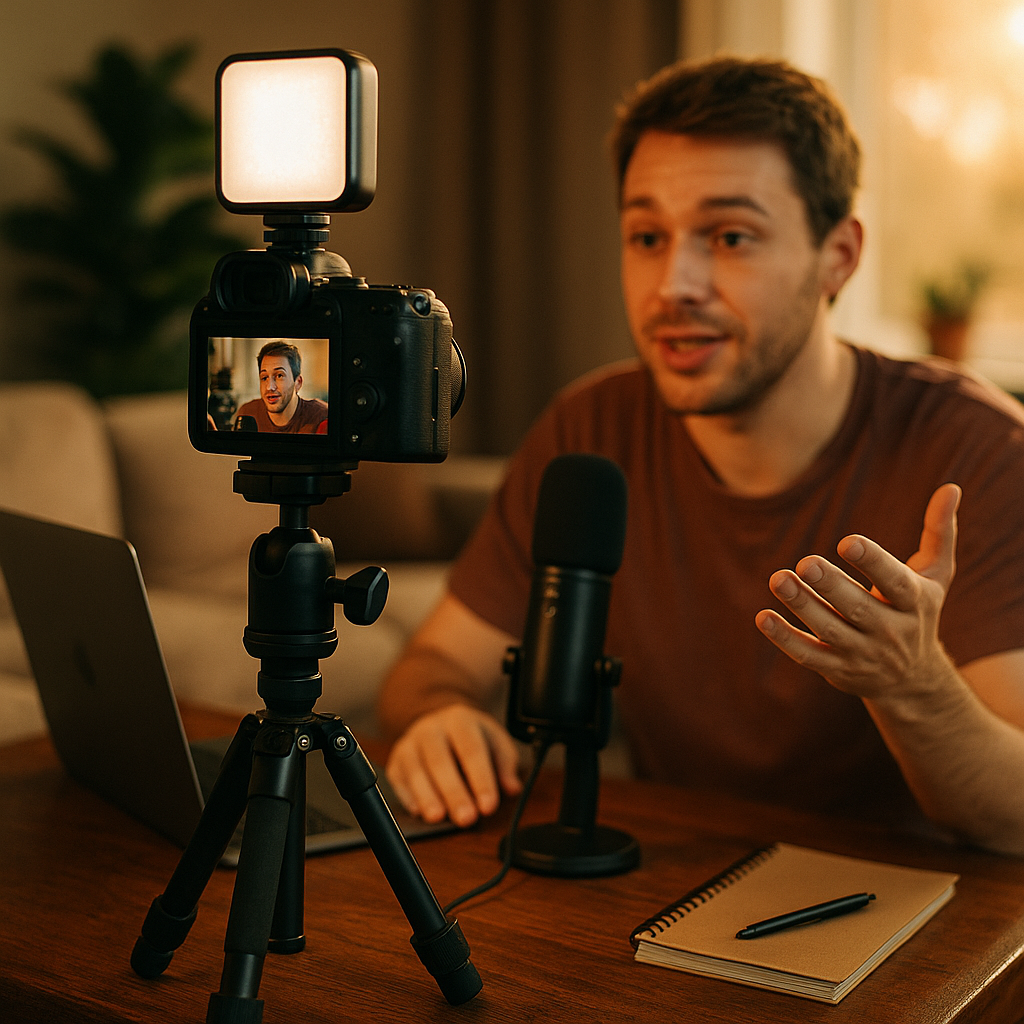
There are now more people making sponsored content for a living than there are licensed real estate agents in the United States. That’s not a typo, it’s the new baseline for the creator economy, and it’s forcing brands to rethink who actually deserves a line item in the media plan.
For a decade, “influencer marketing” meant chasing the handful of creators with follower counts big enough to impress a CMO in a slide deck. That era is ending. The center of gravity has shifted toward a massive, largely anonymous pool of average content creators, the people shooting product reviews in their kitchens, not on branded sets. Brands that haven’t adjusted their sourcing, budgets, and measurement models are already behind.
The Numbers Behind the Shift
Platforms have quietly reorganized themselves around volume creators rather than marquee names. TikTok’s recommendation engine famously ranks content on watch-time and relevance signals, not follower count, which is why a creator with 4,000 followers can outperform one with 400,000 on the same day. We covered this dynamic in detail when breaking down how TikTok’s algorithm rewards reach over follower size, and it’s the single biggest reason budgets have followed suit.
Meanwhile, research on creator work patterns shows most people in this economy aren’t full-time professionals at all. Our analysis of the data found that 63% of creators work under 10 hours a week, and a separate report confirmed that 84% of creators are part-time. That’s not a niche side hustle anymore, it’s the median experience of content creation. Brands built entire influencer strategies around the assumption of professional, full-time talent. That assumption no longer holds.
The influencer economy used to be a talent pyramid with a narrow top. It’s now an inverted funnel: millions of casual creators at the base, generating the volume of content that actually drives product discovery.
Why Brands Are Chasing Average, Not Aspirational
Here’s the uncomfortable truth for anyone who built a career on celebrity partnerships: average creators convert better for a lot of everyday purchase decisions. Content that looks like a recommendation from a friend outperforms content that looks like an ad, even when the “ad” has a six-figure production budget behind it. We’ve written about how UGC now beats top-tier influencers in product discovery, and the pattern holds across categories from skincare to kitchen gadgets.
Why does this happen? A few reasons, none of them mysterious:
- Trust signals shift with scale. Big influencers read as media. Small creators read as peers.
- Authenticity is a production value now. Slightly rough footage performs because it signals “unsponsored,” even when it’s sponsored.
- Search behavior has changed. Consumers increasingly treat TikTok and Instagram like search engines, and they’re looking for review-style content, not polished brand films. This is the same behavior driving UGC’s advantage in the AI search era.
- Volume beats virality. One hundred pieces of content from ninety-nine average creators statistically outperforms one hero asset from a single big name, especially when distributed programmatically.
None of this means celebrity and macro talent are dead. It means they’ve been reclassified. Big creators are now a top-of-funnel awareness lever, not the primary engine of conversion.
The Talent Pool Got Bigger Because the Barriers Got Lower
Five years ago, making decent content required a ring light, an editing app, and patience. Today it requires almost nothing. AI production tools have collapsed the skill gap between a hobbyist and a semi-professional creator. We’ve tracked how templated AI studios erase micro-creator quality barriers, letting someone with zero editing experience produce content that looks like it came from an agency.
That’s expanded the supply side dramatically. It’s also introduced a new problem: quality control at scale. When anyone can generate polished-looking UGC, brands lose a reliable signal for distinguishing a genuine early adopter from someone farming content for quick payouts. Our coverage of how AI studios are flooding the micro-creator pool is required reading for anyone doing vetting at volume right now.
Add in AI-native production platforms like the ones behind the rise of AI-native ad production tools, and you get a talent pool that’s simultaneously bigger, faster, and harder to evaluate using old-school metrics like follower count or engagement rate alone.
What This Means for Budget Allocation
If you’re still running an influencer program built around a dozen “hero” creators and a quarterly content calendar, you’re operating on a model that’s aging out fast. D2C brands have already recalibrated. Recent data shows D2C brands now spend 45% of budgets on creators, and that spend is increasingly distributed across dozens or hundreds of smaller partnerships rather than concentrated in a handful of big-ticket deals.
This has real operational consequences. Managing 200 micro-relationships is not the same job as managing 10 macro-influencer contracts. It requires:
- Repeatable content systems instead of one-off briefs, a shift we detailed in how brands are ditching one-off UGC for content engines.
- Performance-based compensation models rather than flat fees, mirroring what we saw when Levanta’s 90,000 creators signaled a shift toward performance pay.
- No-inventory affiliate structures that let brands scale creator relationships without warehousing risk, a model explored in our piece on no-inventory affiliate programs.
Marketing and sales platforms increasingly reflect this shift, too. Resources like HubSpot’s marketing hub now build creator and affiliate attribution directly into CRM workflows, because average-creator programs generate order-of-magnitude more data points than a handful of celebrity deals ever did.
Sourcing and Vetting: The New Operational Headache
Finding ten reputable influencers used to be a manual, relationship-driven job. Finding and vetting several hundred average creators is a different exercise entirely, and it’s why AI matching platforms have become standard infrastructure rather than a nice-to-have. Brands using tools that let them skip the traditional agency fee are moving faster, but they’re also taking on more of the vetting workload internally.
That workload includes compliance, which is not optional. The FTC has increased scrutiny on undisclosed sponsorships, and platforms are catching heat too. Our reporting on the YouTube FTC probe into disclosure gaps is a useful reminder that scale doesn’t excuse sloppy compliance practices. If anything, a larger creator roster multiplies your disclosure risk exponentially. Brands should review the FTC’s endorsement guidance directly rather than relying on secondhand summaries, and build disclosure checks into onboarding, not as an afterthought.
Scaling from ten influencer partnerships to two hundred average-creator relationships doesn’t just multiply your reach. It multiplies your compliance exposure at the same rate.
Payment Trust Is the Quiet Bottleneck
Nobody talks enough about this, but paying two hundred micro-creators reliably and transparently is genuinely hard, and trust breaks down fast when payments are late or opaque. That friction has spawned a new category of infrastructure. Escrow-backed models are gaining traction specifically because they solve the trust gap in AI-driven creator matching, something we unpacked in our look at escrow-backed payments in creator platforms. Brands that ignore this piece of the stack tend to see churn among their most reliable average creators first, since they have the most alternative options.
Where Discovery Is Actually Happening Now
Average creators aren’t just filling volume, they’re increasingly the discovery layer for entire product categories. TikTok Shop’s growth is the clearest proof point: the platform’s ecosystem crossed the $20 billion mark, driven overwhelmingly by everyday creators doing haul videos and reviews rather than polished brand campaigns. Similar dynamics are playing out regionally, with APAC markets seeing micro-creator-led sales growth outpace reach-driven strategies.
Platforms are reinforcing this with algorithm changes, too. The recent shift detailed in our coverage of the TikTok watch-time algorithm update rewards retention over reach, which structurally favors relatable, average-creator content over slickly produced brand films that people scroll past. For a broader view of platform-level trends, eMarketer’s research and Sprout Social’s industry reports both track similar engagement patterns across the wider social landscape.
What Brands Should Actually Do About It
Stop thinking of this as an influencer strategy problem and start thinking of it as a supply chain problem. You’re sourcing content at industrial scale from a decentralized, largely part-time workforce. That requires different tooling, different contracts, and different KPIs than the old celebrity-endorsement model ever did.
- Rebuild seeding programs around part-time realities, not full-time assumptions.
- Shift budget toward performance and affiliate structures rather than flat sponsorship fees.
- Invest in vetting and disclosure compliance before scaling creator count, not after.
- Treat payment reliability as a retention lever, not a back-office detail.
The brands winning right now aren’t the ones with the biggest influencer budgets. They’re the ones that rebuilt their operations to handle hundreds of small relationships as efficiently as they used to handle a dozen big ones.
Frequently Asked Questions
What is driving the shift from traditional influencers to average content creators?
Algorithm changes that reward watch-time and relevance over follower count, combined with consumer preference for authentic-looking content, have pushed brands toward high-volume UGC from everyday creators rather than a small number of celebrity partnerships.
Are macro-influencers becoming obsolete?
No, but their role has narrowed. They’re now primarily useful for top-of-funnel awareness, while conversion-focused content increasingly comes from smaller, more relatable creators.
How should brands manage compliance across a larger creator roster?
Build FTC disclosure checks into onboarding, use standardized contract templates, and audit content regularly rather than relying on creators to self-police. The FTC’s endorsement guidelines are the baseline standard to follow.
What’s the biggest operational challenge in scaling UGC programs?
Vetting quality and reliability at volume, plus managing timely, transparent payments across hundreds of creators instead of a handful of agency-managed talent.
Does AI-generated content threaten the average creator talent pool?
It’s expanding it and complicating it simultaneously. AI tools lower production barriers for legitimate creators but also make it easier for low-quality or inauthentic content to flood the pool, making vetting more important than ever.
The shift is already priced into platform algorithms and consumer behavior. The next move is operational: rebuild your sourcing, compliance, and payment infrastructure now, before the average-creator pool gets even harder to manage at scale.
Frequently Asked Questions
What is driving the shift from traditional influencers to average content creators?
Algorithm changes that reward watch-time and relevance over follower count, combined with consumer preference for authentic-looking content, have pushed brands toward high-volume UGC from everyday creators rather than a small number of celebrity partnerships.
Are macro-influencers becoming obsolete?
No, but their role has narrowed. They’re now primarily useful for top-of-funnel awareness, while conversion-focused content increasingly comes from smaller, more relatable creators.
How should brands manage compliance across a larger creator roster?
Build FTC disclosure checks into onboarding, use standardized contract templates, and audit content regularly rather than relying on creators to self-police. The FTC’s endorsement guidelines are the baseline standard to follow.
What’s the biggest operational challenge in scaling UGC programs?
Vetting quality and reliability at volume, plus managing timely, transparent payments across hundreds of creators instead of a handful of agency-managed talent.
Does AI-generated content threaten the average creator talent pool?
It’s expanding it and complicating it simultaneously. AI tools lower production barriers for legitimate creators but also make it easier for low-quality or inauthentic content to flood the pool, making vetting more important than ever.
Top Influencer Marketing Agencies
The leading agencies shaping influencer marketing in 2026
Agencies ranked by campaign performance, client diversity, platform expertise, proven ROI, industry recognition, and client satisfaction. Assessed through verified case studies, reviews, and industry consultations.
Moburst

-
2

The Shelf
Boutique Beauty & Lifestyle Influencer AgencyA data-driven boutique agency specializing exclusively in beauty, wellness, and lifestyle influencer campaigns on Instagram and TikTok. Best for brands already focused on the beauty/personal care space that need curated, aesthetic-driven content.Clients: Pepsi, The Honest Company, Hims, Elf Cosmetics, Pure LeafVisit The Shelf → -
3

Audiencly
Niche Gaming & Esports Influencer AgencyA specialized agency focused exclusively on gaming and esports creators on YouTube, Twitch, and TikTok. Ideal if your campaign is 100% gaming-focused — from game launches to hardware and esports events.Clients: Epic Games, NordVPN, Ubisoft, Wargaming, Tencent GamesVisit Audiencly → -
4

Viral Nation
Global Influencer Marketing & Talent AgencyA dual talent management and marketing agency with proprietary brand safety tools and a global creator network spanning nano-influencers to celebrities across all major platforms.Clients: Meta, Activision Blizzard, Energizer, Aston Martin, WalmartVisit Viral Nation → -
5

The Influencer Marketing Factory
TikTok, Instagram & YouTube CampaignsA full-service agency with strong TikTok expertise, offering end-to-end campaign management from influencer discovery through performance reporting with a focus on platform-native content.Clients: Google, Snapchat, Universal Music, Bumble, YelpVisit TIMF → -
6

NeoReach
Enterprise Analytics & Influencer CampaignsAn enterprise-focused agency combining managed campaigns with a powerful self-service data platform for influencer search, audience analytics, and attribution modeling.Clients: Amazon, Airbnb, Netflix, Honda, The New York TimesVisit NeoReach → -
7

Ubiquitous
Creator-First Marketing PlatformA tech-driven platform combining self-service tools with managed campaign options, emphasizing speed and scalability for brands managing multiple influencer relationships.Clients: Lyft, Disney, Target, American Eagle, NetflixVisit Ubiquitous → -
8

Obviously
Scalable Enterprise Influencer CampaignsA tech-enabled agency built for high-volume campaigns, coordinating hundreds of creators simultaneously with end-to-end logistics, content rights management, and product seeding.Clients: Google, Ulta Beauty, Converse, AmazonVisit Obviously →