


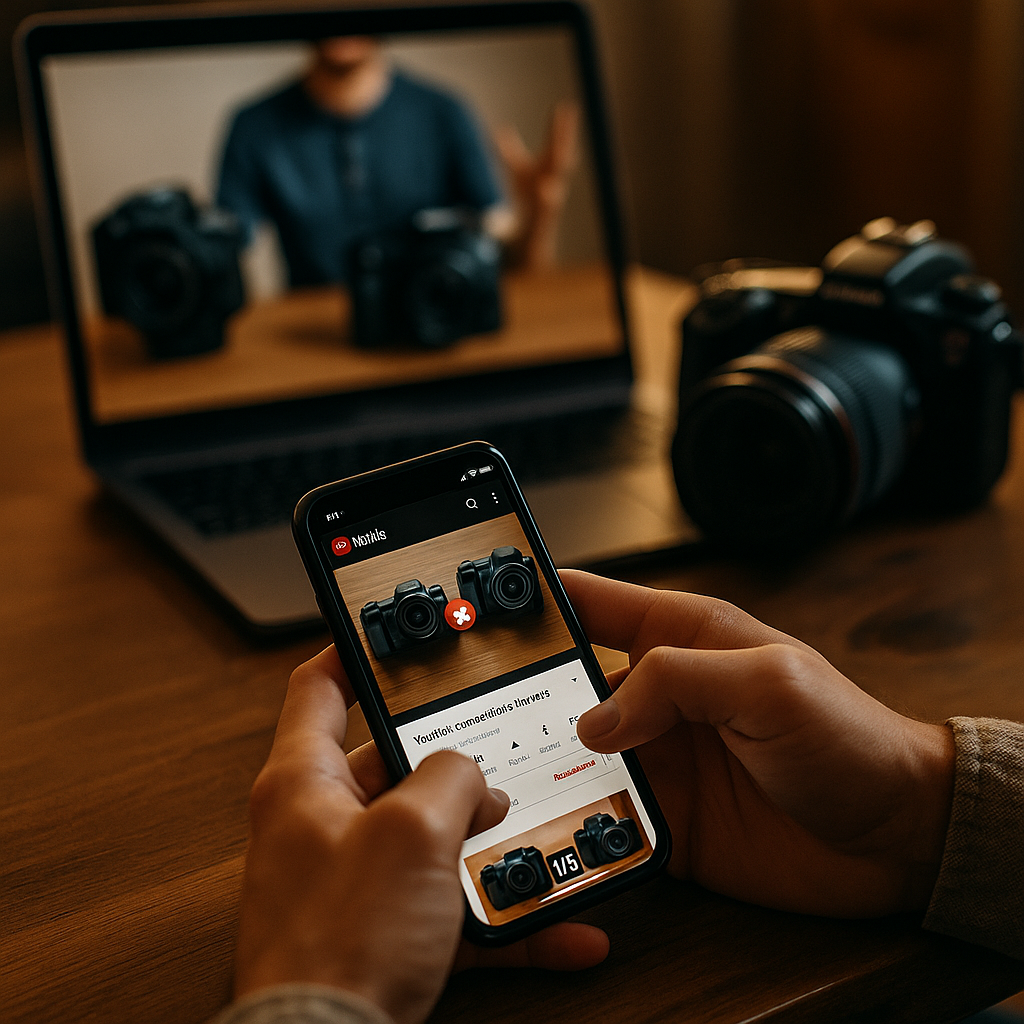
Here’s an uncomfortable number for anyone still betting the farm on 15-second teasers: viewers who watch a YouTube comparison video longer than eight minutes convert at nearly triple the rate of those who bounce off a 30-second Short, according to internal creator benchmarking shared across multiple MCNs. Long-form product comparisons aren’t a nostalgia play. They’re the format doing the heaviest lifting in the consideration stage of the funnel right now, and most brand teams are still briefing them like afterthoughts.
This playbook breaks down how to structure a YouTube comparison-review that actually moves purchase intent, not just watch time.
Why Comparison Content Outperforms the Quick Hit
Short-form teasers are built for discovery. They’re excellent at making someone aware a product exists. But awareness isn’t the problem most brands have anymore, saturation is. The real bottleneck sits at the decision stage: “Is this better than the thing I already own, or the three competitors in my cart tabs?” That question can’t be answered in nine seconds.
Comparison-reviews solve for exactly that friction. They let a creator sit with a viewer through the actual decision process: unboxing side by side, running the same test on two or three products, narrating tradeoffs out loud. That’s a fundamentally different psychological contract than a hook-driven Short. The viewer isn’t being sold to, they’re being walked through a decision they were already going to make.
A viewer who sticks through an 8 to 12 minute comparison has effectively pre-qualified themselves as a high-intent shopper. That’s a segment most paid media can’t buy at any price.
The format also plays nicely with YouTube’s own incentives. Since the platform’s view counting and monetization guidelines reward genuine watch time over inflated impressions, longer sessions with real retention curves get pushed harder in recommendations. That shift has already reshaped how sponsors think about CPV, a topic covered in detail in our breakdown of the view counting change forcing sponsors to rebuild pricing models.
The Anatomy of a Comparison-Review That Converts
Not every long video is a good comparison video. Most are just two products filmed next to each other with no argument holding them together. Here’s the structure that consistently outperforms in retention and click-through to product links:
- The stakes, stated fast. Within the first 45 seconds, name the exact decision the viewer is trying to make. “Which of these two blenders survives daily smoothie use for a year” is a stake. “Let’s look at some blenders” is not.
- Shared criteria, disclosed up front. Tell the viewer the three or four things you’re actually testing before you test them. This builds trust and gives structure they can skim if they’re scrubbing the timeline.
- Side-by-side, not sequential. Cutting back and forth between products during the same test beats reviewing product A fully, then product B fully. It respects the viewer’s attention and mirrors how they’ll actually compare options mentally.
- A clear verdict, with caveats. “It depends” is a cop-out unless you say what it depends on. Give a real recommendation segmented by use case: budget shopper, power user, gift buyer.
- Timestamped chapters. Comparison viewers rarely watch linearly after the first view. Chapters aren’t a nice-to-have, they’re the reason your video keeps getting re-watched and resurfaced in search.
Chapters deserve their own callout, honestly. A well-labeled chapter list (“0:42 Battery Life Test,” “3:15 Price Per Use Breakdown”) turns your video into a searchable reference document. That’s how comparison-reviews keep generating views and conversions for months after publish, unlike a Short that’s dead within 72 hours.
Briefing Creators for Comparison Content Is a Different Skill
Most influencer briefs are written for single-product hero content. Comparison-reviews need a different brief entirely, one that acknowledges a competitor product is going to be on screen, possibly favorably, for a meaningful chunk of runtime.
That makes a lot of brand teams nervous. It shouldn’t. Viewers can smell a rigged comparison from a mile away, and the moment they sense the deck is stacked, they close the tab and distrust everything else in the video, including your product’s genuinely strong points. The brands winning at this format brief creators to be honest about weaknesses, then let the strengths do the talking in context.
Practically, that means your brief should specify:
- Which specific competitor SKUs are fair game for comparison (legal and compliance should sign off, not just marketing).
- What claims are approved for direct comparative statements (avoid unverifiable superiority claims that could trigger scrutiny).
- Disclosure language for paid comparisons, per FTC endorsement guidance, which applies just as strictly to comparison content as to straight reviews.
- A minimum runtime and chapter structure, not just a topic outline.
If you’re already running tutorial and demo content across multiple platforms, it’s worth aligning budget expectations here too. Comparison-reviews are more production-intensive than a single-product demo, and the budget split across Instagram, TikTok, and YouTube should reflect that longer-form YouTube content typically needs a bigger line item per asset, offset by a much longer shelf life.
Where Comparison-Reviews Sit in the Funnel
Comparison content is a mid-to-lower funnel format. That matters because a lot of brands are still measuring it against top-funnel metrics like impressions or reach, and then wondering why the ROI math looks weak.
Think of the funnel this way: Shorts and TikTok create the awareness spike. Comparison-reviews on YouTube do the conversion work once someone’s already shortlisted your category. If you’re trying to decide which platform handles which job, our piece on matching format to funnel stage lays out the logic in more depth, and it consistently comes back to the same conclusion: long-form comparison content earns its keep at the point of purchase decision, not before.
That has a direct implication for how you measure success. Watch time and average view duration matter more than raw view count. Click-through rate on affiliate or shop links embedded in the description and end screen matters more than likes. And because comparison videos have long tails, attribution windows need to stretch well past the standard seven-day click window most platforms default to.
Fixing the Hook Problem in Long-Form
Here’s where a lot of brands sabotage themselves: they take Shorts-style hook thinking and jam it into a 10-minute comparison, front-loading hype instead of substance. That mismatch tanks retention because the promise (“this changes everything”) and the payoff (a methodical spec breakdown) don’t line up.
The fix isn’t to abandon hooks, it’s to recalibrate them for the format. A comparison hook should promise clarity, not drama: “By the end of this video you’ll know exactly which one to buy for your situation.” That’s a lower-energy hook than what works on Shorts, and it should be. Viewers who click into an 11-minute video are already past the impulse-scroll mindset; they want a guide, not a jump scare.
If your team is used to optimizing Shorts hooks for fast retention curves, it’s worth revisiting how differently that principle applies here. The mechanics covered in rebuilding hooks for accelerated viewing are almost inverted for comparison content: pacing slows down, and trust-building replaces urgency as the retention driver.
The best comparison-review hooks sound less like advertising and more like a knowledgeable friend saving you three hours of research. That tonal shift alone is worth testing against your current scripts.
Measuring What Actually Matters
Standard influencer reporting templates were built for reach and engagement, not for consideration-stage content. If you’re evaluating comparison-reviews with the same scorecard you use for a hype Short, you’re going to undervalue your best-performing asset type. Track these instead:
- Average percentage viewed, not just average view duration in seconds, since comparison videos vary wildly in length.
- Return visits per video, a strong signal the content is being used as reference material.
- Comment sentiment on the verdict specifically, which tells you whether the recommendation itself lands as credible.
- Assisted conversions in your attribution model, since a comparison video often gets watched days before the actual purchase happens elsewhere.
Platforms like Sprout Social and reporting benchmarks from eMarketer both point to the same trend: mid-funnel video content is undermeasured across the industry, largely because attribution tooling still favors last-click, top-of-funnel metrics. Fixing your measurement stack before your content strategy is often the higher-leverage move.
For teams that already run comparison content but want a broader library of what’s working, our earlier breakdown of comparison videos that turn browsers into buyers is a useful companion piece with more format-specific examples.
Next Step
Pick your highest-consideration SKU, the one customers research longest before buying, and brief a single comparison-review against its closest competitor this quarter. Measure it against percentage viewed and assisted conversions, not impressions, and you’ll have a real answer on whether this format deserves a bigger slice of your content budget.
FAQs
How long should a YouTube comparison-review actually be?
Most high-performing comparison-reviews run between 8 and 14 minutes. That’s enough runtime to cover shared testing criteria and a real verdict without padding, while staying short enough to hold retention through the payoff.
Is it risky to let a creator show a competitor’s product favorably?
It’s riskier to fake a comparison. Viewers distrust one-sided reviews and that distrust bleeds into your own product’s claims. A balanced comparison with an honest verdict typically converts better than a lopsided one, as long as legal and compliance have signed off on which claims are fair game.
Do comparison-reviews need FTC disclosure like a standard sponsored review?
Yes. If the creator was compensated or given free product to make the comparison, standard endorsement disclosure rules apply regardless of whether the video favors your product or a competitor’s.
How do comparison-reviews fit alongside Shorts in a content calendar?
Shorts drive top-funnel awareness and discovery, while comparison-reviews do the conversion work once a viewer has shortlisted your category. Most effective calendars use Shorts to feed traffic toward a comparison-review rather than treating the two formats as competitors.
What’s the biggest reporting mistake brands make with this format?
Judging comparison-reviews by view count and engagement rate alone. Percentage viewed, return visits, and assisted conversions are far more predictive of whether the content is actually influencing purchase decisions.
Top Influencer Marketing Agencies
The leading agencies shaping influencer marketing in 2026
Agencies ranked by campaign performance, client diversity, platform expertise, proven ROI, industry recognition, and client satisfaction. Assessed through verified case studies, reviews, and industry consultations.
Moburst

-
2

The Shelf
Boutique Beauty & Lifestyle Influencer AgencyA data-driven boutique agency specializing exclusively in beauty, wellness, and lifestyle influencer campaigns on Instagram and TikTok. Best for brands already focused on the beauty/personal care space that need curated, aesthetic-driven content.Clients: Pepsi, The Honest Company, Hims, Elf Cosmetics, Pure LeafVisit The Shelf → -
3

Audiencly
Niche Gaming & Esports Influencer AgencyA specialized agency focused exclusively on gaming and esports creators on YouTube, Twitch, and TikTok. Ideal if your campaign is 100% gaming-focused — from game launches to hardware and esports events.Clients: Epic Games, NordVPN, Ubisoft, Wargaming, Tencent GamesVisit Audiencly → -
4

Viral Nation
Global Influencer Marketing & Talent AgencyA dual talent management and marketing agency with proprietary brand safety tools and a global creator network spanning nano-influencers to celebrities across all major platforms.Clients: Meta, Activision Blizzard, Energizer, Aston Martin, WalmartVisit Viral Nation → -
5

The Influencer Marketing Factory
TikTok, Instagram & YouTube CampaignsA full-service agency with strong TikTok expertise, offering end-to-end campaign management from influencer discovery through performance reporting with a focus on platform-native content.Clients: Google, Snapchat, Universal Music, Bumble, YelpVisit TIMF → -
6

NeoReach
Enterprise Analytics & Influencer CampaignsAn enterprise-focused agency combining managed campaigns with a powerful self-service data platform for influencer search, audience analytics, and attribution modeling.Clients: Amazon, Airbnb, Netflix, Honda, The New York TimesVisit NeoReach → -
7

Ubiquitous
Creator-First Marketing PlatformA tech-driven platform combining self-service tools with managed campaign options, emphasizing speed and scalability for brands managing multiple influencer relationships.Clients: Lyft, Disney, Target, American Eagle, NetflixVisit Ubiquitous → -
8

Obviously
Scalable Enterprise Influencer CampaignsA tech-enabled agency built for high-volume campaigns, coordinating hundreds of creators simultaneously with end-to-end logistics, content rights management, and product seeding.Clients: Google, Ulta Beauty, Converse, AmazonVisit Obviously →