


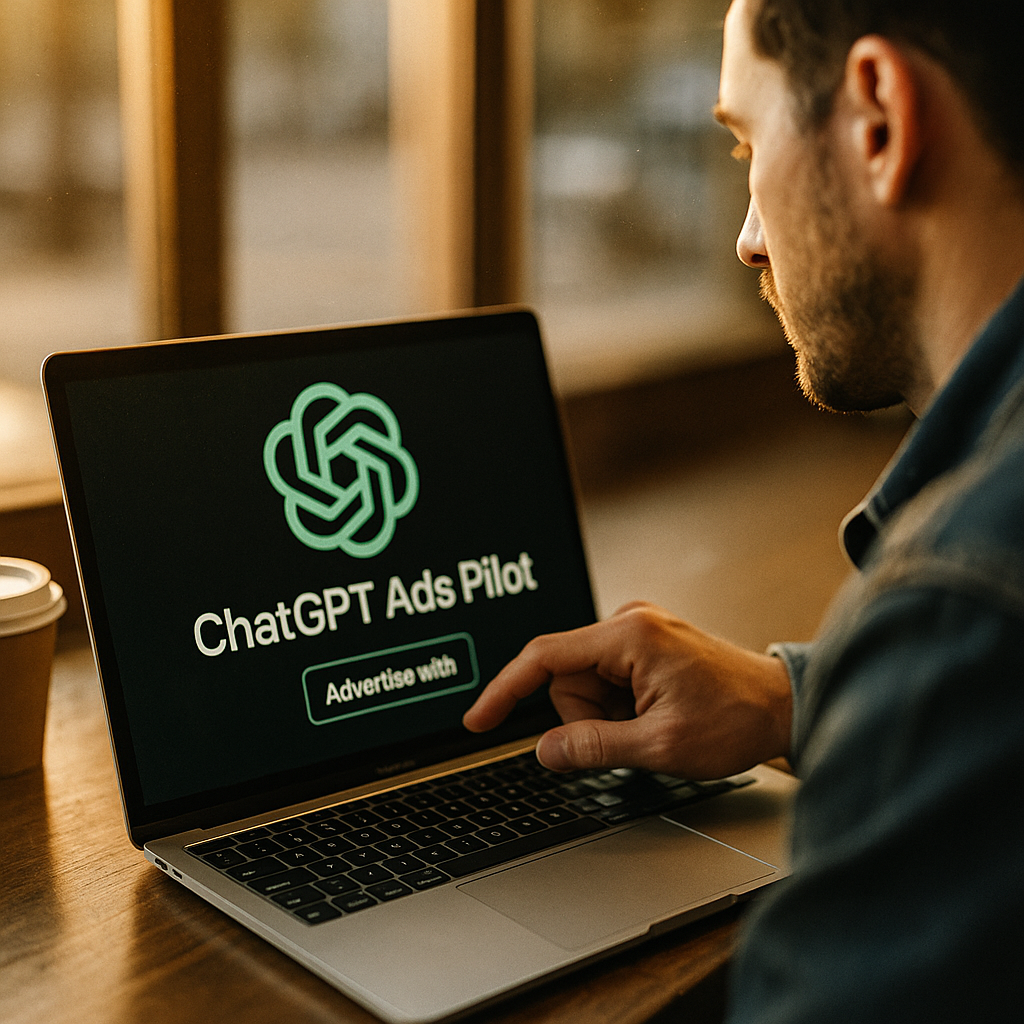
ChatGPT now handles over a billion messages a day, and OpenAI just widened its European ad pilot to more languages and markets. Here’s the uncomfortable question every CMO should be asking: if your brand isn’t testing inside that pilot right now, are you ceding the next major discovery surface to whoever moves first? The OpenAI ad pilot in Europe is small, quiet, and easy to ignore. That’s exactly why it’s worth your attention.
What’s Actually Happening in the Pilot
OpenAI has been running limited advertising tests with select brands across UK, German, and French ChatGPT sessions since late in the prior year, and the program has since expanded to cover more advertiser categories and additional European markets. Unlike a traditional search ad rollout, this isn’t a self-serve auction anyone can join. It’s an invite-driven pilot, and OpenAI is reportedly using it to learn how sponsored placements affect user trust before opening the floodgates.
That matters for two reasons. First, the brands testing now are shaping the ad formats, targeting logic, and disclosure norms that will become standard once the product launches broadly. Second, early data from these pilots tends to get baked into platform defaults. If you’re not in the room, you’re not influencing the room.
The brands quietly testing in OpenAI’s ad pilot today are effectively writing the playbook that late movers will be forced to follow tomorrow.
We covered the initial rollout in detail in our piece on how the ad pilot forces creator budget rethinks, and the expansion only sharpens that thesis. Budgets that once flowed exclusively to Instagram and TikTok creators are starting to get split across a third channel: conversational AI.
Why Europe First, and Why That’s Strategic
OpenAI’s choice to pilot in Europe rather than the US isn’t incidental. European regulators, particularly under GDPR and the incoming AI Act obligations, force stricter data handling and disclosure requirements. Testing there first lets OpenAI stress-test compliance guardrails, consent flows, and ad labeling under the toughest legal regime before scaling elsewhere.
For brands, this is actually good news. It means the ad units you’d be testing in Europe right now are more likely to already meet baseline transparency standards, similar to what regulators like the ICO require for algorithmic advertising disclosures. You’re not testing in a legal gray zone. You’re testing in the most scrutinized version of the product, which reduces downstream compliance risk when it expands to other regions.
It also means European marketing teams have a genuine first-mover edge over their US counterparts for once. That’s rare. Take it.
The Format Questions Nobody’s Answered Yet
Here’s what remains genuinely unclear, and what smart brands should be probing directly with their OpenAI reps or agency partners:
- Placement logic: Are ads triggered by conversation intent, by explicit product queries, or by broader topic clusters? Early reports suggest intent-based triggering similar to search, but the matching criteria haven’t been published.
- Attribution: Can you actually tie a ChatGPT ad impression to a downstream conversion, or are you flying blind? This echoes a problem we’ve already flagged around AI assistant traffic hiding in direct channels, where most referral data simply doesn’t show up in standard analytics.
- Disclosure format: Will sponsored responses carry a persistent label, a one-time disclaimer, or something closer to native content? User trust hinges entirely on this.
- Creative constraints: Is this text-only, or will multimodal ad units (image, video, product cards) roll out in later phases?
None of these are hypothetical. They’re the exact operational details that determine whether your media team can actually measure return on a pilot slot, and whether legal will sign off on running one at all.
What Brands Should Test Before Rivals Do
If you get access, or if your agency can secure a seat at the table, here’s where to spend your limited pilot budget.
1. Query-Triggered Product Discovery
Test how your brand surfaces when users ask ChatGPT for comparisons, recommendations, or troubleshooting help in your category. This is fundamentally different from keyword-based search advertising. It’s closer to the dynamics we’ve discussed around winning AI citations without clicks, except now it’s a paid lane rather than an organic one. Run small budget tests across three or four category-relevant query types and track whether your brand name appears, how it’s framed, and whether users click through.
2. Disclosure Tolerance and Brand Safety
Users interacting with ChatGPT are in a different psychological mode than users scrolling a feed. They’re asking questions, often expecting neutral answers. Sponsored content that feels intrusive here could damage trust faster than a skippable video ad ever would. Test different disclosure phrasings and measure sentiment in follow-up prompts if the platform’s reporting allows it. This is the same brand safety discipline we’ve urged for chatbot ad placements on other platforms, and it applies just as forcefully here.
3. Attribution Bridging
Don’t wait for OpenAI to hand you clean attribution. Build your own bridge now. Use unique UTM parameters, dedicated landing pages, or promo codes tied specifically to ChatGPT referral traffic so you can isolate performance even if the platform’s native reporting stays thin for another year or two. This mirrors the fix we recommended for attribution forms missing AI referrals, where marketers who waited for platform-native tools lost months of measurable data.
4. Creator and Brand Voice Consistency
If your influencer program already trains creators on brand voice, extend that discipline to your ChatGPT ad copy. Conversational surfaces reward a tone that sounds like a helpful expert, not a billboard. Brands that already run structured creator vetting through frameworks like retrieval-grounded creator vetting have a head start here, because the same “sound human, cite sources” discipline applies to AI-surfaced ad copy.
Treat your ChatGPT pilot slot like a limited-run product launch, not a media buy. The learnings matter more than the impressions right now.
Budget Allocation: How Much Should You Actually Commit?
This isn’t the moment to reallocate 20% of your paid social budget. It’s the moment to carve out a small, dedicated test line, think low five figures for a mid-size brand, purely for learning. According to eMarketer, AI-driven ad formats across platforms are still capturing a fraction of a percent of total digital ad spend, but that share is expected to climb sharply as generative interfaces become default discovery tools for younger consumers.
Treat this like the early TikTok ads pilot circa 2019: overinvestment was wasteful, but zero investment meant brands spent the next three years playing catch-up on creative formats their competitors had already mastered. The brands that tested small and early on TikTok built institutional knowledge that paid off enormously once the platform matured. The same pattern is likely here.
Operationally, keep the pilot budget separate from your core influencer and creator spend lines so finance can track it cleanly. If your team already struggles with dashboard visibility into AI-driven budgets, this is a good forcing function to fix that before the spend scales.
Risk Mitigation: What Legal and Compliance Need to Know
Before you greenlight even a modest test budget, loop in legal early. A few specific risks to flag:
- Data handling: Understand exactly what conversational data OpenAI uses to trigger and target your ads, and whether that data crosses jurisdictional lines under GDPR.
- Disclosure compliance: Confirm labeling meets both OpenAI’s internal policy and local advertising standards authorities’ expectations for AI-generated or AI-mediated commercial content.
- Brand adjacency: Since placements are conversation-triggered rather than page-triggered, there’s less control over surrounding context than in traditional display. Ask what safeguards exist against your ad surfacing next to sensitive or controversial user queries.
- Contractual terms: Pilot agreements are often vague on renewal, data ownership, and exit terms. Push for clarity before signing, the same way you’d scrutinize auto-renewing AI contract clauses in creator agreements.
None of this should stop you from testing. It should shape how you test.
The Takeaway
The window to shape how ChatGPT advertising works, rather than simply react to it, is open right now and will not stay open long. Secure a pilot seat if you can, run tight attribution tests even if the platform’s native reporting lags, and bring legal in at the pilot stage rather than the scale stage.
Frequently Asked Questions
What is OpenAI’s ad pilot in Europe?
It’s a limited, invite-based advertising program running on ChatGPT across select European markets, including the UK, Germany, and France, allowing select brands to test sponsored placements within conversational responses before any public launch.
How is this different from Google or Meta advertising?
Placements are triggered by conversational intent rather than keywords or social feed behavior, and the ad experience is embedded directly in a chat response rather than displayed as a separate unit. Attribution and reporting tools are also far less mature than established platforms like Meta or Google Ads.
Can any brand join the pilot right now?
No. Access is currently limited and largely relationship-driven, often through agency partners or direct outreach from OpenAI. Broader self-serve access is expected as the pilot matures, but no public timeline has been confirmed.
How should brands measure ROI during the pilot phase?
Build independent attribution bridges using unique UTMs, dedicated landing pages, or promo codes tied specifically to ChatGPT-referred traffic, since native platform reporting remains limited at this stage.
What compliance risks should marketing teams flag to legal?
Data handling under GDPR, disclosure labeling standards, lack of control over conversational brand adjacency, and vague contractual terms around pilot renewal and data ownership all warrant legal review before committing spend.
Top Influencer Marketing Agencies
The leading agencies shaping influencer marketing in 2026
Agencies ranked by campaign performance, client diversity, platform expertise, proven ROI, industry recognition, and client satisfaction. Assessed through verified case studies, reviews, and industry consultations.
Moburst

-
2

The Shelf
Boutique Beauty & Lifestyle Influencer AgencyA data-driven boutique agency specializing exclusively in beauty, wellness, and lifestyle influencer campaigns on Instagram and TikTok. Best for brands already focused on the beauty/personal care space that need curated, aesthetic-driven content.Clients: Pepsi, The Honest Company, Hims, Elf Cosmetics, Pure LeafVisit The Shelf → -
3

Audiencly
Niche Gaming & Esports Influencer AgencyA specialized agency focused exclusively on gaming and esports creators on YouTube, Twitch, and TikTok. Ideal if your campaign is 100% gaming-focused — from game launches to hardware and esports events.Clients: Epic Games, NordVPN, Ubisoft, Wargaming, Tencent GamesVisit Audiencly → -
4

Viral Nation
Global Influencer Marketing & Talent AgencyA dual talent management and marketing agency with proprietary brand safety tools and a global creator network spanning nano-influencers to celebrities across all major platforms.Clients: Meta, Activision Blizzard, Energizer, Aston Martin, WalmartVisit Viral Nation → -
5

The Influencer Marketing Factory
TikTok, Instagram & YouTube CampaignsA full-service agency with strong TikTok expertise, offering end-to-end campaign management from influencer discovery through performance reporting with a focus on platform-native content.Clients: Google, Snapchat, Universal Music, Bumble, YelpVisit TIMF → -
6

NeoReach
Enterprise Analytics & Influencer CampaignsAn enterprise-focused agency combining managed campaigns with a powerful self-service data platform for influencer search, audience analytics, and attribution modeling.Clients: Amazon, Airbnb, Netflix, Honda, The New York TimesVisit NeoReach → -
7

Ubiquitous
Creator-First Marketing PlatformA tech-driven platform combining self-service tools with managed campaign options, emphasizing speed and scalability for brands managing multiple influencer relationships.Clients: Lyft, Disney, Target, American Eagle, NetflixVisit Ubiquitous → -
8

Obviously
Scalable Enterprise Influencer CampaignsA tech-enabled agency built for high-volume campaigns, coordinating hundreds of creators simultaneously with end-to-end logistics, content rights management, and product seeding.Clients: Google, Ulta Beauty, Converse, AmazonVisit Obviously →