


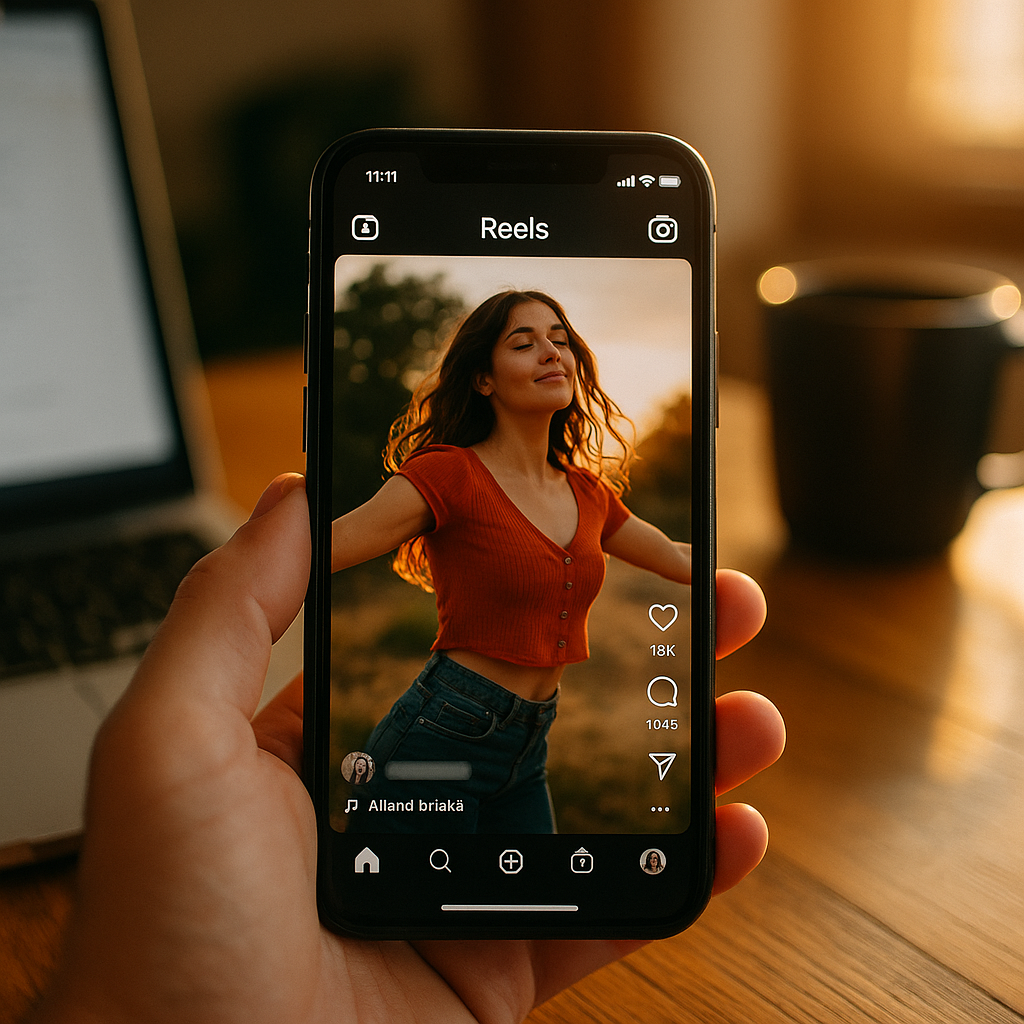
Meta’s own data suggests over half of all time spent on Instagram now goes to video, and Reels sits at the center of that shift. Yet most brand accounts still post like it’s 2021, chasing likes instead of the signals that actually move the Instagram AI recommendation engine. If your Reels distribution has flattened despite consistent posting, the algorithm isn’t broken. Your strategy is.
The Recommendation Engine Doesn’t Care About Your Follower Count Anymore
Here’s the uncomfortable truth for legacy brand pages: reach is no longer a function of audience size. Instagram’s ranking system, much like TikTok’s, evaluates content on a clip-by-clip basis and decides in real time whether to push it beyond your existing followers. A 40,000-follower niche account can outperform a 400,000-follower brand page if its watch-through rates are stronger.
This is the same shift we’ve documented in engagement density over follower count, and it applies just as forcefully to Instagram as it did to earlier platform pivots. The practical implication: stop optimizing creator selection for reach potential and start optimizing for completion behavior. A smaller creator whose audience actually finishes watching, rewatches, and sends the clip to friends will out-distribute a bigger name whose audience scrolls past in two seconds.
Watch-through rate and send-to-friend actions now carry more ranking weight in Instagram’s system than likes or comments, according to Meta’s own creator guidance. Optimize for retention, not reaction.
What Actually Signals “Distribute This” to Instagram
Meta has been unusually transparent about ranking inputs compared to other platforms, and the pattern for 2026 is consistent across every public statement and creator briefing:
- Watch time and completion rate: Did viewers finish the clip, or bail in the first three seconds?
- Rewatches: Looping behavior signals high-value content and gets weighted heavily in early testing pools.
- Sends and shares: A Reel sent via DM is treated as a stronger endorsement than a public like.
- Saves: Especially important for evergreen or how-to content, since saves suggest utility beyond the initial view.
- Comments with substance: Short reaction comments carry less weight than longer, sentence-based comments that suggest genuine engagement.
Notice what’s absent: raw like counts and follower size barely register in Meta’s public ranking explanations anymore. That doesn’t mean likes are worthless, but treating them as your north star metric is a strategic error going into 2026 planning cycles.
Why the First Three Seconds Decide Everything
Instagram tests every Reel against a small sample audience before deciding whether to expand distribution. If your hook doesn’t hold attention in that initial window, the algorithm quietly caps reach and moves on. This mirrors the logic behind YouTube’s first-frame view rule, where platforms increasingly judge content before the viewer has even consciously decided to stay. Brief creators accordingly: the opening frame is not throat-clearing, it’s the entire pitch.
The Creator Brief Rewrite Brands Need
Most influencer briefs still read like ad copy instructions: mention the product, show the logo, include a CTA. That format is precisely what tanks distribution now. Instagram’s system appears to penalize content that reads as overtly promotional in its opening beats, pushing it into a smaller initial test pool.
Rewrite briefs around retention mechanics instead:
- Open with a pattern interrupt or unresolved tension, not a product shot.
- Front-load the payoff or twist within the first five seconds, then let the narrative unfold.
- Build in a natural rewatch trigger, a fast cut, a reveal, or a joke that lands better on second viewing.
- Save direct product mention for the back third of the clip, once retention is already secured.
- End with a reason to save or share, not just a link-in-bio prompt.
This is a bigger operational shift than it sounds. It means creative approval workflows need to prioritize watch-through testing over brand safety checklists alone, and it means account managers need to get comfortable with less overt branding in exchange for better distribution economics.
Paid Versus Organic: Where the Algorithm Still Plays Favorites
Instagram’s Partnership Ads product (the evolution of branded content ads) lets brands boost creator posts directly, and the distribution math changes once paid spend enters the picture. Boosted Reels get algorithmic priority in ad auctions regardless of organic completion rate, which is both an opportunity and a trap. Brands can effectively buy their way past a mediocre hook, but only up to the point where the ad platform’s own quality score kicks in and CPMs start climbing.
This is worth comparing against competitive formats. Our breakdown of Instagram versus YouTube Shorts paid reach found that Instagram’s ad API still rewards organic-style creative more than Shorts does, meaning a Reel that performs well organically will generally cost less to scale with paid dollars. Practical takeaway: test organically first, then feed only the top quartile of performers into paid distribution. Don’t skip straight to spend on unproven creative just because budget allows it.
Checkout Friction Is Quietly Killing Distribution Too
There’s a less obvious wrinkle here that a lot of performance marketers miss. Instagram’s algorithm factors in negative signals, including rapid scroll-away and reported content, and a growing body of anecdotal evidence from agency partners suggests that checkout friction inside shoppable Reels contributes to drop-off that then suppresses future distribution. If viewers tap through to buy and hit a broken or clunky checkout flow, they don’t just abandon the purchase, they often abandon the creator relationship too, and that shows up in subsequent engagement metrics.
We’ve covered this attribution problem in depth in fixing creator attribution gaps and again in our analysis of rethinking influencer funnels around native checkout. The short version for 2026 planning: audit your checkout experience before you audit your creative. A perfectly optimized Reel that dumps viewers into a broken purchase flow is wasted distribution budget.
Building a Testing Cadence That Actually Produces Data
Brands routinely undermine their own Reels performance by treating every post as a one-off creative decision rather than a data point in an ongoing test. A better operational model looks like this:
- Run creator content in small batches of five to eight variations testing one hook style against another.
- Track watch-through rate and save rate as primary KPIs, not likes or follower growth.
- Give the algorithm 48 to 72 hours of organic testing before deciding whether to boost with paid spend.
- Rotate creators every quarter based on retention performance, not personal preference or past relationships.
- Document winning hook patterns in a shared brief template so wins compound across campaigns instead of resetting each time.
This cadence mirrors what performance teams are already doing on TikTok Shop, where category manager recruiting strategies increasingly prioritize creators based on conversion-adjacent behavior rather than raw audience size. The cross-platform lesson is the same: build repeatable testing infrastructure, don’t rely on gut instinct creative approval.
Where This Is Headed
Meta has signaled, through both product updates and public statements, that AI-generated and AI-assisted content will get folded into the same ranking system as human-shot Reels, evaluated on the same retention and engagement signals rather than judged separately. That’s a meaningful shift for brands experimenting with synthetic avatars or AI-edited creative. According to eMarketer’s ongoing coverage of platform ad spend, video-first formats continue capturing a growing share of social budgets, and Instagram’s own reporting to advertisers via Meta Business Suite increasingly foregrounds Reels-specific engagement metrics over legacy feed metrics.
For brand teams building fourth-quarter and annual plans, this means Reels distribution strategy can no longer live in a silo separate from paid media planning, checkout UX, and creator recruitment. It’s one connected system now, and treating it as three disconnected workstreams is exactly why so many brand accounts feel like they’re posting into a void.
Frequently Asked Questions
Does posting frequency still matter for Reels distribution?
Somewhat, but consistency matters more than raw volume. Posting three strong Reels a week that test well beats posting daily with weak hooks, since low-performing content can drag down how the algorithm evaluates your account’s overall content quality signal.
How long should a Reel be to maximize distribution in the current algorithm?
There’s no fixed ideal length. Completion rate matters more than duration, so a tightly edited 12-second clip that gets watched twice will outperform a rambling 45-second video with heavy drop-off. Match length to how much story or payoff the content actually has.
Should brands prioritize working with fewer, larger creators or more micro-creators for Reels?
Given that follower count carries less algorithmic weight than retention behavior, a diversified roster of micro and mid-tier creators generally produces more distribution data and lower risk than concentrating spend on a handful of large names.
Can paid Partnership Ads fix a Reel that’s underperforming organically?
Paid spend can extend reach, but it won’t fix a fundamentally weak hook. Boosting low-completion content tends to produce rising CPMs over time as the ad auction’s quality score penalizes poor retention, so it’s more cost-effective to fix the creative first.
How does shoppable content affect Reels distribution?
Checkout experience indirectly affects distribution. Friction at the point of purchase can trigger negative engagement signals like rapid exits, which may suppress future reach for that creator or campaign, even though the shopping tag itself doesn’t directly penalize a post.
The brands winning Reels distribution right now aren’t the ones with the biggest budgets, they’re the ones treating every post as a testable hypothesis about retention. Start there, and the reach follows.
Top Influencer Marketing Agencies
The leading agencies shaping influencer marketing in 2026
Agencies ranked by campaign performance, client diversity, platform expertise, proven ROI, industry recognition, and client satisfaction. Assessed through verified case studies, reviews, and industry consultations.
Moburst

-
2

The Shelf
Boutique Beauty & Lifestyle Influencer AgencyA data-driven boutique agency specializing exclusively in beauty, wellness, and lifestyle influencer campaigns on Instagram and TikTok. Best for brands already focused on the beauty/personal care space that need curated, aesthetic-driven content.Clients: Pepsi, The Honest Company, Hims, Elf Cosmetics, Pure LeafVisit The Shelf → -
3

Audiencly
Niche Gaming & Esports Influencer AgencyA specialized agency focused exclusively on gaming and esports creators on YouTube, Twitch, and TikTok. Ideal if your campaign is 100% gaming-focused — from game launches to hardware and esports events.Clients: Epic Games, NordVPN, Ubisoft, Wargaming, Tencent GamesVisit Audiencly → -
4

Viral Nation
Global Influencer Marketing & Talent AgencyA dual talent management and marketing agency with proprietary brand safety tools and a global creator network spanning nano-influencers to celebrities across all major platforms.Clients: Meta, Activision Blizzard, Energizer, Aston Martin, WalmartVisit Viral Nation → -
5

The Influencer Marketing Factory
TikTok, Instagram & YouTube CampaignsA full-service agency with strong TikTok expertise, offering end-to-end campaign management from influencer discovery through performance reporting with a focus on platform-native content.Clients: Google, Snapchat, Universal Music, Bumble, YelpVisit TIMF → -
6

NeoReach
Enterprise Analytics & Influencer CampaignsAn enterprise-focused agency combining managed campaigns with a powerful self-service data platform for influencer search, audience analytics, and attribution modeling.Clients: Amazon, Airbnb, Netflix, Honda, The New York TimesVisit NeoReach → -
7

Ubiquitous
Creator-First Marketing PlatformA tech-driven platform combining self-service tools with managed campaign options, emphasizing speed and scalability for brands managing multiple influencer relationships.Clients: Lyft, Disney, Target, American Eagle, NetflixVisit Ubiquitous → -
8

Obviously
Scalable Enterprise Influencer CampaignsA tech-enabled agency built for high-volume campaigns, coordinating hundreds of creators simultaneously with end-to-end logistics, content rights management, and product seeding.Clients: Google, Ulta Beauty, Converse, AmazonVisit Obviously →