


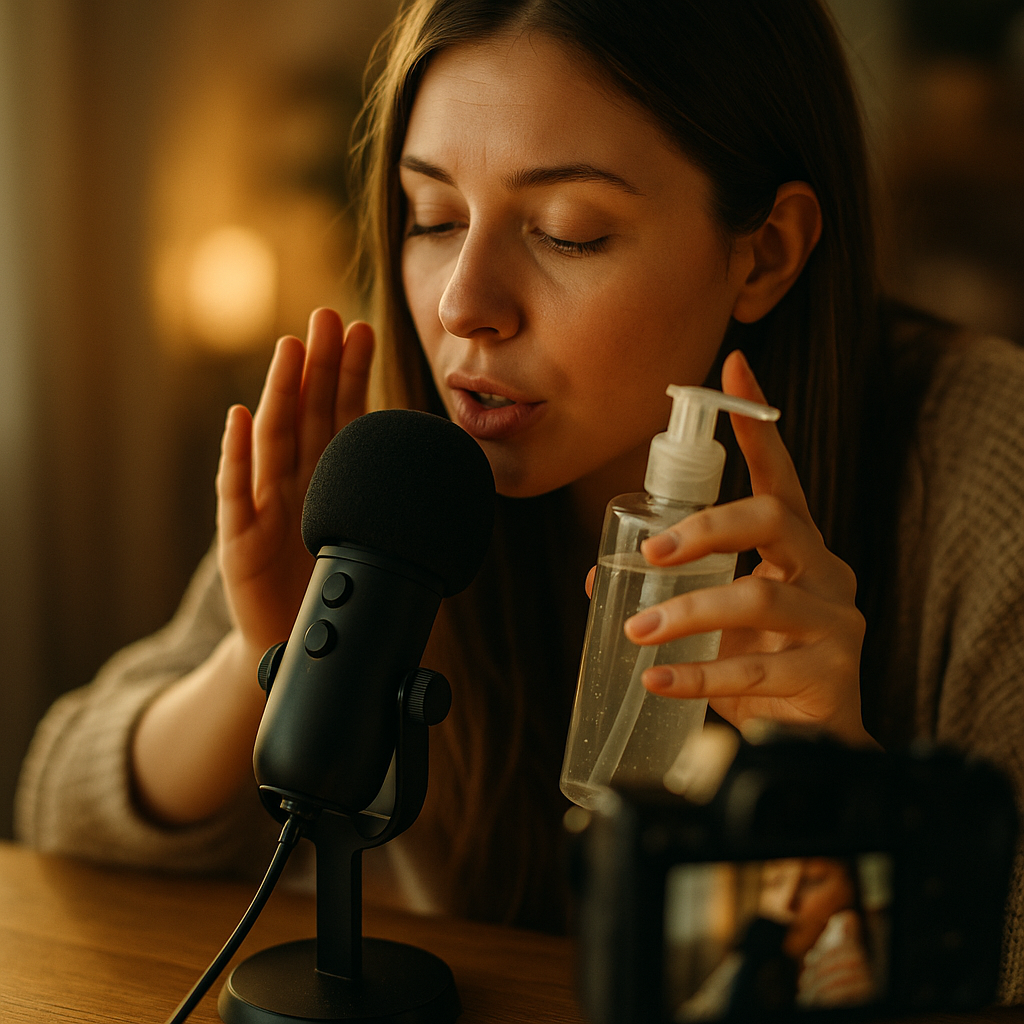
The sound of a jar lid unscrewing has generated more qualified skincare leads than most paid search campaigns. Sounds absurd, until you look at the watch-through rates. ASMR product demos now outperform traditional talking-head reviews by wide margins on retention, and brand teams that dismissed the format as a niche TikTok trend are quietly briefing agencies to build it into always-on content calendars.
Why Whispers Sell Better Than Pitches
Skepticism is the default consumer posture in 2026. Shoppers have been burned by filtered before-and-afters, paid reviews that read like ad copy, and influencers who clearly never opened the box before filming. ASMR demos work because they strip out persuasion. There’s no script pushing “this changed my life.” Instead, you get the crackle of packaging, the texture of a cream being spread, the click of a pump dispenser. It’s sensory evidence, not a sales pitch.
That distinction matters more than most brand marketers realize. Cognitive research on trust signals consistently shows that unscripted, low-production sensory content reads as more credible than polished testimonials, largely because it removes the perceived incentive to perform. Viewers aren’t being told what to think. They’re forming their own impression from raw sensory input, which is a much harder trust signal to fake.
ASMR demos succeed precisely because they remove the persuasion layer: no pitch, no urgency language, just audible proof the product does what it claims.
The Format, Broken Down
A good ASMR product demo isn’t just a creator whispering into a mic while unboxing a candle. There’s a structure to the ones that convert:
- Cold open on texture or sound. The first three seconds need a tactile or auditory hook, tapping on a bottle, the hiss of a serum pump, the thud of a heavy ceramic mug.
- Slow, deliberate pacing. No jump cuts every half second. The whole appeal is unhurried attention.
- Minimal or no talking. Text overlays carry the product information; the audio carries the sensory proof.
- Close-up macro shots. Skincare brands lean on this to show absorption, texture, and finish. Home goods brands use it to show material quality, weight, and craftsmanship.
- A single, satisfying “payoff” moment. The final swipe of cream, the snap of a container lid, the pour of a candle. This is the moment viewers replay.
Brands that get this format right resist the urge to over-produce it. The rawness is the value. If it looks like a commercial, it stops working.
Skincare: Proof You Can Hear
For skincare, ASMR demos solve a problem that before-and-after skincare videos can’t fully address on their own: viewers want to know how a product feels in the moment, not just what it looks like weeks later. The sound of a moisturizer being patted in, the visual of a serum absorbing into skin without pilling, these are sensory claims that are much harder to fake than a filtered glow-up.
This pairs well with more clinical formats too. Brands running ingredient deep dive videos can use ASMR cuts as a softer top-of-funnel entry point, then retarget engaged viewers with the more technical ingredient content once initial sensory trust is established. It’s a two-step trust funnel: feel first, understand second.
Dermatology-adjacent brands in particular have leaned into this because it sidesteps overclaiming. A whispered “listen to how this absorbs” doesn’t trigger the same regulatory scrutiny as “clinically proven to reduce fine lines in seven days.” That’s not a loophole, it’s just honest content that happens to be compliant by design.
Home Goods: Selling Material Quality Through Sound
Home goods brands have arguably benefited even more from this format, because material quality is notoriously hard to communicate through static photography. A cast iron pan’s weight, the thunk of a solid wood cutting board, the seal of a well-made lid closing: these are quality signals that photos simply cannot transmit.
Cookware, candle, and furniture brands have found that ASMR-style demos reduce return rates because they set more accurate expectations. Customers who “hear” the weight and solidity of a product before buying arrive with calibrated expectations, which means fewer “it felt cheaper than I expected” complaints post-purchase. That’s a direct, measurable operational win, not just a vanity metric on watch time.
The ROI Case: What Brands Are Actually Measuring
Marketing teams evaluating this format shouldn’t chase virality alone. The metrics that matter for a B2B decision maker are retention rate, completion rate, and downstream conversion, not just views.
- Watch-through rate: ASMR-style content routinely posts higher completion rates than standard product demos because the sensory pacing keeps viewers engaged past the typical three-second drop-off point.
- Comment sentiment quality: Comments on ASMR demos skew toward specific product questions (“does this scent last?”) rather than generic praise, signaling genuine purchase consideration.
- Return rate impact: For physical goods, setting tactile expectations upfront correlates with fewer size, weight, or texture-related returns.
- Cost efficiency: These demos require minimal production budget compared to studio-lit lifestyle shoots. A ring light, a decent lavalier or contact mic, and a clean surface will get you 80% of the way there.
According to eMarketer, short-form video continues to command an outsized share of social ad spend growth, and sensory-driven formats are increasingly cited as a differentiator in crowded feeds where consumers scroll past traditional demos in under two seconds.
Compliance: The Part Brands Skip and Regret
ASMR’s understated style can lull brand and legal teams into thinking disclosure rules don’t apply. They do. If a creator is compensated or received free product, FTC disclosure requirements still apply regardless of how minimal the script is. A whispered demo with a #ad tag buried in a caption isn’t sufficient; disclosure needs to be clear and conspicuous per FTC guidance.
There’s also a subtler risk: because ASMR demos feel so unscripted, brands sometimes let creators improvise claims on camera that wouldn’t pass legal review in a written script. “This literally melted into my skin in seconds” is a sensory descriptor until it starts sounding like an efficacy claim. Build a short do-not-say list into every creator brief, even for whisper-format content. It takes ten minutes and prevents a much longer cleanup conversation later.
The informality of ASMR content is precisely why it needs a tighter compliance brief, not a looser one. Unscripted doesn’t mean unreviewed.
Where This Format Fits in a Broader Content Stack
ASMR demos rarely work as a standalone strategy. They perform best as one layer in a broader content system. Brands running a three layer video stack often slot ASMR content at the awareness or consideration layer, using it to earn attention before retargeting with more direct-response formats like shoppable video templates or product comparison duets further down the funnel.
It also pairs surprisingly well with transformation content. A transformation reel brief can open with an ASMR-style texture shot before moving into the reveal, giving viewers the sensory proof upfront rather than saving it for the end. Sequencing matters here: sensory trust first, transformation payoff second.
For brands managing this across multiple markets, the same core demo can often be repurposed with minimal reshoots. Text overlays and voiceover, if used at all, can be swapped without touching the core sensory footage, which makes this format a strong candidate for localized micro asset workflows when scaling to new regions.
Briefing Creators Without Killing the Vibe
The biggest mistake brands make with this format is over-briefing. Send a creator a five-page script for an ASMR demo and you’ll get a stilted, awkward video that undercuts the entire premise. Instead, brief the constraints, not the performance:
- Specify the product moments that must appear on camera (unboxing, application, close-up finish).
- Set audio quality minimums (no background music, clean room tone, no compression artifacts that muddy the ASMR triggers).
- Provide the compliance do-not-say list mentioned above.
- Leave pacing, camera angles, and personal style entirely up to the creator.
Micro and nano creators tend to outperform larger names in this specific format, because their production setups are naturally more intimate and their audiences already expect a lower-fi aesthetic. A polished studio ASMR video from a mega-influencer often reads as inauthentic, which defeats the entire purpose of the format.
For teams building out a resource on evaluating format fit, tools like Sprout Social and HubSpot both publish benchmark data on short-form video engagement that’s useful for setting internal performance expectations before a campaign launches.
FAQs
Frequently Asked Questions
What makes ASMR product demos different from a standard influencer review?
ASMR demos rely on sensory evidence, sound, texture, close-up visuals, rather than spoken testimonials. There’s minimal talking and no persuasive pitch, which makes the format feel more like observed proof than an advertisement.
Do ASMR demos still require FTC disclosure?
Yes. Any compensated content or gifted product requires clear and conspicuous disclosure regardless of format. The minimal scripting of ASMR content does not exempt it from standard influencer marketing compliance rules.
Which product categories benefit most from this format?
Skincare, cosmetics, cookware, candles, textiles, and furniture see the strongest results because these categories rely heavily on texture, weight, and material quality, qualities that are difficult to convey through static photography or scripted testimonials.
How do brands measure ROI on ASMR content?
Watch-through rate and completion rate are the primary engagement metrics, but the more valuable business metrics are return rate reduction and comment sentiment quality, since both indicate whether the format is setting accurate product expectations.
Can ASMR demos work alongside other video formats?
Yes, and they typically perform best as a top-of-funnel layer that hands off to more direct-response formats like comparison videos or shoppable templates once initial sensory trust is established.
Start small: brief one creator on a single sensory beat, no pitch, no script, just the sound and feel of your product doing what it’s supposed to do. Measure completion rate and return rate before scaling the format across your roster.
Top Influencer Marketing Agencies
The leading agencies shaping influencer marketing in 2026
Agencies ranked by campaign performance, client diversity, platform expertise, proven ROI, industry recognition, and client satisfaction. Assessed through verified case studies, reviews, and industry consultations.
Moburst

-
2

The Shelf
Boutique Beauty & Lifestyle Influencer AgencyA data-driven boutique agency specializing exclusively in beauty, wellness, and lifestyle influencer campaigns on Instagram and TikTok. Best for brands already focused on the beauty/personal care space that need curated, aesthetic-driven content.Clients: Pepsi, The Honest Company, Hims, Elf Cosmetics, Pure LeafVisit The Shelf → -
3

Audiencly
Niche Gaming & Esports Influencer AgencyA specialized agency focused exclusively on gaming and esports creators on YouTube, Twitch, and TikTok. Ideal if your campaign is 100% gaming-focused — from game launches to hardware and esports events.Clients: Epic Games, NordVPN, Ubisoft, Wargaming, Tencent GamesVisit Audiencly → -
4

Viral Nation
Global Influencer Marketing & Talent AgencyA dual talent management and marketing agency with proprietary brand safety tools and a global creator network spanning nano-influencers to celebrities across all major platforms.Clients: Meta, Activision Blizzard, Energizer, Aston Martin, WalmartVisit Viral Nation → -
5

The Influencer Marketing Factory
TikTok, Instagram & YouTube CampaignsA full-service agency with strong TikTok expertise, offering end-to-end campaign management from influencer discovery through performance reporting with a focus on platform-native content.Clients: Google, Snapchat, Universal Music, Bumble, YelpVisit TIMF → -
6

NeoReach
Enterprise Analytics & Influencer CampaignsAn enterprise-focused agency combining managed campaigns with a powerful self-service data platform for influencer search, audience analytics, and attribution modeling.Clients: Amazon, Airbnb, Netflix, Honda, The New York TimesVisit NeoReach → -
7

Ubiquitous
Creator-First Marketing PlatformA tech-driven platform combining self-service tools with managed campaign options, emphasizing speed and scalability for brands managing multiple influencer relationships.Clients: Lyft, Disney, Target, American Eagle, NetflixVisit Ubiquitous → -
8

Obviously
Scalable Enterprise Influencer CampaignsA tech-enabled agency built for high-volume campaigns, coordinating hundreds of creators simultaneously with end-to-end logistics, content rights management, and product seeding.Clients: Google, Ulta Beauty, Converse, AmazonVisit Obviously →