


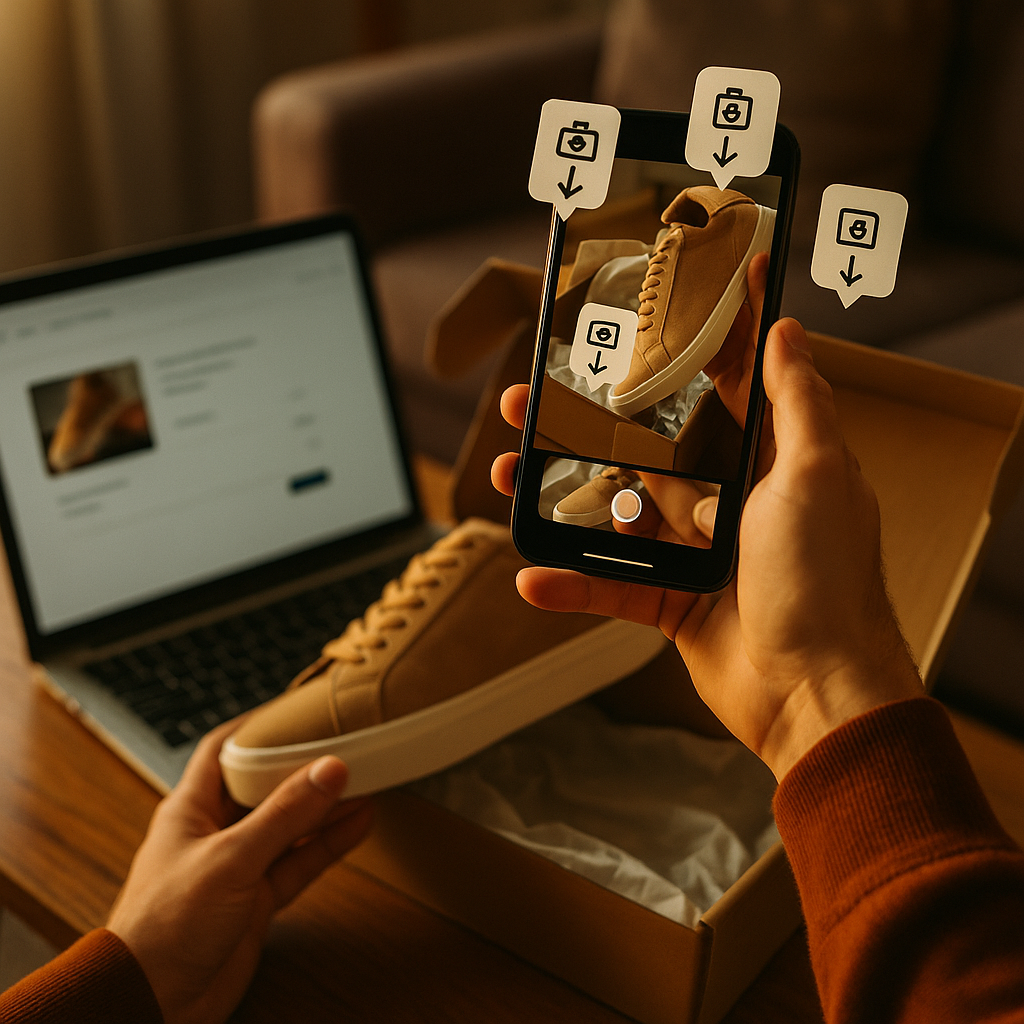
Unboxing videos convert at rates most product pages would kill for, but here’s the catch: if the shoppable tag disappears every time the camera cuts, you’re losing the sale mid-scroll. Multi angle shoppable unboxing only works when product tags survive every jump cut, zoom, and angle switch without a glitch. Get the rigging wrong, and you’ve built a beautiful video that converts like a static image.
Why Camera Cuts Break Most Shoppable Tags
Most shoppable video tools anchor tags to a fixed frame position. That works fine for a single static shot. The moment an editor cuts from a wide unboxing shot to a close-up of the product label, the tag either vanishes, floats awkwardly over the wrong object, or requires the viewer to wait for it to “catch up.” That lag is where taps die.
Unboxing content is inherently multi angle by design. Creators show the box, the packaging peel, the product reveal, a close-up of texture or ingredients, then a lifestyle cutaway. Each of those is a distinct camera setup, sometimes even a different device. If your tagging workflow treats the video as one continuous frame instead of a sequence of discrete shots, tags will drift, disappear, or tag the wrong SKU entirely.
A tag that survives three camera cuts but fails on the fourth doesn’t just lose one sale, it erodes trust in every shoppable video you publish after it.
What “Rigging” Actually Means in Practice
Rigging is the technical and editorial process of pre-mapping product tags to specific timestamps, coordinates, and shot boundaries before a video ever goes live. Think of it like rigging a stunt: nothing is improvised, everything is anchored to a plan. For multi angle unboxing content, that means:
- Tagging each distinct camera angle as its own segment, with its own coordinate set for the product overlay.
- Building transition buffers (typically 0.3 to 0.5 seconds) where the tag fades out before a cut and fades back in after, rather than snapping instantly.
- Locking SKU data to visual cues, not just timecodes, so if an editor trims the video later, the tag logic still holds.
- Testing tag persistence on mobile playback specifically, since most unboxing content is consumed vertically on TikTok Shop, Instagram Reels, or YouTube Shorts.
This is fundamentally different from bolting a tag onto a finished cut. It has to happen at the storyboard stage, ideally before the creator even films. Teams that treat tagging as a post-production afterthought consistently see higher tag failure rates on multi-shot content, according to workflow audits shared by e-commerce platforms building native shopping tools.
The Operational Cost of Getting This Wrong
Brands underestimate how much QA a multi angle shoppable video actually needs. A single-angle demo video might need one round of tag review. A five-cut unboxing sequence needs tag verification at every cut point, on every device orientation, across every platform you plan to distribute on. That’s not one QA pass, that’s potentially fifteen or twenty checkpoints.
Skip that QA and you’ll find out the hard way, usually from a frustrated customer support ticket or a creator flagging that “the link isn’t showing up anymore” three days into a campaign. eMarketer’s research on shoppable video consistently points to friction at the point of interaction as the single biggest conversion killer, and a missing tag is about as much friction as it gets.
There’s a real ROI argument here too. Agencies billing for shoppable video production need to build tag rigging into the scope, not treat it as a free add-on. If a client wants five camera angles in an unboxing sequence, the tagging complexity roughly triples compared to a static single-shot demo. Price it accordingly, and set expectations that revisions to cut order will require re-rigging, not just a quick patch.
Building the Brief: What to Hand Creators Before They Film
The rigging problem starts long before editing. It starts with the brief. If a creator doesn’t know which shots need to hold a product clearly in frame for tag anchoring, you’ll end up trying to tag a blurry pan shot in post, which never works well.
A solid multi angle unboxing brief should specify:
- Which shots are “tag-critical” (product must be centered, well-lit, held steady for at least 1.5 seconds).
- Which shots are purely emotional or reaction-based and don’t need a tag at all (overlaying tags on every single frame is a fast way to look spammy).
- A rough cut order so the tagging team can pre-map coordinates before final edit lands.
- Platform destination, since TikTok Shop, Instagram Shopping, and YouTube Shopping all have different tag placement rules and character limits.
This is the same logic that governs other overlay-heavy formats. The pacing principles covered in shoppable video templates apply directly here: tags need breathing room, and cramming too many into a fast cut sequence tanks tap-through rates.
Platform Quirks You Can’t Ignore
Each major platform handles shoppable overlays differently, and multi angle content exposes those differences fast.
TikTok Shop tags are generally more forgiving of quick cuts because the platform’s native product link sits in a fixed UI position rather than tracking on-screen coordinates. That’s actually an advantage for unboxing content with lots of angle changes, since you’re not fighting frame-by-frame tracking. Check current specs via TikTok’s ads platform before finalizing a campaign, since shopping features update frequently.
Instagram Shopping tags, by contrast, can be pinned to specific timestamps within a Reel, which gives you more precision for multi angle content but also more room to mess it up if timestamps aren’t re-checked after every edit pass. Meta’s business platform documentation is worth a review before scaling a multi-cut format across a full campaign.
YouTube Shopping tends to favor end-screen or description-level tagging over in-frame overlays, which sidesteps the camera-cut problem entirely but sacrifices the immediacy of an in-video tap.
Know which platform you’re optimizing for before you rig anything. A tag strategy built for Instagram’s timestamp precision won’t translate cleanly to TikTok’s fixed UI approach, and trying to force one system’s logic onto another platform is how brands end up with broken links in production.
Testing Before You Scale
Run a single multi angle unboxing video through full QA before committing budget to a batch of creator deliverables. Watch it on three device types, at minimum: a recent iPhone, a mid-range Android, and a tablet. Tag rendering and tap zones behave differently across screen sizes, and what looks perfectly aligned on a 6.1 inch display can sit awkwardly off-center on a smaller or larger screen.
If your tag survives a five-cut unboxing sequence on three device types without drifting, you’ve built something that scales. If it doesn’t, fix it before the creator posts, not after.
It also helps to borrow structure from adjacent formats that already solved similar layering problems. The checklist approach in shoppable video overlays is a useful pre-launch reference, and the layering logic in three layer video stack content translates well to multi angle tag placement, since both deal with stacking interactive elements without cluttering the frame.
For reveal-heavy sequences specifically, timing tags to sound cues (the pop of a box seal, a satisfying click) can lift completion rate, a tactic explored in product reveal sound cues. Pairing audio triggers with visual tag appearance gives viewers a clear signal that something is now shoppable, rather than making them guess.
Compliance Doesn’t Take a Break Between Cuts
Every camera angle in a sponsored unboxing video still needs to carry disclosure, not just the opening shot. The FTC’s endorsement guidance applies to the entire piece of content, and a disclosure that appears only in the first three seconds before disappearing during a cut sequence is a gray area brands shouldn’t be testing. Keep disclosure overlays persistent across all angles, the same way you’re rigging product tags to persist. If UK audiences are in scope, cross-check requirements against ICO guidance as well, since disclosure expectations aren’t identical across markets.
Where This Fits in a Broader Content System
Multi angle shoppable unboxing rarely exists in isolation. It usually feeds into a broader always-on content calendar alongside reveal videos, comparison content, and ambassador-driven series. Treating tag rigging as a reusable system, not a one-off production task, is what lets teams scale from one hero unboxing video to dozens of creator variations without rebuilding the tagging logic every time. Formats like the ones outlined in founder mode videos show how a repeatable brief structure keeps production fast even as output volume grows, and the same discipline applies directly to tag rigging workflows.
Frequently Asked Questions
What is multi angle shoppable unboxing?
It’s an unboxing video format that uses multiple camera angles or shots (wide, close-up, lifestyle cutaway) with product tags that stay accurately placed and functional across every cut, rather than tagging a single static frame.
Why do product tags break during camera cuts?
Most tagging tools anchor to fixed frame coordinates. When the shot changes, the product’s on-screen position changes too, so a tag built for one angle often drifts, disappears, or overlaps the wrong object in the next.
How many camera angles is too many for shoppable tagging?
There’s no hard cap, but each additional angle multiplies QA workload. Most teams find three to five distinct shots manageable; beyond that, tag maintenance and platform testing time grows faster than the conversion benefit.
Does TikTok Shop handle multi angle tagging differently than Instagram?
Yes. TikTok Shop tends to use a fixed UI element for product links rather than frame-tracked overlays, which is more forgiving of quick cuts. Instagram Shopping allows timestamp-based tag placement, offering more precision but requiring more careful re-checking after edits.
Do disclosure requirements change across multiple camera angles?
No. FTC and equivalent regulatory guidance applies to the entire video, not just the opening frame. Disclosure should remain visible or clearly reiterated across all angles and cuts, not just the first shot.
Should tag rigging happen before or after filming?
Before, ideally. A brief that flags which shots are “tag-critical” lets creators film with tagging in mind (steady, well-lit, centered product shots), which drastically reduces post-production tagging errors.
Frequently Asked Questions
Next step: audit your last multi angle unboxing video cut by cut, timestamp every tag failure, and fix the brief before you shoot the next one, not after the campaign underperforms.
Top Influencer Marketing Agencies
The leading agencies shaping influencer marketing in 2026
Agencies ranked by campaign performance, client diversity, platform expertise, proven ROI, industry recognition, and client satisfaction. Assessed through verified case studies, reviews, and industry consultations.
Moburst

-
2

The Shelf
Boutique Beauty & Lifestyle Influencer AgencyA data-driven boutique agency specializing exclusively in beauty, wellness, and lifestyle influencer campaigns on Instagram and TikTok. Best for brands already focused on the beauty/personal care space that need curated, aesthetic-driven content.Clients: Pepsi, The Honest Company, Hims, Elf Cosmetics, Pure LeafVisit The Shelf → -
3

Audiencly
Niche Gaming & Esports Influencer AgencyA specialized agency focused exclusively on gaming and esports creators on YouTube, Twitch, and TikTok. Ideal if your campaign is 100% gaming-focused — from game launches to hardware and esports events.Clients: Epic Games, NordVPN, Ubisoft, Wargaming, Tencent GamesVisit Audiencly → -
4

Viral Nation
Global Influencer Marketing & Talent AgencyA dual talent management and marketing agency with proprietary brand safety tools and a global creator network spanning nano-influencers to celebrities across all major platforms.Clients: Meta, Activision Blizzard, Energizer, Aston Martin, WalmartVisit Viral Nation → -
5

The Influencer Marketing Factory
TikTok, Instagram & YouTube CampaignsA full-service agency with strong TikTok expertise, offering end-to-end campaign management from influencer discovery through performance reporting with a focus on platform-native content.Clients: Google, Snapchat, Universal Music, Bumble, YelpVisit TIMF → -
6

NeoReach
Enterprise Analytics & Influencer CampaignsAn enterprise-focused agency combining managed campaigns with a powerful self-service data platform for influencer search, audience analytics, and attribution modeling.Clients: Amazon, Airbnb, Netflix, Honda, The New York TimesVisit NeoReach → -
7

Ubiquitous
Creator-First Marketing PlatformA tech-driven platform combining self-service tools with managed campaign options, emphasizing speed and scalability for brands managing multiple influencer relationships.Clients: Lyft, Disney, Target, American Eagle, NetflixVisit Ubiquitous → -
8

Obviously
Scalable Enterprise Influencer CampaignsA tech-enabled agency built for high-volume campaigns, coordinating hundreds of creators simultaneously with end-to-end logistics, content rights management, and product seeding.Clients: Google, Ulta Beauty, Converse, AmazonVisit Obviously →