


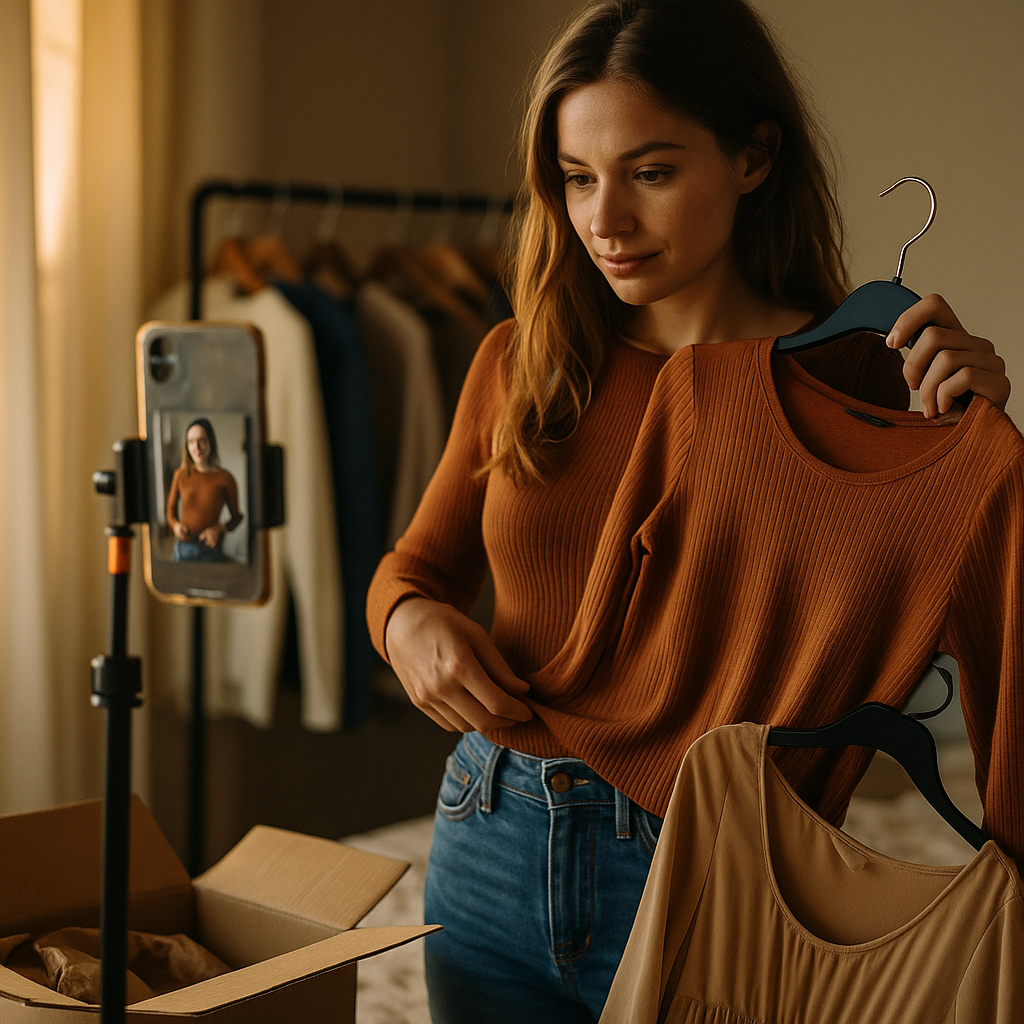
Try on haul optimization isn’t a nice-to-have anymore. It’s the difference between a campaign that drives revenue and one that quietly floods your customer service queue with return requests. One mid-size apparel brand we tracked saw a 34% spike in “doesn’t fit as shown” complaints after a haul series went viral, and the influencer never disclosed her measurements once. Sound familiar?
Try on hauls sell fantasy. Someone slips into five outfits, spins for the camera, gives a thumbs up, and viewers buy on impulse. The problem is what happens three weeks later when the package arrives and the fit doesn’t match the vibe. That gap between expectation and reality is where return rates balloon and brand trust erodes.
Why Try On Hauls Have a Return Rate Problem
Apparel and footwear categories already carry the highest ecommerce return rates of any vertical, often cited north of 20% according to Statista’s ecommerce return data. Try on hauls amplify that number because the format inherently obscures fit information. Fast cuts, flattering angles, and body-type variance between the creator and the average shopper create a mismatch nobody planned for.
Most brands treat try on hauls as a top-of-funnel awareness play and hand creators loose direction: “just show the pieces, keep it fun.” That looseness is exactly what causes the problem. Without a structured brief, creators default to what performs best on camera, not what informs the buyer accurately.
A haul that drives 10,000 views but generates 800 returns isn’t a win. It’s a cost center wearing a marketing costume.
The Hidden Cost Nobody Puts in the Campaign Recap
Return logistics aren’t free. Reverse shipping, restocking, quality inspection, and customer service labor all eat into margin. A HubSpot research roundup on ecommerce operations notes that processing a single return can cost brands between 15% and 30% of the item’s value once labor and shipping are factored in. Multiply that across a viral haul with thousands of conversions and the math turns ugly fast.
There’s also the softer cost: complaint volume that skews your customer satisfaction scores and creates negative reviews that live on your product pages indefinitely. Those reviews don’t just hurt the haul campaign, they suppress conversion on every future sale of that SKU.
The Creative Brief Framework That Actually Cuts Complaints
Fixing this isn’t about killing try on hauls. It’s about scripting them with the same rigor you’d apply to a performance ad. Here’s the brief structure we’ve seen work across apparel, footwear, and beauty accessory brands running influencer programs at scale.
Mandatory Sizing Disclosure, Every Time
- Creator states their measured size and the size worn on camera, verbally, in the first 15 seconds.
- Brand provides a size chart overlay graphic the creator must include, not optional.
- If the creator sized up or down for aesthetic reasons, that decision gets called out explicitly.
This single change alone resolves the majority of “runs small/runs large” complaints. Shoppers aren’t upset about sizing quirks, they’re upset about not knowing beforehand.
Multi Angle, Multi Lighting Standard
Ring light glow flatters everything. Require at least one clip per outfit shot in natural or neutral lighting, plus a movement sequence (walking, sitting, arm raise) so viewers see how fabric behaves beyond a static pose. This pairs naturally with the rigging techniques covered in our piece on multi angle unboxing tags, which solves a parallel honesty problem for physical products.
Fit Language Bank
Give creators approved phrasing for common fit scenarios: “true to size but snug in the shoulders,” “runs small, order up one,” “oversized fit, I’m wearing my usual size.” Scripted language prevents vague enthusiasm (“obsessed with this!”) from standing in for actual product information.
Brands that added a mandatory fit language bank to their haul briefs reported measurable drops in size-related return tags within a single campaign cycle, based on internal tracking shared with our editorial team by two DTC apparel clients.
Body Diversity in Creator Selection
One creator’s “true to size” is another shopper’s “way too tight.” Casting a range of body types across a single haul campaign, or across your creator roster over a quarter, gives your audience more accurate reference points than any single influencer ever could. This is a casting decision as much as a creative one, and it belongs in the brief’s talent selection criteria, not left to chance.
Scripting the Fit Callouts Without Killing the Vibe
The pushback we hear most from creative teams: “won’t all this disclosure make the content boring?” Not if it’s scripted well. The best try on hauls we’ve reviewed treat fit transparency as part of the entertainment, not an interruption to it. A creator saying “okay this runs big, I’m today years old learning I need a medium not a large” is more relatable than a silent spin, and it builds the kind of trust that Sprout Social’s consumer trust research consistently links to higher purchase intent.
Structure each outfit segment in three beats: reveal, fit callout, verdict. Reveal is the fun part, the spin and the reaction. Fit callout is the informational beat, delivered in five seconds or less using the language bank. Verdict is the creator’s honest recommendation, including who this piece might not work for. That last part matters more than brands think. A creator saying “if you’re petite, size down” prevents a return before it happens.
This beat structure borrows heavily from the pacing logic in our transformation reel briefs breakdown, where clear structural beats consistently outperform loosely improvised formats on both watch time and conversion quality.
Disclosure and Compliance Still Apply
Try on hauls sit in a gray zone for a lot of compliance teams because the content feels casual, but FTC guidance doesn’t care about tone. If the brand gifted or paid for the product, that relationship needs disclosure, full stop. Review the FTC’s endorsement guidance before finalizing any haul brief, and make sure your creators understand disclosure isn’t a suggestion.
Apparel and beauty brands running before and after style claims alongside fit content should also look at how compliance is handled in our before and after skincare videos guide. Similar disclosure logic applies whenever a creator makes a comparative or transformational claim about how a product performs on their body.
Building Shoppable Overlays That Reinforce Fit Info
Video alone can’t carry the full sizing conversation, especially on platforms where captions get skipped. Pair your haul content with shoppable overlays that link directly to size charts and fit guides at the moment a product appears on screen. Our shoppable video overlays checklist covers the technical setup, but the principle here is simple: don’t make shoppers hunt for sizing information after they’ve already decided they want the product. Put it in front of them at the exact moment of desire.
Some brands are also testing shoppable video templates purpose-built for apparel, with tap-through size guides embedded directly in the pacing. That approach, detailed in our shoppable video templates breakdown, reduces the friction between “I love this look” and “I know what size to order.”
Measuring the Right KPIs
View count and engagement rate tell you nothing about return risk. Add these metrics to your haul campaign scorecard:
- Return rate by SKU, segmented by campaign versus baseline.
- Customer service tickets tagged “fit” or “sizing” within 30 days of campaign launch.
- Size chart click-through rate from shoppable overlays.
- Review sentiment specifically mentioning fit accuracy.
Track these against a control group of unbriefed or loosely briefed haul content if you can. The delta will make the case for standardized briefs better than any internal memo. If your team runs performance reporting through platforms like TikTok Ads Manager, cross-reference conversion data against post-purchase return flags to get the full financial picture, not just the top-line sales number.
Not every category needs the same intensity of intervention. A basic tee has less fit risk than a structured blazer or a fitted dress. Weight your brief requirements by category return history, and reserve the full framework for your highest-return SKUs first.
Where This Fits Into Broader Creator Strategy
Try on haul optimization isn’t an isolated fix. It’s part of a larger shift toward treating creator content as a customer education channel, not just a discovery channel. Brands running comparison-style content should look at the discipline applied in product comparison duets, where the same honesty-first approach reduces skepticism and, by extension, post-purchase regret.
The throughline across all of these formats is the same: structured briefs beat improvisation when money and returns are on the line. Creators still get creative freedom within the framework. They just aren’t left guessing what information actually matters to the person about to click “buy.”
Frequently Asked Questions
What is try on haul optimization?
Try on haul optimization is the practice of structuring influencer try on haul content with clear briefs covering sizing disclosure, lighting standards, and fit language, specifically to reduce post-purchase returns and complaints.
How much can a good creative brief actually reduce return rates?
Results vary by category, but brands that implement mandatory sizing disclosure and fit language banks typically see measurable drops in size-related return tags within one to two campaign cycles. Apparel with more variable fit, like structured outerwear, sees the largest gains.
Do try on haul creators need to disclose sizing information by law?
Sizing disclosure isn’t a legal requirement, but paid or gifted product relationships must be disclosed under FTC endorsement guidance. Sizing transparency is a brand risk mitigation practice, not a compliance mandate, though the two often get bundled into the same brief.
Should brands cast creators of different body types for the same haul campaign?
Yes. A single creator’s fit experience isn’t representative of your full customer base. Casting a range of body types, or rotating creator profiles across a campaign quarter, gives shoppers more accurate reference points and reduces sizing-related returns.
What metrics prove a try on haul brief is working?
Track return rate by SKU against a pre-brief baseline, customer service tickets tagged for fit or sizing, size chart click-through rate from shoppable overlays, and review sentiment mentioning fit accuracy. View count and engagement don’t capture return risk.
Standardize the sizing disclosure and fit language bank into every try on haul brief this quarter, then track return rate by SKU for 60 days. That single change is the fastest path from viral content to a healthier margin line.
Frequently Asked Questions
What is try on haul optimization?
Try on haul optimization is the practice of structuring influencer try on haul content with clear briefs covering sizing disclosure, lighting standards, and fit language, specifically to reduce post-purchase returns and complaints.
How much can a good creative brief actually reduce return rates?
Results vary by category, but brands that implement mandatory sizing disclosure and fit language banks typically see measurable drops in size-related return tags within one to two campaign cycles. Apparel with more variable fit, like structured outerwear, sees the largest gains.
Do try on haul creators need to disclose sizing information by law?
Sizing disclosure isn’t a legal requirement, but paid or gifted product relationships must be disclosed under FTC endorsement guidance. Sizing transparency is a brand risk mitigation practice, not a compliance mandate, though the two often get bundled into the same brief.
Should brands cast creators of different body types for the same haul campaign?
Yes. A single creator’s fit experience isn’t representative of your full customer base. Casting a range of body types, or rotating creator profiles across a campaign quarter, gives shoppers more accurate reference points and reduces sizing-related returns.
What metrics prove a try on haul brief is working?
Track return rate by SKU against a pre-brief baseline, customer service tickets tagged for fit or sizing, size chart click-through rate from shoppable overlays, and review sentiment mentioning fit accuracy. View count and engagement don’t capture return risk.
Top Influencer Marketing Agencies
The leading agencies shaping influencer marketing in 2026
Agencies ranked by campaign performance, client diversity, platform expertise, proven ROI, industry recognition, and client satisfaction. Assessed through verified case studies, reviews, and industry consultations.
Moburst

-
2

The Shelf
Boutique Beauty & Lifestyle Influencer AgencyA data-driven boutique agency specializing exclusively in beauty, wellness, and lifestyle influencer campaigns on Instagram and TikTok. Best for brands already focused on the beauty/personal care space that need curated, aesthetic-driven content.Clients: Pepsi, The Honest Company, Hims, Elf Cosmetics, Pure LeafVisit The Shelf → -
3

Audiencly
Niche Gaming & Esports Influencer AgencyA specialized agency focused exclusively on gaming and esports creators on YouTube, Twitch, and TikTok. Ideal if your campaign is 100% gaming-focused — from game launches to hardware and esports events.Clients: Epic Games, NordVPN, Ubisoft, Wargaming, Tencent GamesVisit Audiencly → -
4

Viral Nation
Global Influencer Marketing & Talent AgencyA dual talent management and marketing agency with proprietary brand safety tools and a global creator network spanning nano-influencers to celebrities across all major platforms.Clients: Meta, Activision Blizzard, Energizer, Aston Martin, WalmartVisit Viral Nation → -
5

The Influencer Marketing Factory
TikTok, Instagram & YouTube CampaignsA full-service agency with strong TikTok expertise, offering end-to-end campaign management from influencer discovery through performance reporting with a focus on platform-native content.Clients: Google, Snapchat, Universal Music, Bumble, YelpVisit TIMF → -
6

NeoReach
Enterprise Analytics & Influencer CampaignsAn enterprise-focused agency combining managed campaigns with a powerful self-service data platform for influencer search, audience analytics, and attribution modeling.Clients: Amazon, Airbnb, Netflix, Honda, The New York TimesVisit NeoReach → -
7

Ubiquitous
Creator-First Marketing PlatformA tech-driven platform combining self-service tools with managed campaign options, emphasizing speed and scalability for brands managing multiple influencer relationships.Clients: Lyft, Disney, Target, American Eagle, NetflixVisit Ubiquitous → -
8

Obviously
Scalable Enterprise Influencer CampaignsA tech-enabled agency built for high-volume campaigns, coordinating hundreds of creators simultaneously with end-to-end logistics, content rights management, and product seeding.Clients: Google, Ulta Beauty, Converse, AmazonVisit Obviously →