


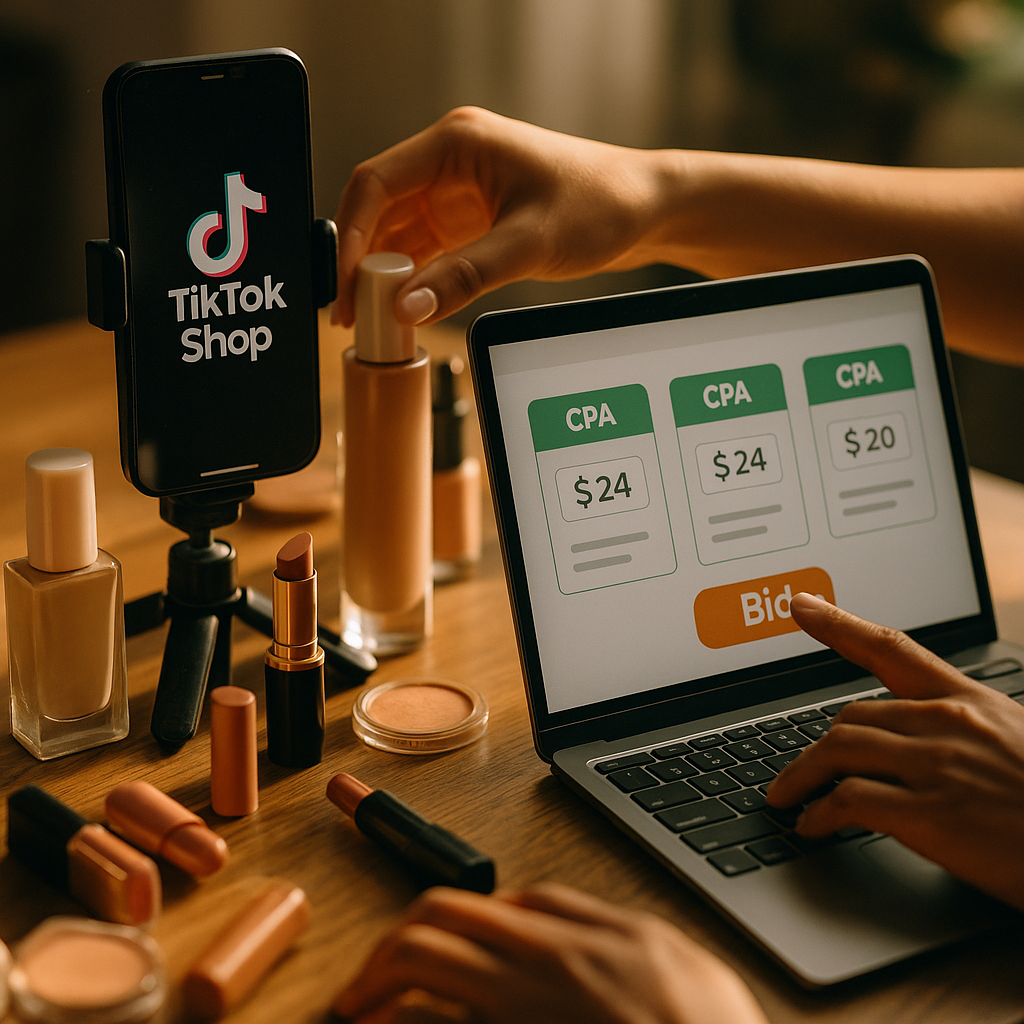
Beauty converts at nearly triple the rate of the average TikTok Shop category, yet most brands still run their beauty campaigns with generic apparel-style bids. That mismatch is expensive. If you’re spending real budget in TikTok Shop beauty, the category has its own bidding logic, its own creator economics, and its own compliance landmines, and treating it like every other vertical is how you burn CPA targets by Q2.
Why Beauty Behaves Differently on TikTok Shop
Beauty shoppers on TikTok don’t behave like fashion or home goods shoppers. They watch longer, they rewatch, and they comment before they buy. Skincare and color cosmetics content routinely pulls completion rates 20 to 40 percent higher than general commerce content, according to internal benchmarks shared by agency buyers running TikTok Shop campaigns. That extra watch time changes the auction dynamics entirely.
Here’s the practical implication: TikTok’s algorithm rewards content that holds attention, and beauty content naturally holds attention because it’s demonstrative. A serum applied on camera, a shade swatch, a before-and-after transition. These formats generate the dwell time that TikTok’s ad delivery system uses to lower effective CPMs. Brands that understand this can bid more aggressively on video view and conversion objectives because the organic engagement is already doing part of the work.
Beauty brands that pair high-dwell-time content with conversion-optimized bidding routinely see 15 to 25 percent lower effective CPAs than brands using flat, category-agnostic bid strategies.
Bidding Strategy: What Actually Moves CPA in Beauty
Forget the default “lowest cost” setting for anything beyond initial testing. Beauty margins are healthy enough on hero SKUs (think a $32 serum with an $8 landed cost) that cost-cap bidding almost always outperforms lowest-cost once you have 50-plus conversions of signal.
- Test at the SKU tier, not the campaign tier. A $12 lip oil and a $45 retinol serum have wildly different conversion windows. Blending them under one bid strategy dilutes signal and confuses the algorithm.
- Use value-based bidding once you have repeat purchase data. Beauty has some of the highest repeat purchase rates in ecommerce. Optimizing purely for first-purchase CPA ignores the lifetime value story that should be steering your bid caps.
- Bid up during GRWM (get ready with me) and haul trends. These content cycles spike organic reach for beauty specifically. Riding the trend with paid amplification for 48 to 72 hours captures demand you’d otherwise pay full price for later.
- Separate live shopping bids from feed bids. Live conversion rates in beauty run higher than static video, and treating them under one blended target undercounts what live is actually worth. For a deeper breakdown of scheduling logic around this, see our live shopping cadence playbook.
One agency buyer I spoke with put it bluntly: “We stopped treating beauty like a single category two years ago. Skincare, makeup, and haircare each need their own bid ceiling because the purchase intent signals are completely different.” That’s not a small operational tweak. It’s a full restructure of how budgets get allocated across ad groups.
The Creator Tiering Problem
Beauty creators aren’t priced the way follower count would suggest. A 40,000-follower skincare creator with a niche dermatology-adjacent audience can outperform a 500,000-follower lifestyle creator on conversion, simply because the audience is pre-qualified. This is the single biggest bidding-adjacent mistake brands make in this vertical: they pay for reach when they should be paying for purchase intent.
Build your creator roster in three tiers:
- Formulation-literate micro creators (10k to 100k). These are the ingredient-callout, “is this actually clean beauty” creators. Their content converts on trust, not spectacle. Rate negotiations here should reference conversion history, not follower count. For rate benchmarking logic that transfers well across platforms, our creator rate negotiation guide is a useful reference point even though it’s Instagram-native.
- Mid-tier demonstration creators (100k to 750k). Best used for launch weeks and haul-style content. Their strength is volume of impressions during a compressed window.
- Macro and celebrity-adjacent creators (750k-plus). Use sparingly, and almost never as your bidding baseline. They’re a brand awareness lever, not a CPA lever.
The mistake to avoid: don’t let your media buying team set bid targets based on aggregate creator performance across tiers. Segment the reporting, or you’ll systematically overpay for reach and underpay for conversion-ready micro talent.
Compliance Isn’t Optional in a Regulated Category
Beauty sits closer to a regulated category than most brands treat it. Skincare claims (anti-aging, acne treatment, “clinically proven”) carry FTC scrutiny that apparel content simply doesn’t. Every creator brief touching active ingredients, SPF claims, or before-and-after imagery needs a compliance review pass before it goes live, not after.
TikTok’s platform-level enforcement has also gotten sharper. Automatic flagging systems now catch undisclosed partnerships and unsubstantiated claims at a rate that would have surprised brands running campaigns just two years ago. If your internal process still relies on creators self-policing disclosure language, you’re exposed. Our automatic flagging compliance guide walks through what triggers these systems and how to brief around them. The same disclosure logic that governs Instagram partnerships, detailed in our disclosure compliance playbook, applies almost directly to TikTok Shop beauty content, with the added wrinkle of ingredient and efficacy claims.
Skincare and cosmetics claims are among the highest-scrutiny content categories on TikTok. A single unreviewed “cures” or “clinically proven” claim in creator content can trigger both platform enforcement and regulatory exposure.
Practical fix: build a claims glossary into your creator brief template. List the words that are off-limits (cure, eliminate, guarantee) and the words that require substantiation on file (clinically tested, dermatologist-recommended). Review the FTC’s endorsement guidance at least annually, since enforcement priorities shift.
Live Shopping Carries the Category
Live commerce is disproportionately a beauty phenomenon on TikTok Shop. Shoppers want to see texture, shade match, and application technique in real time before committing, especially on higher-price-point items. Brands running consistent live cadences (three or more sessions weekly with the same host) see measurably lower return rates than one-off live events, largely because the host builds product familiarity the audience trusts.
Host selection matters more than production value here. A well-lit but disengaged host underperforms a slightly rougher stream from someone who genuinely knows the product line. If you’re building a hosting roster from scratch, the scheduling and consistency frameworks in our host scheduling playbook apply almost directly to beauty, with the caveat that beauty audiences reward ingredient literacy over pure charisma.
And don’t ignore the paid-to-organic handoff. Live sessions that get boosted with even modest ad spend during peak viewer windows extend reach well beyond organic discovery. For the mechanics of turning creator content into a paid acquisition engine, the framework in our creator-to-paid CAC playbook is directly applicable to beauty catalogs.
Benchmarking Against the Broader Market
It helps to know where beauty sits relative to other verticals before you set internal targets. Industry data from eMarketer and category breakdowns from Statista consistently show beauty and personal care as one of the top-performing social commerce categories by conversion rate, which supports the case for category-specific bid ceilings rather than blended account-level targets. Social listening data compiled by Sprout Social also shows beauty content generating disproportionate comment volume relative to likes, a signal worth feeding into your creator selection criteria since comment-heavy content tends to correlate with purchase consideration.
TikTok’s own TikTok for Business platform has continued rolling out beauty-specific catalog and shoppable video features, which is itself a signal about where the platform sees growth. If you’re not testing these tools as they roll out, you’re leaving efficiency gains on the table that competitors in the category are already capturing.
Where This Fits in the Broader Creator Marketplace Shift
Beauty’s bidding and creator dynamics don’t exist in isolation. They’re part of a broader move toward standardized creator marketplace buying that’s reshaping how brands allocate budget across platforms. If your team is evaluating marketplace tools to manage beauty creator relationships at scale, the vetting criteria in our creator marketplace buying playbook apply well beyond TikTok Shop and can help standardize how you evaluate creator ROI across your entire beauty roster.
Next step: Audit your last 90 days of TikTok Shop beauty spend, split it by SKU tier and creator tier, and identify where a blended bid strategy is masking a high-performing segment. That single change is usually the fastest CPA win available in this category.
Frequently Asked Questions
What bidding strategy works best for TikTok Shop beauty campaigns?
Cost-cap bidding segmented by SKU tier outperforms flat lowest-cost bidding once a product has enough conversion volume to generate reliable signal, typically around 50 conversions per ad group.
How is beauty different from other TikTok Shop categories?
Beauty content generates significantly higher watch time and comment engagement than most other commerce categories, which lowers effective CPMs and supports more aggressive conversion-focused bidding.
Should brands prioritize follower count when choosing beauty creators?
No. Formulation-literate micro creators with smaller, highly engaged audiences often outperform larger lifestyle creators on conversion rate, making them a better fit for bottom-funnel bidding strategies.
What compliance risks are specific to beauty content on TikTok?
Ingredient and efficacy claims (anti-aging, acne treatment, clinically proven) carry FTC scrutiny and trigger TikTok’s automatic flagging systems more readily than content in non-regulated categories.
How important is live shopping for beauty brands on TikTok Shop?
Very. Live commerce is disproportionately significant in beauty because shoppers want to see texture, shade match, and application before purchasing, and consistent host cadence correlates with lower return rates.
Top Influencer Marketing Agencies
The leading agencies shaping influencer marketing in 2026
Agencies ranked by campaign performance, client diversity, platform expertise, proven ROI, industry recognition, and client satisfaction. Assessed through verified case studies, reviews, and industry consultations.
Moburst

-
2

The Shelf
Boutique Beauty & Lifestyle Influencer AgencyA data-driven boutique agency specializing exclusively in beauty, wellness, and lifestyle influencer campaigns on Instagram and TikTok. Best for brands already focused on the beauty/personal care space that need curated, aesthetic-driven content.Clients: Pepsi, The Honest Company, Hims, Elf Cosmetics, Pure LeafVisit The Shelf → -
3

Audiencly
Niche Gaming & Esports Influencer AgencyA specialized agency focused exclusively on gaming and esports creators on YouTube, Twitch, and TikTok. Ideal if your campaign is 100% gaming-focused — from game launches to hardware and esports events.Clients: Epic Games, NordVPN, Ubisoft, Wargaming, Tencent GamesVisit Audiencly → -
4

Viral Nation
Global Influencer Marketing & Talent AgencyA dual talent management and marketing agency with proprietary brand safety tools and a global creator network spanning nano-influencers to celebrities across all major platforms.Clients: Meta, Activision Blizzard, Energizer, Aston Martin, WalmartVisit Viral Nation → -
5

The Influencer Marketing Factory
TikTok, Instagram & YouTube CampaignsA full-service agency with strong TikTok expertise, offering end-to-end campaign management from influencer discovery through performance reporting with a focus on platform-native content.Clients: Google, Snapchat, Universal Music, Bumble, YelpVisit TIMF → -
6

NeoReach
Enterprise Analytics & Influencer CampaignsAn enterprise-focused agency combining managed campaigns with a powerful self-service data platform for influencer search, audience analytics, and attribution modeling.Clients: Amazon, Airbnb, Netflix, Honda, The New York TimesVisit NeoReach → -
7

Ubiquitous
Creator-First Marketing PlatformA tech-driven platform combining self-service tools with managed campaign options, emphasizing speed and scalability for brands managing multiple influencer relationships.Clients: Lyft, Disney, Target, American Eagle, NetflixVisit Ubiquitous → -
8

Obviously
Scalable Enterprise Influencer CampaignsA tech-enabled agency built for high-volume campaigns, coordinating hundreds of creators simultaneously with end-to-end logistics, content rights management, and product seeding.Clients: Google, Ulta Beauty, Converse, AmazonVisit Obviously →