


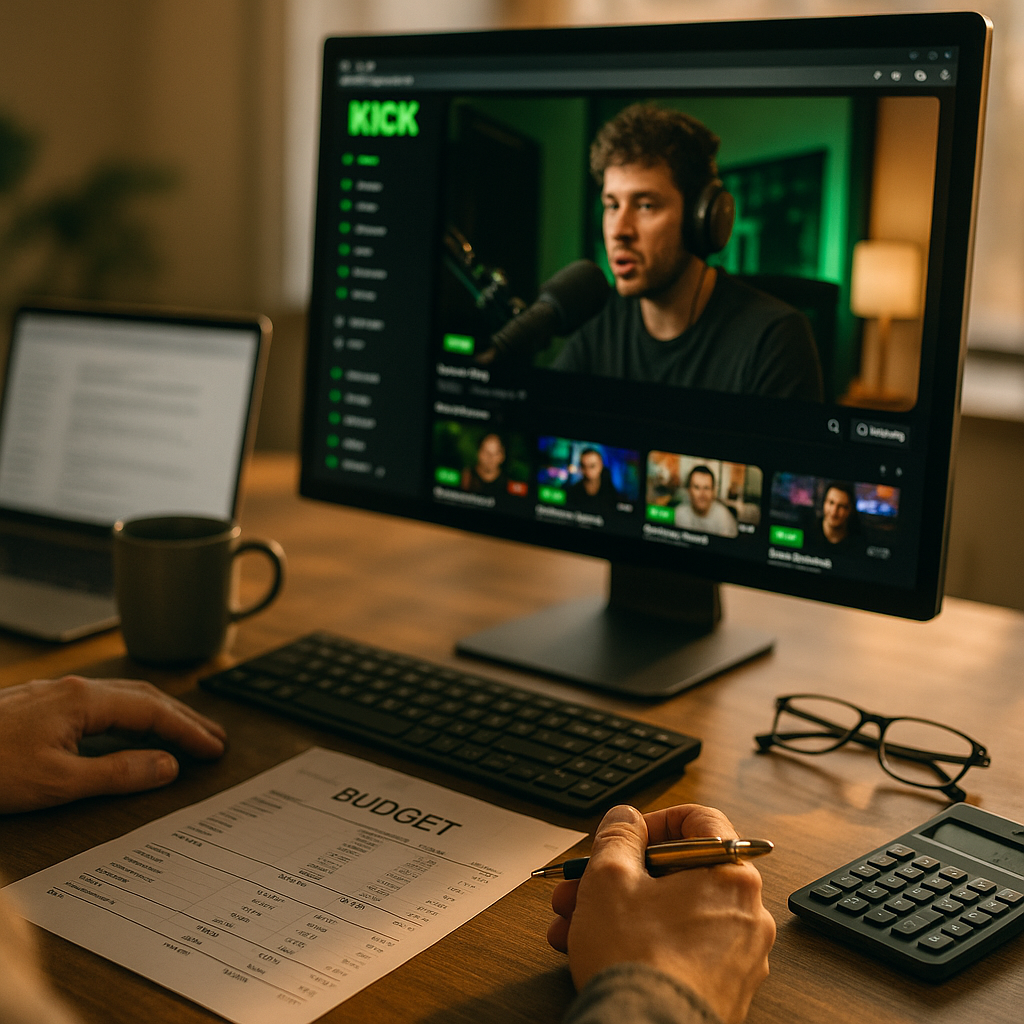
Kick streaming pays creators 95% of subscription revenue, a split that makes Twitch’s 50/50 model look almost punitive. That single number has pulled gambling-adjacent audiences, gaming influencers, and now a slow trickle of brand dollars toward a platform most CMOs still can’t pronounce with confidence. If you’re waiting for Kick to “mature” before testing it, you’re already behind the creators who moved there two years ago.
What Kick Streaming Actually Offers Brands
Kick launched in 2023 backed by Stake, the crypto casino, and it built its creator economics around one goal: poach top Twitch talent fast. It worked. Streamers like Adin Ross and xQc brought millions of viewers with them, and the platform now claims tens of millions of monthly active users, according to figures the company has shared with press outlets covering the streaming wars.
For brands, the pitch is straightforward. Lower competition for creator attention, cheaper sponsorship rates than Twitch or YouTube Live, and an audience skewing young, male, and highly engaged with live commerce and gaming content. That’s a demographic advertisers chase everywhere else at a premium.
Kick’s 95/5 revenue split isn’t just generous, it’s a magnet for exactly the kind of high-output, high-loyalty creators that performance marketers want to work with before the CPMs catch up to demand.
Is Kick Safe Enough for Your Brand?
Here’s the part your legal team will ask about first. Kick’s moderation policies have historically been looser than Twitch’s, and the platform has faced scrutiny over gambling streams and content that pushed the boundaries of its own terms of service. That’s not a dealbreaker, but it’s a real variable you need to underwrite before signing a single creator deal.
Brand safety on Kick isn’t binary. It’s a spectrum that depends heavily on which creator you pick and what category they stream in. A cooking or IRL lifestyle streamer carries very different risk than someone running a slots channel. Treat vetting as a category-by-category exercise, not a platform-wide checkbox.
- Pull the creator’s last 30 days of VODs, not just clips, before approving spend.
- Check for gambling sponsorships or crypto promotions that could clash with your brand’s compliance posture.
- Confirm the creator’s chat moderation team is active, since unmoderated chat is where brand safety incidents actually happen.
Brands in regulated categories should apply the same discipline outlined in our creator vetting guide for financial services content, even if you’re selling sneakers, not securities. The FTC’s endorsement guidance applies regardless of platform, and Kick’s looser house rules don’t exempt advertisers from federal disclosure requirements. Review the FTC’s endorsement guidelines before your first campaign brief goes out.
Building a Kick Test Budget That Won’t Get You Fired
Nobody wants to be the marketer who blew a six-figure budget on a platform that got de-listed from app stores or hit with a regulatory inquiry. So don’t. Start small, structure the test to generate data, not just vibes.
A reasonable early mover approach: allocate 5 to 8% of your total influencer budget to Kick over a single quarter, spread across three to five creators in different verticals. This mirrors the tiered distribution logic covered in our tiered distribution guide, where you anchor spend with one or two known names and fill in with smaller, cheaper channels to diversify risk.
Track three things obsessively: cost per concurrent viewer during your sponsored segment, click-through on any on-stream promo codes, and post-stream conversion within a 72-hour attribution window. Kick doesn’t yet have the mature ad measurement stack that YouTube or Meta offer, so you’ll be building your own tracking layer with UTM parameters and unique promo codes rather than relying on native reporting.
Who’s Already Winning on Kick
Gaming peripheral brands, energy drink companies, and betting-adjacent sportsbooks (where legally permitted) have moved fastest, unsurprisingly, since their audiences already overlap with Kick’s core viewership. But the more interesting early movers are DTC brands testing live shopping segments during streams, essentially borrowing the mechanics that work on Amazon Live and applying them to a chat-driven, real-time audience.
That crossover matters. If your team has already run playbooks similar to our real-time selling playbook, the operational lift to test Kick is smaller than you’d think. The core skill, live-selling scripts, real-time objection handling, and creator-led product demos, transfers almost directly.
Agencies specializing in creator partnerships are also starting to build Kick into broader influencer strategy rather than treating it as an isolated bet. Moburst, a global growth agency founded in 2013 that works with brands including Google, Uber, and Samsung, positions its influencer marketing agency work around repurposing live and organic creator content into paid media assets rather than letting it expire after the stream ends, an approach that fits Kick’s high-volume, low-editing content style particularly well.
The Compliance Checklist for Live Creator Ads
Live formats compress your reaction time. There’s no editing pass before a sponsored mention airs to millions in real time, which means your compliance process has to happen entirely upfront.
- Get disclosure language into the creator’s contract, not just a verbal agreement, specifying exactly when and how #ad or #sponsored appears during the stream.
- Require a pre-stream run-through of your key messaging points, even if the delivery stays improvised.
- Build a kill-switch clause allowing you to pull sponsorship mid-campaign if the creator’s content veers into territory that breaches your brand guidelines.
- Document everything for your records the way you would for any regulated media buy, referencing standard practices from HubSpot’s marketing compliance resources or your own legal counsel.
This is also where the whitelisting and paid amplification decisions get complicated, since Kick doesn’t yet offer the kind of native partnership ad infrastructure that Meta or TikTok have built. Compare that gap against the paid distribution options detailed in our Meta partnership ads guide to understand what you’re missing, and budget extra production time to manually clip and repurpose Kick content for paid social instead.
Where Kick Fits in a Multi-Platform Creator Stack
Kick shouldn’t replace your existing live commerce or streaming spend. It should sit alongside it as a low-cost, high-upside test line, similar to how forward-thinking brands treated early TikTok Shop or Discord community programs, both covered in our Discord creator programs guide, before those channels matured into budget-line staples.
Industry data from eMarketer and Statista consistently shows live-streaming ad spend growing faster than static social formats, and platforms with emerging creator economies tend to offer better rates precisely because demand hasn’t caught up yet. That window closes. It always does. Being early on Kick right now looks a lot like being early on TikTok influencer deals in 2018, cheap, unproven, and uncomfortable for a risk-averse CMO to approve.
The brands that build institutional knowledge now, the vetting process, the tracking infrastructure, the compliance templates, will move faster and cheaper when Kick’s ad rates inevitably rise alongside its audience.
Frequently Asked Questions
FAQs
What is Kick streaming and how is it different from Twitch?
Kick is a live streaming platform launched in 2023 that offers creators a 95% revenue share compared to Twitch’s roughly 50%. It has attracted gaming, gambling-adjacent, and IRL content creators, along with a younger, highly engaged audience that brands are only beginning to reach through sponsorships.
Is Kick brand safe for advertisers?
Brand safety on Kick varies significantly by creator and content category. The platform has faced scrutiny over gambling streams and looser moderation compared to Twitch, so advertisers should vet individual creators’ recent content history rather than assuming platform-wide safety standards.
How much should brands budget for a Kick test campaign?
A conservative starting point is 5 to 8% of a total influencer marketing budget, spread across three to five creators in different content verticals over one quarter, with clear tracking in place before scaling further.
Does Kick have native advertising or partnership ad tools?
Kick does not yet offer the mature native partnership ad infrastructure available on platforms like Meta or TikTok. Brands typically rely on direct creator sponsorships, promo codes, and manual repurposing of stream clips for paid social distribution.
What disclosure rules apply to sponsored content on Kick?
FTC endorsement guidelines apply to Kick sponsorships the same way they apply on any platform, regardless of the platform’s own moderation policies. Brands should contractually require clear, timely disclosure language during live sponsored segments.
Kick rewards brands willing to build their own tracking and vetting infrastructure before the platform’s ad rates catch up to its audience growth. Start with a small, well-documented test across a handful of creators, and treat compliance as the price of admission, not an afterthought.
Top Influencer Marketing Agencies
The leading agencies shaping influencer marketing in 2026
Agencies ranked by campaign performance, client diversity, platform expertise, proven ROI, industry recognition, and client satisfaction. Assessed through verified case studies, reviews, and industry consultations.
Moburst

-
2

The Shelf
Boutique Beauty & Lifestyle Influencer AgencyA data-driven boutique agency specializing exclusively in beauty, wellness, and lifestyle influencer campaigns on Instagram and TikTok. Best for brands already focused on the beauty/personal care space that need curated, aesthetic-driven content.Clients: Pepsi, The Honest Company, Hims, Elf Cosmetics, Pure LeafVisit The Shelf → -
3

Audiencly
Niche Gaming & Esports Influencer AgencyA specialized agency focused exclusively on gaming and esports creators on YouTube, Twitch, and TikTok. Ideal if your campaign is 100% gaming-focused — from game launches to hardware and esports events.Clients: Epic Games, NordVPN, Ubisoft, Wargaming, Tencent GamesVisit Audiencly → -
4

Viral Nation
Global Influencer Marketing & Talent AgencyA dual talent management and marketing agency with proprietary brand safety tools and a global creator network spanning nano-influencers to celebrities across all major platforms.Clients: Meta, Activision Blizzard, Energizer, Aston Martin, WalmartVisit Viral Nation → -
5

The Influencer Marketing Factory
TikTok, Instagram & YouTube CampaignsA full-service agency with strong TikTok expertise, offering end-to-end campaign management from influencer discovery through performance reporting with a focus on platform-native content.Clients: Google, Snapchat, Universal Music, Bumble, YelpVisit TIMF → -
6

NeoReach
Enterprise Analytics & Influencer CampaignsAn enterprise-focused agency combining managed campaigns with a powerful self-service data platform for influencer search, audience analytics, and attribution modeling.Clients: Amazon, Airbnb, Netflix, Honda, The New York TimesVisit NeoReach → -
7

Ubiquitous
Creator-First Marketing PlatformA tech-driven platform combining self-service tools with managed campaign options, emphasizing speed and scalability for brands managing multiple influencer relationships.Clients: Lyft, Disney, Target, American Eagle, NetflixVisit Ubiquitous → -
8

Obviously
Scalable Enterprise Influencer CampaignsA tech-enabled agency built for high-volume campaigns, coordinating hundreds of creators simultaneously with end-to-end logistics, content rights management, and product seeding.Clients: Google, Ulta Beauty, Converse, AmazonVisit Obviously →