


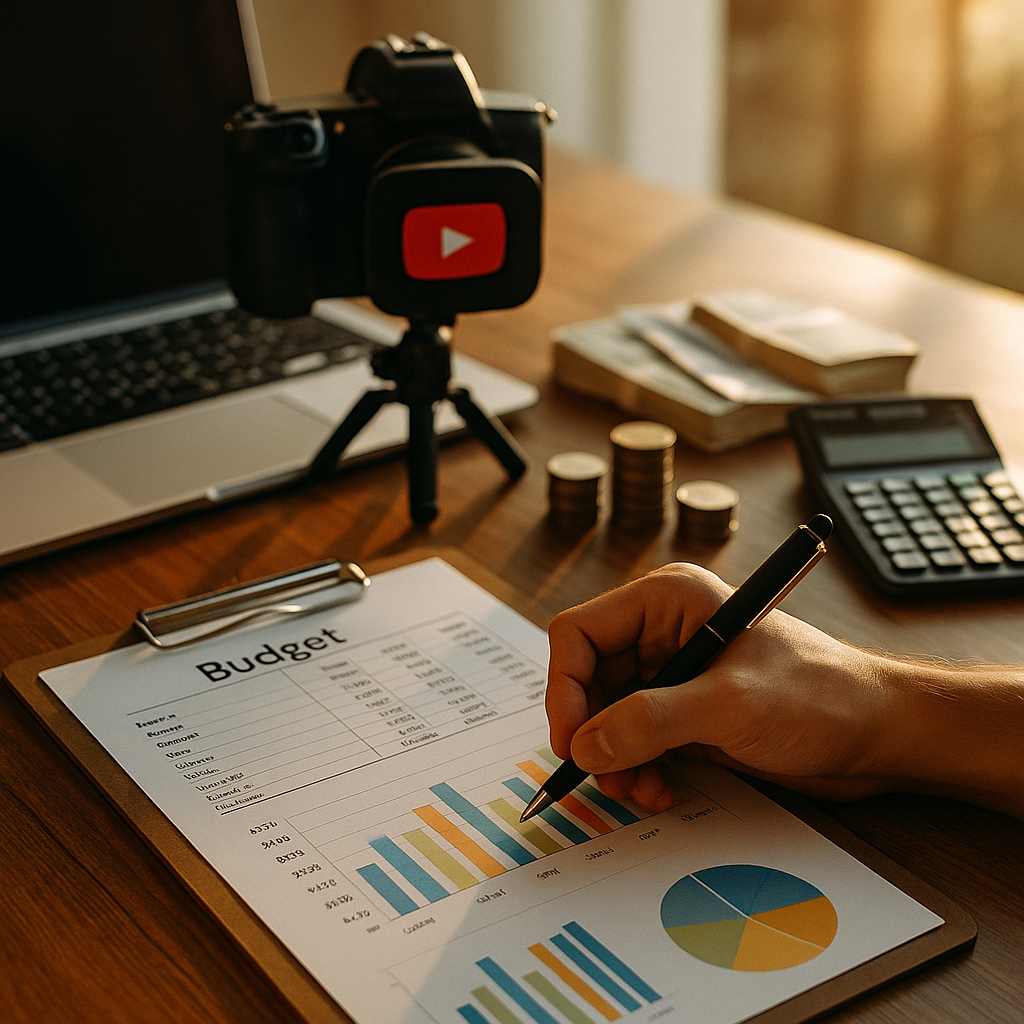
YouTube Shorts now generates over 200 billion daily views, yet most brand media plans still treat it like an afterthought bolted onto a TikTok-first strategy. That’s a budgeting mistake. If you’re still allocating creator video spend based on 2023 platform hierarchies, you’re leaving retention, RPM stability, and search discoverability on the table. The YouTube Shorts creator video budget conversation deserves a real seat at your planning table this cycle, not a leftover percentage.
The Platform Math Has Quietly Shifted
Here’s the thing nobody wants to say out loud at the planning meeting: TikTok’s regulatory uncertainty in the US hasn’t fully resolved, and brands are still hedging. Meanwhile, Instagram Reels is oversaturated with lookalike content fighting for the same algorithmic attention. YouTube Shorts sits in a different position entirely. It benefits from YouTube’s existing search infrastructure, its mature monetization tools, and a creator base that increasingly treats Shorts as a funnel into long-form content rather than a standalone format.
That funnel effect matters more than most media buyers give it credit for. A Short isn’t just a quick hit of attention, it’s a discovery mechanism that can push viewers into a 10-minute review, tutorial, or unboxing video where your product gets a far more thorough treatment. No other short-form platform offers that built-in escalation path.
Brands that allocate solely based on view counts are missing the point: Shorts’ real value is as a discovery layer feeding YouTube’s long-form ecosystem, where purchase intent actually gets built.
Why RPM Stability Changes the Creator Negotiation
Ask any mid-tier creator which platform pays more predictably, and you’ll get the same answer: YouTube. The Shorts Fund rollout and subsequent ad-revenue-sharing model gave creators a reason to treat Shorts as a sustainable income stream rather than a side hustle. That stability trickles down to brand deals. Creators with consistent platform income are less desperate for one-off sponsorships and more willing to negotiate longer-term partnerships, which means better rates for sustained visibility instead of one-and-done posts.
We covered the mechanics of this in detail in our RPM and retention breakdown, but the short version for budget planners: creators optimizing for retention on Shorts tend to produce content that holds attention longer, which correlates directly with better ad recall for embedded or adjacent brand mentions. That’s not a vanity metric. That’s a direct line to media efficiency.
What This Means for CPM Benchmarking
Compare that to TikTok’s Spark Ads or Meta’s Partnership Ads models, where creator payouts are more volatile and tied to campaign-specific whitelisting deals. We’ve broken down those tradeoffs in our Spark Ads versus Partnership Ads guide and our Meta budget decision guide, and the pattern holds: platforms with creator-first monetization tend to produce more stable CPMs for brands over a 12-month horizon, because creators aren’t churning content strategies every quarter chasing algorithm changes.
Search Discoverability Is the Underrated Advantage
Here’s what a lot of social-first marketers forget: YouTube is still the second-largest search engine on the planet. A Short tagged and titled with intent-driven keywords doesn’t just get algorithmic distribution through the Shorts shelf, it can also surface in regular YouTube search results and even Google’s video carousel. TikTok content, by contrast, largely lives and dies within its own app ecosystem (though its search function has improved).
This dual-discovery mechanism is why product review and tutorial content performs disproportionately well as Shorts. A brand running a comparison video doesn’t just get one shot at virality, it gets ongoing, evergreen search traffic months after the initial push. If your team is building any kind of always-on content library, that compounding search value alone justifies a bigger line item.
For context on how algorithm behavior is evolving across YouTube specifically, our algorithm shift watch list tracks the signals worth monitoring if you’re planning quarterly content cadences.
Shopping Integration Closes the Loop
Budget conversations always come back to attribution, and this is where Shorts has made real strides. YouTube’s AI-powered product tagging now lets creators tag items directly within Shorts, pulling from a brand’s Merchant Center feed without manual link insertion. We detailed the operational cadence for this in our AI tagging cadence guide, and the takeaway for budget owners is simple: the friction between “I saw this” and “I bought this” keeps shrinking.
Compare that to platforms still relying on bio links or swipe-up mechanics with multiple drop-off points. Every extra click between discovery and purchase costs you conversion rate. Shorts’ native tagging, paired with YouTube Shopping’s integration into creator storefronts, removes a step that TikTok Shop and Instagram still require workarounds for in certain markets.
A Quick Gut Check for Your Media Plan
- Does your current creator roster include at least one YouTube-native talent, or are you only repurposing TikTok creators’ content as Shorts? (The algorithm rewards native production.)
- Are you tracking view-through conversions from Shorts to long-form, or just counting Shorts views in isolation?
- Have you budgeted separately for YouTube Shopping tag setup, or is that an afterthought for your creator ops team?
- Is your measurement stack pulling YouTube Analytics data into the same dashboard as your other platforms, or living in a silo?
Where Shorts Still Falls Short
None of this means Shorts is a universal upgrade. Trend velocity on Shorts still lags TikTok for pure cultural moments, sound-driven challenges, and Gen Z-first humor formats. If your brand leans heavily on being first to a meme or trend, TikTok and Reels remain faster-moving environments. Our Reels pacing and sound brief guide is still essential reading if trend-jacking is core to your strategy.
There’s also a production nuance worth flagging: Shorts audiences skew slightly older and more research-oriented than TikTok’s, which means pure entertainment content without a clear informational hook tends to underperform relative to other formats. If your creative team only knows how to produce punchy, trend-driven TikTok-style content, you’ll need to adjust the brief, not just the platform.
Shorts rewards informational depth and search intent. TikTok rewards speed and cultural timing. Budget for both, but don’t expect one creative approach to work identically across formats.
How Much Should Actually Move?
There’s no universal formula here, and anyone who gives you an exact percentage without seeing your category, funnel stage, and existing creator mix is guessing. But directionally, brands running beauty, consumer electronics, finance education, or home goods verticals (categories where consideration time matters) should be testing a meaningfully larger Shorts allocation than their current spend reflects. According to eMarketer, short-form video continues to capture a growing share of total digital ad time, and YouTube’s inventory within that mix has expanded substantially as advertiser demand for brand-safe environments increases.
Brand safety is genuinely underrated here too. YouTube’s content moderation and advertiser controls, documented in Google’s support resources, give risk-averse categories like finance and healthcare more confidence than some competitor platforms. If your legal or compliance team has ever flagged concerns about adjacency risk on other short-form apps, that alone might tip the budget conversation. We’ve seen this play out specifically in finance-adjacent content, which our compliance vetting guide covers in more depth.
A reasonable starting test: shift 15 to 20 percent of whatever you’re currently spending on repurposed TikTok content toward YouTube-native Shorts production, run it for one full quarter, and compare view-through rate to long-form plus the shopping tag conversion data. Most teams who run this test don’t revert.
The Takeaway
Stop treating YouTube Shorts as a repurposing dump for TikTok leftovers and start budgeting for native Shorts production tied to your long-form library and shopping tags. Run a one-quarter test shifting 15 to 20 percent of short-form spend toward YouTube-native creators, measure view-through to long-form conversion, and let the retention data make your next budget cycle’s case for you.
Frequently Asked Questions
Is YouTube Shorts actually more profitable for brands than TikTok?
Profitability depends on category and funnel stage, but Shorts tends to offer more stable RPMs, stronger search discoverability, and a built-in path to long-form content, all of which support better long-term ROI for consideration-heavy categories like finance, beauty, and electronics.
How much of a creator video budget should go toward YouTube Shorts?
There’s no universal percentage, but brands currently underinvesting should test shifting 15 to 20 percent of existing short-form spend toward native YouTube Shorts production for at least one full quarter before drawing conclusions.
Do I need different creators for Shorts versus TikTok?
Ideally yes. Shorts rewards creators who understand YouTube’s search and retention mechanics, while TikTok rewards speed and trend fluency. Repurposing content across both works, but native production on each platform consistently outperforms cross-posted content.
Does YouTube Shorts support shoppable content?
Yes. YouTube’s AI-powered product tagging lets creators tag items directly within Shorts using a brand’s Merchant Center feed, reducing friction between discovery and purchase compared to bio-link or swipe-up models.
Is YouTube Shorts safer for brand adjacency than other short-form platforms?
YouTube’s established content moderation and advertiser controls generally give risk-averse categories more confidence than newer or less-regulated short-form platforms, though every brand should still conduct its own creator vetting.
Top Influencer Marketing Agencies
The leading agencies shaping influencer marketing in 2026
Agencies ranked by campaign performance, client diversity, platform expertise, proven ROI, industry recognition, and client satisfaction. Assessed through verified case studies, reviews, and industry consultations.
Moburst

-
2

The Shelf
Boutique Beauty & Lifestyle Influencer AgencyA data-driven boutique agency specializing exclusively in beauty, wellness, and lifestyle influencer campaigns on Instagram and TikTok. Best for brands already focused on the beauty/personal care space that need curated, aesthetic-driven content.Clients: Pepsi, The Honest Company, Hims, Elf Cosmetics, Pure LeafVisit The Shelf → -
3

Audiencly
Niche Gaming & Esports Influencer AgencyA specialized agency focused exclusively on gaming and esports creators on YouTube, Twitch, and TikTok. Ideal if your campaign is 100% gaming-focused — from game launches to hardware and esports events.Clients: Epic Games, NordVPN, Ubisoft, Wargaming, Tencent GamesVisit Audiencly → -
4

Viral Nation
Global Influencer Marketing & Talent AgencyA dual talent management and marketing agency with proprietary brand safety tools and a global creator network spanning nano-influencers to celebrities across all major platforms.Clients: Meta, Activision Blizzard, Energizer, Aston Martin, WalmartVisit Viral Nation → -
5

The Influencer Marketing Factory
TikTok, Instagram & YouTube CampaignsA full-service agency with strong TikTok expertise, offering end-to-end campaign management from influencer discovery through performance reporting with a focus on platform-native content.Clients: Google, Snapchat, Universal Music, Bumble, YelpVisit TIMF → -
6

NeoReach
Enterprise Analytics & Influencer CampaignsAn enterprise-focused agency combining managed campaigns with a powerful self-service data platform for influencer search, audience analytics, and attribution modeling.Clients: Amazon, Airbnb, Netflix, Honda, The New York TimesVisit NeoReach → -
7

Ubiquitous
Creator-First Marketing PlatformA tech-driven platform combining self-service tools with managed campaign options, emphasizing speed and scalability for brands managing multiple influencer relationships.Clients: Lyft, Disney, Target, American Eagle, NetflixVisit Ubiquitous → -
8

Obviously
Scalable Enterprise Influencer CampaignsA tech-enabled agency built for high-volume campaigns, coordinating hundreds of creators simultaneously with end-to-end logistics, content rights management, and product seeding.Clients: Google, Ulta Beauty, Converse, AmazonVisit Obviously →