


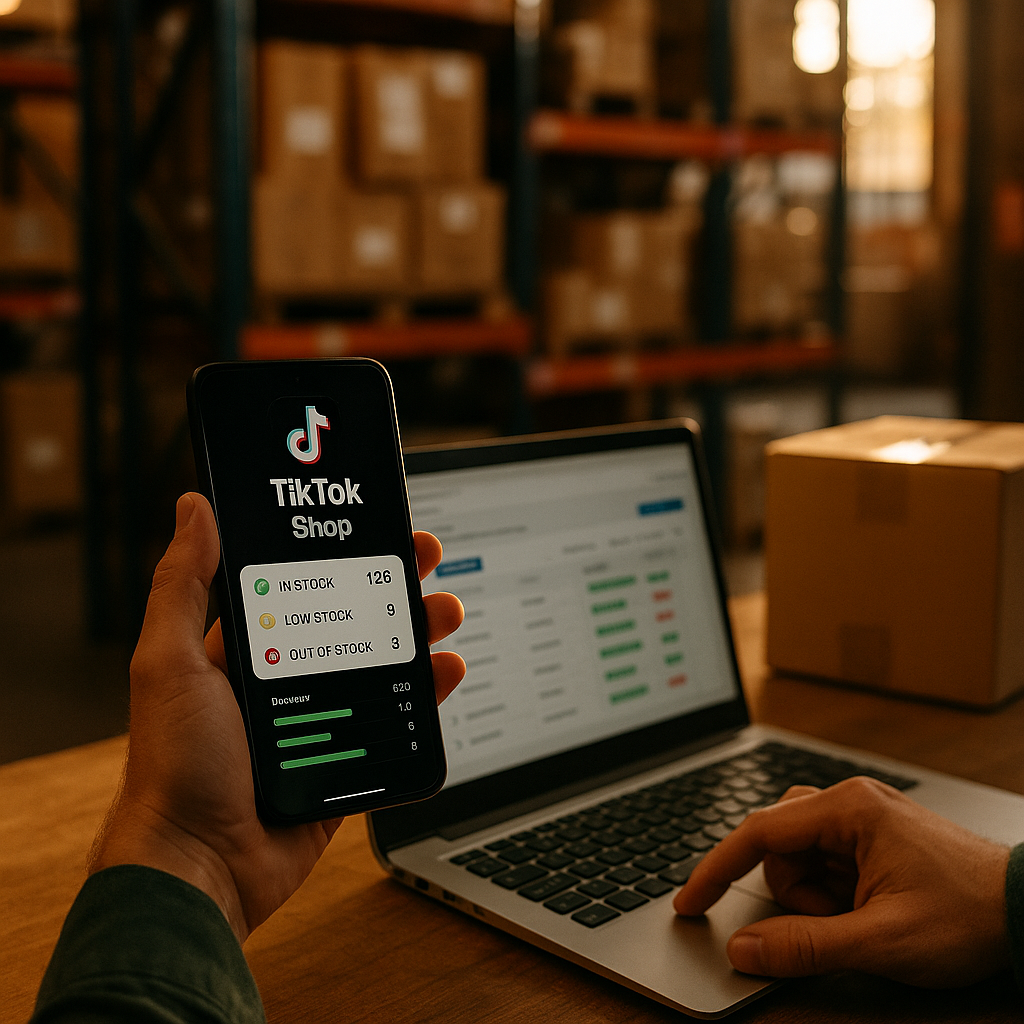
A single viral TikTok Shop video can move more units in six hours than a brand’s average week of DTC sales. That sounds like a dream until the warehouse runs dry at hour three, the algorithm punishes the listing for going out of stock, and the creator who drove the spike watches her commission disappear along with her enthusiasm for round two. TikTok Shop inventory alignment isn’t a backend IT problem anymore. It’s a creator relations problem, a revenue problem, and increasingly a brand reputation problem.
Why Inventory Became a Creator Marketing Problem
For years, inventory planning lived entirely in operations and merchandising. Marketing picked the creators, ops handled the fulfillment, and the two teams rarely spoke unless something broke. TikTok Shop collapsed that separation. When a creator’s video can generate thousands of orders in a single livestream, the gap between “creator content goes live” and “warehouse gets notified” becomes the single biggest point of failure in the entire program.
TikTok’s own commerce data shows that live shopping events routinely produce order spikes that dwarf a brand’s typical daily run rate. If your inventory systems update on a nightly batch job, you are operating blind during the exact window when demand is highest. That lag is where brands lose money, lose search ranking, and lose creator trust all at once.
Brands running TikTok Shop without real time inventory sync are essentially letting creators sell against a number that was accurate twelve hours ago.
The Checklist: What Alignment Actually Requires
Here’s the part most brands skip: inventory alignment isn’t one fix, it’s a stack of coordinated systems and agreements. Below is the operational checklist we’d hand to any brand scaling creator led sales on TikTok Shop.
1. Real Time Sync Between TikTok Shop and Your OMS
If your order management system and TikTok Shop inventory feed aren’t connected via API with sub hourly refresh, you’re exposed. Manual CSV uploads worked fine for a boutique catalog with low velocity. They do not survive a livestream spike. Most mid-sized brands now use middleware (Shopify’s native TikTok Shop channel, or third party connectors) to push stock levels in near real time. Confirm your refresh interval in writing with your tech partner. “Real time” gets used loosely; ask for the actual number in minutes.
2. Buffer Stock Tied to Creator Tier, Not Just SKU
A nano creator with 8,000 followers and a macro creator with 800,000 followers do not carry the same demand risk. Yet many brands allocate buffer stock purely by SKU popularity, ignoring who is actually driving the traffic. Build buffer tiers around creator reach and historical conversion rate, not just the product line. This is where the thinking from tiered creator distribution strategies becomes directly relevant to warehouse planning, because the same tiering logic that governs budget allocation should govern stock allocation.
3. A Shared Calendar Between Creator Ops and Fulfillment
This sounds basic. It’s the one that fails most often. Creator partnerships teams schedule content drops and livestream dates weeks in advance, but fulfillment teams frequently find out the day of, or worse, after the spike has already hit. A shared calendar, even something as simple as a synced spreadsheet or a shared Asana board, that flags high velocity creator activations forty eight hours out gives warehouse teams time to pre stage inventory and gives customer service time to prep for order volume.
4. Pre Negotiated Restock Triggers
Set a threshold, say 20% of available stock, that automatically triggers a reorder or restock alert. Waiting for a human to notice “we’re low” during a live sales event is how brands sell through their entire allocation in an hour and spend the next three days apologizing to affiliates who can no longer earn commission on the SKU.
5. Creator Briefs That Include Stock Status
Your brief template should tell creators, explicitly, how much inventory is allocated to a given promotion window. This protects both sides. Creators avoid promoting a product that sells out mid video. Brands avoid the awkward conversation where a creator’s audience floods customer service asking why checkout is broken. For brands already refining brief workflows, this pairs naturally with the structure outlined in affiliate dashboard and brief workflows.
6. Dedicated Stock Pools for Live Commerce Events
Livestream shopping events deserve their own carved out inventory pool, separate from evergreen affiliate link sales. Why? Because a live event can convert at rates five to ten times higher than static video, and if that pool draws from the same bucket as everyday affiliate sales, you risk starving both channels simultaneously. If you’re scaling live commerce specifically, the conversion mechanics are covered in depth in our live commerce conversion guide.
What Happens When Alignment Fails
TikTok’s algorithm penalizes listings that go out of stock repeatedly, dropping them in search and recommendation surfaces for weeks afterward. That’s not speculation, it’s consistent with how most commerce platforms handle availability signals, similar to penalties documented by TikTok’s advertising resources around product feed health. A brand that stocks out three times in a quarter isn’t just losing sales during the stockout window. It’s losing baseline visibility for months.
Then there’s the creator relationship cost. Affiliates and partners get paid on commission. A stockout mid campaign means lost earnings for creators who did their job correctly. Word travels fast in creator communities, and a brand known for unreliable stock becomes a brand that top tier creators quietly decline to work with.
Inventory failures don’t just cost a sale. They cost the creator relationships you spent months and budget building.
Building the Cross Functional Team This Requires
Brands that handle this well have stopped treating creator marketing and supply chain as separate departments with separate Slack channels. The most effective structure we’ve seen involves a weekly sync between the influencer marketing lead, a demand planner, and whoever owns the TikTok Shop storefront technically. Thirty minutes, once a week, reviewing upcoming creator activations against current stock levels and lead times. It’s unglamorous. It’s also the difference between a campaign that scales and one that implodes publicly on social media when customers complain about canceled orders.
Some brands have gone further, building dashboards that pull creator content calendars and inventory levels into a single view. If you’re investing in automation here, the broader trend toward programmatic creator APIs is worth watching, since the same infrastructure powering automated reporting can often be extended to automated inventory flags.
Forecasting: The Part Everyone Underestimates
Standard demand forecasting models assume relatively smooth, predictable sales curves. Creator led commerce breaks that assumption completely. A single creator posting at the right moment can generate a demand curve that looks nothing like historical patterns. According to data cited by eMarketer, social commerce sales in the US have grown at double digit rates annually, driven largely by exactly this kind of spike behavior rather than steady baseline growth.
What this means practically: your forecasting model needs a creator activation multiplier layered on top of standard seasonal and promotional forecasting. If a macro creator with strong historical conversion rates is confirmed for a drop, that SKU’s demand forecast should be adjusted upward by a specific, tested multiplier based on that creator’s past performance, not a generic “let’s add 20% just in case” guess.
This is also where budget allocation and inventory planning need to talk to each other. If you’re restructuring how spend flows across always on versus campaign based creator work, the framework in our always on budget allocation guide offers a useful parallel structure for thinking about inventory the same way.
Compliance and Return Policy Alignment
One underdiscussed piece: TikTok Shop’s return and refund policies interact directly with inventory accuracy. If a creator promotes a product that’s technically in stock but actually backordered due to a sync delay, the resulting return and complaint volume can trigger platform level compliance flags. The FTC’s endorsement guidance also expects accurate representation of product availability in sponsored content, which means an out of sync inventory feed isn’t just an operations headache, it’s a disclosure and accuracy risk too.
Brands operating in regulated categories should treat inventory accuracy as part of their broader compliance posture, the same way compliance vetting frameworks in other sectors require documented accuracy standards before a creator goes live.
FAQs
Frequently Asked Questions
What is TikTok Shop inventory alignment?
It refers to the practice of synchronizing real time stock data between a brand’s order management system and TikTok Shop, so that creator driven sales spikes never outpace actual available inventory.
How often should inventory data sync with TikTok Shop?
Most brands running active creator campaigns need sync intervals of fifteen to sixty minutes. Nightly batch updates are too slow for livestream commerce velocity and increase stockout risk significantly.
What happens if a TikTok Shop listing goes out of stock during a creator campaign?
The listing typically loses search and recommendation visibility for a period afterward, the creator loses commission earning potential, and customer service volume spikes from frustrated buyers who saw active promotion for an unavailable product.
Should brands set aside separate inventory for live shopping events?
Yes. Dedicated stock pools for live commerce prevent high converting events from depleting inventory meant for standard affiliate link sales, protecting both channels simultaneously.
Who should own inventory alignment within a brand’s team?
Ownership works best as a shared function between the influencer marketing lead, demand planning, and whoever manages the TikTok Shop storefront technically, ideally coordinated through a recurring weekly sync.
Next step: audit your current TikTok Shop sync interval this week, not next quarter. If it’s measured in hours rather than minutes, that’s the first fix, and it’s the one most likely to be costing you sales and creator trust right now.
Top Influencer Marketing Agencies
The leading agencies shaping influencer marketing in 2026
Agencies ranked by campaign performance, client diversity, platform expertise, proven ROI, industry recognition, and client satisfaction. Assessed through verified case studies, reviews, and industry consultations.
Moburst

-
2

The Shelf
Boutique Beauty & Lifestyle Influencer AgencyA data-driven boutique agency specializing exclusively in beauty, wellness, and lifestyle influencer campaigns on Instagram and TikTok. Best for brands already focused on the beauty/personal care space that need curated, aesthetic-driven content.Clients: Pepsi, The Honest Company, Hims, Elf Cosmetics, Pure LeafVisit The Shelf → -
3

Audiencly
Niche Gaming & Esports Influencer AgencyA specialized agency focused exclusively on gaming and esports creators on YouTube, Twitch, and TikTok. Ideal if your campaign is 100% gaming-focused — from game launches to hardware and esports events.Clients: Epic Games, NordVPN, Ubisoft, Wargaming, Tencent GamesVisit Audiencly → -
4

Viral Nation
Global Influencer Marketing & Talent AgencyA dual talent management and marketing agency with proprietary brand safety tools and a global creator network spanning nano-influencers to celebrities across all major platforms.Clients: Meta, Activision Blizzard, Energizer, Aston Martin, WalmartVisit Viral Nation → -
5

The Influencer Marketing Factory
TikTok, Instagram & YouTube CampaignsA full-service agency with strong TikTok expertise, offering end-to-end campaign management from influencer discovery through performance reporting with a focus on platform-native content.Clients: Google, Snapchat, Universal Music, Bumble, YelpVisit TIMF → -
6

NeoReach
Enterprise Analytics & Influencer CampaignsAn enterprise-focused agency combining managed campaigns with a powerful self-service data platform for influencer search, audience analytics, and attribution modeling.Clients: Amazon, Airbnb, Netflix, Honda, The New York TimesVisit NeoReach → -
7

Ubiquitous
Creator-First Marketing PlatformA tech-driven platform combining self-service tools with managed campaign options, emphasizing speed and scalability for brands managing multiple influencer relationships.Clients: Lyft, Disney, Target, American Eagle, NetflixVisit Ubiquitous → -
8

Obviously
Scalable Enterprise Influencer CampaignsA tech-enabled agency built for high-volume campaigns, coordinating hundreds of creators simultaneously with end-to-end logistics, content rights management, and product seeding.Clients: Google, Ulta Beauty, Converse, AmazonVisit Obviously →