


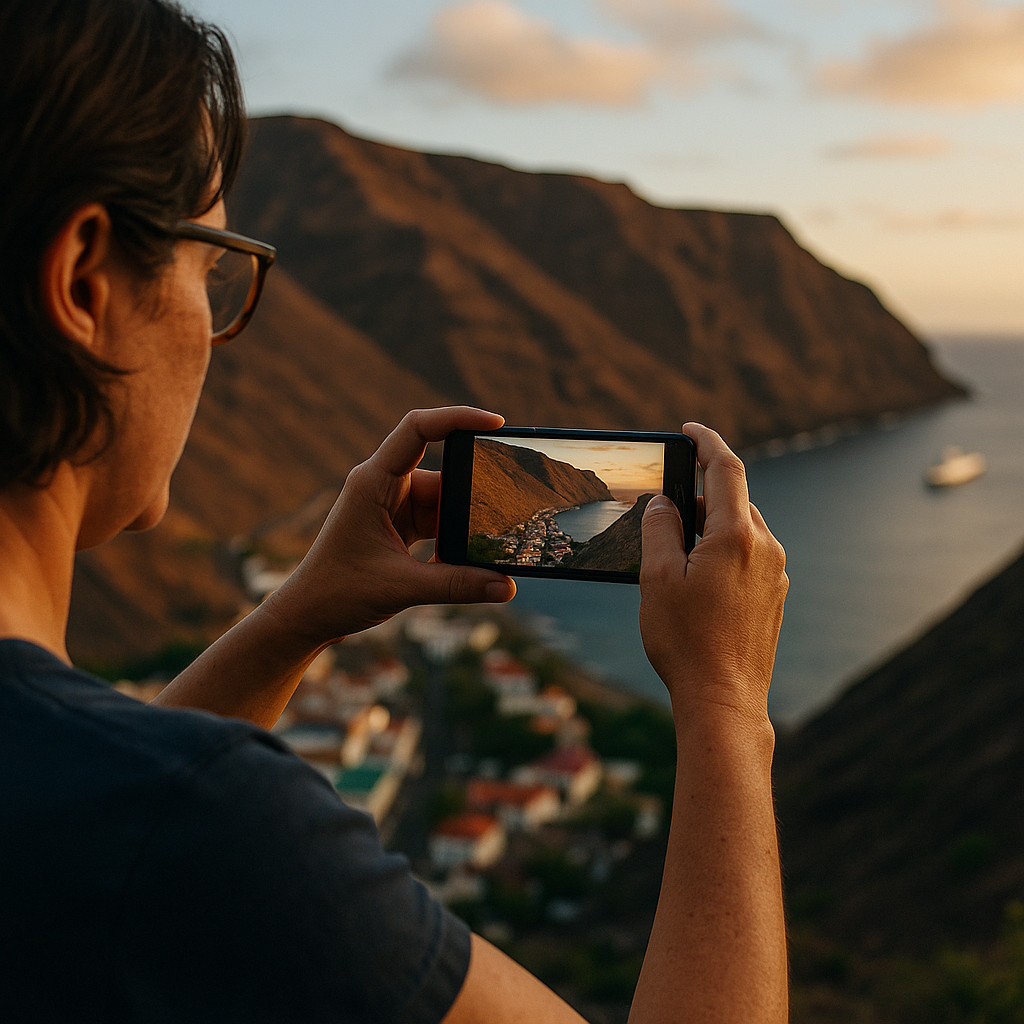
A British Overseas Territory with roughly 4,500 residents and no commercial flights until 2017 just outperformed destination marketing budgets ten times its size. How? St Helena Tourism ditched glossy brochure campaigns for a creator-first UGC strategy, and the results are forcing brand strategists everywhere to rethink what “destination marketing” even means.
Why an Island of 4,500 People Needed a Different Playbook
St Helena sits in the middle of the South Atlantic, roughly 1,200 miles from the nearest continent. It has one weekly flight, limited hotel inventory, and a marketing budget that would barely cover a single influencer campaign for a mid-size CPG brand. Traditional destination marketing, think print ads in travel magazines, paid partnerships with legacy travel publishers, was never going to work here. The math simply didn’t close.
So the tourism board made a bet that sounds obvious in hindsight but was genuinely risky at the time: hand the storytelling over to the people who’d actually been there. No scripted talking points, no polished drone footage commissioned from an agency. Just real visitors, local guides, and diaspora creators posting what they actually experienced.
A destination with almost no paid media budget built global awareness by treating every visitor as a potential content partner, not just a customer.
The Creator First Model: What St Helena Actually Did
The strategy had three moving parts, and none of them required a big agency retainer.
- Seeded local creators first. Instead of chasing international travel influencers with huge followings, the board worked with islanders who already had small but engaged audiences. Authenticity was the product, not an afterthought.
- Turned visitors into unpaid advocates. Every guest who landed got a simple content prompt, not a mandate, more like an invitation: share your arrival, your first meal, your hike up Jacob’s Ladder. Light-touch nudges, not contracts.
- Repurposed UGC across owned channels. Instead of commissioning new assets, the tourism board licensed and republished existing visitor content on its own Instagram and website, cutting production costs dramatically.
This isn’t a new idea in consumer marketing. Brands like Fabletics have run UGC-driven flywheels for years, turning customer content into acquisition fuel instead of relying solely on paid creative. What’s notable here is that a government tourism body with a fraction of the headcount applied the same logic and got outsized reach relative to spend.
Budget Reality Check
Let’s be honest about what made this work: desperation forces discipline. St Helena couldn’t afford a seven-figure campaign, so every dollar had to earn its place. That constraint is actually the lesson, not the island itself.
Destination marketing globally has leaned hard into creator partnerships over the past few years. According to eMarketer, travel and tourism brands now allocate a growing share of digital budgets to creator content rather than traditional paid media, and Statista data consistently shows user-generated content outperforming branded content on engagement metrics across travel categories. St Helena simply skipped the expensive middle step. No agency production budget, no influencer retainer fees in the traditional sense. Just structured encouragement and smart redistribution.
For brand strategists managing seven-figure influencer programs, that might sound quaint. But the operational logic scales. Princess Polly’s shift toward thousands of smaller creator partnerships instead of a handful of expensive macro deals follows the same principle: distribute cost, distribute risk, let volume do the heavy lifting.
What Brands Can Actually Steal From This
Here’s where this stops being a quirky tourism story and becomes a genuine playbook for marketers managing bigger budgets and bigger stakes.
- Treat customers as a content supply chain, not just a sales funnel. The tourism board didn’t commission content, it harvested it. Brands sitting on large customer bases often overlook how much usable creative is already being generated organically.
- Centralize rights management early. One reason St Helena could redistribute UGC freely is that it built simple permission structures from day one. Starbucks took a similar approach recently, bringing UGC commissioning in house specifically to speed up rights clearance and reduce legal friction.
- Centralize the program, not just the content. Molson Coors saw engagement quadruple after centralizing its creator relationships instead of running fragmented regional efforts. Small teams, clear ownership, consistent sourcing.
- Measure what the content actually does, not just how it looks. Even a tourism board needs to justify spend to a government budget committee. If a CPG team like GameSquare can make influencer ROI auditable, a destination marketing office can track booking inquiries sourced from specific creator content too.
Where the Risk Lives
Creator-first isn’t risk-free, and it would be irresponsible to pretend otherwise. Destination marketing carries unique exposure that CPG or fashion brands don’t deal with: misrepresented weather conditions, exaggerated accessibility claims, or UGC that inadvertently sets unrealistic expectations for infrastructure that simply isn’t there yet. A visitor posting about a “quick weekend trip” to an island with one flight a week is going to generate complaints, not conversions.
There’s also the disclosure question. If a tourism board provides free accommodation, discounted flights, or any other compensation in exchange for content, that’s a material connection requiring disclosure under FTC guidelines for US-facing campaigns, and similar transparency expectations apply domestically in the UK given St Helena’s status as a British Overseas Territory. Brands and destination boards operating across jurisdictions need to build disclosure checks into the workflow, not bolt them on after a campaign goes live.
UGC feels free because no production invoice shows up, but the compliance and rights-management overhead is real money if it’s ignored early.
Data handling matters too. Any destination marketing operation collecting visitor emails, trip details, or content submissions from EU or UK travelers should be mindful of guidance from the Information Commissioner’s Office, particularly around consent for reusing personal content commercially. It’s a small detail that gets skipped constantly, and it’s the kind of thing that turns a feel-good UGC story into a legal headache.
The Bigger Shift This Signals
Destination marketing has historically been slow to adopt creator economy tactics compared to retail or beauty. Tourism boards tend to be risk-averse, government-funded, and committee-driven, which doesn’t exactly scream “move fast and post TikToks.” St Helena’s willingness to experiment, partly out of necessity, suggests the category is catching up fast.
It also reframes what “scale” means in influencer marketing. Most case studies in this publication involve brands scaling to thousands of creator partnerships, like e.l.f. Beauty’s jump to 15,900 partnerships in a year. St Helena proves the inverse case: a tiny, tightly managed creator pool combined with smart UGC redistribution can still move awareness metrics meaningfully, provided the content strategy is deliberate rather than accidental.
For agencies pitching destination clients, this is worth internalizing. The pitch isn’t “we need a bigger budget.” It’s “we need a sharper content system.” Those are very different conversations, and the second one is a lot easier to win with finance teams watching every line item.
FAQs
What does “creator-first” mean in destination marketing?
It means prioritizing content generated by real visitors and local creators over traditional agency-produced campaigns, using authentic user-generated content as the primary storytelling engine rather than a supplementary tactic.
How did St Helena’s tourism board fund its UGC strategy without a large budget?
The board minimized production costs by licensing and redistributing existing visitor content instead of commissioning new assets, relying on structured prompts and permission systems rather than paid influencer contracts.
Is UGC actually cheaper than traditional influencer marketing for destination brands?
UGC reduces production spend significantly, but brands still need to invest in rights management, moderation, and disclosure compliance, so the real savings come from operational efficiency rather than eliminating cost entirely.
What compliance risks does destination marketing face with creator content?
Key risks include undisclosed material connections when creators receive free travel or accommodation, misleading claims about accessibility or conditions, and data privacy obligations when collecting visitor-submitted content for commercial reuse.
Can smaller brands outside tourism apply St Helena’s UGC approach?
Yes. Any brand with an engaged customer base can treat existing customers as a content pipeline, centralize rights early, and measure UGC performance against specific conversion metrics rather than vanity engagement numbers.
FAQs
What does “creator-first” mean in destination marketing? It means prioritizing content generated by real visitors and local creators over traditional agency-produced campaigns, using authentic user-generated content as the primary storytelling engine rather than a supplementary tactic.
How did St Helena’s tourism board fund its UGC strategy without a large budget? The board minimized production costs by licensing and redistributing existing visitor content instead of commissioning new assets, relying on structured prompts and permission systems rather than paid influencer contracts.
Is UGC actually cheaper than traditional influencer marketing for destination brands? UGC reduces production spend significantly, but brands still need to invest in rights management, moderation, and disclosure compliance, so the real savings come from operational efficiency rather than eliminating cost entirely.
What compliance risks does destination marketing face with creator content? Key risks include undisclosed material connections when creators receive free travel or accommodation, misleading claims about accessibility or conditions, and data privacy obligations when collecting visitor-submitted content for commercial reuse.
Can smaller brands outside tourism apply St Helena’s UGC approach? Yes. Any brand with an engaged customer base can treat existing customers as a content pipeline, centralize rights early, and measure UGC performance against specific conversion metrics rather than vanity engagement numbers.
The takeaway for brand strategists isn’t “go find a tiny island to admire.” It’s this: audit how much usable content your customers are already creating before approving another production budget, then build the rights and disclosure process before you scale distribution, not after.
Top Influencer Marketing Agencies
The leading agencies shaping influencer marketing in 2026
Agencies ranked by campaign performance, client diversity, platform expertise, proven ROI, industry recognition, and client satisfaction. Assessed through verified case studies, reviews, and industry consultations.
Moburst

-
2

The Shelf
Boutique Beauty & Lifestyle Influencer AgencyA data-driven boutique agency specializing exclusively in beauty, wellness, and lifestyle influencer campaigns on Instagram and TikTok. Best for brands already focused on the beauty/personal care space that need curated, aesthetic-driven content.Clients: Pepsi, The Honest Company, Hims, Elf Cosmetics, Pure LeafVisit The Shelf → -
3

Audiencly
Niche Gaming & Esports Influencer AgencyA specialized agency focused exclusively on gaming and esports creators on YouTube, Twitch, and TikTok. Ideal if your campaign is 100% gaming-focused — from game launches to hardware and esports events.Clients: Epic Games, NordVPN, Ubisoft, Wargaming, Tencent GamesVisit Audiencly → -
4

Viral Nation
Global Influencer Marketing & Talent AgencyA dual talent management and marketing agency with proprietary brand safety tools and a global creator network spanning nano-influencers to celebrities across all major platforms.Clients: Meta, Activision Blizzard, Energizer, Aston Martin, WalmartVisit Viral Nation → -
5

The Influencer Marketing Factory
TikTok, Instagram & YouTube CampaignsA full-service agency with strong TikTok expertise, offering end-to-end campaign management from influencer discovery through performance reporting with a focus on platform-native content.Clients: Google, Snapchat, Universal Music, Bumble, YelpVisit TIMF → -
6

NeoReach
Enterprise Analytics & Influencer CampaignsAn enterprise-focused agency combining managed campaigns with a powerful self-service data platform for influencer search, audience analytics, and attribution modeling.Clients: Amazon, Airbnb, Netflix, Honda, The New York TimesVisit NeoReach → -
7

Ubiquitous
Creator-First Marketing PlatformA tech-driven platform combining self-service tools with managed campaign options, emphasizing speed and scalability for brands managing multiple influencer relationships.Clients: Lyft, Disney, Target, American Eagle, NetflixVisit Ubiquitous → -
8

Obviously
Scalable Enterprise Influencer CampaignsA tech-enabled agency built for high-volume campaigns, coordinating hundreds of creators simultaneously with end-to-end logistics, content rights management, and product seeding.Clients: Google, Ulta Beauty, Converse, AmazonVisit Obviously →