


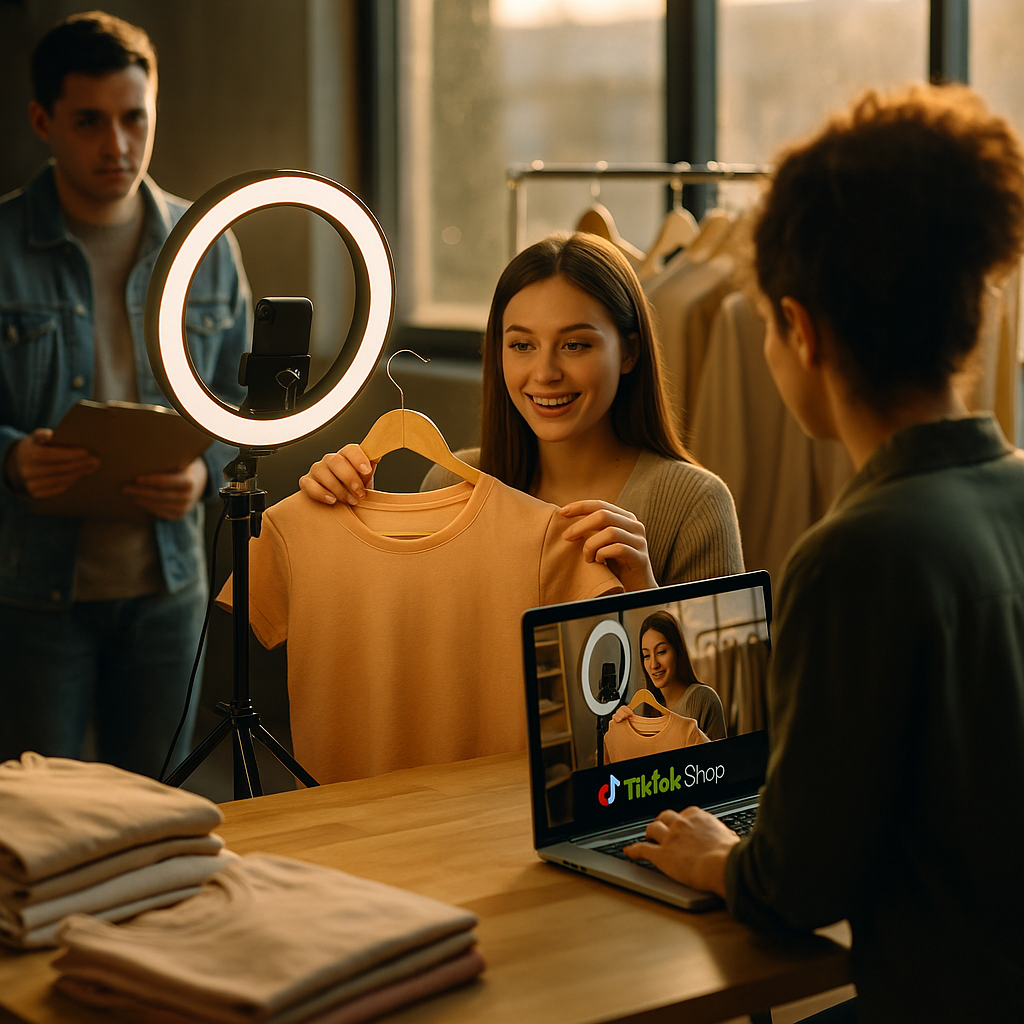
Brands running one livestream a week can get away with a part-time host and a prayer. Brands running twenty hours of live content a day cannot. TikTok Shop’s own seller data has repeatedly shown that accounts streaming daily, with consistent hosts and tight production, outperform sporadic streamers by multiples on GMV per hour. The gap isn’t creative talent. It’s staffing architecture.
Most brands that stall out at “we tried livestream shopping and it didn’t scale” made the same mistake: they treated livestream like a one-off content shoot instead of a media operation. A scaled livestream program needs defined roles, dedicated tooling, and a cadence that survives turnover, burnout, and platform algorithm shifts. Here’s how to build one that doesn’t collapse the moment your best host goes on vacation.
Why Staffing Breaks Before Strategy Does
Ask any brand that’s attempted daily TikTok Shop lives what killed their momentum, and the answer is rarely “the product didn’t sell.” It’s almost always operational: the host burned out, nobody was moderating comments, inventory synced wrong mid-stream, or the one person who understood the affiliate dashboard left the company. Livestream shopping is unforgiving of gaps. A dead air moment or an unanswered comment during a 90-minute session can tank conversion for the rest of the hour.
This is why staffing has to be treated as infrastructure, not a side project for whoever on the social team happens to be comfortable on camera.
A livestream program isn’t a content calendar item, it’s a live broadcast operation with the same failure points as a call center: coverage gaps, tool outages, and untrained backups all show up as lost revenue in real time.
The Core Roles You Actually Need
Scaled programs (meaning more than 10 hours of live content a week) generally need five functional roles. Small teams double up; larger ones split each into specialists.
- Host or talent lead. The on-camera presence. For brand-owned channels this is often a rotating bench of 2-4 hosts so no single person becomes a single point of failure. For affiliate-driven models, this role shifts to creator relationship management instead.
- Producer or stream director. Runs the show behind the scenes: cues the host, manages the product carousel, watches pacing, and reacts to real-time sales data. On longer shows, this person is the difference between a stream that flows and one that visibly stalls.
- Moderator. Monitors chat for questions, complaints, and policy violations. This role also catches early signs of the kind of comment-flagging behavior that can trigger algorithmic demotion if left unaddressed.
- Operations and compliance lead. Owns inventory sync, pricing accuracy, payment flow checks, and disclosure compliance. This is the role most brands underinvest in, and the one the FTC cares about most.
- Analyst. Tracks GMV per hour, viewer retention curves, and affiliate performance across sessions, feeding insights back into scheduling and host rotation.
Note what’s missing from that list: a dedicated “social media manager” title. Livestream commerce roles are closer to broadcast production and retail operations than to traditional content marketing. Hiring managers who try to slot livestream into an existing social media job description usually end up with understaffed, under-skilled teams.
Should You Build In-House or Use a Network?
Not every brand needs to hire a full internal production team. Multi-channel network models, like the one detailed in our MyyShop creator network breakdown, let brands plug into existing host rosters and production infrastructure rather than building from zero. This is often the faster path to volume, though it trades some brand control for speed. The right call depends on whether your priority is owning the audience relationship or simply moving units.
Tools: The Stack That Keeps the Lights On
Staffing without the right tooling just means skilled people doing manual work that software should handle. A functioning scaled livestream stack typically includes:
- TikTok Shop Seller Center for inventory, order management, and live analytics, the system of record for everything happening in the stream.
- Affiliate and creator management tooling to track which creators are driving GMV and at what velocity, which matters enormously once you’re coordinating dozens of affiliates. Our breakdown of the GMV velocity formula is worth reviewing before you set affiliate commission tiers.
- Broadcast production software (OBS Studio or equivalent) for overlays, countdown timers, and multi-camera switching on higher-production shows.
- Scheduling and workforce management tools to coordinate host shifts, producer coverage, and moderator rotation across time zones, especially critical if you’re chasing prime time scheduling windows that don’t align with a standard 9 to 5.
- Payment and compliance monitoring to catch fraud, chargebacks, and policy drift before they become platform penalties. This is non-negotiable; see our payment security checklist for the baseline controls every program needs.
Increasingly, brands are layering AI-assisted creator sourcing into the stack as well, using automated pools to identify and vet affiliate hosts at a speed manual scouting can’t match. Our guide to AI creator pools covers how to evaluate those tools without sacrificing brand safety.
Don’t underestimate the analytics layer here, either. HubSpot’s reporting on commerce funnels and Sprout Social’s social performance benchmarking tools are commonly used by brand teams to contextualize livestream data against broader social performance, even when the actual selling happens on TikTok’s native dashboard.
Cadence: How Often Is Enough?
There’s no universal answer, but the pattern among top-performing TikTok Shop sellers is consistency over intensity. A brand doing three well-staffed, well-promoted 90-minute streams a week during proven high-traffic windows will usually outperform one doing seven understaffed, inconsistent streams. eMarketer data on livestream commerce adoption in the US consistently points to habit formation, viewers returning because they know when their favorite host goes live, as a stronger GMV driver than raw stream volume.
That said, scaled programs (think beauty or apparel brands running near-24/7 coverage) do exist, and they work because they’ve solved the staffing problem, not because more hours inherently sell more product.
Frequency without reliable staffing coverage just multiplies your failure points. Three consistent, fully staffed streams a week will outsell seven chaotic ones almost every time.
A practical cadence model for a mid-size brand scaling up:
- Weeks one through four: Two to three streams weekly, single host rotation, manual moderation. Use this phase to find your best-performing time slots.
- Weeks five through twelve: Expand to five to seven streams weekly once a second host is trained and a dedicated moderator is hired. Introduce affiliate creators to supplement brand-owned streams.
- Beyond month three: Move to near-daily coverage with a producer role formalized, analytics dashboards automated, and a documented runbook so new hires can onboard without shadowing for weeks.
Cross-Platform Lessons Worth Stealing
TikTok Shop isn’t the only place brands are staffing up for live commerce. Amazon’s creator program has its own staffing and budget model worth comparing against, and Twitch’s experiments with non-endemic livestream shopping show how production discipline translates even to platforms with a very different audience expectation. The common thread: every platform that’s succeeded with live commerce has forced brands to professionalize their production operations rather than treat livestream as an improvised extension of social content.
Budgeting for Headcount Without Blowing the Program Up
A reasonable starting budget for a mid-market brand launching a scaled program: one full-time producer, two to three part-time or contract hosts, one dedicated moderator (often outsourced to an agency during ramp-up), and a fractional analyst role shared with the broader e-commerce team. Expect total monthly staffing costs in the range most brands already allocate to a single senior paid media hire, the difference is this spend compounds directly into owned-channel GMV rather than rented ad impressions.
Agencies and creator networks can absorb some of this cost in exchange for commission, which is why so many brands start there before building in-house capacity. Whichever path you choose, document role responsibilities early. Turnover in livestream roles is high (the hours are unusual and the pace is relentless) and a program that depends on tribal knowledge instead of documented process won’t survive its first key departure.
FAQs
Frequently Asked Questions
How many people do I need to run a daily TikTok Shop livestream program?
Most brands running daily coverage need a minimum of five functional roles covered across shifts: host, producer, moderator, operations/compliance lead, and analyst. Small teams double up roles, but each function needs a named owner, not an informal assumption that “someone” will handle it.
Is it better to hire in-house hosts or work with an affiliate network?
It depends on your priority. In-house hosts give you more control over brand voice and consistency, which builds audience habit over time. Affiliate networks, including multi-channel network models, get you to volume faster but with less control over presentation and messaging.
What’s the single biggest staffing mistake brands make with livestream shopping?
Treating it as an extension of an existing social media role instead of a dedicated broadcast operation. Livestream commerce requires real-time production, compliance, and sales monitoring skills that most general social hires don’t have and shouldn’t be expected to improvise.
How does cadence affect staffing needs?
Higher frequency multiplies coverage requirements across every role, not just hosting. A brand moving from three streams a week to daily streams needs a second host rotation, dedicated moderation coverage, and automated analytics well before the frequency increase, not after.
What tools are essential before scaling a livestream program?
At minimum: TikTok Shop Seller Center for inventory and order management, a scheduling tool for shift coverage, broadcast software for production quality, and a payment compliance monitoring process. Affiliate tracking tools become essential once creator-driven streams enter the mix.
Start with a documented role chart and a three-stream-a-week cadence before you chase daily coverage. Scaling staffing ahead of demand is cheaper than rebuilding trust with an audience after a string of understaffed, chaotic streams.
Top Influencer Marketing Agencies
The leading agencies shaping influencer marketing in 2026
Agencies ranked by campaign performance, client diversity, platform expertise, proven ROI, industry recognition, and client satisfaction. Assessed through verified case studies, reviews, and industry consultations.
Moburst

-
2

The Shelf
Boutique Beauty & Lifestyle Influencer AgencyA data-driven boutique agency specializing exclusively in beauty, wellness, and lifestyle influencer campaigns on Instagram and TikTok. Best for brands already focused on the beauty/personal care space that need curated, aesthetic-driven content.Clients: Pepsi, The Honest Company, Hims, Elf Cosmetics, Pure LeafVisit The Shelf → -
3

Audiencly
Niche Gaming & Esports Influencer AgencyA specialized agency focused exclusively on gaming and esports creators on YouTube, Twitch, and TikTok. Ideal if your campaign is 100% gaming-focused — from game launches to hardware and esports events.Clients: Epic Games, NordVPN, Ubisoft, Wargaming, Tencent GamesVisit Audiencly → -
4

Viral Nation
Global Influencer Marketing & Talent AgencyA dual talent management and marketing agency with proprietary brand safety tools and a global creator network spanning nano-influencers to celebrities across all major platforms.Clients: Meta, Activision Blizzard, Energizer, Aston Martin, WalmartVisit Viral Nation → -
5

The Influencer Marketing Factory
TikTok, Instagram & YouTube CampaignsA full-service agency with strong TikTok expertise, offering end-to-end campaign management from influencer discovery through performance reporting with a focus on platform-native content.Clients: Google, Snapchat, Universal Music, Bumble, YelpVisit TIMF → -
6

NeoReach
Enterprise Analytics & Influencer CampaignsAn enterprise-focused agency combining managed campaigns with a powerful self-service data platform for influencer search, audience analytics, and attribution modeling.Clients: Amazon, Airbnb, Netflix, Honda, The New York TimesVisit NeoReach → -
7

Ubiquitous
Creator-First Marketing PlatformA tech-driven platform combining self-service tools with managed campaign options, emphasizing speed and scalability for brands managing multiple influencer relationships.Clients: Lyft, Disney, Target, American Eagle, NetflixVisit Ubiquitous → -
8

Obviously
Scalable Enterprise Influencer CampaignsA tech-enabled agency built for high-volume campaigns, coordinating hundreds of creators simultaneously with end-to-end logistics, content rights management, and product seeding.Clients: Google, Ulta Beauty, Converse, AmazonVisit Obviously →