


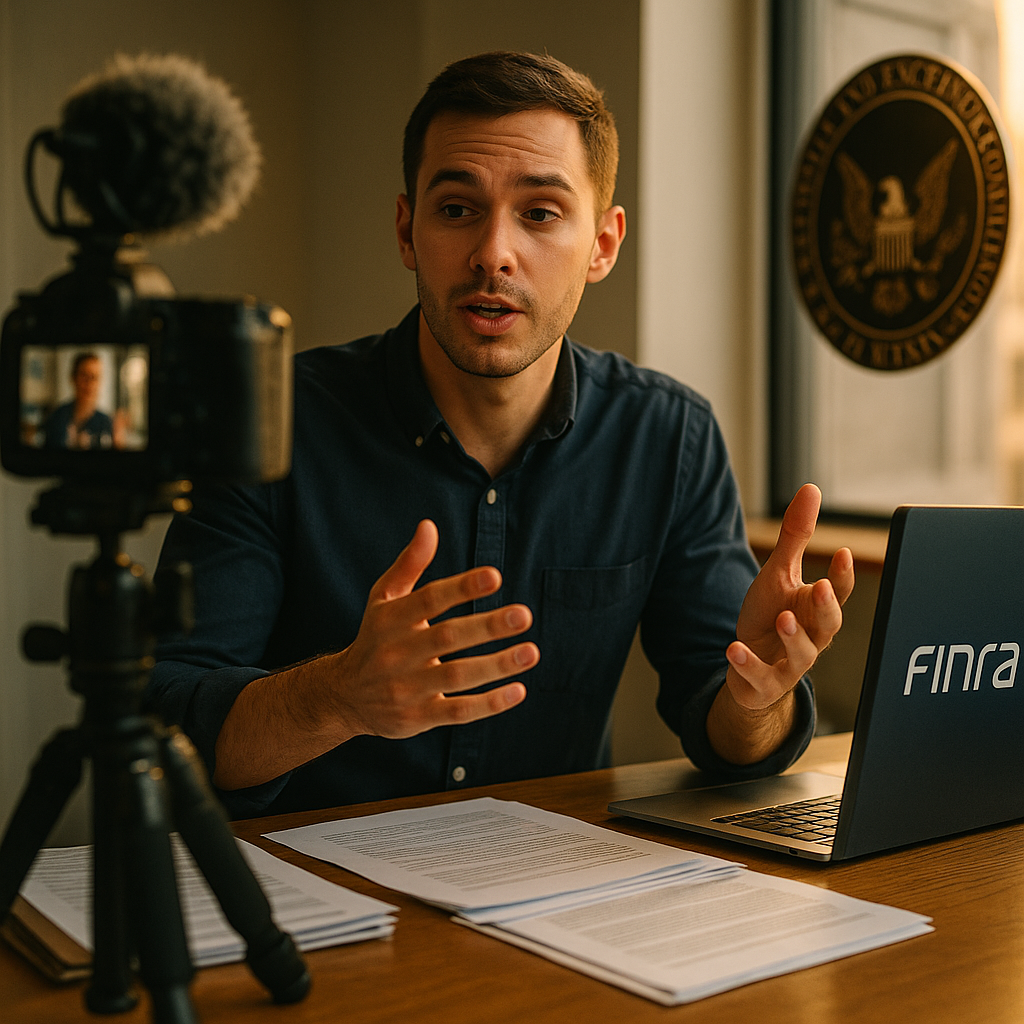
The SEC settled its first finfluencer enforcement action tied to crypto promotion years ago, and the fines have only climbed since. If your brand runs a fintech, investing app, or crowdfunding campaign through creators, “finfluencer” compliance isn’t a legal footnote anymore. It’s the line item that decides whether your next campaign survives regulatory scrutiny or becomes a case study in what not to do.
Why Finance Content Plays by a Different Rulebook
Standard influencer marketing answers to the FTC. Finfluencer marketing answers to the SEC, FINRA, and in many cases state securities regulators simultaneously. That’s three enforcement bodies with overlapping but distinct definitions of what counts as a “recommendation,” a “testimonial,” or an “offer.”
The SEC’s Marketing Rule, which governs how registered investment advisers can use testimonials and endorsements, treats paid creators functionally the same as paid spokespeople in a TV ad. FINRA Rule 2210 adds another layer for broker-dealers, requiring that any communication, including a 30-second TikTok, be fair, balanced, and not misleading. Stack a state blue sky law on top of that, and you’ve got a compliance puzzle most social teams were never trained to solve.
A single non-compliant finfluencer post can trigger liability under three separate regulatory frameworks at once: SEC advertising rules, FINRA communication standards, and FTC disclosure requirements.
What Counts as a “Finfluencer Partnership”?
Brands often assume this only applies to crypto promoters or day-trading personalities. It doesn’t. Any paid or gifted collaboration involving investment products, brokerage platforms, insurance, buy-now-pay-later apps, credit products, or retirement planning tools can trigger SEC or FINRA scrutiny. Even a budgeting app sponsorship that veers into “here’s how I invest” territory can cross the line from lifestyle content into regulated financial advice.
That gray zone is exactly where most brands get burned. A creator posts an authentic, off-script take on a stock they personally hold, your brand’s product gets name-dropped in the same breath, and suddenly your sponsorship looks like an unregistered investment recommendation.
The 2026 Compliance Checklist
Here’s the operational framework we’re seeing compliance-mature brands adopt this year. Treat it as a pre-flight checklist before any finance-adjacent creator deal goes live.
- Verify registration status. If the creator is discussing specific securities performance or giving portfolio advice, confirm whether they need to be a registered investment adviser or associated person. Unregistered advice wrapped in brand sponsorship is a shared liability.
- Document the disclosure language in the contract, not just the brief. Verbal instructions get lost. The contract should specify exact disclosure wording, placement, and timing (first three seconds of video, not buried in a caption).
- Require “fair and balanced” review for FINRA-adjacent content. If a broker-dealer or registered rep is involved, every piece of creator content needs pre-approval through compliance, the same as a traditional ad would.
- Separate testimonial from performance claims. Under the SEC Marketing Rule, a creator can share a personal experience, but cannot imply guaranteed returns or cherry-pick favorable outcomes without context.
- Build a record retention clause. SEC and FINRA both require firms to retain marketing communications, which means your creator content archive needs to survive platform deletions and algorithm resets.
- Audit cross-platform consistency. A compliant disclosure on YouTube doesn’t automatically satisfy requirements on Instagram Reels or TikTok. Review the cross platform disclosure rules before assuming one template covers every channel.
- Confirm state-level securities exposure. Blue sky laws vary, and a campaign running nationally may need state-by-state legal review if it touches investment products.
Contracts Are Your First Line of Defense
Most finfluencer compliance failures aren’t malicious. They’re contractual gaps. The creator didn’t know the rule existed, or the brief never specified it, or the brand assumed the creator’s “usual” disclosure practice was sufficient.
This is where legal and marketing teams need to stop treating creator agreements as boilerplate. Build indemnification language that explicitly addresses regulatory violations, not just generic brand safety issues. Our breakdown of creator indemnification clauses is a useful starting point, even though it’s written for AI liability scenarios; the structural logic (who bears cost when a third-party claim arises from content) applies directly to SEC and FINRA exposure too.
You also need a clawback mechanism. If a post goes live without required disclosure language, or a creator makes an unauthorized performance claim, the brand needs contractual authority to pull the content immediately and recoup fees. Our piece on content clawback provisions walks through how to structure that without triggering a breach dispute.
Where Nano and Micro Creators Add Complexity
Scaling a finfluencer program through nano creators sounds efficient until you realize each one needs individualized compliance review. Unlike a single celebrity spokesperson deal, a 200-creator nano campaign multiplies your disclosure surface area by 200. One missed FINRA-compliant caption template across a cohort can mean 200 separate violations, not one.
This is exactly the scenario covered in our guide to nano creator contracts at scale. The core lesson transfers directly: standardize the legal language, automate the disclosure checks, and don’t rely on individual creators to self-police regulatory nuance they were never trained on.
Enforcement Trends Brands Should Watch
The SEC has been increasingly willing to name both the creator and the issuing company in settlements, which means “the influencer said it, not us” is no longer a viable defense posture. FINRA has similarly expanded guidance on social media use by registered representatives, treating creator collaborations as an extension of firm communications rather than independent third-party speech.
Meanwhile, the FTC continues tightening its own disclosure enforcement in parallel, which compounds the risk. Our coverage of the FTC’s fake ads notice shows how aggressively the agency is pursuing undisclosed sponsorships across categories, finance included. Brands that assume financial content gets a pass because “it’s just an app” are reading the regulatory room wrong.
According to eMarketer, creator-led financial content consumption among adults under 35 continues to outpace traditional financial media, which is precisely why regulators have prioritized this category. Data from Statista shows fintech ad spend through creator channels has grown steadily year over year, meaning the regulatory spotlight is only going to intensify as budgets follow.
Insurance and Risk Transfer
Given the compounding liability (SEC, FINRA, FTC, state regulators), relying solely on contract language is thin protection. More brands running finfluencer programs are now carrying dedicated coverage for regulatory claims tied to creator content. If you haven’t reviewed your policy recently, our explainer on influencer marketing insurance breaks down what a standard general liability policy misses and what riders actually cover regulatory enforcement actions.
For a broader view of how brand compliance teams are structuring ongoing audits across platforms, it’s also worth looking at how other high-scrutiny categories operate. Our review of quarterly compliance audit cadences offers a workable cadence model that finance marketing teams can adapt, even though it was written with TikTok-specific risk in mind.
A Quick Reality Check for Marketing Leads
If you’re running influencer campaigns for a fintech product and your compliance review process looks identical to your lifestyle brand’s process, that’s a red flag. Financial services creator content needs its own approval workflow, its own legal sign-off threshold, and its own escalation path when something goes wrong mid-campaign.
Resources like the FTC’s advertising guidance remain the baseline for disclosure practices, but treat it as a floor, not a ceiling, when securities or broker-dealer products are involved. And don’t assume your platform’s native disclosure tools (branded content labels, paid partnership tags) satisfy SEC or FINRA requirements. They weren’t built for that purpose, and regulators have made clear they won’t accept platform-level tagging as a substitute for substantive compliance review.
Next Step
Pull your current creator contract template and check it against the seven items in the checklist above; if more than two are missing, pause new finfluencer deals until legal closes the gap. The cost of a rewritten contract is nothing compared to the cost of an SEC settlement with your brand name attached.
FAQs
Does the SEC regulate individual influencers or only the brands that pay them?
Both. The SEC has pursued enforcement against individual creators for unregistered promotion and against the companies that paid them, treating the partnership as shared liability rather than isolating fault to one party.
Is FINRA guidance relevant if my brand isn’t a broker-dealer?
If your creator partnerships involve a registered representative, broker-dealer, or FINRA member firm promoting your product, their social media activity falls under FINRA Rule 2210, even if your brand itself isn’t a regulated entity.
Can a creator just add a disclaimer like “not financial advice” to stay compliant?
No. A generic disclaimer doesn’t satisfy SEC or FINRA requirements if the content otherwise functions as a recommendation or testimonial. Regulators look at substance over a boilerplate phrase.
How is finfluencer compliance different from standard FTC influencer disclosure?
FTC rules focus on disclosing material connections between brands and creators. SEC and FINRA rules go further, governing the actual content of financial claims, testimonial fairness, and recordkeeping, stacking additional requirements on top of basic disclosure.
What’s the biggest compliance mistake brands make with finfluencer campaigns?
Treating finance-adjacent content like standard lifestyle sponsorships. Skipping legal review of the actual script or caption language is the most common gap that leads to enforcement exposure.
Top Influencer Marketing Agencies
The leading agencies shaping influencer marketing in 2026
Agencies ranked by campaign performance, client diversity, platform expertise, proven ROI, industry recognition, and client satisfaction. Assessed through verified case studies, reviews, and industry consultations.
Moburst

-
2

The Shelf
Boutique Beauty & Lifestyle Influencer AgencyA data-driven boutique agency specializing exclusively in beauty, wellness, and lifestyle influencer campaigns on Instagram and TikTok. Best for brands already focused on the beauty/personal care space that need curated, aesthetic-driven content.Clients: Pepsi, The Honest Company, Hims, Elf Cosmetics, Pure LeafVisit The Shelf → -
3

Audiencly
Niche Gaming & Esports Influencer AgencyA specialized agency focused exclusively on gaming and esports creators on YouTube, Twitch, and TikTok. Ideal if your campaign is 100% gaming-focused — from game launches to hardware and esports events.Clients: Epic Games, NordVPN, Ubisoft, Wargaming, Tencent GamesVisit Audiencly → -
4

Viral Nation
Global Influencer Marketing & Talent AgencyA dual talent management and marketing agency with proprietary brand safety tools and a global creator network spanning nano-influencers to celebrities across all major platforms.Clients: Meta, Activision Blizzard, Energizer, Aston Martin, WalmartVisit Viral Nation → -
5

The Influencer Marketing Factory
TikTok, Instagram & YouTube CampaignsA full-service agency with strong TikTok expertise, offering end-to-end campaign management from influencer discovery through performance reporting with a focus on platform-native content.Clients: Google, Snapchat, Universal Music, Bumble, YelpVisit TIMF → -
6

NeoReach
Enterprise Analytics & Influencer CampaignsAn enterprise-focused agency combining managed campaigns with a powerful self-service data platform for influencer search, audience analytics, and attribution modeling.Clients: Amazon, Airbnb, Netflix, Honda, The New York TimesVisit NeoReach → -
7

Ubiquitous
Creator-First Marketing PlatformA tech-driven platform combining self-service tools with managed campaign options, emphasizing speed and scalability for brands managing multiple influencer relationships.Clients: Lyft, Disney, Target, American Eagle, NetflixVisit Ubiquitous → -
8

Obviously
Scalable Enterprise Influencer CampaignsA tech-enabled agency built for high-volume campaigns, coordinating hundreds of creators simultaneously with end-to-end logistics, content rights management, and product seeding.Clients: Google, Ulta Beauty, Converse, AmazonVisit Obviously →