


Gartner says 75% of B2B buyers now prefer a rep free experience, and generative AI just gave them the tools to pull it off. Chatbots summarize analyst reports, AI search engines rank vendor comparisons, and creator content gets scraped into answers before a prospect ever fills out a form. If your sales content still assumes a human will close the gap, you’re building for a buyer who no longer exists.
The New Buying Committee Never Calls a Rep
Picture a procurement lead evaluating marketing automation platforms. She doesn’t request a demo first. She asks an AI assistant to compare three vendors, pulls up a LinkedIn creator’s breakdown of implementation headaches, skims a Reddit thread, and checks pricing on G2. By the time a sales rep gets a call, she’s already narrowed the field to one.
This isn’t a hypothetical. It’s the default path for most considered B2B purchases today. Generative AI tools compress research time, and buyers are using that saved time to avoid sales conversations entirely, not to schedule more of them.
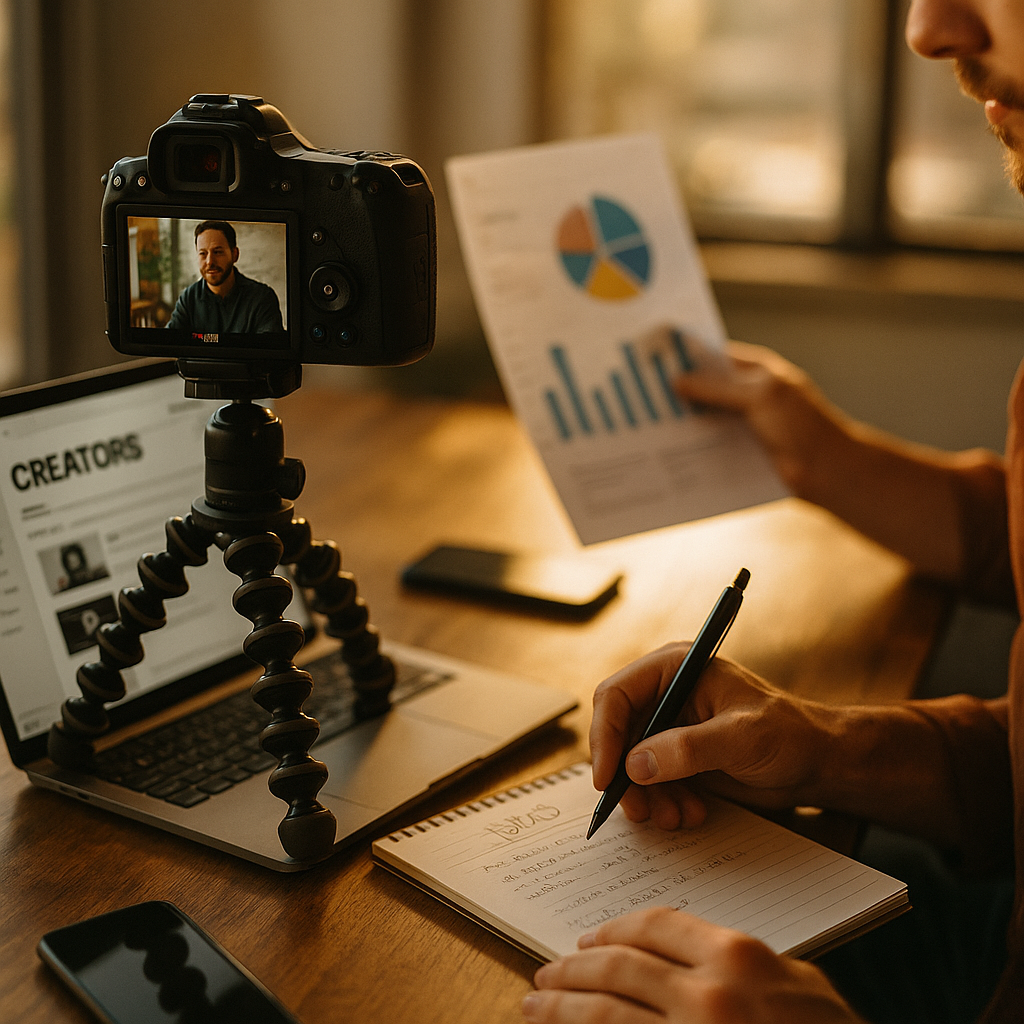
That shift puts enormous pressure on the content that exists before the funnel narrows. Creator led explainer videos, comparison carousels, and founder-voice LinkedIn posts aren’t nice-to-have anymore. They’re the sales conversation, just happening without a salesperson in the room.
If a buyer can get 80% of the way to a decision without talking to anyone, your creator content is doing the job your SDR team used to do, whether you’ve budgeted for that or not.
Why Generative AI Changes the Creator Brief
B2B creator content used to mimic case studies with better lighting. That playbook is dying fast. AI assistants don’t reward polish, they reward specificity, structure, and citable claims. A creator who says “this tool saved us 12 hours a week on reporting” gets pulled into an AI summary. A creator who says “this tool is great for your workflow” does not.
Brands that have already connected creator content to this dynamic have noticed something: unpaid mentions often carry more weight in AI-generated answers than paid placements, because large language models weight perceived independence heavily. That’s uncomfortable for a category built on sponsored posts, but it’s the reality teams need to plan around.
Practically, this means briefs need to change. Less “mention these three features,” more “explain the specific problem this solved and use real numbers.” Creators who can speak like practitioners, not spokespeople, are the ones AI systems and human buyers both trust.
What Buyers Actually Pull From AI Tools
- Side-by-side feature and pricing comparisons sourced from creator reviews and forums
- Implementation horror stories and workarounds, often from niche B2B creators
- Summarized sentiment from LinkedIn threads and YouTube walkthroughs
- Direct quotes pulled from earned coverage, not brand-published content
Notice what’s missing: traditional sales decks and polished brand videos. They’re simply not structured in a way AI tools can extract and cite cleanly.
The Attribution Problem Just Got Harder
Here’s the uncomfortable part. If a buyer never clicks through, never fills a form, and never talks to a rep until the final stage, how do you prove the creator content worked? This is the same attribution breakdown already reshaping SEO, where zero click AI answers are forcing marketing teams to rebuild how they measure influence.
For B2B specifically, the stakes are higher because sales cycles are longer and deal sizes bigger. A single enterprise contract might involve six people, each consuming different creator content over four months, with no single touchpoint you can point to in a CRM report.
Teams that are solving this are leaning on brand lift surveys, self-reported attribution (“how did you hear about us” fields with open text, not dropdowns), and directional signals like branded search volume spikes after a creator campaign runs. None of it is perfect. All of it beats pretending last-click still means something.
In a rep free buying motion, the last touch you can measure is rarely the thing that actually moved the deal. Plan your reporting around influence, not just clicks.
Budget Is Already Moving, Quietly
This isn’t theoretical for finance teams anymore. B2B influencer marketing has graduated from pilot budgets to a real demand engine line item at a growing number of mid-market and enterprise companies. That graduation is happening precisely because rep-dependent pipelines are shrinking and something has to fill the gap earlier in the funnel.
At the same time, CMOs are under pressure to justify every dollar spent on AI-adjacent tools and content. Recent data shows fewer than 10% of CMOs can prove real ROI from their AI investments, which makes this a risky moment to ask for more creator budget without a measurement plan already attached.
The smart move is pairing the budget request with the attribution framework in the same pitch. Don’t ask leadership to trust that rep free content works. Show them the search lift, the AI citation tracking, the sentiment shift, even if it’s imperfect.
Agentic Tools Are Starting to Do the Vetting
There’s a second layer to this shift that most B2B marketing teams haven’t fully absorbed yet. It’s not just buyers using AI to research vendors, it’s agentic tools starting to shortlist vendors on a buyer’s behalf, sometimes with minimal human review. Adoption of agentic marketing tools is growing at nearly 20% year over year, and that growth cuts both ways. These tools can surface your brand to in-market buyers, or filter you out before a human ever sees your name, based entirely on how well-structured and citable your existing content is.
This raises the stakes on content hygiene. Vague claims, missing data points, and gated whitepapers that AI crawlers can’t parse are now a competitive disadvantage, not just a UX annoyance. If your best proof points live behind a form, an agentic research tool may simply skip you in favor of a competitor whose case study is fully indexable.
Building a Rep Free Content Engine
None of this means abandoning sales reps. It means front-loading the work they used to do manually into content that AI systems and self-serve buyers can find on their own. A few operational shifts that actually move the needle:
- Brief creators like analysts, not spokespeople. Ask for specific numbers, named use cases, and honest limitations. Sanitized enthusiasm doesn’t get cited by AI tools or trusted by skeptical buyers.
- Publish comparison content yourself. If you don’t produce the honest “us vs. them” breakdown, a third-party creator or a competitor will, and you lose control of the framing entirely.
- Track AI citations alongside search rankings. Tools that monitor brand mentions in AI-generated answers are becoming as important as traditional rank trackers.
- Align PR and content teams. Earned coverage is increasingly what AI models cite, which is why PR and SEO functions are merging inside forward-thinking marketing orgs.
- Build connective content, not one-off assets. Buyers piece together a decision across multiple touchpoints, so your creator content needs to function as a connected narrative rather than isolated posts. This is the thinking behind connective tissue marketing, which treats creator output as pipeline infrastructure rather than a one-off awareness play.
None of this is revolutionary on its own. What’s new is the urgency. Six months ago, these were “nice to have” optimizations. Now they’re the difference between showing up in a buyer’s AI-assisted shortlist and not existing in their decision process at all.
What Sales Teams Should Stop Doing
If buyers are arriving pre-decided, reps need to stop treating every call as a discovery exercise. Pushing a generic deck on someone who’s already read six comparison posts and watched two creator walkthroughs is a fast way to lose credibility. Reps need briefing documents on what content the buyer likely already consumed, so the live conversation picks up where the AI research left off instead of repeating it.
Sales enablement teams should treat top-of-funnel creator content as required reading, not marketing’s separate project. The handoff between marketing-produced, AI-citable content and the sales conversation is where most rep free strategies currently break down.
FAQs
Frequently Asked Questions
What does “rep free B2B buyer” actually mean?
It describes buyers who complete most or all of their vendor research and shortlisting using AI tools, creator content, and peer reviews before ever speaking with a sales representative. The rep’s role shifts from educating to confirming a decision that’s already largely made.
How is generative AI changing B2B sales content strategy?
Generative AI tools summarize and cite content based on specificity and perceived independence, which means brand-published sales collateral often gets passed over in favor of creator-produced reviews, comparisons, and practitioner commentary that AI systems can extract cleanly.
Can you still measure ROI on creator content if buyers never click through?
Not with last-click attribution alone. Teams are supplementing with branded search lift, AI citation tracking, open-text “how did you hear about us” fields, and brand lift surveys to approximate influence that doesn’t show up in a CRM as a tracked touchpoint.
Should B2B brands stop producing gated content like whitepapers?
Not entirely, but gated content is invisible to AI crawlers and agentic research tools, so brands should pair gated assets with an ungated version or summary that AI systems can index and cite.
What’s the biggest mistake brands make with creator led sales content?
Briefing creators to sound like brand spokespeople instead of practitioners. Vague enthusiasm doesn’t get cited by AI tools and doesn’t build trust with buyers who are actively comparing specific claims across multiple sources.
Next step: Audit your three highest-traffic sales content assets this quarter. If none of them would survive being summarized by an AI tool with specific numbers and named use cases intact, that’s your starting point, not your creator budget.
Top Influencer Marketing Agencies
The leading agencies shaping influencer marketing in 2026
Agencies ranked by campaign performance, client diversity, platform expertise, proven ROI, industry recognition, and client satisfaction. Assessed through verified case studies, reviews, and industry consultations.
Moburst

-
2

The Shelf
Boutique Beauty & Lifestyle Influencer AgencyA data-driven boutique agency specializing exclusively in beauty, wellness, and lifestyle influencer campaigns on Instagram and TikTok. Best for brands already focused on the beauty/personal care space that need curated, aesthetic-driven content.Clients: Pepsi, The Honest Company, Hims, Elf Cosmetics, Pure LeafVisit The Shelf → -
3

Audiencly
Niche Gaming & Esports Influencer AgencyA specialized agency focused exclusively on gaming and esports creators on YouTube, Twitch, and TikTok. Ideal if your campaign is 100% gaming-focused — from game launches to hardware and esports events.Clients: Epic Games, NordVPN, Ubisoft, Wargaming, Tencent GamesVisit Audiencly → -
4

Viral Nation
Global Influencer Marketing & Talent AgencyA dual talent management and marketing agency with proprietary brand safety tools and a global creator network spanning nano-influencers to celebrities across all major platforms.Clients: Meta, Activision Blizzard, Energizer, Aston Martin, WalmartVisit Viral Nation → -
5

The Influencer Marketing Factory
TikTok, Instagram & YouTube CampaignsA full-service agency with strong TikTok expertise, offering end-to-end campaign management from influencer discovery through performance reporting with a focus on platform-native content.Clients: Google, Snapchat, Universal Music, Bumble, YelpVisit TIMF → -
6

NeoReach
Enterprise Analytics & Influencer CampaignsAn enterprise-focused agency combining managed campaigns with a powerful self-service data platform for influencer search, audience analytics, and attribution modeling.Clients: Amazon, Airbnb, Netflix, Honda, The New York TimesVisit NeoReach → -
7

Ubiquitous
Creator-First Marketing PlatformA tech-driven platform combining self-service tools with managed campaign options, emphasizing speed and scalability for brands managing multiple influencer relationships.Clients: Lyft, Disney, Target, American Eagle, NetflixVisit Ubiquitous → -
8

Obviously
Scalable Enterprise Influencer CampaignsA tech-enabled agency built for high-volume campaigns, coordinating hundreds of creators simultaneously with end-to-end logistics, content rights management, and product seeding.Clients: Google, Ulta Beauty, Converse, AmazonVisit Obviously →