


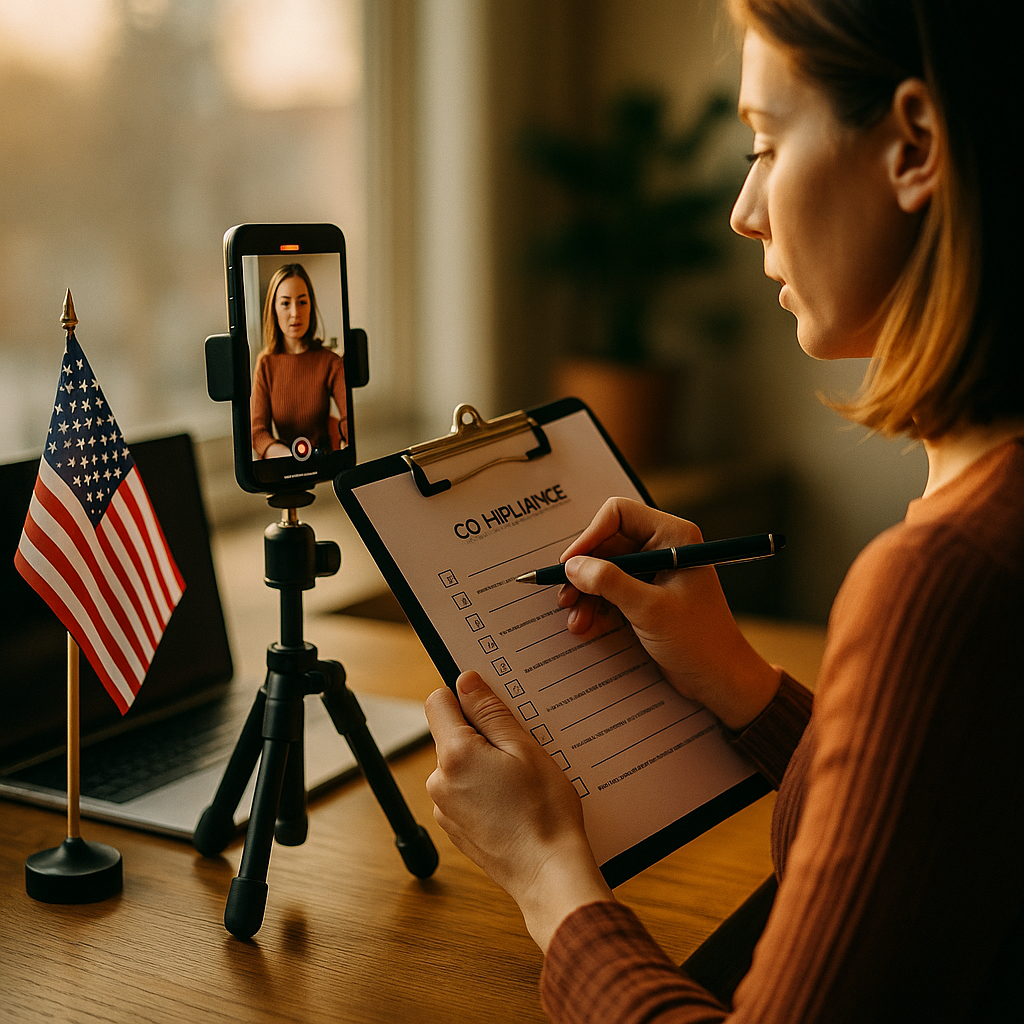
One whitelisted nano creator post, scaled into a six-figure national ad buy, can unravel an entire campaign if a single disclosure or rights clause was missed. That’s not a hypothetical. It’s the reality facing brands that built a compliance checklist for scaling nano creator content as an afterthought instead of a prerequisite. Nano creators are cheap, authentic, and everywhere. But the jump from organic post to paid national media is where legal exposure multiplies fast.
Marketers love nano creators for the same reasons regulators and legal teams get nervous about them. Low cost, high trust, minimal oversight at the contract stage. Fine for a single sponsored post reaching 8,000 followers. Not fine once that same asset gets whitelisted, geo-targeted, and pushed through paid social or connected TV to millions of households. The rules don’t change because the budget got bigger, but the stakes absolutely do.
Why Nano Content Breaks Under National Scale
Most nano creator agreements are built for organic reach. They’re short, informal, and rarely anticipate the content living anywhere beyond the creator’s own handle. That’s the root problem. A contract that never mentions paid media usage, geographic scope, or usage duration becomes a liability the moment someone in performance marketing decides “this post is converting, let’s put spend behind it.”
Scaling decisions usually happen fast, often without legal in the room. A creative team sees strong engagement, pulls the asset into Meta Ads Manager or TikTok’s ad platform, and launches a national flight before anyone checks whether the original agreement even permitted paid amplification. According to eMarketer, influencer-sourced content now accounts for a growing share of paid social creative, which means this gap is widening, not shrinking.
A nano creator agreement without a paid media clause isn’t a cost saving. It’s a deferred legal bill waiting for the moment your performance team hits “boost.”
The Compliance Checklist: Six Gates Before You Scale
Treat scaling as a gated process, not a single approval. Each gate below should have a named owner and a documented sign off before content moves to national buy status.
- Usage rights scope and duration. Confirm the original agreement explicitly grants paid media usage, not just organic repost rights. Check the geographic scope (local, regional, national, international) and the expiration date. A six-month license quietly expiring mid-flight is one of the most common and preventable failures, as covered in our breakdown of whitelisted ad usage expiration risk.
- FTC disclosure compliance at scale. A disclosure that reads fine on a creator’s personal feed may get buried or stripped when the asset is reformatted for a 15-second CTV spot or a carousel ad. The FTC’s endorsement guidelines apply regardless of who’s paying for the media placement, and the agency has made clear that platform defaults (like a generic “paid partnership” tag) aren’t always sufficient. Review the FTC’s endorsement guide before every national push, and see our deeper look at FTC disclosure gaps in AI-matched creator content.
- Creator classification and contractor status. Nano creators are frequently treated as informal collaborators rather than properly classified contractors. Once you’re running their likeness and voice through a national paid campaign, misclassification risk escalates with the dollar amount at stake. Our contractor classification guide walks through the specific triggers.
- Audience verification. National buys amplify whatever audience quality issues already existed. A nano creator with 15% bot followers doesn’t matter much on an organic post. It matters enormously when you’re paying to put their content in front of a lookalike audience built partly from fake engagement signals. Run audience verification before scaling, not after, using the framework in our piece on fake follower liability.
- Morality and brand safety clauses. A creator who’s fine for a one-off nano deal can become a serious brand safety liability once their face is attached to a national campaign with real media weight behind it. Make sure your morality clause actually triggers a takedown, not just a payment pause. See what makes morality clauses enforceable.
- Tax and cross-border payout compliance. National campaigns often pull in creators across multiple states or countries to hit regional targeting goals. That introduces withholding and invoicing complexity that a single-market nano deal never had to deal with. Review cross-border payout rules before finalizing your scaled creator roster.
Where Legal Teams Actually Get Blindsided
It’s rarely the big, obvious risks that cause problems. It’s the procedural gaps. A media buyer assumes legal already cleared the asset because it performed well organically. Legal assumes the media buyer flagged it for review because the spend crossed a threshold. Nobody actually owns the handoff.
This is especially acute in regulated categories. Financial services and healthcare brands face an extra layer of scrutiny when nano content scales into paid media, because disclosure standards that apply to broadcast and national advertising are stricter than what’s typically required for organic social. If you’re in BFSI, the sign off process needs to be formalized well before the first dollar of paid spend touches the content. Our BFSI sign off framework and legal review speed guide both address this directly.
There’s also a broadcast-specific wrinkle worth flagging. If the national buy includes connected TV or linear placements, disclosure standards diverge from social media norms in ways that trip up teams who’ve only ever managed Instagram or TikTok compliance. Check the differences outlined in broadcast versus social disclosure standards before your media plan locks.
Build the Checklist Into Your Workflow, Not Into a PDF
A compliance checklist that lives in a shared drive nobody opens is worthless. The brands doing this well build the gates into their actual production and media workflow, usually through a combination of contract management software, a rights database, and a mandatory legal checkpoint tied to spend thresholds.
A reasonable structure looks like this: any creator asset under consideration for paid amplification beyond $5,000 in spend (adjust the number to your risk tolerance) automatically routes to a compliance queue. That queue checks usage rights expiration, disclosure format, creator classification status, and audience authenticity before the media buy is approved. No queue, no spend. It sounds bureaucratic. It’s a lot less bureaucratic than a cease and desist letter mid-flight.
The fastest way to kill a national campaign isn’t poor creative performance. It’s a takedown notice arriving three weeks into the flight because nobody checked the usage license expiration date.
Tools matter here too. Platforms like Meta Business Suite and TikTok Ads Manager now offer some native whitelisting and usage controls, but they don’t replace a contract review. They flag that a creator authorized paid use, not whether the authorization covers the specific geography, duration, or format you’re planning to run. Treat platform tools as a secondary check, never the primary one.
Repurposing is its own trap. Even if the original agreement covered paid media generally, reformatting the asset (cropping for a new aspect ratio, adding new copy, translating for a different market) can trigger a fresh rights question depending on how the original contract was worded. Our guide on asset repurposing rules covers the specific contract language to look for before your creative team starts editing nano content for national formats.
What “Done Right” Actually Looks Like
Mature programs treat the nano-to-national pipeline as a funnel with checkpoints, not a single yes/no decision. Content gets flagged for scaling potential early, often at the organic performance review stage. That triggers an immediate rights and disclosure audit, well before the media plan is finalized. By the time a creative director is requesting a national flight, legal has already cleared the asset or flagged exactly what needs to be renegotiated.
This also means budgeting for renegotiation. Nano creator rates were set assuming organic-only reach. Scaling into national paid media is a materially different value exchange, and creators (or their reps, increasingly) know it. Build renegotiation time and cost into your scaling timeline rather than discovering it two weeks before launch when the creator’s team asks for a new rate to cover expanded usage.
Tracking and attribution compliance deserves a mention too. If the scaled campaign includes promo codes or affiliate links, make sure the tracking mechanism itself is compliant with privacy regulations in every market you’re targeting nationally. Our piece on promo code tracking and privacy compliance is a useful companion check if your national buy relies on code-based attribution.
For teams managing high volumes of nano creators simultaneously, resources like Sprout Social and HubSpot offer workflow and CRM tooling that can be adapted to track contract status, rights expiration, and disclosure compliance at scale, though neither replaces a dedicated legal review for high-spend campaigns.
Frequently Asked Questions
FAQs
What’s the biggest compliance risk when scaling nano creator content into paid national ads?
Usage rights gaps are the most common failure point. Most nano creator agreements are written for organic posting only and never explicitly grant paid media usage, geographic scope, or a usage duration, which creates exposure the moment the content gets whitelisted into a national ad buy.
Do FTC disclosure rules change when content moves from organic to paid media?
The underlying rules don’t change, but enforcement risk goes up significantly. A disclosure that was adequate on an organic post can get cropped out, buried, or stripped when the asset is reformatted for a paid ad unit, so every scaled asset needs a fresh disclosure check against current FTC endorsement guidelines.
How do I verify a nano creator’s audience before scaling their content nationally?
Run a third-party audience verification check for bot followers, engagement pod activity, and geographic authenticity before approving the asset for paid amplification. Audience quality issues that are negligible at organic reach become expensive once you’re paying to put that content in front of a national lookalike audience.
Should nano creators be renegotiated when their content scales to national paid media?
Yes. Nano creator rates are typically set for organic-only reach, and moving into a national paid buy is a materially different value exchange. Build renegotiation time and budget into your scaling timeline rather than treating the original rate as fixed.
What’s the single most overlooked clause in nano creator contracts?
Usage rights expiration dates. Many agreements grant paid media rights for a fixed window (often three to six months), and brands frequently discover the license has lapsed mid-campaign, forcing an emergency renegotiation or a creative pull mid-flight.
FAQ Schema
Build the six-gate checklist into your media workflow this quarter, assign a named owner to each gate, and refuse to let any asset reach national spend without a documented sign off. The brands getting burned right now aren’t the ones without a checklist. They’re the ones with a checklist nobody actually enforces.
Top Influencer Marketing Agencies
The leading agencies shaping influencer marketing in 2026
Agencies ranked by campaign performance, client diversity, platform expertise, proven ROI, industry recognition, and client satisfaction. Assessed through verified case studies, reviews, and industry consultations.
Moburst

-
2

The Shelf
Boutique Beauty & Lifestyle Influencer AgencyA data-driven boutique agency specializing exclusively in beauty, wellness, and lifestyle influencer campaigns on Instagram and TikTok. Best for brands already focused on the beauty/personal care space that need curated, aesthetic-driven content.Clients: Pepsi, The Honest Company, Hims, Elf Cosmetics, Pure LeafVisit The Shelf → -
3

Audiencly
Niche Gaming & Esports Influencer AgencyA specialized agency focused exclusively on gaming and esports creators on YouTube, Twitch, and TikTok. Ideal if your campaign is 100% gaming-focused — from game launches to hardware and esports events.Clients: Epic Games, NordVPN, Ubisoft, Wargaming, Tencent GamesVisit Audiencly → -
4

Viral Nation
Global Influencer Marketing & Talent AgencyA dual talent management and marketing agency with proprietary brand safety tools and a global creator network spanning nano-influencers to celebrities across all major platforms.Clients: Meta, Activision Blizzard, Energizer, Aston Martin, WalmartVisit Viral Nation → -
5

The Influencer Marketing Factory
TikTok, Instagram & YouTube CampaignsA full-service agency with strong TikTok expertise, offering end-to-end campaign management from influencer discovery through performance reporting with a focus on platform-native content.Clients: Google, Snapchat, Universal Music, Bumble, YelpVisit TIMF → -
6

NeoReach
Enterprise Analytics & Influencer CampaignsAn enterprise-focused agency combining managed campaigns with a powerful self-service data platform for influencer search, audience analytics, and attribution modeling.Clients: Amazon, Airbnb, Netflix, Honda, The New York TimesVisit NeoReach → -
7

Ubiquitous
Creator-First Marketing PlatformA tech-driven platform combining self-service tools with managed campaign options, emphasizing speed and scalability for brands managing multiple influencer relationships.Clients: Lyft, Disney, Target, American Eagle, NetflixVisit Ubiquitous → -
8

Obviously
Scalable Enterprise Influencer CampaignsA tech-enabled agency built for high-volume campaigns, coordinating hundreds of creators simultaneously with end-to-end logistics, content rights management, and product seeding.Clients: Google, Ulta Beauty, Converse, AmazonVisit Obviously →