


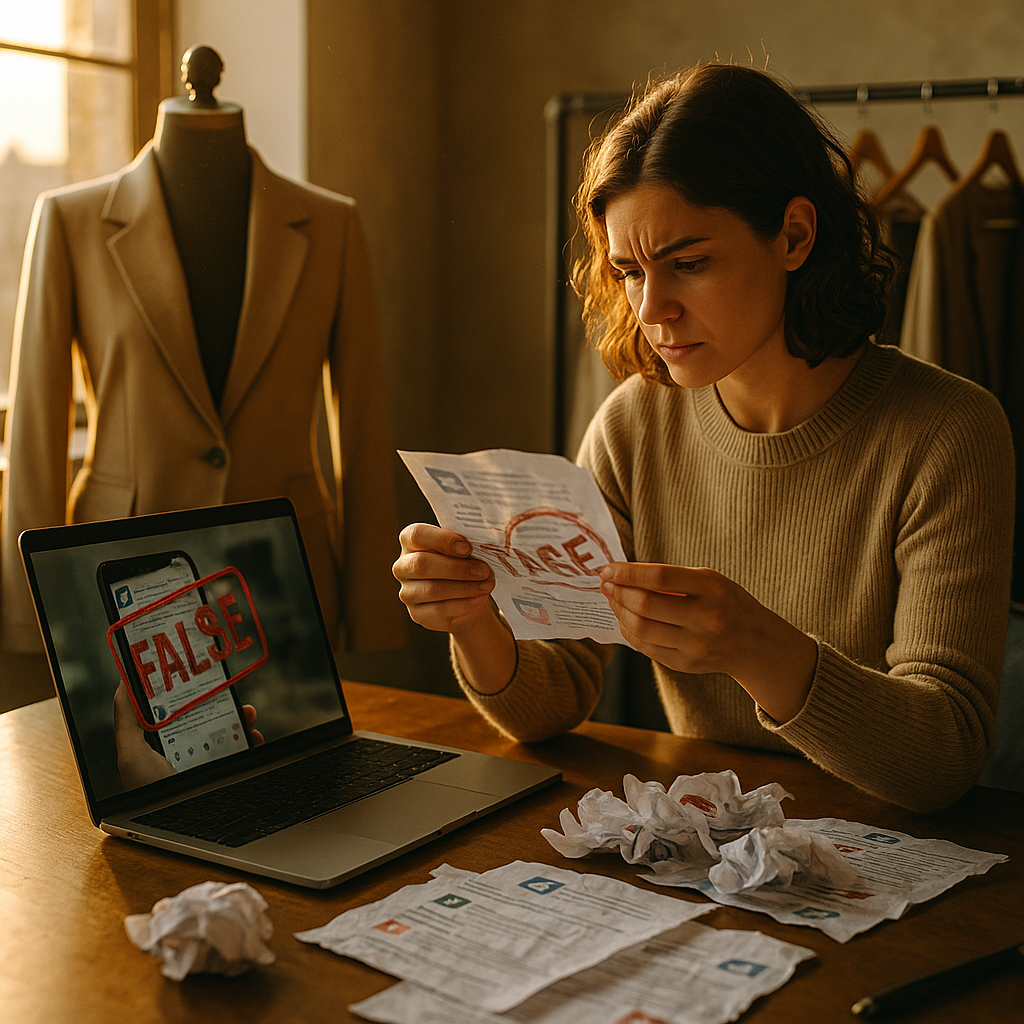
In 2025, a single false claim can outrun facts in minutes, especially when visuals and outrage drive sharing. This case study on a viral misinformation crisis shows how one mid-sized fashion label protected trust, stabilized sales, and improved its communications under pressure. The playbook combines rapid verification, transparent updates, and disciplined social responses. What happens when the rumor seems “too true”?
Rapid response strategy for a viral misinformation crisis
The fashion label in this case sells premium streetwear through its own e-commerce site and a handful of retail partners. It had a strong community presence, steady influencer relationships, and a modest PR team. Then a short video began trending on social platforms, claiming the brand used unsafe dyes and “hid test results.” The clip included a cropped screenshot of a lab report and a factory image that looked plausible.
Within four hours, the rumor had spread to comment sections on the brand’s ads and product pages. Customer support saw a spike in tickets asking for proof of safety. A retailer asked whether it should pull stock “until this is sorted.” The brand’s first decision set the tone: it treated the situation as an information integrity emergency, not a PR drama.
Actions taken in the first 12 hours
- Activated a cross-functional “truth team” including legal, quality assurance (QA), customer support, social, and executive leadership, with one incident lead.
- Paused scheduled content (including paid social) to prevent comments from piling up under promotional posts.
- Established a single source of truth on the website with a short holding statement, a timeline of updates, and a promise of evidence-backed answers.
- Mapped the claim: what was being alleged, what “proof” was circulating, and which audiences were amplifying it.
- Set response standards: no speculation, no personal attacks, no “we’ll sue you” language, and no jargon that could be misread.
Two choices were especially effective. First, leadership approved an “answer before perfect” approach: publish what is known, what is being verified, and when the next update will arrive. Second, QA led the verification work, while PR focused on clarity and distribution. That division kept the content accurate and helped the brand avoid walking back statements later.
Brand reputation management amid misinformation
The brand’s risk wasn’t only reputational. The allegation implied a safety issue, which could trigger payment processor concerns, retailer pressure, and a drop in conversion rates. The label created a structured response plan focused on trust signals customers actually use when deciding whether to buy.
What the brand communicated (and how)
- Clear claim-by-claim rebuttal in plain language: what the rumor says, what is true, and what evidence supports the truth.
- Evidence attachments: full lab certificates, relevant pages highlighted, and an explanation of what each test measures.
- Manufacturing transparency: which facilities produce which product lines and what compliance standards they follow.
- Customer-facing summary: a short “safety and materials” overview for casual readers, plus a deeper “documentation” page for skeptics.
Importantly, the brand acknowledged uncertainty where it existed. The viral clip referenced a report that appeared real, so the brand stated it was verifying whether the screenshot had been altered and whether any supplier documentation had been misrepresented. That honest framing prevented the “they’re denying it” perception that often intensifies online backlash.
Reputation stabilizers that worked
- Human spokesperson: the Head of Quality recorded a short video explaining testing procedures, not a polished brand montage.
- Consistent language: the same phrasing across social posts, support macros, and the website reduced contradictions.
- Retailer toolkit: a one-page FAQ, a buyer briefing call, and a printable statement retailers could use in-store.
The brand also monitored sentiment and search behavior. When “brand name unsafe dye” started appearing in autocomplete and “related searches,” it treated that as a discoverability problem, not only a social media issue. The response content was optimized to rank for those queries, so customers searching the rumor could quickly find the brand’s evidence and updates.
Social media crisis communication for fashion brands
The rumor spread fastest on short-form video and repost accounts that thrive on controversy. The label avoided trying to “win” the algorithm. Instead, it aimed to reduce confusion, meet customers where they were, and keep the conversation tethered to verifiable facts.
Channel-by-channel approach
- Short-form video platforms: posted a concise video with three points: the claim, the evidence, and where to read the full documentation.
- Instagram and community channels: pinned an update post, replied to high-visibility comments with a link to the evidence page, and moved complex questions into DMs or email.
- X-style rapid threads: published time-stamped updates as new verification steps completed, keeping each update scannable.
- Email and SMS: sent a calm message to subscribers with the facts, the link to documentation, and a customer support contact option.
Comment moderation rules were tightened without silencing good-faith critique. The brand removed only content that included harassment, doxxing, or spam. Everything else stayed, and the team responded selectively to reduce amplification. This balanced approach signaled confidence and prevented accusations of “cover-up.”
The label also addressed a predictable follow-up question: “Why not sue?” The brand explained that legal steps can be slow and may not correct misinformation quickly. It would prioritize rapid factual correction, platform reporting for manipulated media, and documentation transparency. This helped audiences understand why the response was practical rather than performative.
Fact-checking and digital forensics in misinformation response
To avoid building its case on assumptions, the label treated the viral content like a forensic problem. QA and legal worked with an external testing lab and a digital forensics consultant. That outside expertise strengthened credibility and supported Google’s EEAT expectations: demonstrate experience, show expertise, and make claims verifiable.
How the claim was investigated
- Document authentication: compared the screenshot to the brand’s archived certificates and requested confirmation directly from the lab named in the clip.
- Image provenance checks: reverse image searched the factory photo and found it was taken from an unrelated supplier directory listing.
- Metadata and editing indicators: the consultant identified likely cropping and annotation layers consistent with manipulation.
- Supply chain audit spot-check: verified batch records for the referenced product run and confirmed compliance testing matched internal policy.
The label published what it could responsibly share: confirmation from the lab that the screenshot did not match an issued report, plus updated test results for the product line in question. Where it couldn’t share details (for example, proprietary supplier identifiers), it explained the limitation and offered a path for verification, such as retailer-facing documentation under NDA and direct lab confirmation contacts.
Key lesson: audiences trust processes as much as outcomes. The brand didn’t just say “this is false.” It showed how it checked, who verified, and what would change if new evidence emerged.
Customer trust recovery and brand transparency
After the initial wave, the brand shifted from defense to rebuilding. It assumed some customers would remain unsure, so it made trust easier to regain through actions that reduced perceived risk.
Trust recovery measures
- Expanded materials and safety page with a simple glossary (what “azo dyes,” “REACH,” and “restricted substances list” mean in practical terms).
- Proactive customer support: added a dedicated category in the help center and trained agents on evidence-based responses.
- Return policy reinforcement: highlighted hassle-free returns and emphasized customer choice rather than pressure.
- Independent verification: commissioned additional testing for best-selling SKUs and published summaries plus full certificates where feasible.
The brand also held a live Q&A hosted by its Head of Quality and a third-party textile chemist. The chemist’s role mattered: it separated education from marketing. The session addressed practical concerns like skin sensitivity, washing, and how to interpret safety certifications. That reduced confusion and created content that continued to help customers beyond the crisis.
Internally, leadership used the incident to strengthen governance. It formalized a “misinformation readiness” checklist, updated vendor documentation requirements, and created pre-approved response templates for safety-related claims. This improved speed without sacrificing accuracy the next time a rumor surfaced.
Long-term crisis management plan and prevention
Viral rumors often recur because the conditions that enable them persist: unclear public information, fragmented messaging, and slow verification cycles. The label turned its response into a durable system.
Prevention and preparedness upgrades
- Always-on listening: tracked brand mentions plus high-risk keywords (for example, “toxic,” “unsafe,” “factory,” “child labor”) across platforms and search.
- Evidence library: maintained a centralized repository of certifications, lab reports, and supplier compliance statements with version control.
- Spokesperson training: prepared QA, customer support leads, and executives to speak in plain language under pressure.
- Platform escalation playbook: documented how to report manipulated media and impersonation quickly, with required links and proof.
- Scenario drills: ran quarterly simulations that included retailer communications, influencer outreach, and customer support surge staffing.
Finally, the brand strengthened its influencer and partner communication norms. Instead of asking creators to “defend us,” it provided a fact sheet and allowed partners to decide how to respond. That protected creator trust and avoided the impression of a coordinated smear campaign against critics.
FAQs about a viral misinformation crisis in fashion
How fast should a fashion brand respond to misinformation?
Respond as soon as you can publish something accurate: a holding statement, what you’re verifying, and when you’ll update. In practice, aim for hours, not days. Speed reduces speculation, but accuracy protects you from damaging reversals.
Should we delete negative comments during a misinformation event?
Delete only content that violates clear rules (harassment, hate, doxxing, spam). Over-deleting can look like a cover-up and may increase sharing of the rumor elsewhere. Pin a factual update and answer high-visibility questions with links to evidence.
What evidence is most persuasive to customers?
Plain-language summaries supported by primary documents: lab certificates, compliance statements, and a clear explanation of what tests mean. A short video from a credible internal expert (like QA) and optional third-party expert input often improves understanding.
How do we handle retailers and wholesalers during the crisis?
Contact them before they contact you. Provide a concise brief, a timeline for updates, and documentation they can share with staff and customers. Offer a direct line to a knowledgeable lead (QA or compliance), not only PR.
When should a brand involve lawyers or forensic experts?
Involve legal early for risk review, especially if safety claims could trigger regulatory scrutiny. Bring in a forensic expert when content appears manipulated or when provenance matters. External validation improves credibility and reduces the chance of missing technical details.
Can SEO help during a misinformation crisis?
Yes. Publish a well-structured update page that answers the exact rumor queries customers search, includes supporting documentation, and is easy to scan on mobile. This helps your factual explanation appear when people research the claim.
Viral misinformation punishes hesitation and rewards clarity. In this case, the fashion label contained damage by verifying facts quickly, communicating with evidence, and using consistent messaging across social, support, and retail partners. It didn’t argue with the internet; it built a reliable record customers could check themselves. The takeaway is simple: prepare proof, publish calmly, and make truth easy to find.
Top Influencer Marketing Agencies
The leading agencies shaping influencer marketing in 2026
Agencies ranked by campaign performance, client diversity, platform expertise, proven ROI, industry recognition, and client satisfaction. Assessed through verified case studies, reviews, and industry consultations.
Moburst

-
2

The Shelf
Boutique Beauty & Lifestyle Influencer AgencyA data-driven boutique agency specializing exclusively in beauty, wellness, and lifestyle influencer campaigns on Instagram and TikTok. Best for brands already focused on the beauty/personal care space that need curated, aesthetic-driven content.Clients: Pepsi, The Honest Company, Hims, Elf Cosmetics, Pure LeafVisit The Shelf → -
3

Audiencly
Niche Gaming & Esports Influencer AgencyA specialized agency focused exclusively on gaming and esports creators on YouTube, Twitch, and TikTok. Ideal if your campaign is 100% gaming-focused — from game launches to hardware and esports events.Clients: Epic Games, NordVPN, Ubisoft, Wargaming, Tencent GamesVisit Audiencly → -
4

Viral Nation
Global Influencer Marketing & Talent AgencyA dual talent management and marketing agency with proprietary brand safety tools and a global creator network spanning nano-influencers to celebrities across all major platforms.Clients: Meta, Activision Blizzard, Energizer, Aston Martin, WalmartVisit Viral Nation → -
5

The Influencer Marketing Factory
TikTok, Instagram & YouTube CampaignsA full-service agency with strong TikTok expertise, offering end-to-end campaign management from influencer discovery through performance reporting with a focus on platform-native content.Clients: Google, Snapchat, Universal Music, Bumble, YelpVisit TIMF → -
6

NeoReach
Enterprise Analytics & Influencer CampaignsAn enterprise-focused agency combining managed campaigns with a powerful self-service data platform for influencer search, audience analytics, and attribution modeling.Clients: Amazon, Airbnb, Netflix, Honda, The New York TimesVisit NeoReach → -
7

Ubiquitous
Creator-First Marketing PlatformA tech-driven platform combining self-service tools with managed campaign options, emphasizing speed and scalability for brands managing multiple influencer relationships.Clients: Lyft, Disney, Target, American Eagle, NetflixVisit Ubiquitous → -
8

Obviously
Scalable Enterprise Influencer CampaignsA tech-enabled agency built for high-volume campaigns, coordinating hundreds of creators simultaneously with end-to-end logistics, content rights management, and product seeding.Clients: Google, Ulta Beauty, Converse, AmazonVisit Obviously →