


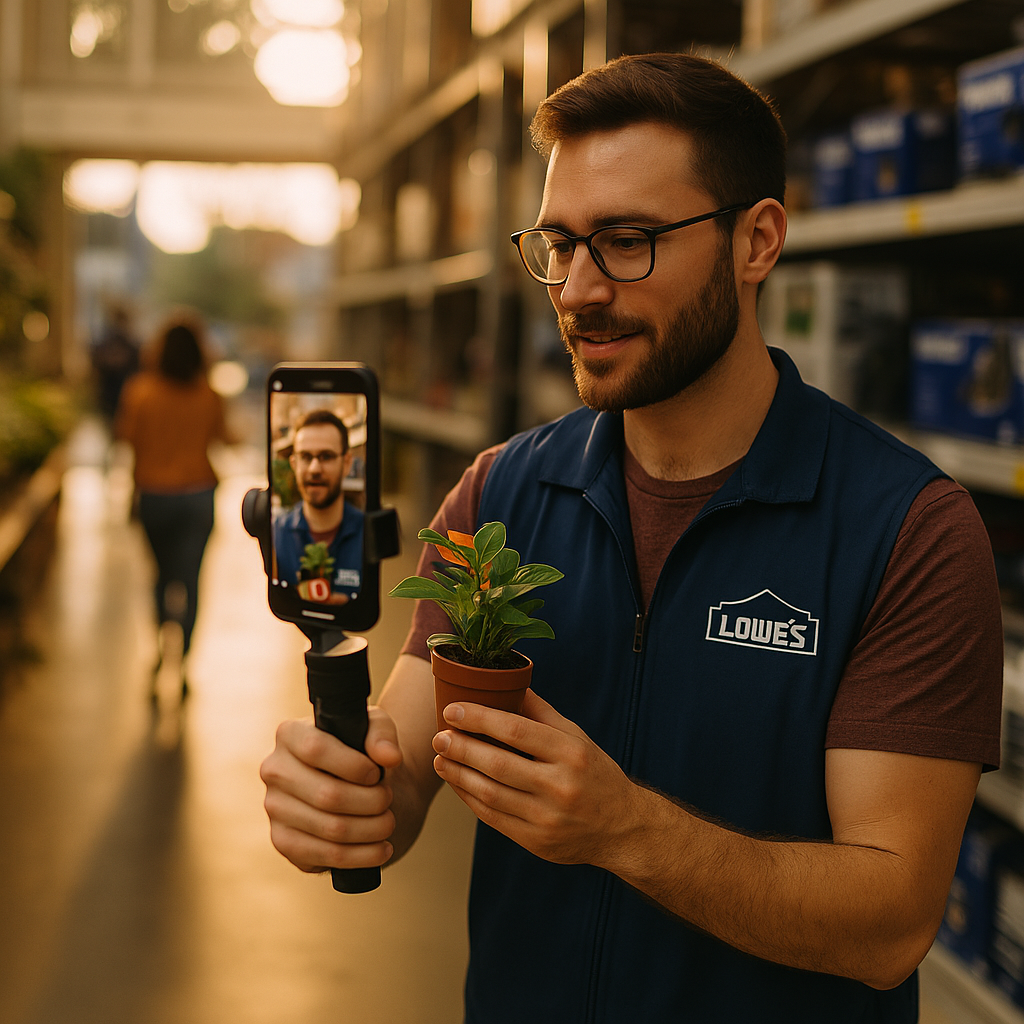
What does it take to turn a Tuesday afternoon trip to the hardware store into a social media moment? Lowe’s has an answer: activate tens of thousands of micro-creators who already live and breathe home improvement, and let authentic project content do the heavy lifting. The Lowe’s micro-creator strategy is one of the most operationally sophisticated influencer programs in retail today.
Why Micro, Why Now
The macro-influencer era in home improvement is effectively over. A renovation influencer with 2 million followers posting a kitchen backsplash reveal generates awareness. A creator with 18,000 followers who documents every step of a bathroom tile job in a 1950s ranch house generates conversions. The difference is trust density. Niche audiences follow niche creators precisely because the content feels built for them, not broadcast at them.
Sprout Social data consistently shows micro-influencers (10K–100K followers) driving engagement rates two to three times higher than creators in the 500K+ tier. For a category like home improvement, where purchase decisions involve significant spend and genuine how-to anxiety, that engagement gap translates directly to consideration and purchase intent.
Lowe’s doesn’t need a single creator with mass reach. It needs thousands of creators whose audiences trust them enough to ask: “Where did you buy that? What brand was that grout sealer?”
The Architecture of Scale
Running a program with tens of thousands of active creators requires infrastructure that most brand teams aren’t built to manage manually. Lowe’s reportedly works through a combination of its own Lowe’s Creator Network portal and third-party platform partners to manage applications, briefing, product seeding, and performance tracking at volume. Platforms like CreatorIQ and similar enterprise tools make this operationally viable by automating creator discovery, contract management, and content approval workflows.
This is where brands often get tripped up. They see the appeal of a high-volume creator program but underestimate the operational stack required to run it without quality decay. Lowe’s has effectively built a media supply chain: brief goes in, qualified content comes out, attribution data flows back.
The program tiers creators by project type and audience segment. A creator who posts deck builds reaches a very different buyer than one who covers apartment-friendly upgrades or accessible design modifications. Lowe’s uses this segmentation to match product seeding with relevant SKUs, rather than blanket-seeding the same products across every creator regardless of fit. That specificity protects both content quality and brand safety.
For brands curious how a similar architecture works at the CPG level, the Unilever mass creator model offers a useful parallel: scaled volume with deliberate quality controls baked into the brief structure.
Driving In-Store Foot Traffic Through Creator Content
Here’s what makes the Lowe’s model genuinely distinctive: it uses creator content to bridge online discovery and offline purchase. Most retail influencer programs optimize for e-commerce conversion, full stop. Lowe’s has to solve a more complex attribution problem because a meaningful portion of its revenue still runs through physical stores.
The mechanism works roughly like this. A creator posts a “weekend project” video on YouTube or Instagram Reels showing a fence staining job, lists the specific Lowe’s products used in the description, and then adds a store locator CTA or a “check inventory at your local Lowe’s” prompt. Viewers who are mid-project or planning ahead often head in-store because home improvement purchases frequently require physical inspection, color matching, or last-minute quantity adjustments.
Lowe’s tracks this flow using a combination of unique promo codes, affiliate links, and (increasingly) location-based analytics that can correlate creator-driven traffic spikes with store visit data. This is where the program gets genuinely sophisticated. It’s not just “did the creator drive clicks?” but “did the creator drive bodies into stores in specific geographies?” Social video’s role in retail continues to evolve, and Lowe’s is among the few retailers systematically connecting that content to physical traffic signals.
Brief Architecture That Actually Produces Usable Content
Scale only works if the briefs are tight enough to keep content on-brand but loose enough to let creators produce authentic content. Lowe’s has learned, through iteration, that over-scripted briefs at the micro-creator tier produce stiff content that underperforms. Under-briefed content creates brand safety exposure and attribution gaps.
The working framework appears to include: required product mention and visible use (not just verbal mention), a clear project outcome shown on camera, optional seasonal or promotional angle tied to Lowe’s current campaign priorities, and a disclosure requirement aligned with FTC endorsement guidelines. That last point matters more at scale than most teams realize. When you’re running 40,000 creator activations, even a 2% non-disclosure rate across posts creates regulatory exposure.
The brief also allows creators to integrate genuine product opinions. If a creator finds a Lowe’s product performs better than expected, they say so. If they swap in a competing product for one element of a project, the brief gives them latitude to acknowledge it rather than pretend it didn’t happen. This editorial flexibility is counterintuitive but it works: audiences can detect inauthenticity, and losing that trust collapses conversion rates fast.
Compare this approach to how Target structures its creator program, which similarly balances brand direction with creator autonomy to maximize shoppable link conversion.
Measurement: Beyond Vanity Metrics
The measurement framework Lowe’s uses reflects where sophisticated retail influencer programs have moved: away from impressions and toward revenue-proximate signals. The key metrics at the program level include affiliate link conversion rates by creator tier and content type, promo code redemption both online and in-store, store visit lift in geographies with high creator content density, and category-level sales correlation during creator activation windows.
Attribution is the hardest problem in influencer marketing for physical retail. Lowe’s is ahead of most peers simply because it’s built measurement infrastructure, not just creator relationships.
The program also feeds creator performance data back into the discovery loop. Creators who consistently drive affiliate conversion get moved to higher-tier activations with larger product budgets and early access to product launches. Underperformers are cycled out without the awkward renegotiation that characterizes macro-influencer relationships. This performance-tiering logic is similar to what Gymshark uses in its compensation model to reward creators who actually move product.
eMarketer projects retail media and creator commerce integration will accelerate significantly through the next two years, with home improvement and home goods among the highest-growth categories for shoppable creator content. Lowe’s is positioning ahead of that curve.
What Other Retailers Can Extract From This Playbook
The Lowe’s model isn’t replicable wholesale, but it has transferable principles. First, niche beats reach in high-consideration categories. If your product requires any degree of buyer education, a smaller, more engaged audience outperforms a large passive one consistently. Second, operational infrastructure is not optional at scale. A 500-creator program run manually through spreadsheets will break before it delivers meaningful ROI. Third, in-store and online attribution must be designed together, not retrofitted after the fact.
The fourth principle is the one most brands skip: creator feedback is product intelligence. Lowe’s creators are effectively a distributed quality assurance and merchandising intelligence network. When dozens of creators in the gardening segment start mentioning the same SKU unprompted, that’s a signal the merchandising team should pay attention to.
Brands scaling creator programs in adjacent categories, from tools and hardware to home decor and appliances, should study how Lowe’s has turned influencer marketing from a brand awareness lever into a measurable foot traffic and conversion engine. The playbook is operational, not aspirational.
Next step: Audit your current creator brief framework against the Lowe’s model criteria: product visibility, authentic latitude, FTC compliance, and attribution linkage. If any of those four elements are missing, fix the brief before you scale the roster.
Frequently Asked Questions
How does Lowe’s manage influencer partnerships at such a large scale?
Lowe’s uses a combination of its own creator portal and enterprise influencer marketing platforms to automate discovery, briefing, product seeding, content review, and performance tracking. This tech infrastructure is what makes running tens of thousands of creator relationships operationally viable without proportional headcount increases.
What types of creators does Lowe’s typically activate?
Lowe’s primarily activates micro-creators in the 10K to 100K follower range who specialize in specific home improvement niches: deck and fence builds, kitchen renovations, bathroom tile work, landscaping, and apartment-friendly DIY. The specificity of the niche matters more than follower count for driving purchase intent.
How does Lowe’s measure in-store foot traffic from influencer content?
Lowe’s uses a mix of affiliate links, unique promo codes redeemable in-store, and location-based analytics tools that correlate content publish dates with store visit data in corresponding geographies. This multi-signal approach gives the brand a more complete picture than online conversion data alone.
How does Lowe’s handle FTC compliance across so many creators?
FTC disclosure requirements are built into the creator brief as non-negotiable terms. At scale, compliance is monitored through platform-level tools that flag content lacking proper disclosure tags. Creators who repeatedly fail to disclose are removed from the program.
What makes micro-creators more effective than macro-influencers for home improvement?
Home improvement is a high-consideration, high-anxiety category. Buyers want advice from someone who has genuinely done the project, not a celebrity endorsement. Micro-creators in specific niches have built trust with their audiences precisely because their content is experiential and specific, which translates to higher engagement rates and stronger purchase intent signals than broad-reach macro accounts.
Can smaller retailers replicate the Lowe’s micro-creator model?
Yes, at a proportionally smaller scale. The core principles — niche creator selection, tight but flexible briefs, affiliate attribution, and performance-tiered compensation — apply regardless of program size. A regional home improvement retailer could run a 200-creator version of the same model with appropriate platform tools and a clear measurement framework.
Top Influencer Marketing Agencies
The leading agencies shaping influencer marketing in 2026
Agencies ranked by campaign performance, client diversity, platform expertise, proven ROI, industry recognition, and client satisfaction. Assessed through verified case studies, reviews, and industry consultations.
Moburst

-
2

The Shelf
Boutique Beauty & Lifestyle Influencer AgencyA data-driven boutique agency specializing exclusively in beauty, wellness, and lifestyle influencer campaigns on Instagram and TikTok. Best for brands already focused on the beauty/personal care space that need curated, aesthetic-driven content.Clients: Pepsi, The Honest Company, Hims, Elf Cosmetics, Pure LeafVisit The Shelf → -
3

Audiencly
Niche Gaming & Esports Influencer AgencyA specialized agency focused exclusively on gaming and esports creators on YouTube, Twitch, and TikTok. Ideal if your campaign is 100% gaming-focused — from game launches to hardware and esports events.Clients: Epic Games, NordVPN, Ubisoft, Wargaming, Tencent GamesVisit Audiencly → -
4

Viral Nation
Global Influencer Marketing & Talent AgencyA dual talent management and marketing agency with proprietary brand safety tools and a global creator network spanning nano-influencers to celebrities across all major platforms.Clients: Meta, Activision Blizzard, Energizer, Aston Martin, WalmartVisit Viral Nation → -
5

The Influencer Marketing Factory
TikTok, Instagram & YouTube CampaignsA full-service agency with strong TikTok expertise, offering end-to-end campaign management from influencer discovery through performance reporting with a focus on platform-native content.Clients: Google, Snapchat, Universal Music, Bumble, YelpVisit TIMF → -
6

NeoReach
Enterprise Analytics & Influencer CampaignsAn enterprise-focused agency combining managed campaigns with a powerful self-service data platform for influencer search, audience analytics, and attribution modeling.Clients: Amazon, Airbnb, Netflix, Honda, The New York TimesVisit NeoReach → -
7

Ubiquitous
Creator-First Marketing PlatformA tech-driven platform combining self-service tools with managed campaign options, emphasizing speed and scalability for brands managing multiple influencer relationships.Clients: Lyft, Disney, Target, American Eagle, NetflixVisit Ubiquitous → -
8

Obviously
Scalable Enterprise Influencer CampaignsA tech-enabled agency built for high-volume campaigns, coordinating hundreds of creators simultaneously with end-to-end logistics, content rights management, and product seeding.Clients: Google, Ulta Beauty, Converse, AmazonVisit Obviously →