


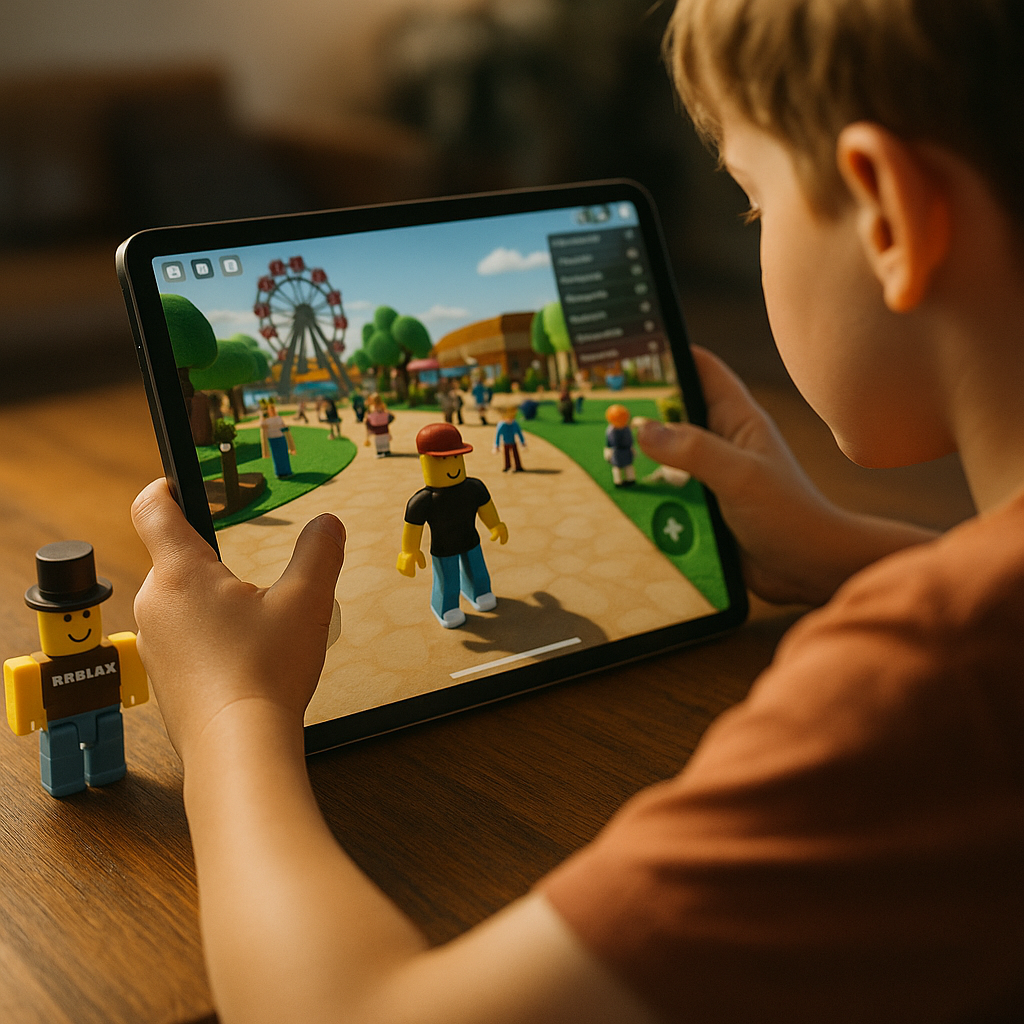
Roblox now pulls in more daily time from under-16s in the US than YouTube and Netflix combined, according to multiple engagement studies cited by industry analysts. If your brand still treats Roblox brand experiences as a novelty side project, you’re already behind. Gen Alpha isn’t watching ads. They’re building, trading, and hanging out inside games, and the creators who built those worlds are the new gatekeepers.
The Numbers Brands Can’t Ignore Anymore
Roblox reported over 80 million daily active users in recent quarters, with a meaningful share under age 13 and a fast-growing teen and young-adult cohort that platforms like eMarketer now track as a distinct commerce audience. That’s not a niche gaming crowd anymore. It’s a parallel media ecosystem where kids spend allowance money, brands rent virtual real estate, and creators run economies bigger than some regional retailers.
What makes this different from a standard influencer buy is that the “creator” in Roblox isn’t just posting content about your product. They’re often the developer who built the experience your product lives inside. That distinction changes everything about how you brief, pay, and measure the partnership.
Roblox isn’t a media channel you buy impressions on. It’s a platform economy you have to build a presence within, and the builders (not the ad buyers) hold the leverage.
Why Gen Alpha Doesn’t See Roblox as “Gaming”
Ask a twelve-year-old what Roblox is and you won’t get “a game.” You’ll get “where I hang out with my friends.” That reframing matters for brand strategy. Gen Alpha treats Roblox experiences the way millennials treated shopping malls: a social destination first, a transactional space second. Branded experiences that lead with product placement instead of play tend to get abandoned in under sixty seconds.
Compare this to how younger audiences behave on other emerging surfaces. The same instinct that makes teens gravitate toward community-first Discord sponsorships applies here: trust the space, then tolerate the brand. Roblox just adds a layer of interactive world-building on top of that social trust.
Building With Creators, Not Just Advertising to Them
The single biggest mistake brands make on Roblox is treating experienced developers like influencer talent you brief and forget. Top Roblox creators, the ones behind experiences pulling tens of millions of visits, run production studios. Some have teams of a dozen or more. They understand engagement loops, retention curves, and in-experience economies better than most agency strategists.
Working with them successfully means three things:
- Co-design, don’t dictate. Bring the brand objective and budget; let the creator design the mechanic. A branded obstacle course only works if it’s actually fun to replay.
- Pay for ongoing operation, not a launch date. Roblox experiences decay fast without updates. Budget for post-launch content drops, not just a one-time build.
- Respect the in-world economy. Robux-based rewards, limited-edition items, and UGC accessories need to fit the creator’s existing monetization model or players will smell the ad from a mile away.
This is roughly the same lesson brands learned briefing sponsored mini-games on YouTube Playables: the creator’s platform mechanics dictate the brief, not the other way around.
What a Roblox Brand Experience Actually Requires
Budgets vary wildly. A simple branded item drop inside an existing popular experience can run in the low five figures. A custom-built world with its own mechanics, matchmaking, and seasonal content roadmap can run into seven figures over a year. The variable that matters most isn’t build cost, it’s ongoing content velocity.
Practical line items to plan for:
- Developer or studio fees (build and iterate)
- Robux economy integration (virtual currency, item drops, limited editions)
- Paid Roblox ads to drive initial discovery inside the platform
- Creator promotion fees to their existing player base
- Post-launch content updates, typically monthly or seasonal
Marketers who’ve run Twitch Drops campaigns will recognize the pattern: the acquisition spend gets attention, but retention spend determines whether the campaign actually moves brand metrics. Roblox is no different. A branded world that gets 2 million first-week visits and zero return visits didn’t build a brand relationship, it rented eyeballs for a week.
Compliance Isn’t Optional When Your Audience Is Under 13
This is where a lot of otherwise smart marketing teams get sloppy. Roblox’s core audience skews younger than almost any other platform brands actively market on, which means FTC children’s advertising guidance and COPPA considerations aren’t background noise, they’re central to campaign design.
Key compliance checkpoints for any Roblox brand experience:
- Clear, age-appropriate disclosure that an experience is sponsored, ideally built into the experience name or loading screen, not buried in a description.
- No direct calls to purchase real-world products aimed at under-13 users without parental gating.
- Data collection limits: know exactly what Roblox’s own platform policies allow you to collect and what you’re prohibited from doing with player data.
- Age-appropriate design review before launch, not after a complaint.
The regulatory scrutiny on under-16 engagement isn’t unique to Roblox. Platforms across the board are tightening rules around younger users, as seen in how teen ad scheduling restrictions and teen feed algorithm changes have forced brands elsewhere to rebuild targeting from scratch. Treat Roblox with the same seriousness you’d apply to any campaign where the FTC or the UK’s ICO could reasonably ask questions.
If your legal team hasn’t reviewed a Roblox brief with the same rigor they’d apply to a kids’ TV ad, you’re carrying more risk than your ROI projections account for.
Measuring ROI Inside a Virtual World
Standard influencer metrics don’t translate cleanly. Impressions and follower counts matter less than visit duration, return visit rate, and in-experience conversion events (item purchases, referral invites, badge completions). Roblox’s own analytics dashboard gives developers granular retention data; brands need to negotiate access to that data as part of the creator contract, not as an afterthought.
A useful framework borrowed from broader creator economy measurement, similar to how brands recalibrated around instant-play view metrics on other platforms, is to separate discovery KPIs from depth KPIs. Discovery answers “did people find it?” Depth answers “did it change how they feel about the brand?” Both matter, but depth is what actually correlates with purchase intent among Gen Alpha, who research shows are increasingly influencing household spending decisions even though they can’t buy directly themselves.
Benchmarking tools from firms like HubSpot and social measurement platforms such as Sprout Social are starting to build Roblox and metaverse reporting modules, but most brands still rely on the creator’s native analytics plus manual cross-referencing with sales lift studies. Expect this tooling gap to close over the next cycle as more agencies specialize in the format.
Picking the Right Creator Partner
Vet Roblox creators the way you’d vet a production studio, not a talent agency roster. Ask for retention data on their existing experiences, not just visit totals. Ask how often they ship content updates. Ask what percentage of their player base is returning versus new. A creator with 500,000 loyal returning players is a better partner than one with 5 million one-time visitors and a steep drop-off curve.
Roblox brand experiences work when brands stop thinking like advertisers and start thinking like co-developers: fund the play, respect the economy, disclose clearly, and measure depth over reach. Start with one experienced creator partner, run a 90-day pilot with monthly content updates, and let the retention data decide whether you scale the budget.
Frequently Asked Questions
What exactly is a Roblox brand experience?
It’s a branded, interactive world or game built on the Roblox platform, either as a standalone experience or as an integration (items, mechanics, sponsorships) inside an existing creator’s popular game.
How much does a Roblox brand experience typically cost?
Costs range from low five figures for a simple item drop or sponsorship inside an existing experience to seven figures for a fully custom-built world with ongoing seasonal content, depending on scope and creator reputation.
Do Roblox campaigns require special compliance beyond standard influencer disclosure rules?
Yes. Because a large share of Roblox users are under 13, brands need to account for COPPA-related data restrictions and FTC guidance on advertising to children, in addition to standard sponsorship disclosure.
How do brands measure ROI on Roblox campaigns?
Effective measurement focuses on return visit rate, average session length, in-experience conversion events like item purchases or referrals, and sentiment lift, rather than one-time visit counts alone.
Should brands work with individual Roblox creators or agencies?
Both models work, but the priority should be vetting a creator’s retention data and content update cadence rather than their raw audience size, since ongoing engagement drives most of the brand value.
Top Influencer Marketing Agencies
The leading agencies shaping influencer marketing in 2026
Agencies ranked by campaign performance, client diversity, platform expertise, proven ROI, industry recognition, and client satisfaction. Assessed through verified case studies, reviews, and industry consultations.
Moburst

-
2

The Shelf
Boutique Beauty & Lifestyle Influencer AgencyA data-driven boutique agency specializing exclusively in beauty, wellness, and lifestyle influencer campaigns on Instagram and TikTok. Best for brands already focused on the beauty/personal care space that need curated, aesthetic-driven content.Clients: Pepsi, The Honest Company, Hims, Elf Cosmetics, Pure LeafVisit The Shelf → -
3

Audiencly
Niche Gaming & Esports Influencer AgencyA specialized agency focused exclusively on gaming and esports creators on YouTube, Twitch, and TikTok. Ideal if your campaign is 100% gaming-focused — from game launches to hardware and esports events.Clients: Epic Games, NordVPN, Ubisoft, Wargaming, Tencent GamesVisit Audiencly → -
4

Viral Nation
Global Influencer Marketing & Talent AgencyA dual talent management and marketing agency with proprietary brand safety tools and a global creator network spanning nano-influencers to celebrities across all major platforms.Clients: Meta, Activision Blizzard, Energizer, Aston Martin, WalmartVisit Viral Nation → -
5

The Influencer Marketing Factory
TikTok, Instagram & YouTube CampaignsA full-service agency with strong TikTok expertise, offering end-to-end campaign management from influencer discovery through performance reporting with a focus on platform-native content.Clients: Google, Snapchat, Universal Music, Bumble, YelpVisit TIMF → -
6

NeoReach
Enterprise Analytics & Influencer CampaignsAn enterprise-focused agency combining managed campaigns with a powerful self-service data platform for influencer search, audience analytics, and attribution modeling.Clients: Amazon, Airbnb, Netflix, Honda, The New York TimesVisit NeoReach → -
7

Ubiquitous
Creator-First Marketing PlatformA tech-driven platform combining self-service tools with managed campaign options, emphasizing speed and scalability for brands managing multiple influencer relationships.Clients: Lyft, Disney, Target, American Eagle, NetflixVisit Ubiquitous → -
8

Obviously
Scalable Enterprise Influencer CampaignsA tech-enabled agency built for high-volume campaigns, coordinating hundreds of creators simultaneously with end-to-end logistics, content rights management, and product seeding.Clients: Google, Ulta Beauty, Converse, AmazonVisit Obviously →