


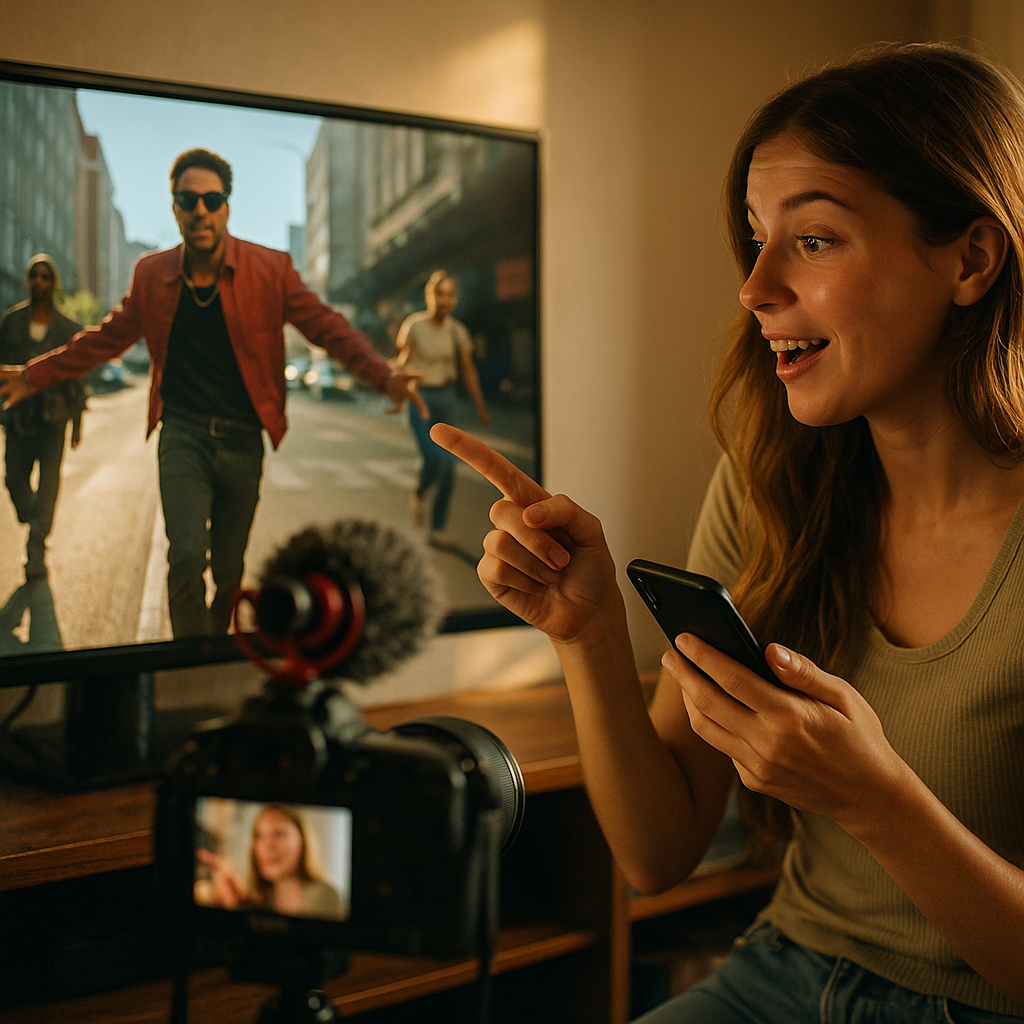
When was the last time you watched a brand ad twice? Not skipped it. Not muted it. Actually rewatched it. Lume Deodorant’s music-video-style spots and Activision’s cinematic Diablo trailers are pulling that off consistently, and the production philosophy behind those pieces is now reshaping how smart brands brief creators. The music video format revival is not a nostalgia play. It is a strategic response to attention economics.
Why Entertainment-Driven Video Is Winning Again
Completion rates for skippable pre-roll ads average somewhere between 15 and 30 percent depending on the platform and targeting quality. Music-video-style branded content regularly exceeds 60 percent completion on the same placements. The gap is not a coincidence. It reflects a structural difference in how the content is built: story first, message second.
The format revival is being driven by three converging forces. First, algorithmic feeds on TikTok, Instagram Reels, and YouTube Shorts now reward watch time over click-through rate, which means entertaining content literally distributes itself more cheaply. Second, audiences have developed a near-automatic scroll reflex around anything that looks like a traditional ad. Third, production costs for high-quality short-form video have dropped sharply enough that mid-market brands can now afford the craft.
When a brand’s content competes with entertainment rather than interrupting it, the distribution math changes entirely. Lower CPMs, higher completion rates, and organic amplification all follow from the same creative decision: make something worth watching.
Lume’s approach is instructive. Their spots use original music, recurring characters, absurdist humor, and sharp editing rhythms that borrow directly from pop music video conventions. The product still appears. The CTA still lands. But neither one shows up until the audience has been given a reason to stay.
What Diablo and Gaming Brands Do That CPG Brands Should Copy
Gaming has been doing this for years, and the rest of the brand world is finally paying attention. Diablo IV‘s launch campaign used cinematic storytelling that was indistinguishable from a premium short film. The brand brief was clearly world-building first, product second. Key creative decisions: original score, visual motifs borrowed from prestige TV, and a runtime that refused to apologize for going long.
The transferable lesson for CPG, DTC, and retail brands is not “spend like Activision.” It is: give your creative team permission to prioritize the viewer’s emotional experience before the conversion objective. Those two goals are not in conflict. They are sequential. Entertainment earns attention; attention earns the conversion moment.
For brands evaluating the music video format versus creator content, the honest answer is that the most effective programs are now doing both simultaneously, which is exactly where the production brief conversation gets interesting.
The Brief Is Where Most Brands Lose the Format
Here is the uncomfortable truth: most creative briefs are structurally incapable of producing entertainment-driven content. They are built around message hierarchies, not narrative arcs. They front-load the product claim. They treat “tone of voice” as a legal guardrail rather than a creative direction. And then brand managers wonder why the resulting video looks like an ad.
Writing a brief for a music-video-style format requires a different mental model. Think about it like a music video treatment, not a media brief. The brief should answer: What is the visual world? What is the emotional journey? What does the product interrupt or enable in that journey? When does the audience meet the brand, and how does meeting it feel?
The teams producing the best results right now are separating the creative brief from the compliance brief. Entertainment direction lives in one document. FTC disclosures, claim restrictions, and platform rules live in another. For a deeper look at how to structure that separation without creating workflow chaos, the FTC-compliant creator brief framework covers the integration logic in detail.
Useful reference: music video ad creative briefs and the format-specific production decisions that flow from them are covered in a dedicated framework if you want the tactical detail.
Production Lessons That Transfer Directly to Creator Programs
The music video format revival is not just changing brand-produced content. It is changing what brands should expect from creator-produced content, and how they should structure the shoots that produce it.
Four production principles from the format are now directly applicable to influencer briefs:
- Shot economy: Music videos achieve narrative density through tight editing and purposeful visual choices, not through long explanatory sequences. Brief your creators with a shot list that tells a story, not a checklist of product features to hit.
- Audio-first structure: The music video format treats audio as the primary storytelling layer. For creator content, this means hooks should be written for the ear before they are written for the eye. A strong spoken line at second zero outperforms a text overlay every time. See the hook design principles for the structural breakdown.
- Continuity of visual world: A single-session shoot for multiple platforms does not have to look fragmented. The same set, lighting logic, and costume can produce TikTok verticals, Reels cutdowns, and a YouTube hero piece if the brief was planned with that output in mind. The single-session shoot guide maps the production sequence.
- Emotional payoff before product reveal: The format convention is setup, tension or delight, resolution, brand moment. Most brand briefs invert that sequence and wonder why the content underperforms.
Repurposing the Format Across the Funnel
One thing the music video format does exceptionally well is produce reusable raw material. A 90-second hero piece shot with this approach can be cut into a 15-second Reels hook, a static frame for paid social, a GIF for email, and a product-page embed without any of them feeling disconnected from the original. That is not an accident. It is a production planning decision made at the brief stage.
The brands getting maximum mileage from this format are treating every creator production as a content system, not a single deliverable. UGC repurposing pipelines that are designed with the music video format’s visual logic built in can extend the effective lifespan of a single shoot significantly, which changes the ROI calculation on the initial production investment.
The production budget conversation changes completely when a single shoot generates 30 content assets instead of three. The per-asset cost on an entertainment-driven creator production is frequently lower than a conventional ad buy — with measurably stronger engagement signals.
Brands moving toward episodic content structures are finding the format especially durable. An episodic YouTube brand series built on music-video visual conventions creates an audience expectation of production quality that compounds over time, making each subsequent piece cheaper to distribute organically.
The Algorithmic Argument for Investing in Entertainment Quality
Platform economics in 2026 favor this format in ways that were not true three years ago. TikTok’s recommendation engine explicitly weights content that drives replays and shares over content that drives immediate clicks. Meta’s Advantage+ systems are increasingly favoring content that earns organic engagement before receiving paid amplification. Google’s YouTube algorithm has been publicly documented as prioritizing watch time and satisfied viewer signals over raw view counts.
What this means operationally: entertainment-driven content is not just a creative preference. It is a media efficiency decision. A piece of creator content that earns strong organic engagement signals before you boost it will cost less to distribute at scale than a direct-response asset that was never designed to hold attention. Sprout Social’s research consistently shows that content with high organic engagement rates receives better CPMs when promoted, a dynamic that compounds the initial creative investment.
The implication for influencer program managers is concrete: evaluate creator partners not just on audience size or niche alignment, but on their demonstrated ability to produce content that holds attention for longer than three seconds. That specific metric is now a leading indicator of media efficiency, not just creative quality.
For brands still building out their creator brief infrastructure to support this level of production intent, the music-style video production playbook outlines the exact brief components, shot planning frameworks, and delivery specs that support the format across platforms. Pair that with a clear repurposing strategy from the first brief, and the format stops being an experiment and starts being a program. HubSpot’s content efficiency benchmarks reinforce the case: brands that plan distribution at the content creation stage consistently outperform those that treat distribution as an afterthought.
The immediate next step: Audit your last three creator briefs against a single criterion — does the brief give a creator permission to entertain before they sell? If the answer is no, the brief is the problem, not the creator.
Frequently Asked Questions
What is the music video format revival in brand advertising?
The music video format revival refers to brands structuring their video advertising and creator content around entertainment-first storytelling conventions borrowed from music videos: original or licensed music, strong visual worlds, narrative arcs, and emotional payoff before product messaging. Brands like Lume and gaming franchises like Diablo have used this approach to achieve significantly higher completion rates and organic distribution than traditional ad formats.
How does the music video format apply to influencer-produced content?
For influencer programs, the format translates into brief structures that prioritize the viewer’s emotional experience, shot economy, audio-first hook design, and continuity of visual world across a shoot. Rather than briefing creators to demonstrate product features in sequence, brands brief them to build a narrative in which the product plays a meaningful role. The result is content that performs better on algorithmic feeds and produces more reusable assets from a single production session.
Is this format only viable for large brands with big production budgets?
No. The production cost curve for high-quality short-form video has shifted substantially. Mid-market and DTC brands can execute entertainment-driven creator content effectively with a well-planned single-session shoot, a clear brief, and a creator who understands the format. The investment difference between a standard creator brief and a music-video-format brief is primarily in planning time, not equipment or crew cost.
How do FTC disclosure requirements interact with narrative-driven branded content?
FTC requirements apply regardless of format. The key operational solution is to separate the creative brief from the compliance brief. The narrative and entertainment direction lives in the creative brief; disclosure placement, claim restrictions, and platform-specific rules live in a compliance addendum. This separation preserves the creator’s ability to build genuine entertainment content while ensuring all legal requirements are met. Clear disclosure must appear early and prominently, which skilled creators can integrate without disrupting the narrative flow.
Which platforms are best suited for music-video-format brand content?
TikTok, Instagram Reels, and YouTube are the primary distribution platforms for this format because their algorithms reward watch time, replays, and shares — the exact engagement signals that entertainment-driven content generates. YouTube supports longer-form hero content (90 seconds to several minutes), while TikTok and Reels work best with tightly edited versions that deliver the emotional payoff within the first 15 to 30 seconds. A single well-planned production can supply all three with platform-appropriate cuts.
Top Influencer Marketing Agencies
The leading agencies shaping influencer marketing in 2026
Agencies ranked by campaign performance, client diversity, platform expertise, proven ROI, industry recognition, and client satisfaction. Assessed through verified case studies, reviews, and industry consultations.
Moburst

-
2

The Shelf
Boutique Beauty & Lifestyle Influencer AgencyA data-driven boutique agency specializing exclusively in beauty, wellness, and lifestyle influencer campaigns on Instagram and TikTok. Best for brands already focused on the beauty/personal care space that need curated, aesthetic-driven content.Clients: Pepsi, The Honest Company, Hims, Elf Cosmetics, Pure LeafVisit The Shelf → -
3

Audiencly
Niche Gaming & Esports Influencer AgencyA specialized agency focused exclusively on gaming and esports creators on YouTube, Twitch, and TikTok. Ideal if your campaign is 100% gaming-focused — from game launches to hardware and esports events.Clients: Epic Games, NordVPN, Ubisoft, Wargaming, Tencent GamesVisit Audiencly → -
4

Viral Nation
Global Influencer Marketing & Talent AgencyA dual talent management and marketing agency with proprietary brand safety tools and a global creator network spanning nano-influencers to celebrities across all major platforms.Clients: Meta, Activision Blizzard, Energizer, Aston Martin, WalmartVisit Viral Nation → -
5

The Influencer Marketing Factory
TikTok, Instagram & YouTube CampaignsA full-service agency with strong TikTok expertise, offering end-to-end campaign management from influencer discovery through performance reporting with a focus on platform-native content.Clients: Google, Snapchat, Universal Music, Bumble, YelpVisit TIMF → -
6

NeoReach
Enterprise Analytics & Influencer CampaignsAn enterprise-focused agency combining managed campaigns with a powerful self-service data platform for influencer search, audience analytics, and attribution modeling.Clients: Amazon, Airbnb, Netflix, Honda, The New York TimesVisit NeoReach → -
7

Ubiquitous
Creator-First Marketing PlatformA tech-driven platform combining self-service tools with managed campaign options, emphasizing speed and scalability for brands managing multiple influencer relationships.Clients: Lyft, Disney, Target, American Eagle, NetflixVisit Ubiquitous → -
8

Obviously
Scalable Enterprise Influencer CampaignsA tech-enabled agency built for high-volume campaigns, coordinating hundreds of creators simultaneously with end-to-end logistics, content rights management, and product seeding.Clients: Google, Ulta Beauty, Converse, AmazonVisit Obviously →