


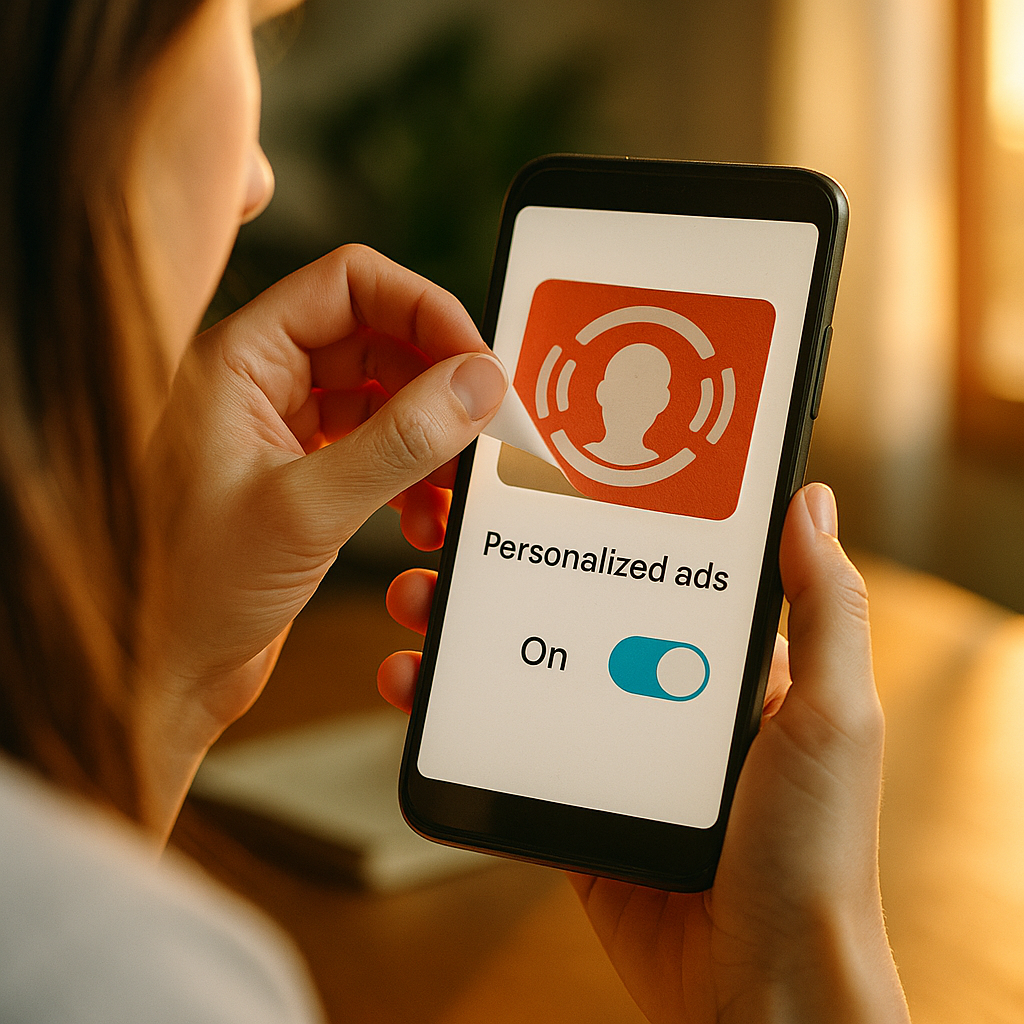
Sixty-two percent of consumers say they’ll disengage from a brand that feels “creepily” personalized, according to recent HubSpot research on trust and data usage. So why are some of the smartest brands in the world spending less on AI targeting, not more? Welcome to un-personalization — the deliberate scaling-back of hyper-targeted AI marketing in favor of broader, more transparent messaging that consumers actually trust.
It sounds counterintuitive. Marketing spent a decade chasing 1:1 personalization as the holy grail. Now a growing cohort of brands is walking it back, and the reasons have less to do with ideology than with hard ROI math and mounting regulatory risk.
What Un-Personalization Actually Means
Un-personalization isn’t a retreat to 1990s mass-market advertising. It’s a recalibration. Brands practicing it are still using data and AI, but they’re pulling back on the creepiest layers: real-time behavioral tracking, cross-device stitching, and hyper-specific retargeting that makes consumers feel surveilled rather than served.
Think of it as a spectrum. On one end you have fully individualized AI targeting — the kind that infers a pregnancy before a customer tells anyone. On the other, you have broad, contextual advertising with zero personal data. Un-personalization lives in the middle: segment-level personalization, contextual targeting, and creative that feels relevant without feeling invasive.
Patagonia, Aveda, and several DTC skincare brands have quietly shifted budget toward contextual and creator-driven placements rather than granular retargeting stacks. The logic isn’t sentimental. It’s that the trust dividend from feeling “less watched” often outperforms marginal targeting gains in lifetime value.
The brands winning on trust aren’t rejecting AI. They’re rejecting the assumption that more data always means better outcomes.
The Trust Math Behind the Retreat
Here’s the uncomfortable truth marketers are finally reckoning with: targeting precision and brand trust don’t move in the same direction. Our own coverage of the consumer AI trust gap found a persistent disconnect between how much brands rely on AI-driven personalization and how much consumers actually want them to.
Add in mounting scrutiny from regulators — the EU’s Digital Services Act, state-level privacy laws in the US, the ICO’s ongoing guidance on automated profiling — and the calculus shifts. Every additional data point collected is now a liability line item, not just a targeting asset.
McKinsey’s research on AI search behavior found that half of consumers now start research in AI search, meaning brand discovery increasingly happens in contexts where hyper-targeted ads can’t even follow the user. That alone is forcing budget reallocation toward broader brand-building plays.
There’s also a simpler explanation: fatigue. Consumers have been retargeted into numbness. A Sprout Social survey on brand trust found that consumers increasingly associate “personalized” ads with “invasive” ones — the two words are converging in consumer sentiment, which is a branding nightmare nobody wants attached to their name.
Regulation Is Doing Some of the Work For You
Let’s be honest: not every brand pulling back on AI targeting is doing it purely for trust reasons. Compliance costs are climbing. Our compliance map for brands lays out just how fragmented the global regulatory landscape has become — what’s permissible profiling in Texas may trigger fines in Frankfurt.
Reducing the depth of AI targeting isn’t just a trust play. It’s risk mitigation. Fewer data points collected means fewer things that can go wrong, get leaked, or get regulated retroactively. The FTC has signaled increased enforcement interest in algorithmic targeting practices, particularly around sensitive categories like health, finance, and anything targeting minors.
For CMOs, that means the “reduce AI targeting” decision often gets made in legal and compliance meetings before it ever reaches the CMO’s desk.
Where Brands Are Actually Cutting Back
Un-personalization isn’t uniform. It shows up differently depending on channel and category. Here’s where the shift is most visible right now:
- Retargeting depth: Brands are capping retargeting windows and reducing frequency caps to avoid the “this ad followed me for three weeks” effect.
- Lookalike audience scope: Instead of narrow AI-generated lookalikes built on granular behavioral signals, brands are widening audience definitions to reduce the feeling of surveillance.
- Creative personalization: Dynamic creative optimization that once inserted names, locations, and browsing history into ad copy is being dialed back in favor of segment-level creative variants.
- Influencer and creator content: Brands are leaning on creator authenticity instead of algorithmic precision, because audiences trust a creator’s voice more than a retargeted banner. Our analysis of why 85% of marketers trust community signals over AI output backs this up directly.
Notice the pattern? Every one of these is a shift from machine-precision targeting toward human-scale relevance. That’s not a rejection of AI. It’s a more disciplined use of it.
The Backlash That Accelerated This Shift
Meta’s rollout of increasingly autonomous AI ad tools drew sharp criticism from advertisers who felt they were losing granular control over targeting and creative decisions in exchange for a black-box promise of “better performance.” Our coverage of the Meta AI ad tools backlash documented a wave of advertisers pulling back specifically because the automation felt opaque, not because it underperformed.
That opacity is the real issue. Consumers and advertisers alike are rebelling against systems they can’t see inside. Un-personalization, in that sense, is partly a demand for explainability. If a brand can’t explain why an algorithm targeted someone a certain way, that’s a trust problem waiting to surface publicly — usually on social media, usually at the worst possible time.
Un-personalization isn’t anti-AI. It’s anti-opacity. Brands are learning that consumers will tolerate data use they understand and reject data use they can’t explain.
Does Un-Personalization Actually Work? The ROI Case
Skeptical CMOs should ask the obvious question: does pulling back on targeting cost conversions? Sometimes, yes — in the short term. But the brands doing this deliberately are optimizing for a longer curve: retention, brand equity, and reduced churn from privacy-related backlash.
Consider the parallel with the broader attention recession reshaping reach planning. As attention becomes scarcer and more guarded, consumers reward brands that don’t feel intrusive. Un-personalization, done right, actually increases attention share because it lowers the psychological cost of engaging with an ad.
There’s also a budget efficiency angle. Hyper-personalized AI targeting is expensive to build and maintain — data infrastructure, modeling, compliance review, constant testing. Our breakdown of the 22% AI agency premium shows how much of current martech spend goes toward targeting sophistication that may not be delivering proportional lift. Simplifying the targeting stack can free budget for creative and creator investment, both of which tend to have better trust-adjusted ROI right now.
What This Means for Budget Allocation
If you’re rethinking your targeting stack, here’s a practical reallocation framework based on what’s working across categories:
- Shift 10-20% of retargeting budget toward contextual and creator placements.
- Reduce data retention windows for behavioral targeting to the minimum viable for performance, not the maximum permissible by law.
- Invest saved compliance overhead into creator-driven UGC, which builds trust without deep personal data reliance.
- Audit vendor dependencies — see the martech vendor concentration risk tied to over-indexing on one AI targeting provider.
None of this requires abandoning AI. It requires using AI where it adds clear value — media buying efficiency, creative testing, measurement — and pulling it back where it erodes trust for marginal gain.
A Practical Framework for Deciding What to Dial Back
Not every brand needs to un-personalize. A B2B SaaS company targeting known accounts faces a different trust calculus than a consumer skincare brand collecting browsing behavior. Ask three questions before making changes:
- Can we explain this targeting decision to a customer’s face? If the honest answer is uncomfortable, that’s a signal.
- Is the data collected proportional to the value delivered? Collecting five data points to personalize a $15 discount code is a bad trade.
- What’s the regulatory half-life of this data? If a law could retroactively penalize how you’re using data today, reduce collection now rather than scrambling later.
Cannes Lions discussions this year, as covered in our piece on the Cannes AI consensus, kept circling back to this exact tension: marketing leaders want AI efficiency without losing the human judgment that signals trustworthiness to consumers. Un-personalization is that principle applied to targeting strategy specifically.
The brands getting this right aren’t the ones with the most sophisticated AI stacks. They’re the ones asking whether their sophistication is actually earning trust or just eroding it more slowly than competitors.
Start with an audit: map every data signal currently feeding your targeting models, and cut anything you can’t defend in plain language to a customer. That single exercise will tell you more about your un-personalization opportunity than any benchmark report.
Frequently Asked Questions
What is un-personalization in marketing?
Un-personalization is the deliberate reduction of granular AI-driven targeting and data collection in favor of broader, more transparent, and contextually relevant advertising. It’s a response to consumer distrust of hyper-targeted ads and increasing regulatory scrutiny of automated profiling.
Is un-personalization the same as abandoning AI in marketing?
No. Brands practicing un-personalization still use AI for media buying efficiency, creative testing, and measurement. They’re specifically scaling back invasive behavioral tracking, deep retargeting, and hyper-individualized targeting that consumers find unsettling.
Does reducing AI targeting hurt conversion rates?
It can reduce short-term conversion efficiency in some campaigns, but many brands report improved retention, brand trust, and long-term customer lifetime value that offsets the initial dip. The tradeoff depends heavily on category and customer relationship depth.
Which industries are adopting un-personalization fastest?
Consumer categories with high privacy sensitivity — skincare, health and wellness, financial services, and family-oriented brands — are moving fastest, largely because regulatory risk and consumer backlash potential are highest in these sectors.
How does un-personalization relate to data privacy regulation?
Regulations like the EU’s Digital Services Act and various US state privacy laws are pushing brands to minimize data collection and improve targeting transparency. Un-personalization aligns commercial trust-building with compliance requirements, making it a dual-purpose strategy rather than a purely ethical stance.
Frequently Asked Questions
What is un-personalization in marketing?
Un-personalization is the deliberate reduction of granular AI-driven targeting and data collection in favor of broader, more transparent, and contextually relevant advertising. It’s a response to consumer distrust of hyper-targeted ads and increasing regulatory scrutiny of automated profiling.
Is un-personalization the same as abandoning AI in marketing?
No. Brands practicing un-personalization still use AI for media buying efficiency, creative testing, and measurement. They’re specifically scaling back invasive behavioral tracking, deep retargeting, and hyper-individualized targeting that consumers find unsettling.
Does reducing AI targeting hurt conversion rates?
It can reduce short-term conversion efficiency in some campaigns, but many brands report improved retention, brand trust, and long-term customer lifetime value that offsets the initial dip. The tradeoff depends heavily on category and customer relationship depth.
Which industries are adopting un-personalization fastest?
Consumer categories with high privacy sensitivity — skincare, health and wellness, financial services, and family-oriented brands — are moving fastest, largely because regulatory risk and consumer backlash potential are highest in these sectors.
How does un-personalization relate to data privacy regulation?
Regulations like the EU’s Digital Services Act and various US state privacy laws are pushing brands to minimize data collection and improve targeting transparency. Un-personalization aligns commercial trust-building with compliance requirements, making it a dual-purpose strategy rather than a purely ethical stance.
Top Influencer Marketing Agencies
The leading agencies shaping influencer marketing in 2026
Agencies ranked by campaign performance, client diversity, platform expertise, proven ROI, industry recognition, and client satisfaction. Assessed through verified case studies, reviews, and industry consultations.
Moburst

-
2

The Shelf
Boutique Beauty & Lifestyle Influencer AgencyA data-driven boutique agency specializing exclusively in beauty, wellness, and lifestyle influencer campaigns on Instagram and TikTok. Best for brands already focused on the beauty/personal care space that need curated, aesthetic-driven content.Clients: Pepsi, The Honest Company, Hims, Elf Cosmetics, Pure LeafVisit The Shelf → -
3

Audiencly
Niche Gaming & Esports Influencer AgencyA specialized agency focused exclusively on gaming and esports creators on YouTube, Twitch, and TikTok. Ideal if your campaign is 100% gaming-focused — from game launches to hardware and esports events.Clients: Epic Games, NordVPN, Ubisoft, Wargaming, Tencent GamesVisit Audiencly → -
4

Viral Nation
Global Influencer Marketing & Talent AgencyA dual talent management and marketing agency with proprietary brand safety tools and a global creator network spanning nano-influencers to celebrities across all major platforms.Clients: Meta, Activision Blizzard, Energizer, Aston Martin, WalmartVisit Viral Nation → -
5

The Influencer Marketing Factory
TikTok, Instagram & YouTube CampaignsA full-service agency with strong TikTok expertise, offering end-to-end campaign management from influencer discovery through performance reporting with a focus on platform-native content.Clients: Google, Snapchat, Universal Music, Bumble, YelpVisit TIMF → -
6

NeoReach
Enterprise Analytics & Influencer CampaignsAn enterprise-focused agency combining managed campaigns with a powerful self-service data platform for influencer search, audience analytics, and attribution modeling.Clients: Amazon, Airbnb, Netflix, Honda, The New York TimesVisit NeoReach → -
7

Ubiquitous
Creator-First Marketing PlatformA tech-driven platform combining self-service tools with managed campaign options, emphasizing speed and scalability for brands managing multiple influencer relationships.Clients: Lyft, Disney, Target, American Eagle, NetflixVisit Ubiquitous → -
8

Obviously
Scalable Enterprise Influencer CampaignsA tech-enabled agency built for high-volume campaigns, coordinating hundreds of creators simultaneously with end-to-end logistics, content rights management, and product seeding.Clients: Google, Ulta Beauty, Converse, AmazonVisit Obviously →