


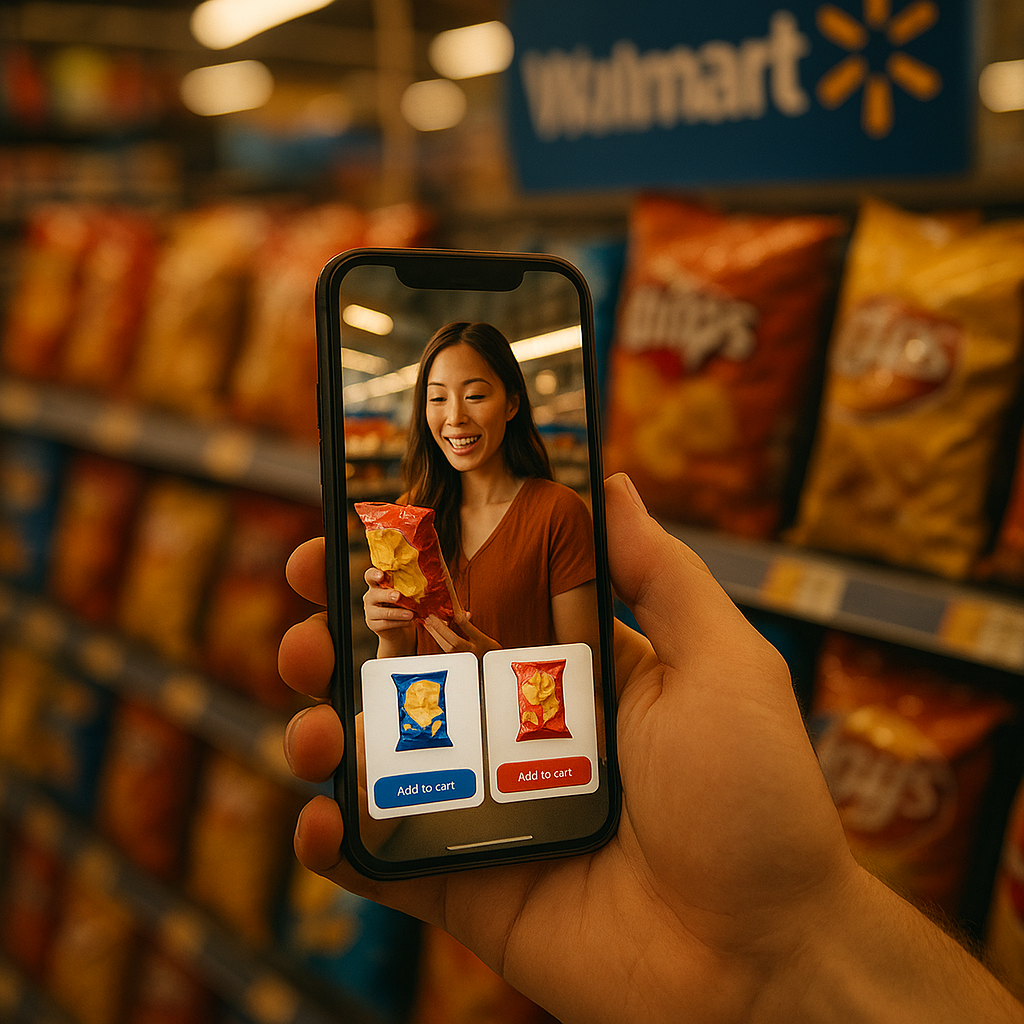
Retail media hit an estimated $175 billion in ad spend this year, and the next battleground isn’t placement — it’s format. Amazon and Walmart have both quietly rolled out interactive, shoppable video units that let customers add to cart without leaving the ad. A well-built retail media shoppable video pilot could be the highest-ROI test on your media plan next quarter. Here’s how to structure one that actually produces usable data.
Why This Isn’t Just Another Ad Format
Shoppable video on retail media networks is different from shoppable video everywhere else. On Instagram or TikTok, you’re driving intent toward a purchase that happens later, often on a different app. On Amazon or Walmart Connect, the shopper is already inside the transaction layer. There’s no hop, no attribution guesswork, no “assisted conversion” hand-waving. The ad, the product page, and the checkout button live in the same environment.
That proximity changes everything about how you should brief, produce, and measure creative. A video built for awareness on YouTube will underperform badly if you just repurpose it for Amazon’s interactive units. The content needs to be built for a shopper who’s three seconds from buying, not three touchpoints away.
Retail media shoppable video isn’t a top-of-funnel play repackaged with a buy button — it’s a checkout-adjacent format that demands checkout-adjacent creative discipline.
What Amazon and Walmart Actually Launched
Amazon’s interactive video ads (expanding out of Sponsored Brands video and Streaming TV inventory) now support in-unit product carousels, shoppable hotspots, and “add to cart” overlays that fire without leaving the video player. Walmart Connect’s answer, built on Walmart+ streaming inventory and on-site video placements, pushes similar functionality: tap a hotspot, see the SKU, add it to the cart tied to your Walmart account.
Neither platform has fully standardized specs yet, which is exactly why a pilot matters. You’re not just testing performance. You’re testing production workflow, creative-to-spec turnaround, and whether your existing content library can be adapted or needs bespoke shoots.
- Amazon: Interactive Sponsored Brands video, DSP-served shoppable streaming units, product hotspot overlays.
- Walmart: Connect-managed shoppable video across on-site placements and connected TV inventory, with cart-linked SKU tagging.
Both require a registered brand presence (Amazon Brand Registry, Walmart Connect seller/vendor status) before you can even access the self-serve or managed-service tools. If you haven’t sorted that out, do it before you build a pilot timeline — it’s the most common reason launches slip.
Building the Pilot: Scope It Like an Experiment, Not a Campaign
The mistake most brands make is treating this like a regular media buy: pick a budget, pick some SKUs, launch, hope. That’s how you end up with directionally interesting but statistically useless data. Treat this as a controlled test instead.
Start with a narrow SKU set — three to seven products, ideally ones with existing video assets and a track record of paid performance elsewhere. You want variables you can control, not a full catalog rollout that muddies results.
- Define one primary KPI. Not five. Pick add-to-cart rate or in-unit conversion rate, and treat everything else as secondary.
- Set a floor budget per platform. Retail media minimums vary, but plan for at least $15,000–$25,000 per platform over four to six weeks to get a statistically usable sample.
- Lock a control group. Run standard (non-interactive) video ads on the same SKUs simultaneously, so you have a real performance delta, not a vibe.
- Cap creative variants at two or three. More variants sound rigorous but usually just dilute your sample size per version.
This mirrors the same discipline brands are applying to other emerging shoppable formats — see how shoppable carousel sequencing forces similar variant discipline on Instagram. The platform changes, the testing logic doesn’t.
Creative That Actually Converts In-Unit
Interactive video ads live or die on the first three seconds and the clarity of the hotspot. A cinematic brand story is wasted here. What works instead:
- Product-forward opening frame — no slow builds, no logo-first intros.
- Hotspots that appear early and stay visible, not ones buried at the 20-second mark.
- Price and promo messaging baked into the visual, not just the overlay text.
- Short runtime — 15 seconds outperforms 30 in most early retail media video tests, similar to what’s been seen in shoppable livestream openings on TikTok Shop.
One CPG brand running an early Walmart Connect pilot found that simply moving the hotspot trigger from second 12 to second 4 lifted in-unit clicks by double digits. Small edit, real lift. That’s the kind of granular finding a proper pilot is supposed to surface.
Where Creator Content Fits
Here’s an underused lever: creator-produced UGC tends to outperform polished brand video in shoppable retail units, because it reads as review-adjacent rather than an ad. If you already have creator assets from affiliate or seeding programs, repurpose them for the pilot rather than commissioning new brand-studio content. It’s cheaper and often converts better.
This is also a moment to think about rights and usage terms up front. If your creator agreements don’t cover retail media placement, you’ll need addenda before launch — a detail that’s easy to miss when legal isn’t looped into the media plan early. The same negotiation logic used in creator bundle pricing frameworks applies here: usage rights are a line item, not an afterthought.
Measurement: What “Success” Actually Looks Like
Both Amazon and Walmart will hand you dashboards full of impressions, view-through rate, and click-through rate. None of that tells you if the format is worth scaling. Build your own scorecard instead:
- In-unit add-to-cart rate versus your control group’s standard CTR-to-cart path.
- Incremental sales lift using each platform’s clean-room or incrementality testing tools (Amazon Marketing Cloud, Walmart’s Luminate).
- Cost per incremental unit sold, not just cost per click.
- Halo effect on non-featured SKUs in the same category, which retail media data can sometimes surface at the brand level.
Retail media measurement is still maturing industry-wide, and interactive video is the newest corner of it. Don’t expect perfect attribution. Expect directionally strong signal if your test design is tight.
If you can’t name your primary KPI in one sentence before launch, you’re not running a pilot — you’re running a placeholder campaign with a bigger budget than it deserves.
Budget Reality Check
Interactive video production costs more than standard retail media banners, but less than you’d think if you’re repurposing existing assets. Plan for:
- 10–20% premium over standard video ad production for hotspot/overlay integration work.
- Platform minimums that vary by managed-service tier — Amazon’s DSP-served interactive units typically require higher spend commitments than self-serve Sponsored Brands video.
- Agency or in-house trafficking time for spec compliance, since neither platform has finalized universal creative specs.
Compare this to CTV buying decisions elsewhere in the funnel — the same incrementality-first thinking behind CTV buying strategy shifts should govern how much budget you commit before you have pilot data in hand. Don’t scale spend on promise. Scale it on proof.
Risk and Compliance Notes Brands Skip
Shoppable formats blur the line between content and commerce, which means disclosure and compliance questions aren’t just a social media problem anymore. If creator-sourced footage appears in a retail media shoppable unit, FTC endorsement guidance still applies, even inside a retail environment the FTC doesn’t directly regulate the same way as social platforms. Review your creator contracts for retail media usage clauses, and make sure any claims made on-camera (efficacy, comparisons, pricing) are legally cleared for a checkout-adjacent context, where a regulator could argue the line between editorial and advertising is thinnest.
The same disclosure diligence brands apply to buy-moment ad formats on social should extend to retail media video. Regulators are watching commerce-embedded ad formats closely as they scale across platforms — worth a check-in with legal before your pilot goes live, and worth reviewing the FTC’s own endorsement guidance directly at ftc.gov.
Rolling Out Past the Pilot
If your pilot clears the bar — meaningful lift in add-to-cart rate, acceptable cost per incremental unit, no compliance red flags — the next step isn’t a full-catalog rollout. It’s a second, larger pilot across more SKUs and a longer flight, ideally spanning a seasonal peak so you can see performance under real demand pressure. Retail media budgets, per eMarketer’s retail media forecasts, keep climbing year over year, and interactive video is positioned to capture a growing share of that spend. Brands that build pilot infrastructure now will have a real head start when platforms firm up specs and shift more inventory into these formats by default.
Also worth tracking: how your on-site retail presence (storefronts, A+ content, Posts) interacts with shoppable video traffic. A shopper who clicks a hotspot but lands on a thin product page will bounce regardless of how good the video was. Revisit your Amazon storefront strategy alongside any interactive video pilot — the two need to work together, not in isolation.
FAQs
What is retail media shoppable video?
It’s video advertising served on retail media networks like Amazon or Walmart Connect that lets shoppers interact with the ad directly — tapping hotspots, viewing product details, and adding items to cart without leaving the video or the retailer’s app.
How much does a shoppable video pilot cost?
Budget at least $15,000 to $25,000 per platform for a four-to-six-week pilot with a narrow SKU set, plus a 10–20% creative production premium for hotspot and overlay integration versus standard video ads.
Is Amazon or Walmart better for testing interactive video first?
It depends on where your sales volume already concentrates. Brands with strong Amazon Brand Registry presence often find Sponsored Brands video easier to activate quickly, while Walmart Connect suits brands with strong Walmart+ or connected TV reach. Many teams pilot both in parallel with separate control groups.
Do FTC disclosure rules apply to retail media shoppable ads?
Yes, if creator-sourced content or endorsement-style claims appear in the unit. FTC endorsement guidance applies regardless of platform, so any creator video repurposed for retail media needs usage rights and disclosure language cleared in advance.
What’s a good primary KPI for a shoppable video pilot?
In-unit add-to-cart rate compared against a control group running standard, non-interactive video ads on the same SKUs. It isolates the format’s actual lift rather than general campaign performance.
Start small, control tightly, and let the data — not platform hype — decide whether shoppable video earns a permanent line in your retail media budget.
Top Influencer Marketing Agencies
The leading agencies shaping influencer marketing in 2026
Agencies ranked by campaign performance, client diversity, platform expertise, proven ROI, industry recognition, and client satisfaction. Assessed through verified case studies, reviews, and industry consultations.
Moburst

-
2

The Shelf
Boutique Beauty & Lifestyle Influencer AgencyA data-driven boutique agency specializing exclusively in beauty, wellness, and lifestyle influencer campaigns on Instagram and TikTok. Best for brands already focused on the beauty/personal care space that need curated, aesthetic-driven content.Clients: Pepsi, The Honest Company, Hims, Elf Cosmetics, Pure LeafVisit The Shelf → -
3

Audiencly
Niche Gaming & Esports Influencer AgencyA specialized agency focused exclusively on gaming and esports creators on YouTube, Twitch, and TikTok. Ideal if your campaign is 100% gaming-focused — from game launches to hardware and esports events.Clients: Epic Games, NordVPN, Ubisoft, Wargaming, Tencent GamesVisit Audiencly → -
4

Viral Nation
Global Influencer Marketing & Talent AgencyA dual talent management and marketing agency with proprietary brand safety tools and a global creator network spanning nano-influencers to celebrities across all major platforms.Clients: Meta, Activision Blizzard, Energizer, Aston Martin, WalmartVisit Viral Nation → -
5

The Influencer Marketing Factory
TikTok, Instagram & YouTube CampaignsA full-service agency with strong TikTok expertise, offering end-to-end campaign management from influencer discovery through performance reporting with a focus on platform-native content.Clients: Google, Snapchat, Universal Music, Bumble, YelpVisit TIMF → -
6

NeoReach
Enterprise Analytics & Influencer CampaignsAn enterprise-focused agency combining managed campaigns with a powerful self-service data platform for influencer search, audience analytics, and attribution modeling.Clients: Amazon, Airbnb, Netflix, Honda, The New York TimesVisit NeoReach → -
7

Ubiquitous
Creator-First Marketing PlatformA tech-driven platform combining self-service tools with managed campaign options, emphasizing speed and scalability for brands managing multiple influencer relationships.Clients: Lyft, Disney, Target, American Eagle, NetflixVisit Ubiquitous → -
8

Obviously
Scalable Enterprise Influencer CampaignsA tech-enabled agency built for high-volume campaigns, coordinating hundreds of creators simultaneously with end-to-end logistics, content rights management, and product seeding.Clients: Google, Ulta Beauty, Converse, AmazonVisit Obviously →