


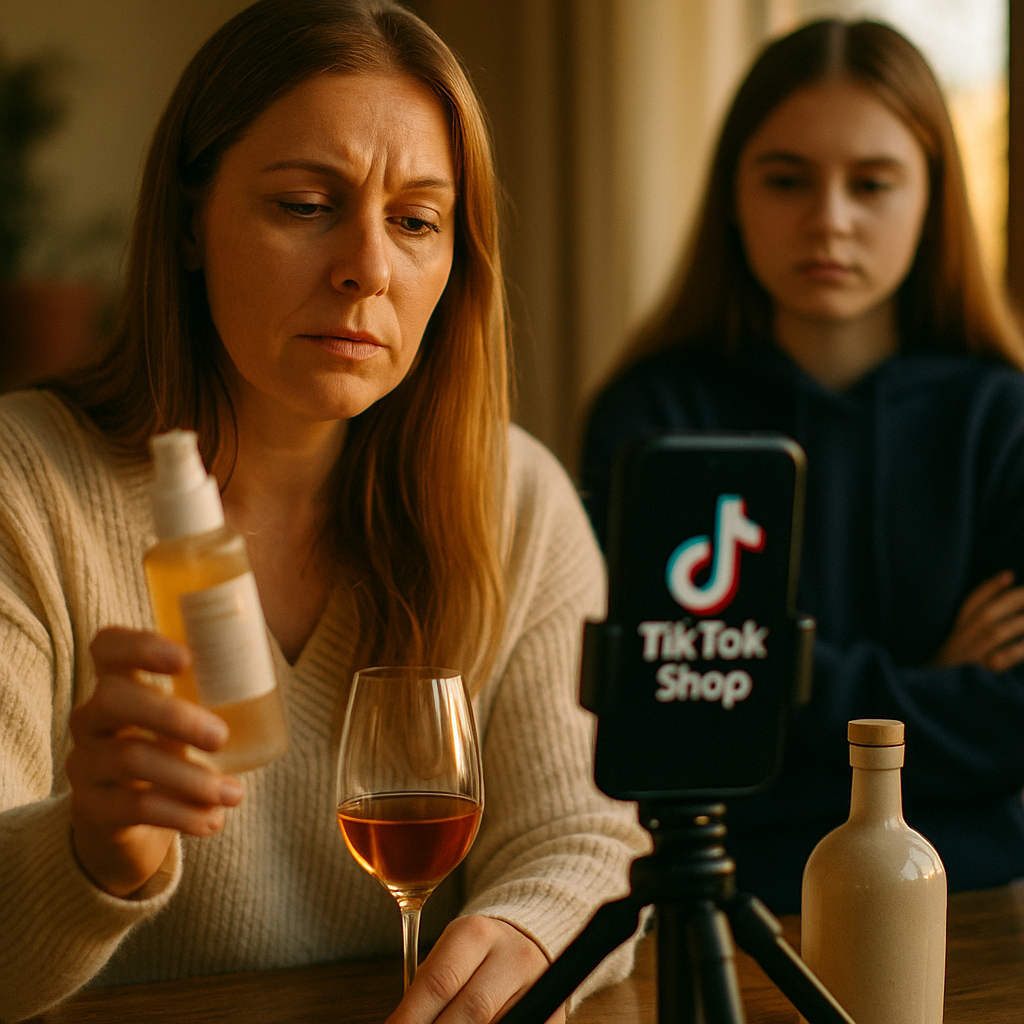
One flagged livestream can cost a beauty brand its TikTok Shop selling rights for weeks. That’s the reality UK retailers faced the moment alcohol-adjacent skincare, think glycolic toners with ethanol bases, retinol serums cut with denatured alcohol, boozy-scented body mists, started scaling through livestream selling. A TikTok Shop beauty strategy that ignores age-gating isn’t a strategy. It’s a compliance incident waiting for a timestamp.
This isn’t a niche problem. Alcohol-adjacent formulations are everywhere in skincare: astringents, fragrance layering, “cocktail” branded serums riding the mixology-in-beauty trend. UK retailers selling these products via TikTok Shop livestreams have had to build entirely new operational muscle around age verification, content moderation, and platform policy, often faster than TikTok’s own guidance could keep pace.
Why alcohol-adjacent skincare triggers different rules
Let’s be precise about the category. We’re not talking about brands selling gin. We’re talking about skincare and fragrance products that contain alcohol as an ingredient, denatured alcohol, ethanol, isopropyl, and how TikTok’s Shop moderation systems and UK advertising codes treat that ingredient list once it appears in a livestream context.
TikTok Shop’s community guidelines restrict the promotion of alcohol products, and its automated moderation tools frequently flag content using keyword detection on ingredient callouts, not just product category tags. A host casually saying “this toner’s got a good bit of alcohol in it for that fresh finish” can trip the same filters built for actual alcoholic beverage sales. UK retailers learned this the hard way during early livestream tests, watching perfectly compliant skincare streams get throttled or pulled mid-broadcast.
The compliance risk isn’t the product. It’s the language used to sell it, and most beauty brands were never briefed to think that way.
Add the UK’s Advertising Standards Authority rules on age-restricted product marketing, plus retailer-level Challenge 25 policies already in place for in-store alcohol-adjacent sales, and you’ve got three overlapping compliance layers: platform policy, ASA guidance, and internal retail age-verification standards. None of them were built with livestream commerce in mind. Retailers had to reconcile all three simultaneously.
The age-gating mechanics retailers actually built
Here’s where it gets operational. UK beauty retailers running TikTok Shop livestreams for alcohol-adjacent lines converged on a few common structural fixes:
- Pre-stream age declaration gates: Viewers landing on the livestream from a product link get an interstitial age-confirmation screen before the shop tab unlocks, mirroring the age gates used on brand websites for spirits and vape-adjacent categories.
- Scripted ingredient language: Hosts are briefed with pre-approved phrasing for describing alcohol content, avoiding trigger words that read as promotional-of-alcohol rather than descriptive-of-formulation.
- Checkout-level verification: Rather than relying on stream-level gating alone, some retailers pushed age verification to the TikTok Shop checkout flow itself, using date-of-birth capture tied to account data, since stream-level gates are easy to click through without real friction.
- Moderator shadowing: A dedicated compliance moderator watches the live chat in real time, flagging any comment thread that veers into misuse suggestions (“does this get you tipsy if you drink it lol”) before TikTok’s own systems do.
None of this is glamorous. It’s the unsexy infrastructure work that determines whether a livestream campaign survives contact with TikTok’s trust and safety team. Brands that skipped it learned quickly that a single strike against Shop guidelines can suppress discoverability across the entire storefront, not just the flagged stream.
Building the creator brief around restriction, not just reach
Most creator briefs are built to maximize watch time and conversion. For alcohol-adjacent skincare, the brief has to lead with restriction language first, conversion tactics second. That’s a mindset shift for talent teams used to optimizing purely for GMV.
Retailers that got this right restructured their creator briefs around three non-negotiables: no ingestible framing (“drink this in through your skin” type language, which sounds silly written out but shows up constantly in beauty livestream scripts), no comparison to alcoholic beverages for comedic effect, and mandatory disclosure of alcohol content when directly asked in chat. This mirrors the discipline retailers have had to apply elsewhere in TikTok Shop, where category templates for creator onboarding now include compliance checklists as standard, not optional add-ons.
It also means rethinking commission structures. If a host is paid purely on conversion, the incentive is to hype the product using whatever language converts, including risky framing. Some retailers now build compliance adherence into the commission calculation itself, docking payout or flagging future bookings if a livestream trips a moderation flag. It’s a blunt instrument, but it works. For a wider view of how commission architecture shapes creator behavior on the platform, see our breakdown of TikTok Shop commission tiers.
What the data says about livestream risk in regulated-adjacent categories
TikTok Shop’s UK GMV crossed meaningful growth thresholds through the back half of the platform’s rollout, with beauty consistently ranking among the top three purchase categories according to platform-reported data cited by eMarketer. But growth in a category doesn’t mean growth without friction. Retailers running age-adjacent skincare lines report moderation review times on livestream content running noticeably longer than standard beauty SKUs, sometimes delaying stream approval by hours, which is a lifetime in livestream commerce planning.
That delay matters more than it sounds. A livestream slot booked around a creator’s peak audience window loses most of its value if approval slips by even 90 minutes. Retailers now build in buffer windows of 24 to 48 hours for any stream featuring alcohol-adjacent SKUs, submitting product listings and draft scripts for internal legal review well before the scheduled air time. It’s the same discipline retailers have had to apply to bulk listing templates, just extended into live content review.
The ICO angle nobody talks about
Age verification isn’t just an advertising standards issue. It’s a data protection issue. Any age-gating mechanism that captures date of birth, ID uploads, or self-declared age data triggers obligations under UK data protection law, and retailers building these flows have had to loop in privacy teams alongside marketing and legal.
The Information Commissioner’s Office has been increasingly vocal about age-assurance mechanisms across digital platforms, and while its enforcement focus has largely centered on social platforms and gaming, the precedent applies directly to any retailer capturing age data through a shopping flow. Retailers who treated age-gating as a pure marketing checkbox, bolting on a simple “are you 18?” click-through with no data retention policy behind it, are the ones most exposed if that mechanism ever gets scrutinized.
Age-gating isn’t just a UX pattern. Once you capture birth data, you’re a data controller with obligations, not just a retailer running a clever popup.
The retailers doing this well built a shared age-verification layer across their TikTok Shop, website, and app checkout flows, so a customer verified once doesn’t have to re-verify every time they hit a gated livestream. It’s better UX, and it centralizes the data governance into one auditable system instead of scattering age data across a dozen ad hoc gates.
Where this connects to the broader livestream shopping shift
None of this happens in isolation from the platform’s wider push toward live shopping. TikTok has been steadily rewarding discovery-driven content over raw reach, a shift covered in depth in our piece on discovery over reach, and that same algorithmic logic applies to Shop livestreams. A stream that gets flagged or suppressed for compliance issues doesn’t just lose that session’s sales, it damages the account’s discoverability signal going forward.
That’s the real cost of getting age-gating wrong. It’s not a one-time fine or a single lost stream. It’s a suppressed account trying to recover visibility in a feed that already rewards consistency and penalizes risk signals. Retailers who treat compliance as a growth lever, not a tax on growth, are the ones scaling alcohol-adjacent skincare lines profitably through livestream. Compare this to how Instagram’s live shopping model handles restricted categories, where Meta’s more conservative default settings mean less flexibility but also fewer moderation surprises.
For UK beauty retailers still building out their TikTok Shop livestream operation, the lesson from the alcohol-adjacent skincare cohort is blunt: build the compliance layer before you build the growth targets. Every brand that skipped straight to GMV forecasting had to backtrack once the first strike hit, and backtracking on a live platform always costs more than building it right the first time.
Frequently Asked Questions
What counts as “alcohol-adjacent” in TikTok Shop’s beauty category?
Any skincare, haircare, or fragrance product listing alcohol, ethanol, denatured alcohol, or isopropyl alcohol as a formulation ingredient can trigger TikTok’s alcohol-related moderation filters, even though it’s not an alcoholic beverage. This includes toners, some retinol and glycolic serums, aftershaves, and alcohol-based fragrance mists.
Does TikTok Shop require formal age verification for these products?
TikTok doesn’t mandate a single standardized age-gate for alcohol-adjacent skincare specifically, but its broader content policies restrict alcohol promotion, which pushes retailers toward voluntary age-gating as a risk-mitigation measure. Most UK retailers selling these lines have built their own verification layers rather than waiting for platform-mandated requirements.
Can a flagged livestream affect the whole TikTok Shop storefront?
Yes. Repeated moderation flags on livestream content can suppress a Shop’s overall discoverability in the feed, not just the specific stream that triggered the flag. This is why retailers build in compliance review buffers rather than treating each stream as an isolated event.
How does age-gating intersect with UK data protection law?
Any mechanism capturing date of birth or age-related data to verify a viewer’s age makes the retailer a data controller under UK data protection rules, with obligations around consent, storage, and retention. Retailers should coordinate age-gating design with privacy and legal teams, not just marketing.
What’s the biggest mistake retailers make with creator briefs in this category?
Optimizing the brief purely for conversion language without restriction guardrails. Hosts paid on pure GMV incentives tend to reach for hype language that can trip alcohol-promotion filters, so briefs need compliance rules built in alongside sales messaging, not bolted on afterward.
Next step: Audit your current TikTok Shop livestream scripts against your platform’s alcohol-promotion guidelines this week, not after your next scheduled stream. If your age-gating flow hasn’t been reviewed by legal or privacy teams in the past quarter, that’s the first fix, not the last.
Frequently Asked Questions
What counts as “alcohol-adjacent” in TikTok Shop’s beauty category?
Any skincare, haircare, or fragrance product listing alcohol, ethanol, denatured alcohol, or isopropyl alcohol as a formulation ingredient can trigger TikTok’s alcohol-related moderation filters, even though it’s not an alcoholic beverage. This includes toners, some retinol and glycolic serums, aftershaves, and alcohol-based fragrance mists.
Does TikTok Shop require formal age verification for these products?
TikTok doesn’t mandate a single standardized age-gate for alcohol-adjacent skincare specifically, but its broader content policies restrict alcohol promotion, which pushes retailers toward voluntary age-gating as a risk-mitigation measure. Most UK retailers selling these lines have built their own verification layers rather than waiting for platform-mandated requirements.
Can a flagged livestream affect the whole TikTok Shop storefront?
Yes. Repeated moderation flags on livestream content can suppress a Shop’s overall discoverability in the feed, not just the specific stream that triggered the flag. This is why retailers build in compliance review buffers rather than treating each stream as an isolated event.
How does age-gating intersect with UK data protection law?
Any mechanism capturing date of birth or age-related data to verify a viewer’s age makes the retailer a data controller under UK data protection rules, with obligations around consent, storage, and retention. Retailers should coordinate age-gating design with privacy and legal teams, not just marketing.
What’s the biggest mistake retailers make with creator briefs in this category?
Optimizing the brief purely for conversion language without restriction guardrails. Hosts paid on pure GMV incentives tend to reach for hype language that can trip alcohol-promotion filters, so briefs need compliance rules built in alongside sales messaging, not bolted on afterward.
Top Influencer Marketing Agencies
The leading agencies shaping influencer marketing in 2026
Agencies ranked by campaign performance, client diversity, platform expertise, proven ROI, industry recognition, and client satisfaction. Assessed through verified case studies, reviews, and industry consultations.
Moburst

-
2

The Shelf
Boutique Beauty & Lifestyle Influencer AgencyA data-driven boutique agency specializing exclusively in beauty, wellness, and lifestyle influencer campaigns on Instagram and TikTok. Best for brands already focused on the beauty/personal care space that need curated, aesthetic-driven content.Clients: Pepsi, The Honest Company, Hims, Elf Cosmetics, Pure LeafVisit The Shelf → -
3

Audiencly
Niche Gaming & Esports Influencer AgencyA specialized agency focused exclusively on gaming and esports creators on YouTube, Twitch, and TikTok. Ideal if your campaign is 100% gaming-focused — from game launches to hardware and esports events.Clients: Epic Games, NordVPN, Ubisoft, Wargaming, Tencent GamesVisit Audiencly → -
4

Viral Nation
Global Influencer Marketing & Talent AgencyA dual talent management and marketing agency with proprietary brand safety tools and a global creator network spanning nano-influencers to celebrities across all major platforms.Clients: Meta, Activision Blizzard, Energizer, Aston Martin, WalmartVisit Viral Nation → -
5

The Influencer Marketing Factory
TikTok, Instagram & YouTube CampaignsA full-service agency with strong TikTok expertise, offering end-to-end campaign management from influencer discovery through performance reporting with a focus on platform-native content.Clients: Google, Snapchat, Universal Music, Bumble, YelpVisit TIMF → -
6

NeoReach
Enterprise Analytics & Influencer CampaignsAn enterprise-focused agency combining managed campaigns with a powerful self-service data platform for influencer search, audience analytics, and attribution modeling.Clients: Amazon, Airbnb, Netflix, Honda, The New York TimesVisit NeoReach → -
7

Ubiquitous
Creator-First Marketing PlatformA tech-driven platform combining self-service tools with managed campaign options, emphasizing speed and scalability for brands managing multiple influencer relationships.Clients: Lyft, Disney, Target, American Eagle, NetflixVisit Ubiquitous → -
8

Obviously
Scalable Enterprise Influencer CampaignsA tech-enabled agency built for high-volume campaigns, coordinating hundreds of creators simultaneously with end-to-end logistics, content rights management, and product seeding.Clients: Google, Ulta Beauty, Converse, AmazonVisit Obviously →