


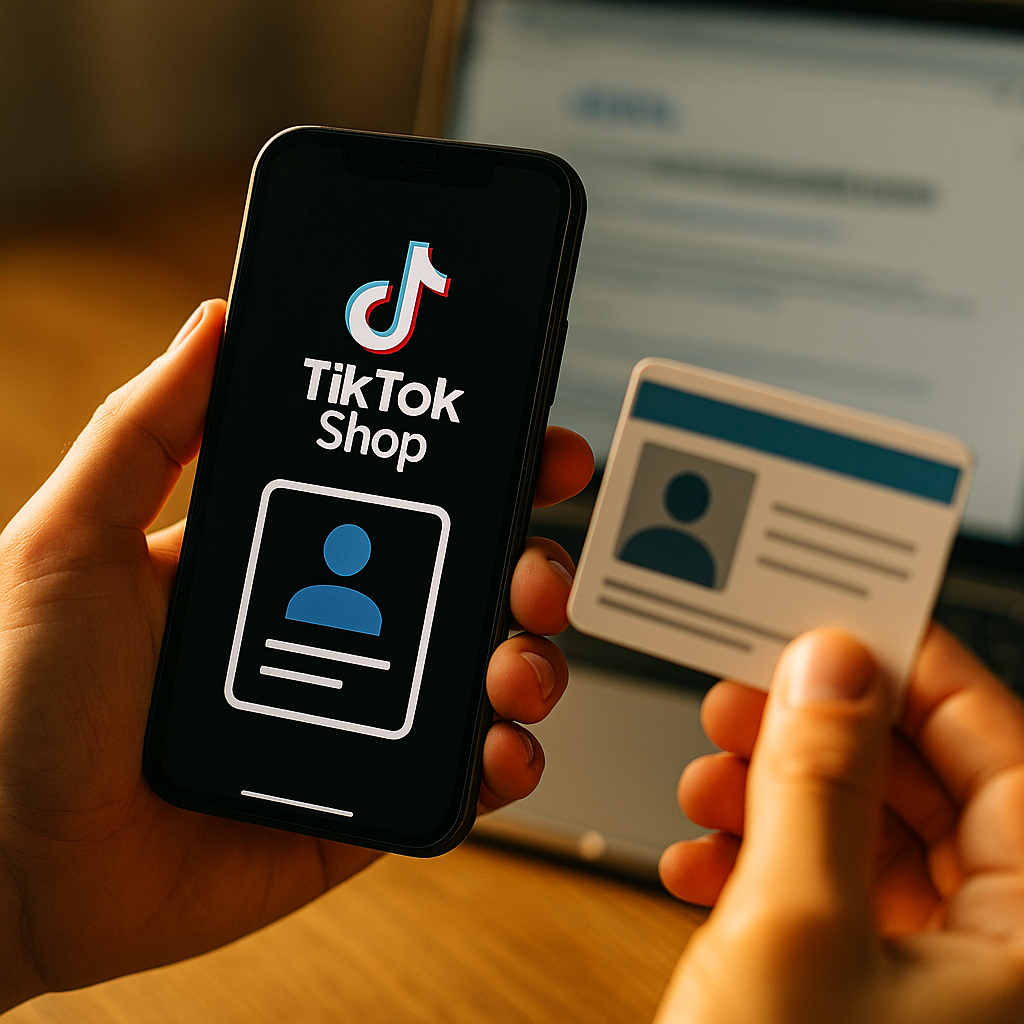
Here’s the collision nobody flagged in the vendor onboarding deck: TikTok Shop now requires real, government-issued identity verification for creators hosting merchant-authorized livestreams, while the FTC still expects those same streams to carry clear, conspicuous, plain-language disclosures that any casual viewer can spot in seconds. One system verifies who’s behind the camera. The other regulates what they say and how they say it. Brands assuming TikTok Shop’s real IP verification process satisfies FTC endorsement obligations are building compliance programs on a false equivalency — and that gap is where enforcement actions live.
Two Rules, Two Purposes, One Livestream
TikTok Shop’s identity verification mandate exists to fight fraud, bot accounts, and shell sellers gaming the platform’s affiliate and merchant systems. It confirms a real human, tied to a real government ID, is operating the account behind a given livestream. That’s a platform integrity control, full stop.
The FTC’s endorsement guidelines exist for a completely different reason: protecting consumers from being misled about whether a recommendation is genuine or paid. Verification tells TikTok Shop who is streaming. It tells a viewer nothing about whether that person got paid to say the serum “changed my skin.” Confusing the two is the single most common compliance blind spot brands walk into when scaling merchant-authorized livestream programs.
Identity verification answers “is this a real seller?” Endorsement law answers “does the audience know this is paid promotion?” A brand can pass the first test completely and still fail the second in front of the FTC.
Why This Gap Matters More in Merchant-Authorized Streams
Merchant-authorized livestreams sit in a weird middle zone. The creator isn’t necessarily an employee, but they’re also not a fully independent affiliate posting whenever they feel like it — they’re operating under a merchant’s TikTok Shop seller permissions, often pulling directly from the brand’s product catalog, pricing, and promotional codes in real time. That operational closeness is exactly why the FTC would treat the relationship as a “material connection” requiring disclosure, per the agency’s endorsement guides.
The verification process doesn’t ask about compensation structure, gifting, commission rates, or brand control over the script. It’s purely identity. So a fully “verified” creator can still run a stream that violates disclosure law if the merchant relationship isn’t flagged to viewers. Brands that treat “they passed TikTok’s ID check” as a compliance checkbox are skipping the actual legal requirement.
This is the same structural issue explored in livestream shopping compliance protocols — verification and disclosure operate on parallel tracks that never automatically sync unless a brand builds the bridge itself.
What TikTok Shop’s Verification Actually Confirms
- The account holder’s legal identity matches submitted government ID
- The seller or creator meets TikTok Shop’s regional eligibility requirements
- Basic anti-fraud signals (device, location, banking details) align with a real business or individual
- Age thresholds are met for regulated categories, an issue covered in TikTok Shop age verification requirements for supplements and similar high-risk verticals
None of that touches disclosure language, script approval, or whether a “gifted” product was actually paid placement in disguise.
Building a Reconciliation Framework That Actually Holds Up
So how does a brand legal or compliance team make these two systems work together instead of assuming one covers the other? Start by treating verification as the gate and disclosure as the ongoing obligation.
- Separate the checklists entirely. Verification status belongs in your creator onboarding CRM. FTC disclosure compliance belongs in your content approval workflow. Don’t let one team assume the other handled it.
- Require disclosure language in every merchant-authorized livestream brief, not just in pre-recorded UGC. Livestreams are improvisational by nature, which makes scripted disclosure harder to enforce in real time — a challenge similar to what’s outlined in script approval depth and FTC liability.
- Audit live disclosure placement, not just presence. A “#ad” buried in a bio doesn’t satisfy the FTC’s clear-and-conspicuous standard during a 45-minute shopping stream. Verbal disclosure at the start, repeated periodically, is the safer standard.
- Log verification and disclosure compliance together per stream, so if TikTok Shop or the FTC ever requests records, you’re not scrambling to reconstruct who said what and when.
- Escalate disclosure failures separately from identity failures. A verified creator who fails to disclose is a legal risk. An unverified creator is a platform risk. They require different remediation paths, similar to the tiered approach in the escalation matrix for FTC, state AG, and platform risk.
The Age and Identity Overlap Brands Keep Missing
Real ID verification does one useful thing for brands in regulated categories: it gives you a credible age signal for the creator. But it says nothing about the livestream audience, which is where beauty, wellness, and supplement brands keep getting tripped up. TikTok Shop’s push toward stricter checks, detailed in livestream age verification for beauty brands, addresses viewer-side risk, not creator-side disclosure risk. Treating the two as one compliance problem leads to gaps on both ends.
Supplement and wellness brands face a compounding issue here. Not only do they need age-appropriate audience controls, they also carry heightened substantiation obligations for any health claim made live, unscripted, by a merchant-authorized creator. That’s a topic covered thoroughly in the FTC substantiation checklist for creator campaigns — and it applies just as much to a live shopping stream as to a static Instagram post.
What Happens When Brands Get This Wrong
The FTC has been explicit that platform-level compliance doesn’t shield brands from endorsement liability. A merchant can be fully verified, fully onboarded, operating entirely within TikTok Shop’s terms of service, and still receive an FTC warning letter if the livestream content itself misleads consumers about the nature of the relationship. Sprout Social’s research on social commerce trust consistently shows disclosure transparency directly affects purchase confidence — meaning this isn’t just a legal exposure, it’s a conversion issue too.
Consider the operational reality: TikTok Shop livestreams generate revenue in real time, often with countdown promotions and limited-stock urgency tactics. That pressure environment is precisely where disclosure gets rushed or skipped. A creator juggling live comments, cart clicks, and a merchant’s sales targets isn’t thinking about FTC clear-and-conspicuous standards — unless the brief and training made it unmissable beforehand.
A verified identity plus a missing disclosure is still an FTC violation. Platforms don’t issue legal immunity, they issue account access.
Practical Controls for Legal and Marketing Teams
Reconciling these two systems isn’t a one-time policy memo, it’s an operational rebuild. Here’s what tends to work in practice for brands running merchant-authorized programs at scale:
- Pre-stream disclosure scripting baked directly into the creator brief, treated with the same rigor as product claims review.
- Real-time monitoring or spot-checks during high-volume shopping events, especially around major sales moments where multiple creators stream simultaneously.
- Contractual disclosure clauses that survive independent of TikTok Shop’s own terms, so your legal recourse isn’t dependent on platform policy alone — a structure similar to what’s recommended in liability clauses for creator contracts.
- Data handling alignment between what TikTok Shop collects for verification and what your brand retains for compliance records, an issue also relevant to data minimization clauses for TikTok Shop vendors.
- Post-stream audit sampling, reviewing recorded replays (TikTok Shop retains these) against your disclosure checklist, not just your sales metrics.
None of this is glamorous. But it’s cheaper than an FTC inquiry, and it’s a lot cheaper than losing merchant privileges over repeated content policy violations, a risk mapped out in the TikTok Shop content policy audit on pricing and livestream risk.
Where This Is Headed
Expect platform verification requirements to tighten further as regulators pressure TikTok Shop and similar social commerce platforms on fraud and consumer protection generally. Expect FTC scrutiny of livestream shopping to intensify in parallel, given how fast the format has scaled. eMarketer’s social commerce forecasts continue to show livestream shopping as one of the fastest-growing purchase channels in the US, which means enforcement attention will scale with it, not lag behind it. Brands that build reconciliation into their program now, rather than reactively, will have a real advantage when that scrutiny arrives.
Next step: Pull your last ten merchant-authorized livestream recordings and run them against your FTC disclosure checklist independent of TikTok Shop’s verification records. If disclosure timing, placement, or clarity fails on even two of those ten, your program has a compliance gap that platform verification will never catch.
Frequently Asked Questions
Does TikTok Shop’s real IP verification satisfy FTC disclosure requirements?
No. Verification confirms the creator’s legal identity for platform fraud prevention. FTC disclosure rules require clear, conspicuous notice to viewers that content is sponsored or a material connection exists. These are separate obligations, and passing one does not satisfy the other.
Who is legally responsible if a verified creator fails to disclose during a merchant-authorized livestream?
Both the brand and the creator can face FTC liability. The FTC has historically pursued brands directly, particularly when the brand controlled scripting, compensation, or promotional codes used during the stream.
How often should disclosure appear during a livestream shopping event?
Best practice is disclosure at the start of the stream and repeated periodically throughout, especially after breaks, host changes, or new product segments, since viewers frequently join mid-stream and miss the opening disclosure.
Does age verification for creators also cover audience age restrictions?
No. Creator identity verification confirms who is operating the account. Audience-facing age gates are a separate mechanism, particularly relevant for supplement, beauty, and wellness categories with regulated product claims.
What records should brands keep to prove disclosure compliance?
Recorded stream replays, timestamped disclosure moments, the creator brief showing disclosure instructions, and any compensation or gifting documentation tied to that specific stream date.
FAQs
Does TikTok Shop’s real IP verification satisfy FTC disclosure requirements?
No. Verification confirms the creator’s legal identity for platform fraud prevention. FTC disclosure rules require clear, conspicuous notice to viewers that content is sponsored or a material connection exists. These are separate obligations, and passing one does not satisfy the other.
Who is legally responsible if a verified creator fails to disclose during a merchant-authorized livestream?
Both the brand and the creator can face FTC liability. The FTC has historically pursued brands directly, particularly when the brand controlled scripting, compensation, or promotional codes used during the stream.
How often should disclosure appear during a livestream shopping event?
Best practice is disclosure at the start of the stream and repeated periodically throughout, especially after breaks, host changes, or new product segments, since viewers frequently join mid-stream and miss the opening disclosure.
Does age verification for creators also cover audience age restrictions?
No. Creator identity verification confirms who is operating the account. Audience-facing age gates are a separate mechanism, particularly relevant for supplement, beauty, and wellness categories with regulated product claims.
What records should brands keep to prove disclosure compliance?
Recorded stream replays, timestamped disclosure moments, the creator brief showing disclosure instructions, and any compensation or gifting documentation tied to that specific stream date.
Top Influencer Marketing Agencies
The leading agencies shaping influencer marketing in 2026
Agencies ranked by campaign performance, client diversity, platform expertise, proven ROI, industry recognition, and client satisfaction. Assessed through verified case studies, reviews, and industry consultations.
Moburst

-
2

The Shelf
Boutique Beauty & Lifestyle Influencer AgencyA data-driven boutique agency specializing exclusively in beauty, wellness, and lifestyle influencer campaigns on Instagram and TikTok. Best for brands already focused on the beauty/personal care space that need curated, aesthetic-driven content.Clients: Pepsi, The Honest Company, Hims, Elf Cosmetics, Pure LeafVisit The Shelf → -
3

Audiencly
Niche Gaming & Esports Influencer AgencyA specialized agency focused exclusively on gaming and esports creators on YouTube, Twitch, and TikTok. Ideal if your campaign is 100% gaming-focused — from game launches to hardware and esports events.Clients: Epic Games, NordVPN, Ubisoft, Wargaming, Tencent GamesVisit Audiencly → -
4

Viral Nation
Global Influencer Marketing & Talent AgencyA dual talent management and marketing agency with proprietary brand safety tools and a global creator network spanning nano-influencers to celebrities across all major platforms.Clients: Meta, Activision Blizzard, Energizer, Aston Martin, WalmartVisit Viral Nation → -
5

The Influencer Marketing Factory
TikTok, Instagram & YouTube CampaignsA full-service agency with strong TikTok expertise, offering end-to-end campaign management from influencer discovery through performance reporting with a focus on platform-native content.Clients: Google, Snapchat, Universal Music, Bumble, YelpVisit TIMF → -
6

NeoReach
Enterprise Analytics & Influencer CampaignsAn enterprise-focused agency combining managed campaigns with a powerful self-service data platform for influencer search, audience analytics, and attribution modeling.Clients: Amazon, Airbnb, Netflix, Honda, The New York TimesVisit NeoReach → -
7

Ubiquitous
Creator-First Marketing PlatformA tech-driven platform combining self-service tools with managed campaign options, emphasizing speed and scalability for brands managing multiple influencer relationships.Clients: Lyft, Disney, Target, American Eagle, NetflixVisit Ubiquitous → -
8

Obviously
Scalable Enterprise Influencer CampaignsA tech-enabled agency built for high-volume campaigns, coordinating hundreds of creators simultaneously with end-to-end logistics, content rights management, and product seeding.Clients: Google, Ulta Beauty, Converse, AmazonVisit Obviously →